

Midlife Women’s Skin Hydration and Aging: Water’s Limits
Drinking more water can measurably improve skin hydration if you’re currently under-hydrated, but it won’t erase wrinkles that have already formed in your skin’s deeper layers. The most reliable ways to improve how your skin looks are consistent topical moisturizing and daily sunscreen, which directly address surface hydration and prevent further structural damage. Combining better fluid intake, targeted nutrition, and a steady topical routine tends to produce the most noticeable improvement for most people.
TL;DR:
- People with low baseline water intake saw the clearest gains; adding about 2 liters daily improved skin hydration within 2 to 4 weeks.
- Dehydration lines often soften after moisturizer, but wrinkles tied to collagen and elastin loss persist; drinking water cannot restore those deeper fibers.
- Apply moisturizer within 3 minutes of bathing while skin is damp; use SPF 30 or higher sunscreen each morning and reapply every two hours outdoors.
- Collagen peptides at about 1,000 milligrams daily, plus lipids, polyphenols, or probiotics, were associated with improved hydration and wrinkle measures over 6 to 12 weeks.
- Trials were generally small and brief, and some included only women, so results may not apply broadly or establish lasting benefits.
Table of Contents
- What the science says about water, diet, and skin hydration
- Why some lines fade with moisturizer and others don’t
- Building a daily routine that keeps skin hydrated longer
- Who benefits most from drinking more water, and what supplements actually help
- How NUKA thinks about hydration for midlife, on-the-go women
- How menopause changes skin hydration and aging
- Why barrier function matters more during menopause
- How oral hydration strips and powders support skin during menopause
- Why travel dries out skin and how to counter it
- Who sees the biggest improvement and when to see a dermatologist
- Making hydration part of your everyday carry
- FAQ
- Sources
What the science says about water, diet, and skin hydration
Researchers have tested whether drinking water actually changes skin, and the answer depends heavily on where you start. A randomized controlled trial that added about 2 liters of water per day to participants with low baseline intake found measurable improvements in both superficial and deep skin hydration, along with better biomechanical markers like extensibility and recovery, within two to four weeks. The effect was strongest in people who started out drinking the least water, which makes sense: if your skin is already well-hydrated, pouring in more fluid has less room to help.
Water type itself may matter too. A double-blind randomized trial compared an oligo-mineral water against a medium-mineral water and found statistically significant differences in cutaneous lipidomics after just one month. Sixty-six lipids changed in the group drinking oligo-mineral water, and a machine learning model could predict which water a participant drank based on skin lipid profiles alone. This is early, intriguing data rather than a reason to switch water brands, but it suggests mineral content is a variable worth more research.
Beyond plain water, a 2025 meta-analysis of dietary interventions and skin aging pooled data across 61 studies and found that collagen peptides, lipids and fatty acids, polyphenols, and pre/probiotics were each associated with improved skin hydration and reduced wrinkle metrics. Effects generally showed up over 6 to 12 weeks, though the size of the benefit varied by intervention type and study design.
The research supports a few consistent patterns:
- Increasing water intake helps most when your baseline intake is low, with effects measurable in 2 to 4 weeks.
- Water mineral composition may influence skin lipid biology, based on early trial data.
- Several dietary interventions, especially collagen peptides, show hydration and wrinkle benefits over 6 to 12 weeks.
- Study samples tend to be small, often female-only, and follow-up periods are short, so results should be read as promising rather than definitive.
A 2025 meta-analysis of multiple studies found that collagen peptides, lipids, polyphenols, and probiotics were associated with improved skin hydration over several weeks to months. That pooled evidence is one of the more consistent findings in nutritional dermatology, though individual study quality and duration still vary widely.
The honest caveat here is that these trials are small, often run for only a few weeks to a few months, and several rely on female-only cohorts, which limits how broadly the findings generalize. Heterogeneity between study designs, measurement tools, and population types means no single trial should be read as the final word. Still, the direction of the evidence is consistent: hydration status and specific nutrients can shift measurable skin markers, even if they can’t rebuild skin that has already aged structurally.
Why some lines fade with moisturizer and others don’t
Your skin’s response to hydration depends on which layer is affected. The outermost layer, the stratum corneum, holds water loosely and responds quickly to both moisture loss and moisture replacement. Deeper down, the dermis holds the collagen and elastin fibers that give skin its structural firmness, and those fibers don’t rebound just because you drink more water or slather on cream.

Transepidermal water loss, often abbreviated TEWL, describes how much water evaporates through your skin’s surface. When barrier lipids like ceramides are depleted, whether from harsh soap, dry air, or aging, TEWL increases and your skin loses water faster than it can replace it. Hyaluronic acid, a humectant your body produces naturally, helps the dermis hold onto water, but natural hyaluronic acid production slows with age, which is part of why older skin dries out more easily.
Here’s the practical distinction that matters: dehydration lines are temporary creases caused by a thirsty stratum corneum, and they typically soften or disappear within minutes of applying a good moisturizer. True wrinkles come from a loss of collagen and elastin in the dermis, often compounded by years of sun exposure, and they persist whether or not your skin is hydrated at that moment.
Here’s what tends to separate the two:
- Dehydration lines often fade noticeably after moisturizing; structural wrinkles stay put regardless of how hydrated your skin is.
- Measurable biomechanical changes, like improved skin extensibility and faster recovery after stretching, show up after increased hydration, reflecting surface and mid-layer improvements rather than collagen regrowth.
- Barrier lipid loss makes existing fine lines look deeper because dehydrated surface cells reflect light unevenly.
Pro Tip: Press a damp finger gently on a fine line after cleansing. If it visibly softens within a minute, it’s likely a dehydration line that responds to moisturizer, not a structural wrinkle.
Building a daily routine that keeps skin hydrated longer
A few consistent habits do more for your skin’s appearance than any single product. The order of operations and timing matter almost as much as what you apply.
Start with moisturizer selection based on how dry your skin actually is. Ointments work best for very dry or cracked skin because of their high oil content, creams suit dry or mature skin well, and lighter lotions are enough for mild dryness. Look for a combination of humectants, like hyaluronic acid and glycerin, paired with barrier lipids such as ceramides and squalane. Dermatology guidance consistently ranks ointments and creams above lotions for locking in moisture, particularly for skin that’s already compromised.
A simple sequence that works for most midlife skin:
- Shower or wash your face with warm, not hot, water for 5 to 10 minutes at most.
- Use a gentle, non-foaming cleanser that won’t strip natural oils.
- Pat skin dry, leaving it slightly damp rather than fully dry.
- Apply moisturizer within about 3 minutes of stepping out, while skin is still damp, to trap surface water.
- Apply a broad-spectrum sunscreen of SPF 30 or higher every morning, rain or shine.
- Reapply sunscreen every two hours when you’re outdoors.
- Reapply moisturizer after handwashing or whenever skin feels tight or dry.
Environmental control matters just as much as what touches your skin. Indoor heating and low humidity in winter months pull moisture out of skin faster than you can replace it, and Harvard Health Publishing notes that these conditions, along with hot showers, are common drivers of dehydration lines. Running a humidifier during dry months, keeping indoor humidity at a comfortable level, and shielding your face from wind and cold all reduce how often your barrier gets stripped.
Sunscreen deserves its own emphasis because it isn’t just about preventing sunburn. Daily broad-spectrum SPF 30+ is widely regarded as the most effective single step for preventing photoaging, the cumulative structural damage from ultraviolet exposure that produces permanent wrinkles, uneven texture, and loss of elasticity over years.
A realistic morning routine looks like: cleanse, apply a hydrating serum or moisturizer with humectants, then finish with sunscreen. In the evening: cleanse again, apply a richer cream or ointment while skin is still damp, and let it absorb overnight.
Pro Tip: Keep a travel-sized moisturizer and SPF at your desk or in your bag. Skipping reapplication because the products are at home is one of the most common reasons routines fail.
Who benefits most from drinking more water, and what supplements actually help
Not everyone gets the same payoff from increasing fluid intake. People who already drink enough water throughout the day see a smaller effect, while those with low baseline intake see the fastest, most measurable gains according to Early Thinning: Hair Volumizing Products Backed by Evidence. The trial that added roughly 2 liters per day to under-hydrated participants found the biggest improvements in that exact group, which is a useful signal if you’re trying to decide whether a hydration push is worth it for you.
Where the dietary and supplement evidence is strongest:
- Collagen peptide supplementation at around 1,000 milligrams per day has shown improved hydration and wrinkle metrics over 6 to 12 weeks in several trials. Our collagen for menopause guide goes deeper into how collagen supports skin, joints, and bone during this life stage, and our comparison of marine versus bovine collagen breaks down sourcing and expected timelines.
- Lipid and fatty acid interventions, along with polyphenols and probiotics, showed measurable hydration improvements in the same 2025 meta-analysis referenced earlier.
- Oligo-mineral water may shift skin lipid composition in ways that affect barrier function, though this remains an early and developing area of research.
A 2025 meta-analysis of dietary interventions found collagen peptides improved both skin hydration and wrinkle measures over weeks to months. This pooled data supports collagen as one of the better-supported nutritional options, though it works as a complement to topical care rather than a replacement for it.
Set your expectations around these timelines: most trials measuring hydration or wrinkle improvement run 6 to 12 weeks before showing meaningful change. If you’re expecting dramatically smoother skin within days of drinking more water, the evidence doesn’t support that. What it does support is steady, incremental improvement in skin hydration and some aging markers when internal and external strategies are combined.
How NUKA thinks about hydration for midlife, on-the-go women
We built our approach around a simple observation: midlife women juggling hormonal changes, travel, and busy schedules need hydration support that fits into real life, not just a routine they’ll abandon after a week. As a women-owned brand focused on menopause-related wellness, we design our products around portability and fast use, because the best hydration habit is the one you’ll actually keep up.
A few ways our product formats support a hydration-focused routine:
- Oral strips and hydration powders dissolve or mix quickly, which matters when you’re moving between meetings, flights, or time zones and don’t have time for a full supplement routine.
- Using a hydration powder before or during a flight can help offset the dry cabin air that pulls moisture from skin and the body generally.
- Pairing an oral hydration product with your regular moisturizer and sunscreen routine addresses hydration from two angles at once: internal fluid support and topical barrier protection.
- Compact formats pack easily into a carry-on or bag, so a hydration habit doesn’t depend on remembering a water bottle or mixing a large tub of powder.
How menopause changes skin hydration and aging
Hormonal shifts during menopause directly affect how skin holds moisture. Declining estrogen levels reduce the skin’s natural production of collagen, hyaluronic acid, and sebum, all of which contribute to hydration and elasticity. This is part of why many women notice drier, more easily irritated skin during perimenopause and menopause, even if their skincare routine hasn’t changed.
Lower estrogen also thins the dermis over time, which compounds the hydration problem: a thinner dermis holds less water and shows the effects of surface dryness more visibly. This doesn’t mean menopausal skin is beyond help. It means the baseline has shifted, so the hydration strategies that worked in your 20s and 30s may need to be more deliberate and consistent now. Richer moisturizers, barrier-supporting ingredients like ceramides, and attention to internal hydration tend to matter more during this transition than they did before it.
The practical takeaway is that menopause doesn’t just add wrinkles, it changes the skin’s capacity to retain water in the first place, which is why hydration-focused strategies often need to be layered rather than applied as an afterthought.
Why barrier function matters more during menopause
Skin barrier function, the ability of the stratum corneum to hold moisture in and keep irritants out, tends to weaken during menopause. Reduced estrogen lowers natural lipid and sebum production, leaving the barrier thinner and more prone to water loss. That means the same environmental stressors, dry air, hot showers, harsh cleansers, cause more noticeable dryness and irritation than they would have a decade earlier.
A compromised barrier also makes topical products work harder to deliver the same result. Humectants and barrier lipids become less optional and more foundational at this stage, since the skin’s own ability to self-regulate moisture has declined. This is one reason dermatology guidance increasingly emphasizes richer, ceramide-containing formulas for midlife skin rather than lighter lotions that may have worked fine in earlier decades.
Our guide on crepey skin remedies for menopause walks through barrier-focused strategies in more detail, including which ingredients and habits tend to make the most visible difference when skin has become thinner and more reactive.
How oral hydration strips and powders support skin during menopause
Oral hydration products work by delivering fluids, electrolytes, and sometimes targeted nutrients in a form that’s fast to use and easy to absorb, which matters when menopausal symptoms like hot flashes and night sweats increase fluid loss throughout the day. Replacing lost fluids and electrolytes supports the body’s overall hydration status, which, as the earlier research on water intake shows, is the foundation measurable skin hydration improvements are built on.
The oral strip and powder format solves a practical problem rather than a scientific one: convenience. A fast-dissolving strip or a powder that mixes into water doesn’t require blending, refrigeration, or planning ahead, which matters for women managing a transition that already brings unpredictable symptoms. Using one consistently, especially during times of higher fluid loss, supports the same internal hydration baseline that clinical trials have linked to improved skin hydration markers.
These products work best as a complement to, not a replacement for, topical moisturizing and sunscreen, since internal hydration and surface barrier repair address different layers of the same problem.
Why travel dries out skin and how to counter it
Air travel is uniquely hard on skin hydration. Cabin air typically sits at very low humidity, often well below what’s comfortable indoors, and that dry environment accelerates transepidermal water loss during even a short flight. Combine that with recycled air, limited movement, and the tendency to under-drink water while traveling, and it’s easy to land with visibly drier, duller-looking skin.
Time zone changes and disrupted sleep compound the problem, since skin repair processes are tied to normal sleep cycles. The fix isn’t complicated, but it requires planning ahead rather than reacting once your skin already feels tight.
Strategies that make the most difference before and during travel:
- Increase water intake in the days leading up to a flight rather than only during it.
- Apply a richer moisturizer or facial oil before boarding to create a barrier against dry cabin air.
- Use a portable hydration powder or strip during the flight to support fluid and electrolyte levels without relying on bulky liquids.
- Reapply moisturizer midflight and avoid alcohol or excess caffeine, which both increase fluid loss.
Our 72-hour post-flight routine covers specific steps for repairing skin in the days after travel, and our guide to hydration sachets for travel covers what’s worth packing.
Who sees the biggest improvement and when to see a dermatologist
People with chronically low water intake or a visibly compromised barrier tend to see the fastest, most noticeable gains from improved hydration habits. If your skin is already well cared for and well hydrated, expect smaller, slower improvements rather than a dramatic transformation.
It’s worth being clear-eyed here: hydration improves how skin looks and feels, but it doesn’t rebuild collagen that’s already been lost. The best outcomes come from pairing internal hydration, topical barrier repair, and sun protection rather than expecting any single step to do all the work.
If you notice persistently cracked, severely dry, or inflamed skin that doesn’t respond to consistent moisturizing, or if you suspect an underlying skin condition, that’s a signal to see a dermatologist rather than adjusting your routine further on your own.
— NUKA
Making hydration part of your everyday carry
We make hydration easy to act on, not just understand, with products built for women navigating menopause and real-life schedules. Fast-dissolving oral strips and portable hydration powders fit conveniently into everyday carry items to support hydration habits on the go.
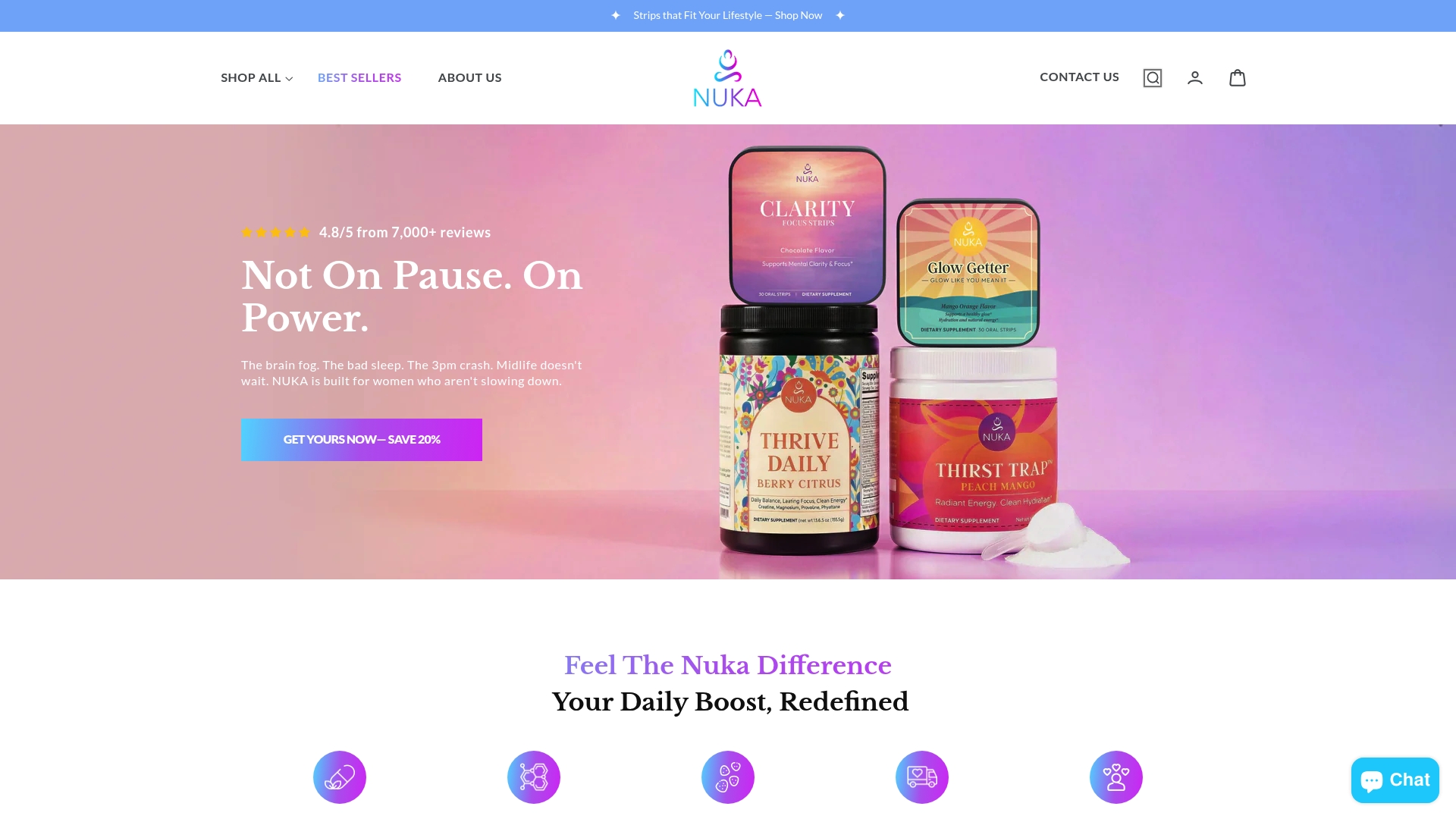
Use a hydration powder like Thirst Trap before or during travel to support fluid and electrolyte levels, then follow with your usual moisturizer and sunscreen once you land. If you’re also looking to support skin from a nutritional angle, our GLOW GETTER oral strips are formulated for skin and hair support alongside your topical routine. Browse our full hydration and wellness lineup to find the format that fits your routine.
This article is general information, not a substitute for advice from a qualified doctor. Consult a qualified healthcare professional about your own circumstances before acting on anything here.
FAQ
What is the best way to hydrate aging skin?
The most effective approach combines a ceramide and hyaluronic-acid moisturizer applied to damp skin within a few minutes of bathing, daily broad-spectrum SPF 30+, and adequate water intake if your baseline is currently low. Clinical trial data shows measurable hydration improvements within 2 to 4 weeks when under-hydrated people increase fluid intake, but topical care remains the most direct lever for appearance.
Do people look younger because of hydration?
Better hydration can make skin look smoother and more plump by softening dehydration lines and improving light reflection off the surface, but it doesn’t reverse deep wrinkles caused by collagen loss. Biomechanical studies show improved skin extensibility and recovery after increased hydration, which translates to a fresher appearance rather than true structural reversal.
Does drinking water prevent skin aging?
Drinking water helps maintain measurable skin hydration, especially if you’re currently under-hydrated, but it does not prevent the structural aging caused by sun exposure and years of collagen loss. Daily sunscreen use remains the most effective preventive step against photoaging, with hydration acting as a helpful complement rather than a substitute.
How does hydration affect aging?
Hydration primarily affects the skin’s surface layer, improving moisture retention, elasticity, and the appearance of fine dehydration lines, while deeper structural aging involves collagen and elastin breakdown that hydration alone can’t repair. A 2025 meta-analysis found that pairing hydration with specific nutrients, like collagen peptides and polyphenols, produced better measurable results than water intake alone.