

Hydration Sachets for Menopause: What to Pack
One travel-ready hydration sachet with sodium, potassium, and magnesium is the fastest way for menopausal women to rehydrate on the go. Plain water often falls short because electrolytes drive cellular water uptake — without them, fluid passes through rather than staying where your body needs it. For menopausal travelers, that gap shows up as fatigue, headaches, and thirst that just won’t quit.
The short version:
- Prioritize sodium, potassium, and magnesium — the three minerals on which the World Health Organization’s rehydration guidance centers
- Avoid sachets with sugar alcohols, synthetic sweeteners, or unnecessary fillers, which can worsen menopause-related digestive sensitivity
- Recommended pick: Nukalove’s Thirst Trap Hydration Powder (Peach Mango) — travel-ready single-serve packaging, a clean mineral panel, and built specifically for women navigating menopause
Table of Contents
- What formats do hydration sachets actually come in?
- Which ingredients actually matter on the label?
- How to choose sachets specifically for menopause and travel
- How to use hydration sachets safely while traveling
- Side effects and interactions to watch for
- Powder sachets vs. oral strips vs. tablets: which format wins for travel?
- The recommended travel-ready option for menopausal women
- Key Takeaways
- Why we built hydration for women who move
- Thirst Trap is ready when you are
- Sources and further reading
What formats do hydration sachets actually come in?
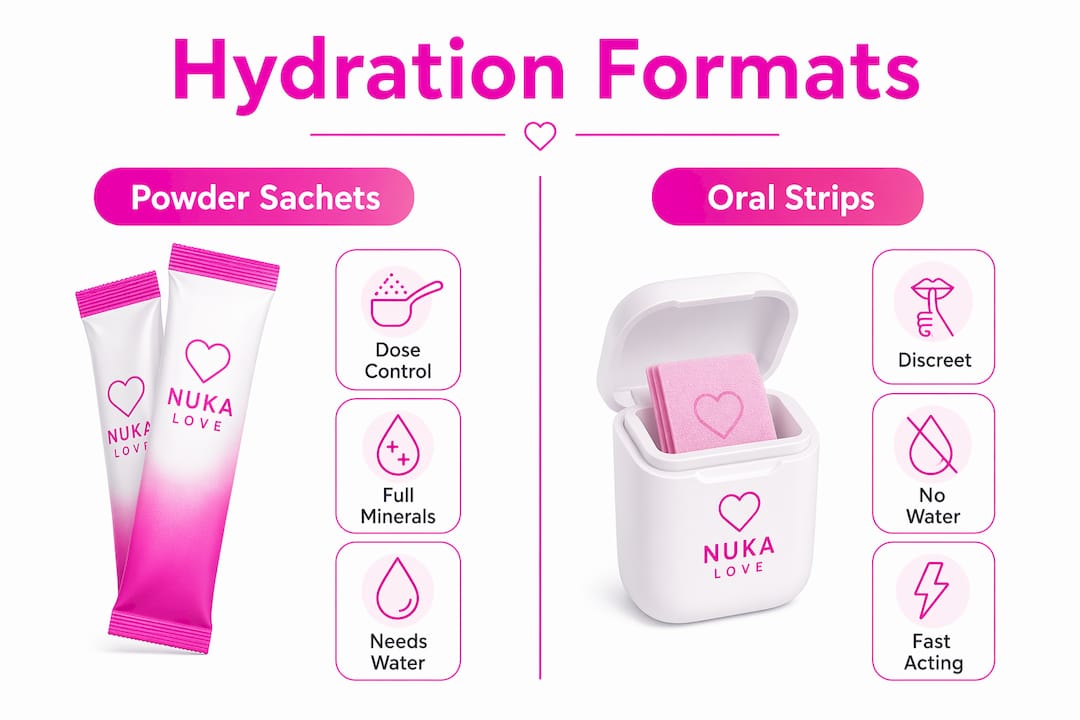
Single-serve powder sachets are the most common format. You tear one open, mix it into water, and drink. They give you full control over flavor strength and electrolyte dose, and the packaging is flat enough to slip into a carry-on pocket.
Oral strips dissolve on your tongue with no water needed. They’re discreet and fast, which makes them useful mid-flight or during a hot flash when you don’t want to fuss with a bottle. The trade-off is that strips typically carry a lighter electrolyte load than powders. Nukalove’s oral strip format shows how compact this delivery can get.
Effervescent tablets drop into water and fizz. They’re easy to find, but the carbonation can cause bloating, and the citric acid used for fizzing can be rough on sensitive stomachs.
| Format | Best for | Watch out for |
|---|---|---|
| Powder sachet | Dose control, full mineral panel | Needs water to mix |
| Oral strip | Discreet, no water needed | Lower electrolyte load |
| Effervescent tablet | Familiar, widely available | Carbonation, citric acid |
Which ingredients actually matter on the label?
Lead with the mineral panel. Sodium, potassium, and magnesium each do a specific job: sodium pulls fluid into cells and keeps you from losing it just as fast, potassium supports muscle contractions and nerve signals, and magnesium helps with cramps and energy metabolism. Sachets improve fluid retention rather than just letting water pass through — that’s the physiological reason they work better than plain water for women whose hormonal shifts have changed how they process fluids.
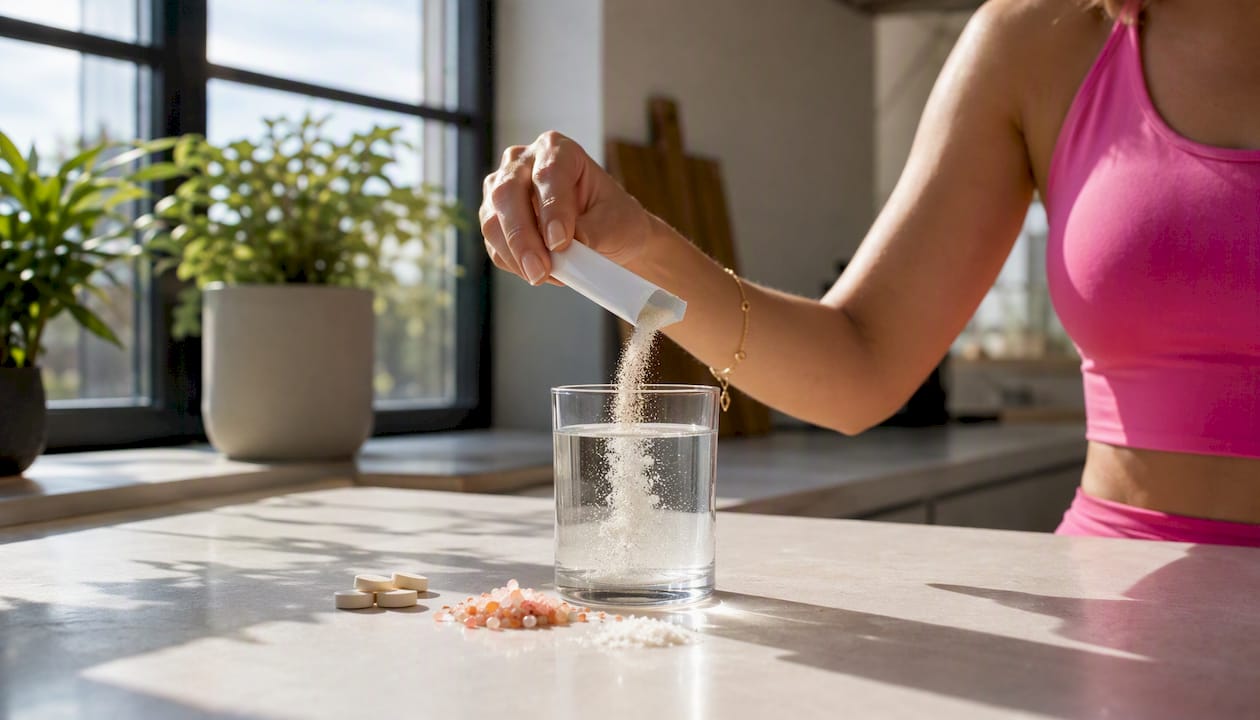
Example per-serving ranges from reputable formulations:
| Electrolyte | Typical range | Why it matters |
|---|---|---|
| Sodium | 800–1,000 mg per serving | Fluid absorption and retention |
| Potassium | 200–240 mg per serving | Muscle and nerve function |
| Magnesium | 50–60 mg per serving | Cramp reduction, cellular energy |
Zero-sugar products often substitute erythritol, sorbitol, or novel sweeteners to maintain sweetness. Sugar alcohols are a known cause of digestive discomfort in sensitive users, and that sensitivity tends to increase during menopause. Artificial sweeteners carry similar risks. When you’re reading a label, look for natural ingredients over synthetic ones — or choose an unflavored option entirely.
Some formulations include a small amount of real cane sugar to speed absorption by matching WHO-style rehydration ratios. That’s a legitimate trade-off, but it adds calories and may not suit women tracking blood glucose.
How to choose sachets specifically for menopause and travel
Start with a full mineral panel. If the label doesn’t list sodium, potassium, and magnesium with actual milligram amounts, put it back.
Checklist for menopausal travelers:
- Sodium per serving: 800–1,000 mg, matching most reputable travel and hot-flash formulas
- Magnesium form: glycinate or malate absorbs well and is gentler on digestion than oxide
- Sweetener check: no erythritol, sorbitol, aspartame, or sucralose; natural fruit flavoring or unflavored is safest
- Packaging: single-serve sticks or sachets, not jars, for short trips and carry-ons
- Transparency: full ingredient amounts listed, not just a proprietary blend
For TSA, powders in original packaging or clearly labeled zip pouches clear security without issue — though checking the TSA’s current guidance before you fly is always worth a minute. Single-serve sticks are easier to manage than a jar because you’re not scooping in an airplane bathroom.
Pro Tip: Pack unflavored sachets alongside flavored ones. Unflavored electrolyte packets mix into morning coffee, broth, or sparkling water without clashing — useful when taste fatigue sets in on day three of a trip.
For deeper guidance on electrolytes for menopause, Nukalove’s blog covers the hormonal context behind why mineral needs shift during perimenopause and beyond.
How to use hydration sachets safely while traveling
Start with one serving. Increase only if symptoms — fatigue, muscle cramps, persistent thirst — don’t improve after a day.
Practical dosing examples:
- Daily maintenance: 1 stick in 12–16 oz of water, morning or midday (contains 800–1,000 mg sodium, 200–240 mg potassium, 50–60 mg magnesium)
- After a hot flash or heavy sweat: 1 stick in 16 oz water within 30 minutes (800–1,000 mg sodium, 200–240 mg potassium, 50–60 mg magnesium)
- Long-haul flight: 1 stick every 4–6 hours; cabin air is extremely dry and dehydration compounds quickly
- Hot-weather travel: 1–2 sticks per day depending on sweat rate and heat exposure (each stick provides the travel-recommended electrolyte range above)
Manufacturers typically recommend mixing one stick with 12–32 oz of water and adjusting volume to taste and symptom level.
Travel packing tips:
- Keep 3–5 single-serve sticks in a small zip pouch with your flight essentials — passport, lip balm, earplugs
- Use an insulated bottle so cold water stays cold; warm water makes some powders taste off
- Pre-fill a 16 oz bottle before boarding so you’re not waiting for the drink cart
Side effects and interactions to watch for
Most single-serve sachets are safe for healthy adults. The exceptions matter, though.
Who should check with a clinician first:
- Anyone with kidney disease (impaired kidneys can’t clear excess potassium or sodium safely)
- Women with uncontrolled hypertension — sodium load adds up across the day
- Anyone taking diuretics, ACE inhibitors, ARBs, or lithium, since these medications directly affect electrolyte levels
Common side effects from excess minerals include nausea and muscle weakness. Sugar alcohols add their own layer: bloating and loose stools are the most frequent complaints, and menopause-related gut changes make that more likely.
If you experience repeated dizziness, fainting, or swelling after using electrolyte sachets, stop and contact your healthcare provider. These symptoms can signal electrolyte imbalance that needs clinical assessment, not more powder.
Seek medical advice if you notice: persistent cramping that doesn’t resolve, irregular heartbeat, or swelling in hands and feet. This article is general information, not medical advice — confirm any supplement routine with your clinician, especially if you manage a chronic condition.
Powder sachets vs. oral strips vs. tablets: which format wins for travel?
For menopausal travelers, single-serve powders are the strongest choice most of the time. They carry a full electrolyte dose, let you control concentration, and give you ingredient transparency that strips and tablets rarely match.
Quick format comparison for travel use cases:
- Long-haul flights: Powder sachet wins — full dose, mixes into the water you bring through security
- Hot-weather day trips: Powder sachet again — higher sodium range handles heavy sweat better
- Discreet daytime use (meetings, museums): Oral strip is the practical pick; no mixing, no bottle
- Portability: All three formats pass TSA; strips and sachets are flatter and lighter than tablet tubes
Strips are genuinely useful as a backup format. Nukalove’s strip line shows how much convenience you can pack into a format that fits in a wallet. The limitation is dose — strips work for maintenance hydration, not for recovering from a significant sweat event.
The recommended travel-ready option for menopausal women
Nukalove’s Thirst Trap Hydration Powder (Peach Mango) earns the recommendation here for a few concrete reasons:
- Single-serve packaging designed for travel — no jar, no scoop, no mess
- Clean mineral panel with sodium, potassium, and magnesium listed transparently
- Women-first formulation from a women-owned brand built specifically around menopause wellness
- Flavor that works: Peach Mango is light enough to drink warm or cold, which matters when you’re stuck on a plane with lukewarm water
For women who want to go deeper on sugar-free electrolyte options and how to read labels, Nukalove’s resource library covers the ingredient science without the marketing fluff. The promo section below has direct links to buy.
Key Takeaways
Sodium, potassium, and magnesium in a single-serve sachet with no sugar alcohols or synthetic sweeteners is the most practical hydration solution for menopausal travelers.
| Point | Details |
|---|---|
| Prioritize three electrolytes | Sodium, potassium, and magnesium drive cellular hydration — check that all three appear with mg amounts on the label. |
| Avoid sugar alcohols | Erythritol, sorbitol, and synthetic sweeteners commonly cause bloating, a risk that rises with menopause-related digestive changes. |
| Pack for the trip | Keep 3–5 single-serve sticks in your carry-on zip pouch; one stick per 12–16 oz water covers daily maintenance. |
| Check interactions | Women on diuretics, ACE inhibitors, ARBs, or with kidney disease should consult a clinician before adding daily electrolyte sachets. |
| Nukalove Thirst Trap | Single-serve Peach Mango powder with a transparent mineral panel, built for menopausal women who travel. |
Why we built hydration for women who move
Most hydration products were designed with athletes in mind — high-sodium, aggressively sweetened, and packaged in ways that assume you have a gym bag and a blender bottle. That’s not the reality for a woman managing hot flashes on a red-eye or trying to stay sharp during a work trip.
At Nukalove, we started from a different question: what does a woman in perimenopause or menopause actually need when she’s away from home? The answer shaped everything about Thirst Trap — the mineral choices, the serving size, the packaging, the flavor. We’re a women-owned brand, and the women who built this product are the same women who use it. That’s not a marketing line; it’s why the ingredient panel looks the way it does.
Thirst Trap is ready when you are
Nukalove’s Thirst Trap Hydration Powder is available now on the U.S. store in single-serve Peach Mango sticks, built for the carry-on, the hotel room, and every sweaty moment in between. No subscription required to try it — grab a single pack or bundle it with other travel-ready supplements from the wellness collection to save on your order.
Women who travel frequently tend to pair Thirst Trap with Nukalove’s energy and focus strips for a full travel stack that fits in a single zip pouch. One-time purchase or subscribe for recurring delivery — your call. Shop Thirst Trap and see the full ingredient panel before you buy.
Sources and further reading
The claims in this article draw on the following sources. Check product labels against these references and consult your clinician for personalized guidance.
- Hydrant — Hydration Packets: electrolyte cellular uptake and absorption
- Trace Minerals — Sugar-Free Electrolyte Powder collection: practitioner guidance on sweetener-free formulations
- Trace Minerals — Power Pak Zero Sugar: natural ingredient prioritization
- Saltivate — Unflavored Electrolyte Packets: per-serving mineral ranges and dosing guidance
- Salt of the Earth — Unflavored Electrolytes: versatility and acidulant-free formulation
- Organika — Electrolyte Sachets: fluid retention mechanism
- Nukalove — Electrolytes for Menopause: menopause-specific mineral guidance
- Nukalove — Best Sugar-Free Electrolytes: label-reading and ingredient quality