

72 Hour Routine to Stop Dry Skin After Flying for Midlife Women
Stop dry skin after flying with three moves: hydrate from the inside out, strengthen your skin barrier in the 72 hours before takeoff, and seal moisture in with an occlusive during the flight itself. Drink water on a regular schedule, apply a rich moisturizer before boarding, and carry a balm to reapply mid-flight. Skip any one of these and cabin air will find the gap.
TL;DR:
- Hydrating from the inside begins at least three days before a flight by using richer moisturizers, serums, and avoiding new actives to build skin resilience.
- During long flights, sipping water regularly and sealing moisture with occlusive balms prevent significant skin dehydration caused by low cabin humidity.
- After flying, gentle cleansing followed by barrier-restoring products is essential, and aggressive treatments should be avoided until skin stabilizes.
- Packing travel-sized humectants, emollients, and occlusives ensures effective skincare without overloading luggage, especially on long or red-eye flights.
- Supporting systemic hydration with electrolyte intake and oral hydration strips enhances moisture retention beyond topical skincare efforts.
Table of Contents
- Why Does Flying Cause Dry Skin?
- What Should You Do 72 Hours Before a Flight?
- What’s the Best In-Flight Skin Care Routine?
- How Do You Repair Skin After a Flight?
- Which Ingredients Should You Pack for Travel?
- What Skin Care Mistakes Make Flying Worse?
- A Travel-First Take on Hydration From the Inside Out
- A Compact Way to Support Hydration in the Air
- Sources
Why Does Flying Cause Dry Skin?
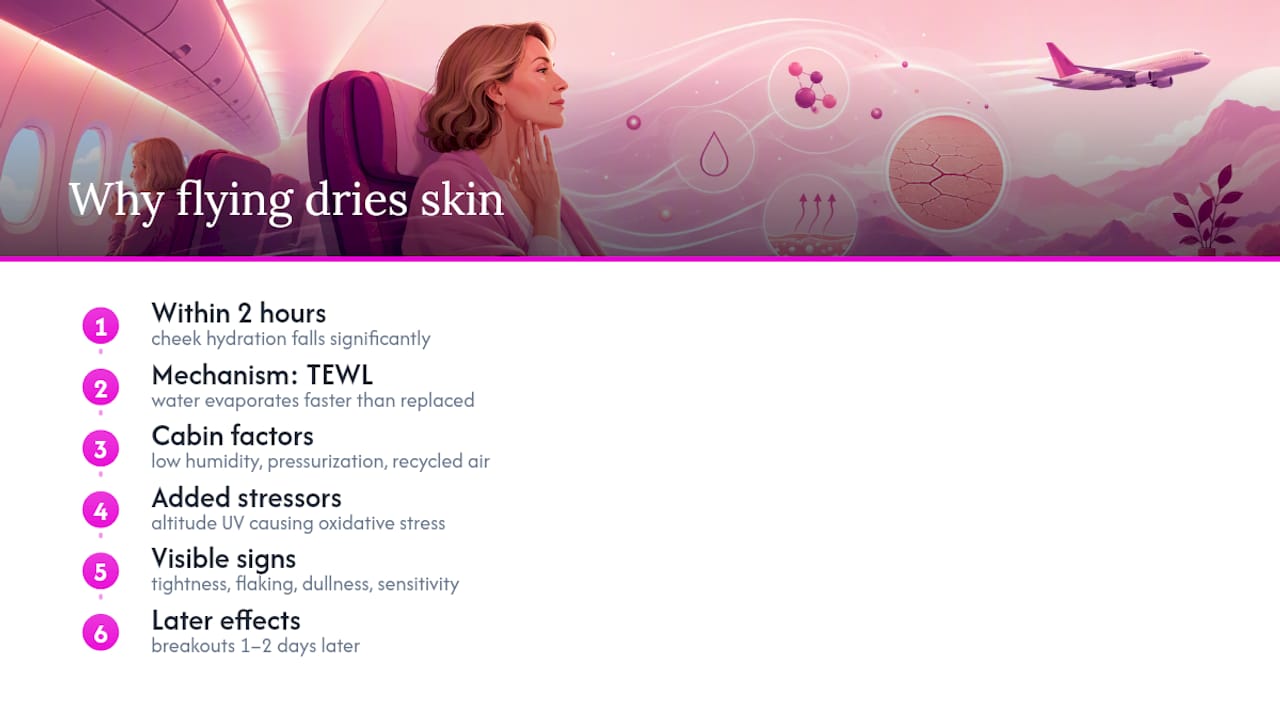
Cabin humidity drops to very low levels within two hours of takeoff, and a 2011 study measuring skin hydration on long flights found cheek skin hydration fell significantly, highlighting challenges noted by the cabin crew environment guide on dry conditions in commercial aviation.
The mechanism is called transepidermal water loss, or TEWL: water evaporates from your skin faster than your body can replace it, especially when the air around you is this dry. Add cabin pressurization, recycled air, and altitude-related UV exposure through the window, and you get a perfect setup for oxidative stress on top of the moisture loss.
Watch for tightness across your cheeks, visible flaking around the nose and mouth, a dull or ashy look to your complexion, and sudden sensitivity to products that never bothered you before. Some flyers also notice breakouts a day or two later. That’s your barrier reacting to the disruption, not necessarily a hygiene issue.
Statistic to remember: Facial skin hydration can drop significantly during a single long-haul flight, according to the same PubMed research. That’s not a slow fade. It happens within hours.
What Should You Do 72 Hours Before a Flight?
Dermatologic coverage of air travel increasingly points to a 72-hour prep window, and the logic tracks with how skin actually works. Your outer layer turns over on a multi-day cycle, so starting barrier support three days out gives your skin time to build resilience instead of scrambling to react once you’re airborne.
Here’s what that looks like in practice:
- Day 3 before: Layer in a hyaluronic acid serum and switch to a richer night moisturizer with ceramides or squalane.
- Day 2 before: Keep hydrating; hold off on trying anything new, especially retinoids, acids, or fresh exfoliants.
- Day 1 before: Increase water intake, ease up on alcohol and caffeine, and prioritize sleep.
- Day of travel: Apply your full routine (antioxidant serum, humectant, moisturizer) before you leave for the airport.
Pro Tip: Pack your barrier products in travel-sized jars before the 72-hour window starts, not the morning of your flight. Digging through a suitcase for a 3 oz container at 5 a.m. is how good routines get skipped.
Dermatologist guidance consistently favors a simple triage over this window: antioxidant treatment, a barrier-supporting moisturizer, and an occlusive balm, rather than a long list of actives.
What’s the Best In-Flight Skin Care Routine?
Systemic hydration matters as much as anything you put on your face. Aviation health guidance recommends sipping roughly 8 ounces of water per hour during flight, which the Aerospace Medical Association’s own travel guidance backs as standard practice for long-haul comfort. Bring an empty bottle through security and refill it past the gate so you’re not relying on a single small cup from the beverage cart.
Here’s a simple sequence to follow once you’re seated:
- Before boarding: Apply a humectant (hyaluronic acid or glycerin serum), then seal it with an occlusive moisturizer or balm.
- Every 2 to 3 hours: Reapply lip balm and a lightweight eye cream, since lips and under-eyes lose moisture fastest.
- Once mid-flight, on longer trips: Do a light reapplication of your sealing balm, especially on cheeks and around the nose.
- Throughout: Sip water on a steady schedule rather than only when you feel thirsty.
An aisle seat makes it easier to get up and move without disturbing anyone, which helps circulation and gives you a reason to reapply products at the sink. Wash your hands before you touch your face, and go easy on salty snacks and alcohol, both of which pull water out of your system exactly when you need to be holding onto it.
How Do You Repair Skin After a Flight?
Landing doesn’t mean your skin is done reacting. Cleanse gently with a non-foaming wash to remove recycled cabin air residue without stripping whatever moisture you have left. Follow with a humectant, then lock it in with an emollient or richer cream, paying extra attention to lips, under-eyes, and any patches that flaked during the flight.
Hold off on anything aggressive for a bit:
- Skip exfoliation, retinoids, and strong acids until your skin stops feeling tight or reactive, often somewhere between 24 and 72 hours after landing.
- An overnight hydrating mask the first night back can speed things along.
- A gentle facial massage helps circulation and can ease puffiness alongside dryness.
- If tightness, flaking, or breakouts persist past a few days, that’s worth a dermatologist visit rather than more product layering.
Which Ingredients Should You Pack for Travel?
Three ingredient categories do the actual work, and knowing the difference keeps you from packing five products that all do the same job.
- Humectants (hyaluronic acid, glycerin) pull water into the skin’s surface, which is useless without something to trap it.
- Emollients (squalane, fatty esters) soften and smooth, filling in the cracks in a stressed barrier.
- Occlusives (petrolatum, dimethicone, plant oils like jojoba) physically seal moisture in, which is the step most people skip.
For daytime flights with a window seat, SPF still matters at altitude, and it’s worth a light reapplication if you’re sitting in direct sun for hours. Stick to TSA-compliant 3.4 oz containers, and favor tubes over jars for anything you’ll be applying with your fingers in a cramped seat. On a short flight, a humectant and a balm cover you. On a red-eye or international long-haul, bring the full antioxidant, humectant, occlusive lineup.
What Skin Care Mistakes Make Flying Worse?
The biggest one: relying on a facial mist alone. Water evaporating in 10% humidity actually pulls existing moisture out of your skin, and dermatologists interviewed on the topic are blunt about it: a mist without a sealing balm right after can leave you drier than before you sprayed it.
Other habits that backfire:
- Wearing heavy, full-coverage makeup, which clogs an already stressed barrier.
- Over-cleansing mid-flight, which strips the little oil you have left.
- Starting a new retinoid or acid the week of travel, right when your skin can least handle irritation.
- Overdoing alcohol or caffeine, both diuretics working against your hydration efforts.
The fix for all of it is the same: fewer products, applied smarter, sealed properly.
A Travel-First Take on Hydration From the Inside Out
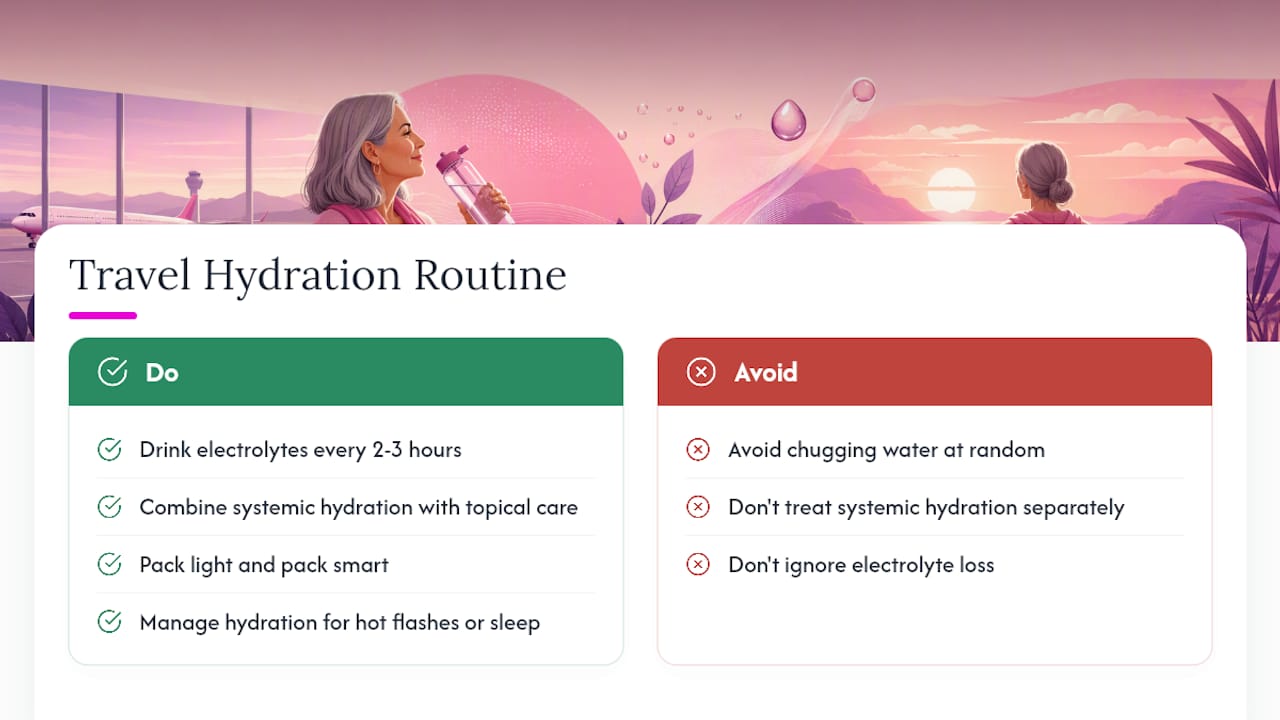
Topical care handles half the equation. The other half is what’s happening inside your body, and that’s where most airplane skin care advice falls short. Cabin air doesn’t just dry out your face. It pulls fluid and electrolytes out of your whole system, which matters even more for women navigating hot flashes or disrupted sleep during travel.
Timing your hydration around electrolyte intake every 2 to 3 hours rather than just chugging water at random supports the same barrier function you’re trying to protect topically. Pack light, pack smart, and treat systemic hydration as part of your skin routine, not separate from it. Midlife women managing hot flashes mid-flight already know that comfort and hydration are connected. Your skin is just the most visible part of that equation.
— NUKA
A Compact Way to Support Hydration in the Air
Hydration support that fits in your pocket instead of your carry-on liquids bag is available. Oral strips that dissolve in seconds, no water bottle required, can help support consistent fluid intake during long flights.
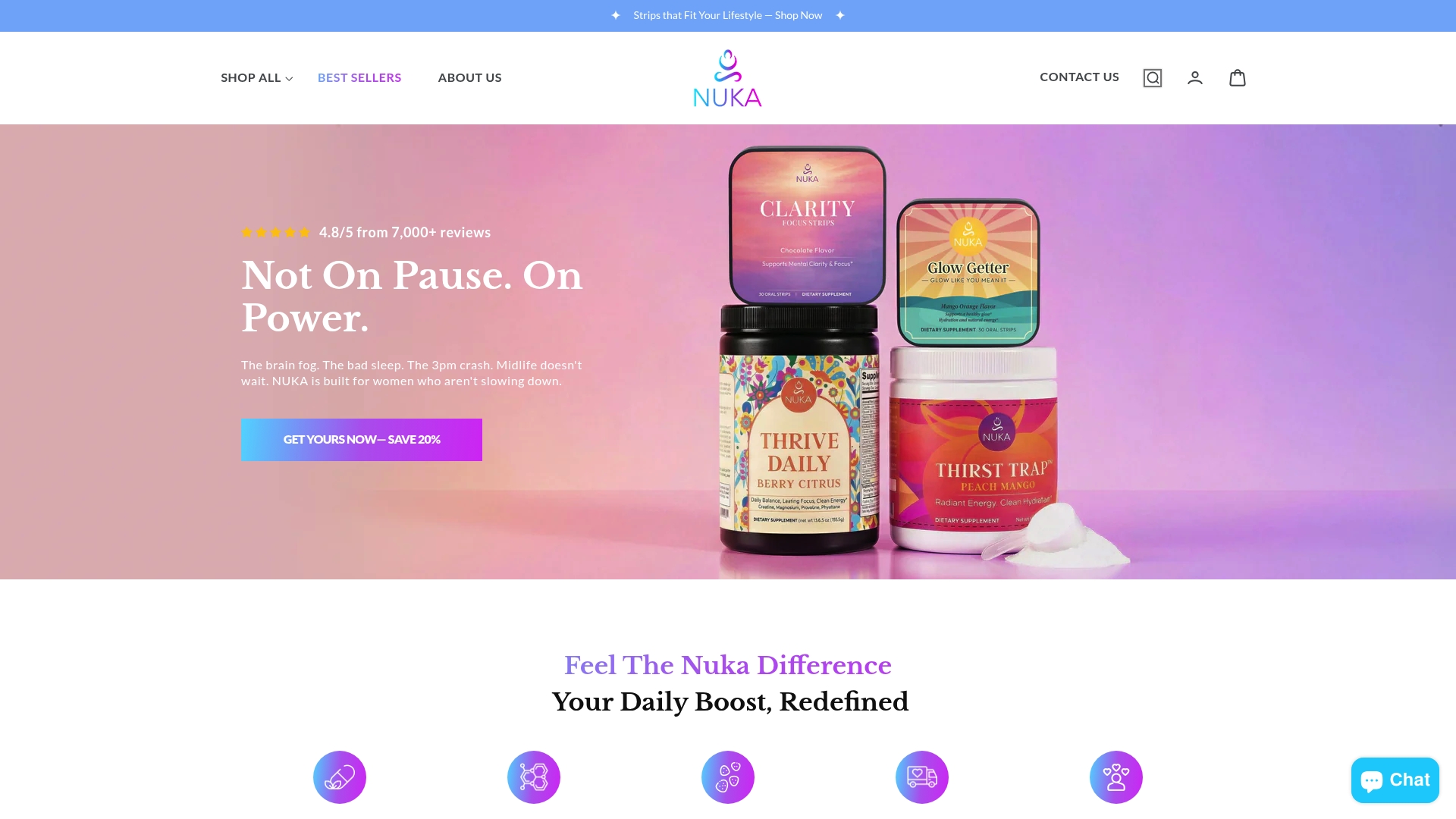
They’re not a replacement for your moisturizer or your water bottle. Think of them as a third layer, alongside the topical routine and the hourly sipping schedule already covered, built specifically for people who travel often enough to want something that survives a jacket pocket and a security line. The Glow Getter oral strips are designed for exactly this kind of on-the-go skin and hydration support, and if sleep disruption is part of your travel pattern too, Deep ZZZs sleep strips are built for the same compact, travel-first approach. Check out the full lineup at Nukalove and pack something that works as hard as your moisturizer does.
Sources
- Skin surface hydration decreases rapidly during long distance flights
- Healthy Travel Tips: Staying hydrated while traveling (Abbott Nutrition summary of ASMA guidance)
- Airplane Travel Skincare Guide: How to Protect Your Skin Before, During, and After a Flight: Dermatologist Guide – Doctor Rogers Skin Care
- Inflight Skincare Guide: What To Do Before, During, After Flights – Forbes