

8–12 Weeks to Results: Marine vs Bovine Collagen for Midlife Women
Marine collagen wins for skin, hydration, and fine-line concerns because it runs almost entirely Type I. Bovine collagen wins for joints, tendons, and gut lining support because it delivers both Type I and Type III. Both work when they’re hydrolyzed and taken consistently, and allergies or dietary restrictions often make the decision for you before biology does. If skin and hair are the priority, a strip-format option like an oral collagen strip fits the goal without adding another powder to your countertop.
TL;DR:
- Marine collagen provides mainly Type I collagen, making it especially effective for skin hydration, elasticity, and reducing fine lines within 8 to 12 weeks.
- Bovine collagen supplies both Type I and Type III collagen, offering broader support for joints, tendons, gut lining, and connective tissue, with results also appearing in 8 to 12 weeks.
- Marine collagen carries allergy risks and potential heavy-metal contamination, but it dissolves easily and is more soluble in cold liquids or strips.
- Bovine collagen is generally more affordable per gram, but dietary restrictions and certification clarity are important considerations before purchase.
- Consistent daily intake and selecting a convenient format, such as oral strips, significantly influence the effectiveness of collagen supplementation.
Table of Contents
- Marine Collagen vs Bovine: What the Collagen Type Actually Does
- Marine Collagen Strengths and Trade-offs
- Bovine Collagen Strengths and Trade-offs
- Marine vs Bovine Collagen: The Practical Side-by-Side
- Who Should Choose Which Collagen Source
- Safety, Sourcing, and Quality Checks Worth Doing
- Why Adherence Beats Ingredient Precision
- Try Glow Getter for a Skin-Focused Collagen Routine
- Sources
Marine Collagen vs Bovine: What the Collagen Type Actually Does
Collagen isn’t one substance. Your body makes at least 16 types, but two matter for supplements: Type I and Type III.
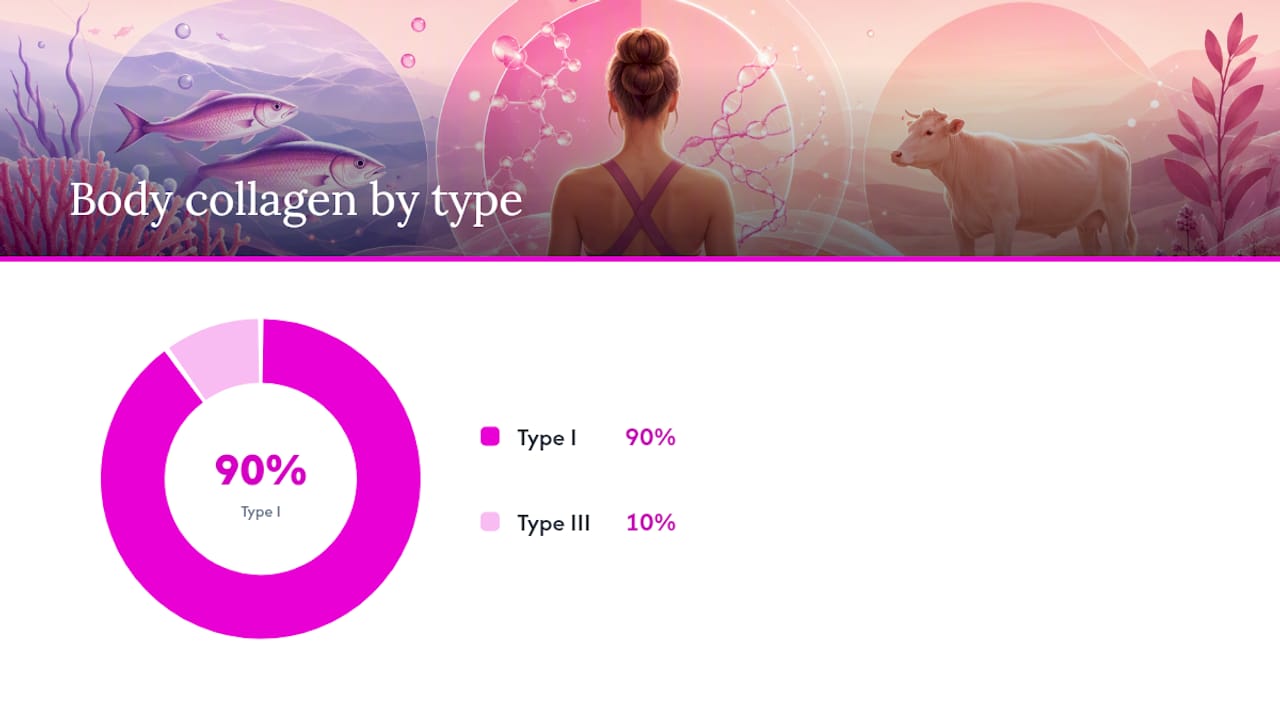
Type I is the collagen in your skin, tendons, bones, and blood vessel walls. It’s dense, strong, and makes up roughly 90% of the collagen your body produces. Type III sits alongside Type I in your skin, but it’s also the dominant collagen in your gut lining, blood vessels, and muscle tissue. It’s more elastic and tends to show up wherever tissue needs to stretch and recover, like joints and connective tissue between muscles.
Neither type does much good sitting in a jar. Whole collagen molecules are too large for your gut to absorb intact, so manufacturers hydrolyze them, breaking the protein into smaller peptides your digestive system can actually process. This is why “hydrolyzed collagen” appears on nearly every credible label. Smaller peptides move through the gut wall more easily, though the science on exactly how much of that peptide gets used for skin or joint repair versus just general amino acid supply is still being worked out.
Source materials vary by type:
- Marine collagen typically comes from fish skin, scales, or byproducts of the seafood industry.
- Bovine collagen typically comes from cow hide or bone.
- Source alone doesn’t determine effectiveness. Processing quality, peptide size, and dose matter more than whether the animal swam or grazed.
Marine Collagen Strengths and Trade-offs
Marine collagen is predominantly Type I, which is exactly why it’s marketed so heavily for skin. Human trials cited in research on marine-derived collagen show measurable improvements in skin elasticity and wrinkle depth after consistent oral intake, likely tied to how these peptides stimulate fibroblast activity in the dermis.
Marine collagen peptides show high intestinal absorption after oral intake, according to reviews of hydrolyzed marine collagen, though the degree of that advantage over other sources in real-world use is more modest than most marketing suggests. Processing quality and peptide profile end up mattering more than the source itself.
There are real trade-offs worth weighing before you buy:
- Fish allergy risk. If you’re allergic to fish or shellfish, marine collagen is off the table regardless of its skin benefits.
- Contamination potential. Marine collagen carries a documented need for heavy-metal and contaminant testing, since fish can accumulate mercury and other metals depending on where they’re harvested.
- Lower imino-acid content. Marine collagen generally has less proline and hydroxyproline than mammalian collagen, which affects thermal stability but often improves solubility, making it easier to dissolve in cold liquids or dissolve on the tongue as a strip.
- Sourcing variability. Byproduct-based marine collagen (using skin and scales that would otherwise be discarded) is a more sustainable pull than collagen from targeted or farmed fishing operations.
If skin hydration and visible aging are your main concern, marine collagen’s Type I concentration gives it a real edge. Just check for a published Certificate of Analysis before you commit to a brand.
Bovine Collagen Strengths and Trade-offs
Bovine collagen’s advantage is breadth. Most bovine supplements deliver both Type I and Type III collagen, which is why it’s the more common recommendation for joint pain, tendon support, and gut lining health. Type III’s role in connective tissue between joints and in the intestinal wall makes bovine collagen the more versatile pick when skin isn’t your only goal.
Human trials on bovine-sourced collagen peptides consistently report improved joint comfort with regular dosing, and bovine collagen tends to cost less per gram than marine collagen, which matters when you’re taking it daily for months rather than weeks. Given that consistent, long-term dosing is what the evidence actually supports, affordability isn’t a minor detail. It’s often the difference between finishing a supplement routine and abandoning it in week three.
A few things worth checking before buying bovine collagen:
- “Grass-fed” claims should be specific. Grass-fed and grass-finished cattle are raised differently, and vague labeling can obscure which one you’re actually getting.
- Third-party testing matters here too. Bovine collagen isn’t immune to contamination concerns, even if the risk profile differs from marine sources.
- Dietary and religious restrictions apply. Bovine collagen is off-limits for anyone following halal or kosher dietary law unless the product is specifically certified, and it’s not an option for vegetarians or vegans regardless of certification.
- Gut and joint support isn’t instant. Like marine collagen, bovine needs consistent daily use over weeks, not days, to show results.
For anyone dealing with joint stiffness, connective tissue recovery, or general “my body doesn’t bounce back like it used to” complaints that often show up around menopause, bovine’s dual-type profile makes it the more logical starting point.
Marine vs Bovine Collagen: The Practical Side-by-Side
Here’s how the two stack up when you get past the marketing copy:
| Factor | Marine Collagen | Bovine Collagen |
|---|---|---|
| Best for | Skin hydration, elasticity, fine lines | Joints, tendons, gut lining, connective tissue |
| Collagen types | Type I (dominant) | Type I + Type III |
| Typical dose | a moderate daily amount often studied | a moderate daily amount often studied |
| Time to results | 8–12 weeks | 8–12 weeks |
| Allergen concerns | Fish/shellfish allergy | Rarely allergenic; excluded by some diets |
| Diet/religious fit | Not vegetarian/vegan; generally halal/kosher-flexible | Excludes vegetarians, vegans; needs certification for halal/kosher |
| Taste and format | Neutral, dissolves well, works in strips and drinks | Can have a mild earthy taste in powder form |
| Typical cost | Higher per gram | Generally more affordable |
Dosing ranges and the 8 to 12 week timeline for visible results are consistent across trials for both sources, so the real decision comes down to your goal, not the number on the label. Taste is worth a mention too: bovine powders sometimes carry a faint earthy note that some people notice in coffee or smoothies, while marine collagen tends to be more neutral, which is part of why it works well in strip or dissolvable formats.
Sustainability is a real variable on both sides. Marine collagen sourced from fish-processing byproducts reduces waste, but farmed fish sourcing carries its own environmental questions, and bovine sustainability swings widely based on whether cattle are pasture-raised or grain-finished at scale.
Who Should Choose Which Collagen Source
Run through this before you buy:
- Name your primary goal. Skin and hair concerns point to marine. Joint pain, tendon recovery, or gut support point to bovine.
- Check dietary and allergy restrictions first. Fish allergies rule out marine. Halal, kosher, vegetarian, or vegan needs rule out most bovine products unless specifically certified or avoided entirely.
- Set a realistic timeline. Expect to wait 8 to 12 weeks of consistent daily use before judging whether it’s working, at a typical dose of 2.5 to 10 grams a day.
- Match the budget to the commitment. If you’re planning to take it for months, bovine’s lower per-gram cost makes long-term adherence easier on your wallet.
A woman in perimenopause noticing drier, thinner skin is a textbook case for marine collagen. Someone managing knee stiffness after a return to running is a better fit for bovine’s Type I and Type III combination.
Pro Tip: Pair either source with a vitamin C source. Vitamin C is a required co-factor for collagen synthesis, and skipping it is one of the most common reasons people don’t see results even after 12 weeks of consistent use.
Safety, Sourcing, and Quality Checks Worth Doing
Before buying either type, look for a few specific things on the label or the brand’s website.
Ask for a Certificate of Analysis, particularly for marine collagen, where heavy-metal screening is the single most important quality check given fish’s tendency to accumulate mercury and other contaminants from ocean water. A brand that won’t produce one isn’t worth your money.
Watch for cross-contamination language on allergen statements, especially if a manufacturer processes both marine and bovine products in the same facility. If you’re highly fish-allergic, a “may contain” disclaimer on a bovine product matters.
A few sourcing questions worth asking any brand directly:
- Is the marine collagen wild-caught or farmed, and from which species?
- Is it a byproduct of existing seafood processing, or from fishing specifically for collagen?
- For bovine collagen, what does “grass-fed” actually mean for this specific product?
- Has the product been tested by a third-party lab, and will they show you the results?
Pro Tip: If you’re on blood thinners or manage a chronic digestive condition, run any new collagen supplement by your doctor first. Collagen itself is low-risk, but interactions with existing medications or conditions are worth a two-minute conversation.
Why Adherence Beats Ingredient Precision
Most of the debate around marine collagen vs bovine treats this like a lab decision. It isn’t. The bigger variable in whether collagen actually works for you is whether you take it every day for 8 to 12 weeks straight, and that comes down to format, not molecular weight.
A powder that needs mixing, dissolving, and remembering to pack when you travel gets skipped. Skipped days stretch into skipped weeks, and by week six you’ve lost the consistency the research depends on. This is the practical argument for oral strips over powders: a strip that dissolves on the tongue in seconds fits into a routine that survives hotel bathrooms, flight delays, and the days when nothing goes according to plan.

Format also interacts with dosing accuracy. A pre-measured strip removes the guesswork of scooping powder, which matters more than people assume when the whole point is consistent daily intake over months, not days.
None of this replaces the biology. Type I still matters more for skin, Type III still matters more for joints, and no format fixes a mismatched source for your goal. But biology only pays off with adherence, and adherence is a logistics problem as much as a science one.
— NUKA
Try Glow Getter for a Skin-Focused Collagen Routine
If skin hydration and hair support are the goal, an oral strip option gives a Type I focused choice without the powder, water, and travel-bag guesswork that comes with most collagen routines. An oral strip dissolves in seconds and slips into a purse or carry-on the same way a stick of gum would, which matters more than it sounds like once you’re three time zones deep into a trip and trying to keep a supplement habit alive.
GLOW GETTER is built for daily use, the same daily use that the 8 to 12 week research window actually requires. There’s no blender, no scoop, and no dissolving grit at the bottom of a glass. If you’ve started and stopped a collagen powder more than once because it just didn’t fit your routine, this is a different shape of the same idea. Check out GLOW GETTER’s oral strips and see whether a format built for consistency gets you further than the jar sitting half full in your cabinet right now.
This article is general information, not a substitute for advice from a qualified doctor. Consult a qualified healthcare professional about your own circumstances before acting on anything here.