

No Willpower Needed: Reduce Menopause Sugar Cravings With Meal Timing
Yes, hormone and metabolic shifts during perimenopause and menopause commonly raise sugar cravings. The fastest fix is a protein-plus-fiber snack and consistent meal timing to steady your blood sugar. The rest comes down to understanding why your body is signaling this way and building habits that keep those signals quiet. If cravings come with unusual thirst, frequent urination, or rapid weight change, it’s worth a conversation with your clinician about menopause bone loss and what women should do now.
TL;DR:
- Menopause-related hormonal shifts increase hunger signals and insulin resistance, making sugar cravings more frequent and harder to satisfy.
- Blood sugar crashes from refined carbs are amplified during menopause due to altered insulin sensitivity and poor sleep quality.
- Consistent meal timing, combined with protein and fiber-rich snacks, effectively prevents blood sugar swings that trigger cravings.
- Stress, dehydration, and caffeine fluctuations further worsen cravings, which can be mitigated with short stress resets and proper hydration.
- Persistent extreme hunger, unusual thirst, or rapid weight changes should prompt a medical consultation to rule out metabolic or diabetes-related issues.
Table of Contents
- Why menopause changes appetite and triggers sugar cravings
- How blood sugar, sleep disruption, and stress amplify cravings
- Food-focused strategies and specific snacks to curb sugar cravings
- Meal timing, routines, and lifestyle habits that reduce cravings
- When sugar cravings need medical attention and what to ask your clinician
- NUKA perspective: how portable supplements and hydration fit into an anti-craving routine
- The part of this conversation that gets missed
- Quick support when meals can’t wait: NUKA options
- FAQ
- Sources
Why menopause changes appetite and triggers sugar cravings
Cravings during this stage are not a failure of discipline. They are a biological response to a shifting hormonal landscape, and understanding that shift makes them easier to manage.
Estrogen does more than regulate your cycle. It also helps the hypothalamus, the brain region that governs hunger and fullness, read signals from hormones like leptin and ghrelin accurately. As estrogen declines through perimenopause, that signaling gets noisier, and many women notice hunger that feels less predictable and harder to satisfy.
Estrogen also influences serotonin and dopamine, the neurotransmitters tied to mood and reward. When estrogen drops, serotonin production can dip too, and carbohydrates offer a fast, if temporary, way to nudge it back up. That is part of why a stressful afternoon can turn into a strong pull toward something sweet rather than something savory.
These shifts also show up in your body composition. A peer-reviewed review on estrogen and metabolism describes how estrogen decline reshapes central appetite regulation and fat metabolism, contributing to increased appetite, insulin resistance, and more central adiposity during the menopausal transition. Insulin resistance means your cells respond less efficiently to insulin, so blood sugar stays elevated longer after eating, which can intensify the urge for another quick carbohydrate fix soon after a meal.
None of this means your cravings are irrational. They reflect real changes in brain chemistry and metabolism, and that reframing alone often reduces the shame that makes cravings feel worse.
How blood sugar, sleep disruption, and stress amplify cravings
Refined carbohydrates and sugary snacks cause a fast rise in blood glucose followed by an equally fast crash. During that crash, your body releases hormones meant to raise blood sugar again, and that often expresses itself as a craving for something sweet. During the menopausal transition, this spike and crash cycle tends to be more pronounced, partly because of the insulin resistance described above.
Sleep plays a direct role too. Research from the Study of Women’s Health Across the Nation found that elevated fasting insulin during early perimenopause is linked to more severe hot flashes and night sweats, along with disrupted sleep. Poor sleep alters ghrelin and leptin, the hormones that signal hunger and fullness, which can make sugar cravings sharper the next day. Research from King’s College London found that postmenopausal women report 12% higher sugar intake and 12% poorer sleep quality compared with premenopausal women, and up to 60% experience increased food cravings during this transition.
Stress compounds both problems. Cortisol, the body’s primary stress hormone, encourages the body to store fat and seek quick energy, which often means reaching for sugar. In practice, cravings rarely appear out of nowhere. They tend to follow a skipped meal, a rough night of sleep, or a stretch of high stress, which is useful information because each of those triggers is something you can address directly.

Food-focused strategies and specific snacks to curb sugar cravings
The most reliable way to quiet cravings is to stop the blood sugar spike and crash cycle before it starts. Harvard Health recommends pairing sweets or carbohydrates with protein or fat to blunt the glycemic response, and prioritizing fiber-rich, low-glycemic carbohydrates over refined ones. Phytoestrogen-containing foods, such as flaxseed, soybeans, and chickpeas, can also fit naturally into meals during this transition.
A few snack combinations put that principle into practice:
- An apple with almond butter pairs fiber with protein and healthy fat.
- Greek yogurt with berries combines protein with antioxidants and natural sweetness.
- A small square of dark chocolate with a handful of nuts satisfies a sweet craving without a full sugar load.
- Hummus with carrot sticks offers fiber and plant protein together.
For meals, a breakfast built around eggs or Greek yogurt with fruit holds you steadier than cereal or toast alone. A lunch with a lean protein, a fiber-rich vegetable, and a modest portion of whole grains helps prevent the mid-afternoon dip. Dinner that repeats the protein-plus-fiber pattern, rather than leaning on refined pasta or bread, reduces the odds of a late-evening sugar urge.
It’s worth being cautious about ultra-processed snack foods marketed as “healthy,” since many still spike blood sugar quickly despite the packaging. Strict no-sugar detoxes often backfire too, triggering the same restriction-binge cycle they’re meant to prevent. Artificial sweeteners can also keep sugar cravings alive for some people by maintaining a preference for intense sweetness without resolving the underlying blood sugar swings.
Pro Tip: Keep a protein-and-fiber snack within reach at all times, in your bag or car, so a craving never has to be solved with whatever vending machine is nearest.
Meal timing, routines, and lifestyle habits that reduce cravings
Food choices matter, but when you eat shapes cravings just as much as what you eat. A few habits make the biggest difference:
- Eat at consistent times each day, including a protein-rich breakfast rather than a carb-only one like toast or a pastry alone.
- Schedule a planned protein-and-fiber snack about two to three hours after lunch, since Tufts Now notes that anticipating the mid-afternoon dip this way reduces cortisol spikes and rebound eating.
- Stay ahead of thirst and watch caffeine timing, since both dehydration and a late-day caffeine crash can mimic or worsen hunger signals; our electrolyte guidance for menopause covers practical hydration timing.
- Use short stress resets, such as a few minutes of slow breathing, a short walk, or a few minutes of daylight exposure, to lower cortisol before it drives you toward sugar.
When sugar cravings need medical attention and what to ask your clinician
Most cravings respond to the food and routine changes above, but some patterns deserve a clinical look. Persistent extreme hunger, unusual thirst, frequent urination, rapid unexplained weight change, or a strong family history of diabetes are reasons to bring this up with your clinician rather than waiting it out.
The CDC notes that after menopause, unpredictable blood sugar and weight gain can raise diabetes risk, so ask about fasting glucose, HbA1c, and possibly fasting insulin if your cravings feel out of proportion to your habits. It’s also reasonable to ask how menopausal hormone therapy might fit into your broader care plan. Track your symptoms and bring specific examples of your diet and timing to the appointment, since that detail helps a clinician tell the difference between a hormonal craving pattern and a metabolic one.

NUKA perspective: how portable supplements and hydration fit into an anti-craving routine
We build our products around moments when a full meal isn’t an option: a delayed lunch, a long flight, or the hour after a hot flash leaves you drained. Our products are designed to travel easily and dissolve fast, which makes them a reasonable stopgap between real meals, never a replacement for the protein, fiber, and consistent timing that actually stabilize cravings.
The part of this conversation that gets missed
Most advice on menopause cravings treats them as a problem to suppress, something to white-knuckle through with willpower or eliminate with another round of sugar-free rules. That framing tends to backfire, and the research on restriction-binge cycles backs that up. The more useful shift is treating a craving as information: a sign that a meal was skipped, sleep was short, or stress ran high, rather than a character flaw to fix.
What’s underrated is how much a boring, consistent meal schedule does compared with any specific “craving-busting” food. No snack pairing outperforms simply not letting four or five hours pass without protein in your system. If you take one thing from this, make it that: fix the timing first, and let the food choices support it, not the other way around.
— NUKA
Quick support when meals can’t wait: NUKA options
Some days a full meal just isn’t close by, and that’s where a fast, portable option earns its place. Our Energy Strips offer a quick pick-me-up during an afternoon dip, our Hydration Powder helps after a hot flash leaves you depleted, and our Oral Sleep Strips support the rest that keeps next-day cravings in check.
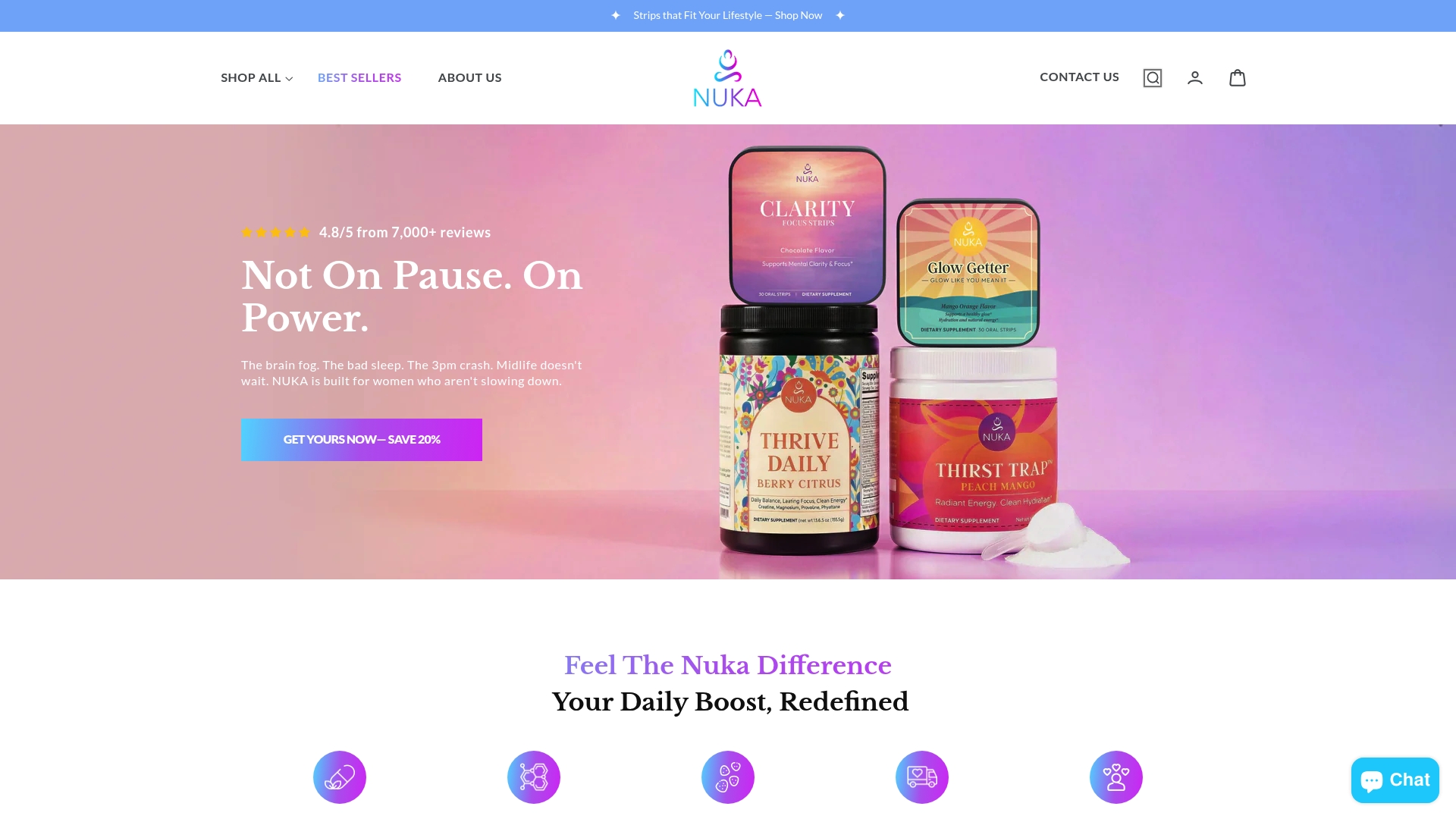
Browse the full lineup of Oral Strips and find the one that fits your routine.
This article is general information, not a substitute for advice from a qualified doctor. Consult a qualified healthcare professional about your own circumstances before acting on anything here.
FAQ
What helps with menopause sugar cravings?
Pairing protein, fiber, and healthy fat at every meal and snack is the most consistent fix, since it prevents the blood sugar spike and crash that often triggers a craving. Regular meal timing, better sleep, and short stress-reduction breaks also reduce how often cravings show up, according to The Menopause Society’s guidance on lifestyle measures during this transition.
What deficiency causes sugar cravings?
Sugar cravings are rarely caused by a single nutrient deficiency during menopause. They are more often tied to hormonal shifts, including falling estrogen and its effect on serotonin and insulin sensitivity, rather than a specific vitamin or mineral shortfall.
When you crave sugar, what should you eat instead?
Reach for a combination of protein and fiber, such as Greek yogurt with berries or an apple with almond butter, since this blunts the glycemic swing that drives the craving in the first place. A small portion of the craved food paired with protein or fat can also satisfy the urge without triggering a full spike and crash cycle.
Is it normal to have perimenopause for 10 years?
Perimenopause length varies widely from person to person, and a decade-long transition is within the range some women experience. Because hormone fluctuations during this stretch can affect appetite and sleep for years rather than months, ongoing craving management is a reasonable long-term expectation rather than a short-term fix.
Sources
- Menopause is associated with postprandial metabolism/metabolic health (KCL research)
- Study of Women’s Health Across the Nation (SWAN) — insulin and vasomotor symptoms
- Estrogen and Metabolism: Navigating Hormonal Transitions (peer-reviewed review)