

Electrolytes for Menopause: What You Need to Know
Why electrolytes matter so much during menopause
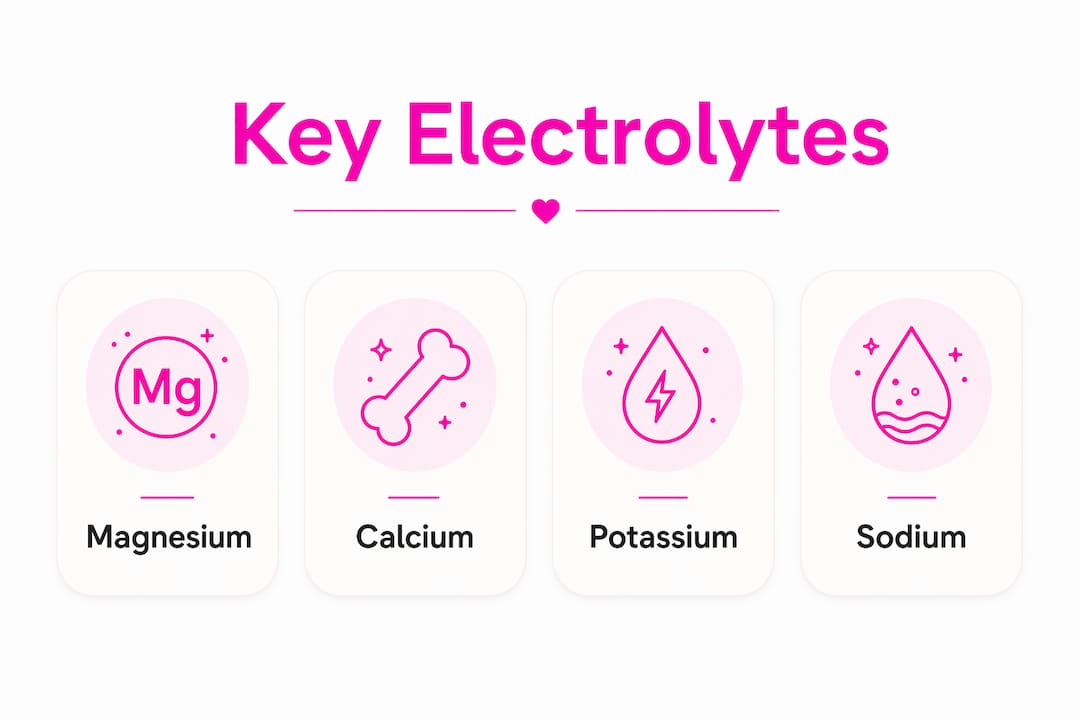
Sodium, potassium, magnesium, and calcium are the four electrolytes that do the heaviest lifting during menopause. They regulate how your cells hold water, how your nerves fire, how your muscles contract, and how your body manages temperature. When any one of them drops, you feel it fast: fatigue, dizziness, muscle cramps, brain fog, and worsening hot flashes.
What most women don’t realize is that menopause actively depletes these minerals through two separate mechanisms. First, hormonal shifts change how your kidneys handle sodium and fluid. Second, hot flashes and night sweats push you into a sweating cycle that drains minerals faster than plain water can replace them. The result is a chronic, low-grade electrolyte imbalance that looks a lot like “just menopause” but responds quickly to targeted replenishment.
Here’s what each one does for you specifically:
- Sodium: Maintains blood volume, supports nerve signaling, and regulates body temperature. It’s the mineral you lose most during a hot flash.
- Potassium: Balances fluid inside and outside cells, supports heart health, and helps prevent the blood pressure spikes that become more common after 45.
- Magnesium: Supports sleep quality, reduces anxiety, prevents muscle cramps, and plays a direct role in bone mineral density after menopause.
- Calcium: Keeps bones strong as estrogen declines, supports muscle contraction, and helps regulate heart rhythm.
How menopause changes your electrolyte balance
Declining estrogen is the root cause of most electrolyte disruption during the menopausal transition. Estrogen supports kidney sodium conservation, so as levels fall or fluctuate, the kidneys become less efficient at holding onto sodium. A walk that felt easy at 38 can drain your electrolytes noticeably at 48, even in mild heat.
Progesterone adds another layer. It acts as a natural diuretic, increasing urination frequency and accelerating the loss of sodium, potassium, chloride, and magnesium. During perimenopause, when progesterone levels swing unpredictably, this diuretic effect can be especially pronounced. The body loses minerals faster than it replaces them, and the thirst mechanism that would normally trigger drinking becomes blunted with age.
Hot flashes compound everything. A single episode can trigger profuse sweating that depletes a significant amount of sodium in minutes. Women experiencing frequent hot flashes daily can lose the equivalent of multiple days of dietary sodium through perspiration alone. That loss doesn’t just cause dehydration. It feeds a cycle: low sodium triggers more sweating, which causes more sodium loss, which worsens the next hot flash. Sodium replacement—especially a small dose before bed—can reduce night sweats by up to 90% within 7–14 days.
What each key electrolyte does for your symptoms
Sodium
Sodium is the foundation of hydration. Without enough of it, water passes through your cells without being absorbed, leaving you dehydrated even when you’re drinking plenty of fluids. For menopausal women with frequent hot flashes, sodium replacement is the single most direct intervention for breaking the dehydration-sweating cycle. A small dose before bed can reduce night sweats significantly within about a week by preloading mineral stores before hormonal fluctuations peak overnight.

Magnesium
Magnesium does more for menopausal women than almost any other mineral. It supports bone mineral density in postmenopausal women, improves sleep quality, reduces anxiety, prevents muscle cramps, and helps regulate body temperature. Deficiency correlates strongly with depression and anxiety, two symptoms that spike during hormonal transition. The form matters: magnesium glycinate and L-threonine offer superior absorption compared to less bioavailable forms like magnesium oxide, which also tends to cause digestive upset.
Potassium
Potassium works in tandem with sodium to regulate fluid balance. It helps counteract blood pressure spikes, prevents the muscle cramps that wake women up at 3 AM, and preserves bone density by reducing calcium loss through urine. Cardiovascular disease risk rises after menopause, and adequate potassium intake directly supports heart health during that transition.
Calcium
Calcium’s role in bone health during menopause is well established, but it also supports muscle contraction, nerve transmission, and cardiovascular function. Higher calcium intake is linked with reduced premenstrual syndrome risk, and magnesium intake should balance calcium for optimal effect. Calcium lactate absorbs better than calcium carbonate, particularly for women with lower stomach acid production, which becomes more common with age.
Best food and supplement sources for menopausal women
A food-first approach gives you minerals alongside fiber and antioxidants that support cardiovascular health during menopause. These are the most practical sources for each electrolyte:
- Sodium: Mineral-rich salts, broth, pickled vegetables, and olives. Avoid relying on processed foods, which deliver sodium alongside excess sugar and additives.
- Potassium: Avocados, bananas, sweet potatoes, white beans, spinach, and coconut water. Low-sodium V8 is a convenient option for a quick post-exercise recharge.
- Magnesium: Pumpkin seeds, dark chocolate, almonds, black beans, and leafy greens. Supplementing with magnesium glycinate at bedtime addresses both sleep and cramp issues simultaneously.
- Calcium: Dairy products, fortified plant milks, canned salmon with bones, kale, and bok choy.
When it comes to supplements, form and purity matter more than most labels suggest. Magnesium glycinate and L-threonate are the top choices for sleep, mood, and cognition. Calcium lactate outperforms calcium carbonate for absorption. And sugar content is a real concern: insulin resistance increases during menopause, and sugar worsens hot flashes, disrupts sleep, and accelerates abdominal weight gain. Choose electrolyte products sweetened with stevia or allulose, or unsweetened entirely.
Pro Tip: Try a 7-day electrolyte challenge: take one serving of a clean, sugar-free electrolyte supplement daily for a week. If your energy, sleep, headaches, and cramps improve noticeably, your body was running low. Many women are surprised by how quickly they feel the difference.
How much to take and when to take it
Timing your electrolyte intake around your symptom patterns makes a real difference. General daily targets for menopausal women are:
- Sodium: a higher intake level recommended for women with frequent hot flashes and night sweats
- Magnesium: a moderate daily dose, preferably in divided amounts
- Potassium: an intake primarily from food sources
- Calcium: a recommended amount from food and supplements combined
The timing strategies that work best in practice:
- Morning: Start with a moderate amount of water mixed with an electrolyte supplement before coffee. Caffeine is a diuretic, so preloading minerals first protects your hydration baseline.
- Before bed: Take sodium and magnesium shortly before sleep. This is a highly effective timing window for reducing night sweats.
- During a hot flash: Consume electrolytes at the first sign of onset. Underhydrated blood vessels dilate less effectively, which worsens palpitations and fatigue during an episode. Quick replenishment shortens both intensity and duration.
- Before exercise: Take electrolytes before activity. Menopausal women lose minerals through sweat faster than younger women due to altered thermoregulation.
- In hot weather: Increase baseline sodium intake to counteract added losses. Environmental heat compounds the internal temperature dysregulation from hot flashes.
For hydration volume, a practical formula: drink half your body weight in ounces per day, then add 8oz for each caffeinated drink and every 30 minutes of outdoor activity. A 160-pound woman walking for 30 minutes in summer heat would need around 100oz of fluid that day.
Drinking large amounts of plain water without electrolytes can actually dilute blood sodium, worsening fatigue, headaches, and muscle weakness. More water is not always the answer. Electrolyte-balanced water is.
What clinical observations and hormone experts say
The clinical picture on electrolytes and menopause has sharpened considerably. Electrolytes act as hormonal messengers that facilitate cell communication and temperature regulation, functions directly disrupted by declining estrogen. Daily steady intake, rather than reactive supplementation after symptoms spike, is what sustains hormone balance and symptom control across the full menopausal transition.
One clinical observation stands out: a patient experiencing severe night sweats several times per week over many months added a daily electrolyte supplement as the only change while awaiting test results. She reported dramatic improvement within a month, with very few night sweats in that entire period. The mechanism is straightforward: sodium breaks the dehydration cycle that perpetuates vasomotor symptoms.
The research supports this pattern. Women who maintained optimal electrolyte balance experienced 41% fewer severe hot flashes compared to those who were chronically dehydrated. Proper electrolyte balance also maintains blood volume to the brain, supports neurotransmitter function, and improves cognitive clarity and mood, three areas where menopausal women consistently report decline.
The phase-dependent nature of electrolyte needs is worth noting. Perimenopause, with its unpredictable hormonal swings, often requires more aggressive replenishment than established menopause. Women in perimenopause may notice their needs shift week to week depending on cycle irregularity, stress, and activity level. Consistent daily intake smooths out those fluctuations better than sporadic high-dose supplementation.
Interactions with menopause medications and health conditions
Electrolyte supplementation is generally safe, but several common menopause-related medications and conditions require attention before significantly increasing intake.
Hormone therapy (HT): Estrogen-based hormone therapy influences sodium and water retention through the renin-angiotensin-aldosterone system. Women on HT may retain more sodium than those not using it, so aggressive sodium supplementation warrants monitoring, particularly if blood pressure is already elevated.
Antihypertensives: ACE inhibitors, ARBs, and potassium-sparing diuretics (such as spironolactone) can raise blood potassium levels. Adding potassium supplements on top of these medications risks hyperkalemia. Women on any of these drugs should check with their prescribing physician before increasing potassium intake beyond food sources.
Diuretics: Thiazide diuretics, sometimes prescribed for blood pressure or fluid retention, deplete potassium and magnesium. In this case, supplementing both is often appropriate, but dosing should be guided by lab values rather than general targets.
Kidney disease: Impaired kidneys cannot regulate potassium and sodium excretion normally. Women with any degree of chronic kidney disease need individualized electrolyte guidance from a nephrologist or primary care provider.
Osteoporosis medications: Bisphosphonates like alendronate (Fosamax) and risedronate (Actonel) are not directly affected by calcium or magnesium supplementation, but timing matters. Calcium supplements taken within two hours of a bisphosphonate dose reduce absorption of the medication. Space them by at least two hours.
Thyroid conditions: Hypothyroidism, common in midlife women, can affect kidney function and fluid balance. Magnesium supplementation is generally well tolerated, but thyroid patients on levothyroxine should also separate calcium supplements from their medication by at least four hours.
How to monitor your electrolyte levels during menopause
Symptoms are the first signal, but lab tests give you the full picture. A standard comprehensive metabolic panel (CMP), available through any primary care visit, measures serum sodium, potassium, calcium, and bicarbonate. It also checks kidney and liver function, which affect how your body processes these minerals. Most clinicians recommend a CMP at least annually for women in perimenopause or menopause, and more frequently if you’re on medications that affect fluid balance.
Magnesium is the one electrolyte that a standard CMP often misses. Serum magnesium levels are routinely low in menopausal women, yet many providers don’t order the test unless symptoms suggest deficiency. Ask specifically for a serum magnesium test if you’re experiencing persistent muscle cramps, poor sleep, anxiety, or heart palpitations. A result below 1.8 mg/dL is considered deficient; optimal is generally 2.0–2.5 mg/dL.
A 24-hour urine collection gives a more accurate picture of calcium and sodium excretion than a single blood draw, particularly if you’re managing osteoporosis risk or have a history of kidney stones. Bone density scans (DEXA) track the downstream effect of calcium and magnesium status on skeletal health over time.
The practical approach: get a baseline CMP and serum magnesium at your next annual visit. If you start a new electrolyte protocol, recheck in 8–12 weeks. Symptoms that improve rapidly after supplementation, like the 7-day challenge described earlier, are a reliable functional indicator that you were running low, even when fasting labs looked borderline normal.
Pro Tip: Keep a simple symptom log for two weeks before your lab visit. Note hot flash frequency, sleep quality, energy levels, and any muscle cramps. This gives your provider context that blood values alone can’t capture, and it helps you track your own response to any changes you make.
Nukalove supports your menopause wellness, wherever you are

Nukalove is a women-owned wellness brand built specifically for every stage of menopause. The products are designed for real life: compact, travel-ready oral strips and supplements that fit in a purse, a carry-on, or a nightstand drawer. No bulky pill organizers, no mixing powders in a gym bag.
Whether you’re managing sleep disruption, brain fog, low energy, or the hydration challenges covered throughout this article, Nukalove’s menopause wellness collection was formulated with your specific needs in mind. The No Pause Power Pack™ bundles targeted support for energy, hydration, and mood into one convenient set, so you’re not piecing together a dozen separate products.
Key Takeaways
Electrolytes are not a wellness trend for menopausal women. They are a physiological requirement, and declining estrogen makes deficiency both more likely and more consequential.
| Point | Details |
|---|---|
| Sodium loss drives hot flash cycles | A single hot flash can deplete significant sodium; replacing it before bed can reduce night sweats by up to 90% within 7–14 days, according to clinical research. |
| Magnesium form determines results | Magnesium glycinate and L-threonate absorb far better than oxide and directly support sleep, mood, and bone density. |
| Plain water can worsen symptoms | Drinking large amounts of water without electrolytes dilutes blood sodium, worsening fatigue, headaches, and muscle weakness. |
| Timing matters as much as dose | Taking sodium and magnesium shortly before sleep is the most effective single intervention for night sweats. |
| Lab monitoring closes the loop | A standard CMP plus a serum magnesium test gives you the baseline data to guide supplementation and track progress. |