

5 Travel Friendly, Evidence Backed Steps to Ease Menopause Nausea
Yes, for some women, hormone shifts in perimenopause and menopause can trigger nausea, often alongside hot flashes or as a side effect of hormone therapy. The feeling is usually mild and comes and goes. If that describes you, the self-care steps below are worth trying first; you might also consider menopause bone loss: what women should do now for broader menopausal health guidance related to systemic risks. Severe, persistent, or worsening nausea deserves a clinician’s attention.
TL;DR:
- Hormone fluctuations during menopause can unpredictably affect gut motility and temperature regulation, leading to mild, intermittent nausea.
- Hot flashes and hormone therapy, especially when taken orally, are common triggers; switching to transdermal options often reduces nausea.
- Other causes like dehydration, low blood sugar, medications, or infections should be ruled out before attributing nausea to menopause.
- Immediate relief measures include sipping fluids, eating bland snacks, and using ginger or cool compresses, while lifestyle habits can reduce future episodes.
- Severe, persistent symptoms or associated signs of dehydration, bleeding, or neurological issues require prompt medical evaluation.
Table of Contents
- Why hormone changes trigger nausea in perimenopause and menopause
- What else could be causing your nausea besides menopause
- How to relieve nausea during menopause day to day
- When nausea during menopause needs medical attention
- Travel-friendly tactics that fit a busy routine
- What I’ve noticed about menopause nausea patterns
- Travel-ready hydration and support options from Nukalove
- FAQ
- Sources
Why hormone changes trigger nausea in perimenopause and menopause
Estrogen and progesterone do more than regulate your cycle. They also influence gut motility, the vagus nerve, and the brain’s nausea centers. When these hormones swing up and down during perimenopause, the gut can slow or speed up unpredictably, and that mismatch can feel like queasiness or an unsettled stomach.

Hot flashes add another layer. The same vasomotor surges that cause sudden heat and sweating can also come with a wave of nausea, since both share overlapping triggers in the body’s temperature and stress-response systems.
Hormone therapy itself can cause nausea, particularly when it is taken orally. According to the 2022 NAMS hormone therapy position statement, hormone therapy is highly effective for vasomotor symptoms, but nausea, bloating, and headaches are recognized adverse events. Switching from an oral pill to a transdermal patch or gel, or taking the medication with food, often reduces this side effect.
There is also newer research pointing to the gut microbiome as a piece of the puzzle. A review on diet, the gut microbiome, and estrogen physiology describes how declining estrogen during menopause reshapes the collection of gut bacteria known as the estrobolome, which may affect inflammation and digestion in ways that contribute to nausea and other gastrointestinal complaints. This is an emerging area, not a settled one, but it helps explain why some women notice digestive changes alongside hormonal ones.
What else could be causing your nausea besides menopause
Before assuming hormones are the culprit, it helps to rule out other common triggers. Several overlap directly with menopause symptoms, which can make the cause hard to pin down without a little detective work.
- Hot flashes, dehydration, and sudden temperature shifts can all provoke a wave of queasiness on their own.
- Low blood sugar from a skipped meal is worth testing: eat a small snack and see if the nausea eases within 20 to 30 minutes.
- New or adjusted medications, including oral hormone therapy or SSRIs, commonly cause nausea in the first one to two weeks, according to the NAMS nonhormone therapy position statement.
- A stomach bug, inner ear or vestibular issue, or, if relevant, pregnancy should also be considered and ruled out.
If nausea started right after a medication change or a string of rough nights with hot flashes, that timing is a strong clue.
How to relieve nausea during menopause day to day
Short-term relief and long-term habits work together here. Start with what calms your stomach right now, then build routines that reduce how often nausea shows up.
For immediate relief:
- Sip clear fluids slowly, such as water or ginger tea, rather than gulping a large glass at once.
- Eat small, bland snacks like crackers or dry toast to settle your stomach.
- Try ginger in tea, candied form, or lozenges, a remedy with a long track record for easing nausea.
- Apply a cool compress to your neck or forehead if a hot flash is part of the trigger.
- Slow your breathing for a minute or two, which can calm the vagus nerve and ease queasiness.
Over-the-counter antiemetics can help occasionally, but check with a pharmacist first since some interact with other medications you may be taking.
For daily strategies, Healthline’s overview of menopause nausea points to hydration, small frequent meals, and avoiding known triggers as the most consistently useful steps. Stabilizing blood sugar with regular meals, staying hydrated with water or an electrolyte drink, moderating caffeine and alcohol, dressing in layers to manage hot flashes, and keeping a simple log of when nausea strikes can all reduce how often it happens. Our guide to electrolytes during menopause walks through how fluid balance shifts in this stage of life.
When lifestyle steps are not enough, hormone therapy remains the most effective treatment for the vasomotor symptoms that often trigger nausea, according to ACOG’s guidance on managing hot flashes, though it carries its own nausea risk as noted above. Nonhormonal options such as certain SSRIs, SNRIs, or fezolinetant can also reduce hot flashes, but these medications may cause transient nausea of their own in the first week or two.
Pro Tip: Keep a simple note on your phone logging meals, hot flashes, and any new medication, so you and your clinician can spot patterns in minutes instead of guessing.
When nausea during menopause needs medical attention
Most menopause-related nausea is manageable at home, but certain signs call for prompt care: vomiting that will not stop, signs of dehydration, unexplained weight loss, blood in vomit or stool, or new neurological or heart and lung symptoms.
A clinician evaluating persistent nausea will typically ask about when it started, review your current medications, and may run basic labs or a pregnancy test if relevant. Depending on what they find, next steps might include adjusting or stopping a medication that is causing the problem, prescribing a short course of antiemetics, reconsidering your hormone therapy dose or delivery method, or referring you to a gastroenterologist or ENT specialist if something beyond menopause seems to be involved.
Travel-friendly tactics that fit a busy routine
As a wellness brand built around easy, on-the-go products, we think a lot about how symptoms like nausea show up when you are away from your usual kitchen and routine. A long flight, a skipped meal in an airport, or a sudden hot flash in an unfamiliar place can all make nausea worse.
Packing small hydration options, ginger lozenges, and portable snacks ahead of time means you are not scrambling when queasiness hits. Pacing yourself during a hot flash, by slowing down and sipping fluids rather than pushing through, tends to shorten how long the nausea lingers.

What I’ve noticed about menopause nausea patterns
In my reading and conversations around this topic, one thing stands out: nausea rarely shows up alone. It tends to ride along with a hot flash, a new medication, or a string of poor sleep, rather than appearing out of nowhere. Tracking those patterns for even a week or two often reveals the trigger. Small self-care steps help most people, but do not hesitate to loop in a clinician if something feels off. Some women find that simple, portable products like hydration strips fit naturally into that daily tracking habit.
— NUKA
Travel-ready hydration and support options from Nukalove
Staying hydrated is one of the simplest ways to take the edge off nausea, and that is harder to do consistently when you are traveling or juggling a packed schedule. We offer oral strips and hydration powder designed for ease of use on the go: no water bottle to mix, no refrigeration, just a quick strip or packet you can use between meals or during a hot flash.
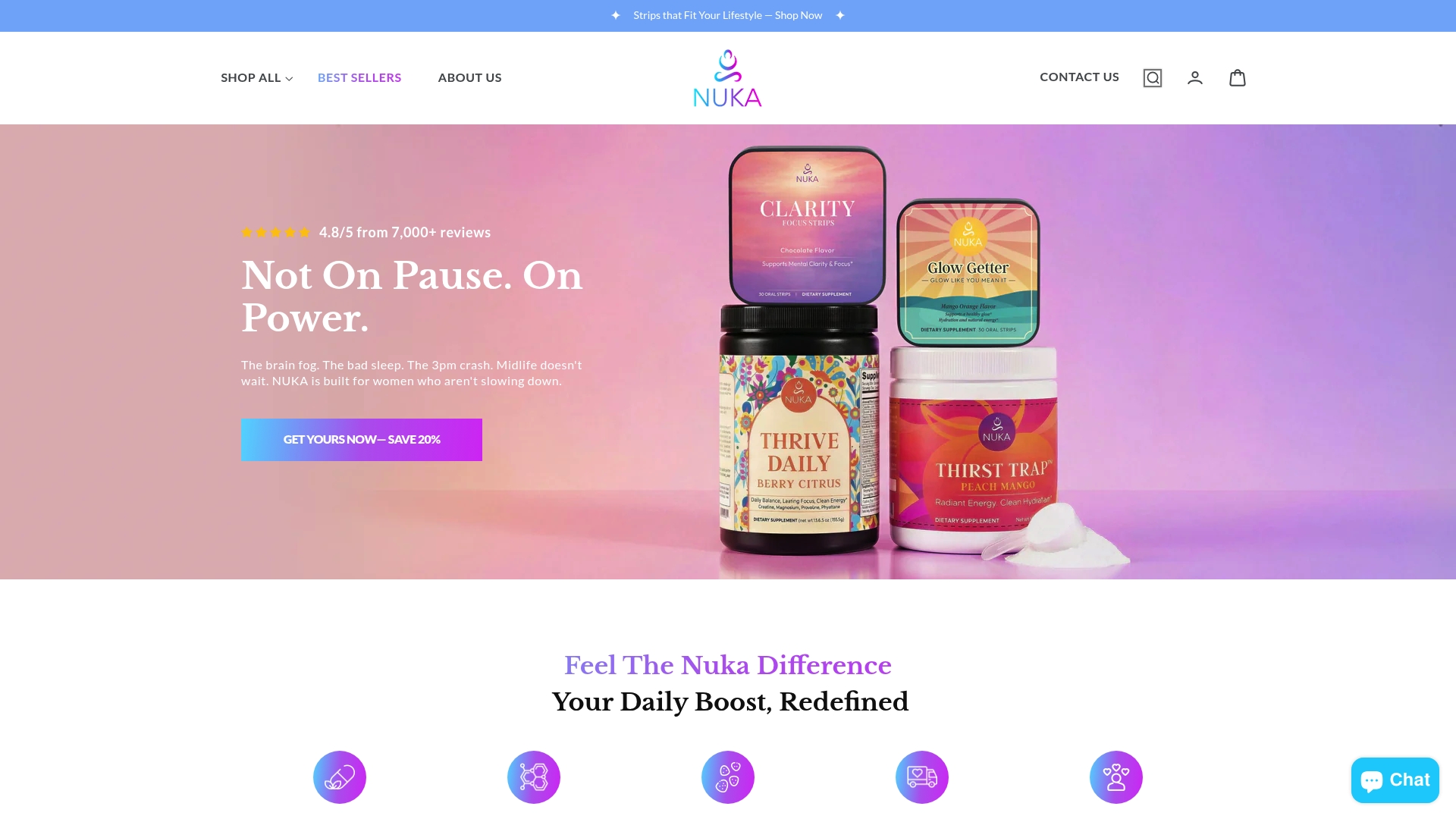
- Our Hydration Powder supports fluid and electrolyte balance when a hot flash or missed meal leaves you feeling off.
- Our Energy Strips offer a fast option for the sluggish, low-blood-sugar feeling that can accompany nausea.
- Our Oral Strips collection is worth browsing if you want a compact format that fits in a bag or pocket.
These are supportive tools for your daily routine, not a substitute for medical evaluation or a clinician-prescribed treatment. If your nausea is frequent or severe, see a provider first, then consider how a portable product might fit into the plan you build together. Browse our full wellness collection to find what fits your routine.
FAQ
What are the three stages of menopause?
The three stages are perimenopause, menopause, and postmenopause. Perimenopause is the transition period when hormone levels fluctuate and periods become irregular, menopause is marked by a full year without a period, and postmenopause refers to the years that follow, when hormone levels have settled at a lower baseline.
What can I do to feel better during menopause?
Staying hydrated, eating regular small meals, limiting caffeine and alcohol, and dressing in layers for hot flashes are among the simplest steps that help with multiple symptoms at once, according to Healthline’s guidance on menopause nausea. Hormone therapy and nonhormonal medications are additional options worth discussing with a clinician if lifestyle steps are not enough.
What are the common symptoms of menopause at 50?
Common symptoms around this age include hot flashes, night sweats, irregular or absent periods, mood changes, and sleep disruption, with some women also experiencing nausea tied to hormone swings or hot flashes. Symptoms vary widely from one woman to the next, and timing depends on where someone falls in the perimenopause to postmenopause transition.
How do I get rid of nausea related to hormone changes?
Small, frequent meals, clear fluids, and ginger in tea or lozenge form are commonly recommended first steps for hormone-related nausea. If nausea started after beginning hormone therapy, switching from an oral form to a patch or gel often helps, since oral hormone therapy is more likely to cause nausea according to the NAMS position statement.
Sources
- Diet, the gut microbiome, and estrogen physiology: A review in menopausal health and interventions — PMC
- The 2022 hormone therapy position statement of The North American Menopause Society — NAMS
- Menopause Nausea: Causes and Treatments — Healthline