

Fasting Vitamin Absorption: D3 Absorbs 32% Better With Food for Women
Fat-soluble vitamins (A, D, E, K) absorb best with a meal that contains fat, while plain electrolytes and filler-free water-soluble vitamins (B-complex, C) usually don’t interrupt a fast. The real line isn’t vitamins versus no vitamins: it’s calories and sugar. Gummies, flavored powders, and protein blends can trigger an insulin response, and vitamin D3 absorption rises by about 32% when taken alongside a meal rather than on an empty stomach.
TL;DR:
- For a strict metabolic fast, avoid gummies, flavored powders, protein blends, and BCAAs; check labels for calories, sugar, dextrose, maltodextrin, whey, and amino acids.
- Vitamin D3 absorption rose about 32% with a meal, so take vitamins A, D, E, and K alongside food containing fat, not during a fast.
- B complex or vitamin C capsules without fillers and electrolytes without sugar can fit a fast; take vitamins with meals if they cause nausea.
- People taking insulin or other medicines that can cause low blood sugar should consult a clinician before fasting, because dosing may need adjustment.
- Among postmenopausal women, reported B12 deficiency rates range from 6% to 30%; symptoms such as tingling or fatigue warrant testing, not self treatment.
Table of Contents
- Which Supplements Are Fasting-Friendly and Which Break a Fast
- How Fasting Affects Absorption: Fat-Soluble vs. Water-Soluble Vitamins
- Timing Rules for Vitamins and Supplements During Intermittent Fasting
- Menopause and Nutrient Considerations: B12, Vitamin D, and Absorption Risk
- Sample Supplement Schedules for 16:8 and Extended Fasts
- How Supplement Format and Labels Affect Fasting-Friendly Absorption
- A Practical Perspective on Vitamins, Fasting, and Fast-Friendly Formats
- Fast-Friendly Formats We Built for Women on the Go
- FAQ
- Sources
Which Supplements Are Fasting-Friendly and Which Break a Fast
Not every capsule or powder affects a fast the same way. The dividing line comes down to calories, sugar content, and whether the formula stimulates digestion or insulin release.
Generally fasting-safe:
- Plain, sugar-free electrolytes (sodium, potassium, magnesium without added glucose)
- Filler-free water-soluble vitamins like B-complex or vitamin C capsules
- Creatine monohydrate, which has no meaningful caloric load
- Most probiotics, as long as they’re not suspended in a calorie-containing base
Likely to break a metabolic fast:
- Gummy vitamins and chewables (sugar-based)
- Flavored electrolyte or vitamin powders with dextrose or maltodextrin
- Protein powders and BCAAs, which contain calories and amino acids that trigger digestion
Before taking anything during a fasting window, check the label for calories per serving, the words “sugar,” “dextrose,” or “maltodextrin,” and any listed whey, casein, or named amino acids. If any of those appear, save the product for your eating window.
How Fasting Affects Absorption: Fat-Soluble vs. Water-Soluble Vitamins
Fat-soluble vitamins need dietary fat to form the micelles that carry them across the intestinal wall, as explained in detail in this bone health guide on sun exposure and vitamin D. Without fat present, the body can only absorb a fraction of what’s in the capsule. A randomized trial found that vitamin D3 absorption increased by roughly 32% when the supplement was taken with the day’s largest meal compared to taking it on an empty stomach.
32% higher vitamin D3 absorption was measured when the supplement accompanied a meal versus a fasted state, according to a randomized trial. That gap is large enough to matter for anyone relying on a daily capsule to maintain healthy levels, especially during longer fasting windows when meals are compressed into a shorter part of the day.
Water-soluble vitamins work differently. They dissolve in the bloodstream and don’t require fat for uptake, but fasting still changes how the body handles them. A study on the urinary excretion of water-soluble vitamins in fasting humans and rats found that a single day of fasting dropped urinary thiamin excretion by 70% in a group of 12 healthy adults, a sign that the body shifts its metabolic handling of these nutrients rather than simply flushing them out unused. That doesn’t mean thiamin becomes dangerous to take while fasting. It suggests the body holds onto it differently when there’s no incoming food, which is worth knowing if you’re timing B-vitamin intake around a fasting schedule.

Some formulations attempt to work around the fat requirement for vitamins like D using emulsified or lipid-carrier delivery systems designed to improve uptake even without a meal. This is a practical insight from supplement formulators rather than an established rule, and most standard capsules still depend on dietary fat to absorb well.
Timing Rules for Vitamins and Supplements During Intermittent Fasting
The right timing depends partly on how strict your fasting goal is. If you’re fasting for a tight metabolic or fat-burning window, you’ll want to be more careful about anything that could trigger digestion. If your goal is general health or simply skipping breakfast, you have more flexibility.
A few practical rules cover most situations:
- Take fat-soluble vitamins (A, D, E, K) with a meal that contains some fat, never during the fasted window
- Water-soluble vitamins (B-complex, C) are generally fasting-safe, but move them to a meal if they cause nausea on an empty stomach
- Sugar-free electrolytes are fine during a fast and often help with headaches or fatigue in longer windows
- Magnesium and omega-3s absorb best with food, similar to other fat-soluble or fat-associated nutrients
Pro Tip: Keep fat-soluble vitamins in the kitchen, not the nightstand, so you automatically associate them with your first meal.
If you’re on insulin or a medication that carries hypoglycemia risk, fasting changes the calculus for dosing and timing. NIDDK guidance stresses working with a clinician before starting any fasting routine so medication can be adjusted safely. This applies whether you’re doing a 16:8 pattern or a longer fast, and it’s not optional for anyone managing blood sugar with medication.
Menopause and Nutrient Considerations: B12, Vitamin D, and Absorption Risk
Midlife women face a specific set of absorption challenges that make vitamin timing more than a minor detail. Postmenopausal women show B12 deficiency rates that vary widely across populations, roughly 6% to 30%, and deficiency at that stage has been linked to neurological and functional symptoms including sensorimotor changes. That range is wide partly because B12 status depends on diet, stomach acid production, and intrinsic factor availability, all of which can shift with age.
Supplement form matters here. B12 in supplements is typically in free form, which means it skips the protein-release step that food-bound B12 requires before absorption. That’s part of why a supplement can sometimes raise B12 status more reliably than diet alone for someone with reduced stomach acid, though absorption still depends on dose and how much intrinsic factor is available.
If you’re experiencing fatigue, brain fog, tingling in the hands or feet, or other symptoms that could point to a deficiency, testing is the only way to know for sure. A clinician can advise on whether a higher-dose oral form or an injectable option makes sense, since neither should be self-prescribed based on symptoms alone. For more on choosing B vitamins without falling for marketing hype, our primer on B vitamins for women’s energy breaks down what actually matters on a label.
Sample Supplement Schedules for 16:8 and Extended Fasts
Here’s how the timing rules play out across two common fasting patterns.
- 16:8 fasting, morning fasted hours: Take sugar-free electrolytes if needed, and a filler-free B-complex if your stomach tolerates it.
- 16:8 fasting, first meal: Take your multivitamin, vitamin D3/K2, and omega-3 together with food that contains some fat.
- Longer fasts, during the fast: Prioritize electrolytes for energy and headache prevention, and take B12 or creatine if they don’t cause stomach upset.
- Longer fasts, post-fast meal: Reserve all fat-soluble vitamins for this window, since it’s the only reliable chance to pair them with dietary fat.
If nausea is an issue, split doses between your first and second meal rather than taking everything at once. For travel days or mornings when pills get forgotten, a sublingual strip is easier to remember and doesn’t require water, which makes it a practical swap for people who fast on the go.
How Supplement Format and Labels Affect Fasting-Friendly Absorption
Format matters almost as much as timing. Gummies and flavored powders usually rely on sugar or syrup as a base, and that sugar content is often what triggers the insulin response that interrupts a fast, not the vitamin itself. Oil-based or emulsified capsules, by contrast, can improve fat-soluble vitamin absorption even in smaller meals, since the fat carrier is built into the formula.
For water-soluble nutrients, sublingual and oral-strip delivery offers a practical middle ground. These formats dissolve under or on the tongue, deliver minimal to no calories, and skip the digestive process that a pill or powder requires, which makes them a reasonable fasting-safe choice for B-vitamins or similar nutrients. Our guide to sublingual vitamin absorption covers what the evidence does and doesn’t support for this delivery method.
When reading labels, check for:
- Calories per serving, not just “serving size”
- Sugar listed under any name: dextrose, maltodextrin, sucrose, corn syrup
- Claims like “emulsified” or “lipid carrier,” which signal fat-soluble vitamins designed for better uptake
- The difference between “no added sugar” (may still contain natural sugars) and “zero calorie” (the stricter fasting-safe standard)
A Practical Perspective on Vitamins, Fasting, and Fast-Friendly Formats
Vitamin timing during fasting matters more than most people realize and less than supplement marketing suggests. The 32% absorption boost for vitamin D3 taken with a meal is a real, measurable effect, and it’s one of the few places where timing genuinely changes outcomes rather than just convenience. The same can’t be said for most water-soluble vitamins, where fasting shifts metabolic handling without clear evidence that it reduces effectiveness.
We design convenient formats, like dissolvable strips and hydration powders, because convenience shouldn’t come at the cost of nutrition: skip the fat-soluble vitamin, not the electrolytes. The conventional advice to just “take your vitamins whenever” ignores a documented absorption gap for fat-soluble nutrients. The practical fix isn’t complicated: anchor fat-soluble vitamins to a meal with fat, keep water-soluble options and electrolytes flexible, and pay attention to label sugar content before assuming any supplement is fasting-safe.
— NUKA
Fast-Friendly Formats We Built for Women on the Go
We offer oral strips and hydration powder for convenient use on the go. Our Oral Strips are fast-dissolving and designed for convenience and portability. Our hydration powder is designed for convenience on the go.
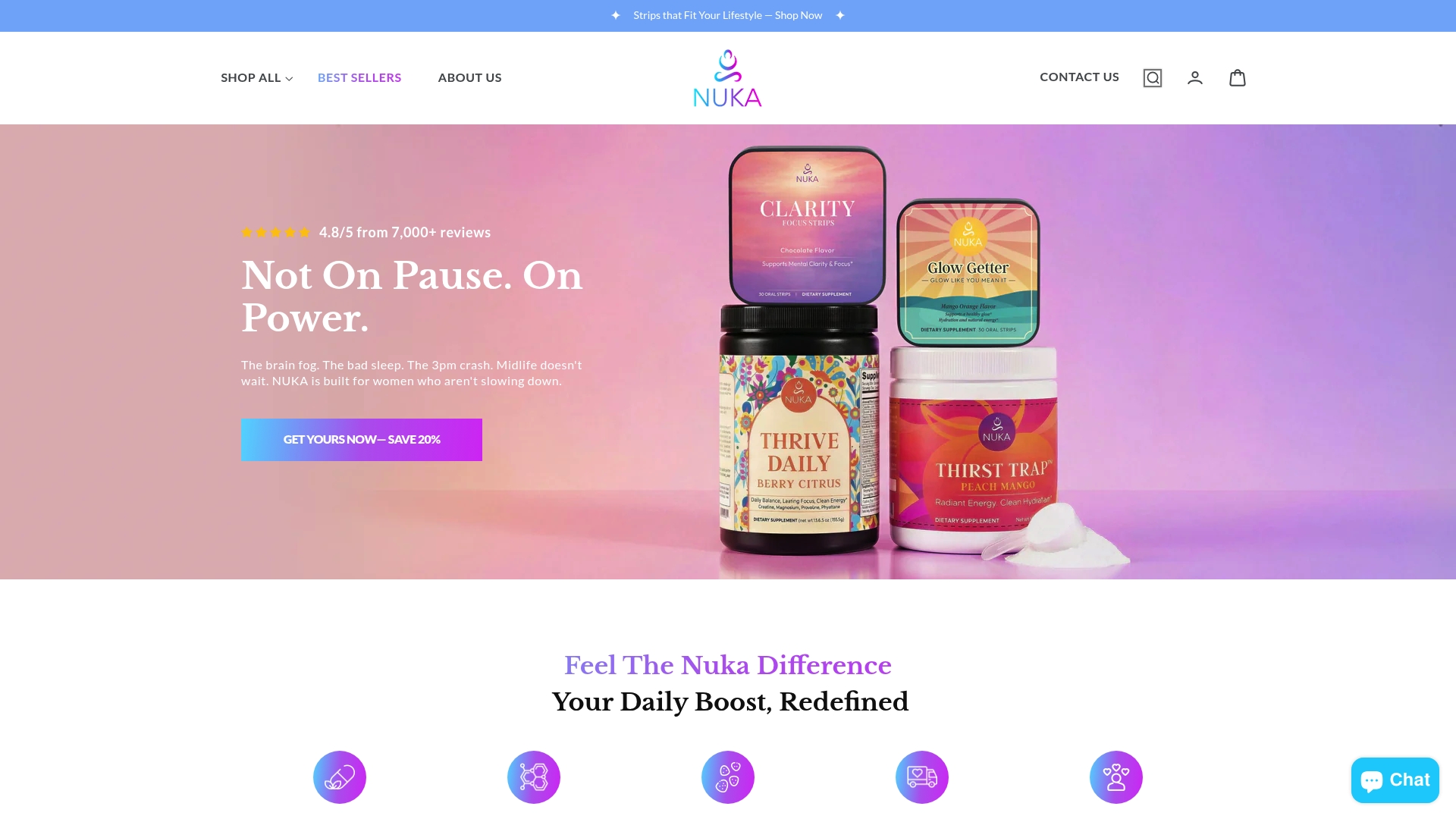
Every product is formulated for women’s needs during midlife and tested in certified labs for quality and safety, with the fast-dissolving format built for travel days, busy mornings, or anywhere a pill bottle and water glass aren’t practical. Browse our Energy Strips and other convenient formats to find what fits your routine.
This article is general information, not a substitute for advice from a qualified doctor. Consult a qualified healthcare professional about your own circumstances before acting on anything here.
FAQ
What vitamins not to take while fasting?
Avoid gummy vitamins, chewables, and flavored powders during a strict fasting window, since their sugar or filler content can trigger an insulin response and end the metabolic state you’re fasting for. Protein powders and BCAAs carry the same issue because they contain calories and stimulate digestion.
Why is 16 hours the magic number for fasting?
There’s no single mechanism that makes 16 hours uniquely effective, and fasting research covers a range of windows rather than one fixed number. The 16:8 pattern is popular mainly because it’s sustainable for most people, allowing an overnight fast plus a few extra hours without feeling extreme.
Is it healthy to fast for 3 days every week?
Fasting for extended multi-day periods carries more risk than shorter daily windows, particularly for people on medications like insulin, where NIDDK guidance stresses clinician involvement to avoid hypoglycemia. Anyone considering a multi-day fasting routine should talk to a healthcare provider first, since nutrient and medication needs change significantly over longer fasts.
What’s the best vitamin to take while fasting?
Filler-free water-soluble vitamins, such as a plain B-complex or vitamin C capsule, are generally the safest choice during a fasting window since they don’t require dietary fat and carry minimal calories. Fat-soluble vitamins like D3 and K2 absorb better when taken with a meal containing fat, so they’re best saved for your eating window.
Does taking vitamins on an empty stomach reduce absorption?
It depends on the vitamin. Fat-soluble vitamins absorb significantly less without dietary fat, shown by a roughly 32% increase in vitamin D3 absorption when taken with a meal, while water-soluble vitamins don’t have the same fat requirement.
Sources
- Pubmed
- Effect of fasting on the urinary excretion of water-soluble vitamins in humans and rats
- Nih
- Vitamin B12 - Health Professional Fact Sheet
- Correlation of Vitamin B12 Deficiency with Sensorimotor Deficits in Postmenopausal Women: A Cross-sectional, Observational Study - PMC