

Yes, Vegan Supplement Strips Are Worth Trying in 2026
Vegan supplement strips are a legitimate, plant-based way to get nutrients like B12, biotin, and vitamin D3 without swallowing a pill, and for most health-conscious adults juggling travel and daily routines, they’re worth adding to your cabinet. If you want a travel-ready option built specifically for real-world use, Nuka Love’s strip lineup, including GLOW GETTER for skin and hair and GO GIRL for an afternoon boost, is the pick to start with.
Here’s the quick tradeoff before you buy:
- Pro: Dissolves in seconds, no water needed, easy to pack flat in a bag or wallet.
- Pro: Vegan formulations sidestep gelatin-based capsules and animal-derived D3.
- Con: Potency per strip tends to run lower than a high-dose capsule, so strips suit maintenance, not deficiency correction.
Key Takeaways
Vegan supplement strips work best as a daily maintenance tool for nutrients like B12 and D3, not as a fix for a diagnosed deficiency.
| Point | Details |
|---|---|
| Strips suit maintenance, not correction | Use strips for daily upkeep; consult a clinician and consider higher-dose options for confirmed deficiencies. |
| B12 is the priority nutrient | Plant-based eaters should prioritize B12 strips first, since it’s the nutrient most commonly missing from vegan diets. |
| Check potency and certification | Verify mcg or IU per strip and confirm lichen-sourced D3 or third-party testing before buying. |
| Format matters for adherence | Choose a travel-friendly, no-water format if pill fatigue or travel has derailed past supplement routines. |
| Nuka Love fits travel-first routines | GLOW GETTER and GO GIRL offer vegan, portable strips built specifically for midlife women’s energy and skin goals. |
Table of Contents
- What Are Vegan Supplement Strips and How Do They Work?
- Who Should Consider Vegan Supplement Strips?
- Which Nutrients Come in Vegan Strip Form?
- How Do You Use Supplement Strips and What’s the Dosing Timeline?
- What Should You Look for When Choosing a Vegan Strip?
- Are There Safety Concerns With Supplement Strips?
- Nuka Love’s Vegan Strip Lineup: What It Offers and Why It Fits
- Where Can You Buy Vegan Supplement Strips and What Do They Cost?
- Why I’d Point Health-Conscious Women Toward Strips First
- A Vegan Strip Made for Travel and Real Routines
- Frequently Asked Questions
What Are Vegan Supplement Strips and How Do They Work?
A vegan supplement strip is a thin, dissolvable film, usually made from a plant-derived polymer like pullulan, that carries a measured dose of a vitamin or active ingredient. You place it on or under your tongue, and it breaks down in seconds to a minute, releasing the nutrient into your mouth without a swallow required.
That delivery method matters more than it sounds like it should. Sublingual placement (under the tongue) allows some absorption directly through the mucous membrane, bypassing part of the digestive process. Buccal placement (against the cheek) works similarly. Both differ from a capsule, which has to survive stomach acid before your gut absorbs anything. Whether strips genuinely boost absorption compared to a standard tablet is still debated among formulators, but the convenience factor isn’t: no water, no aftertaste from a hard-to-swallow capsule, no chalky residue.
You’ll typically find strips packaged three ways:
- Individual single strips in resealable pouches, ideal for a purse or carry-on.
- Blister packs that separate each dose, useful for tracking daily intake.
- Multi-strip pouches with 20 to 30 strips, better value for daily users.
Packaging claims are worth reading closely. “Vegan” should mean no gelatin, no animal-derived vitamin D3 (lanolin-sourced), and no beeswax binders. “Sugar-free” usually means a sugar alcohol like xylose or stevia replaces sucrose. “Third-party tested” means an outside lab verified the label’s claims, which is a meaningfully different standard than a brand simply saying it’s clean.
Who Should Consider Vegan Supplement Strips?
Strips fit best into a specific kind of routine, not every routine. If you travel often, hate swallowing pills, or run a plant-based diet that leaves gaps in B12 or D3, strips solve a real problem.
Run through this quick checklist:
- You fly or drive frequently and want something TSA-friendly that won’t spill in a bag.
- You’ve avoided taking supplements consistently because pills feel like a chore.
- You eat a strict plant-based diet and know you’re not getting B12 from food alone.
- You want a simple, one-a-day maintenance habit rather than a multi-pill regimen.
- You’re managing mild energy or focus dips and want something fast-acting for occasional use.
Strips are less ideal if you’re correcting a diagnosed deficiency, managing a complex stack of five or more supplements, or need doses higher than what a thin film can practically hold. Someone with confirmed anemia needing therapeutic iron, for example, won’t get there with a strip. Iron rarely appears in strip form at all, partly because effective doses are bulky and partly because it can irritate oral tissue at higher concentrations.
Which Nutrients Come in Vegan Strip Form?
B12 dominates the vegan strip category, and for good reason. Because B12 comes almost exclusively from animal products in nature, plant-based eaters are consistently flagged as a group at risk for deficiency, and a fast-dissolving format is a low-friction way to close that gap daily. Formats like Wellbeing Nutrition’s melts B12 strips pair B12 with folate, a common combination since the two work together in red blood cell formation.
Beyond B12, here’s what shows up regularly:
- Vitamin D3 from lichen, the plant-based alternative to sheep’s-wool-derived D3, common in strips marketed as vegan-certified.
- Biotin, frequently included in skin and hair-focused strips.
- B-complex components like B6 and B12 together, often marketed for energy support.
- Caffeine or natural energy blends, found in strips meant for an afternoon lift rather than daily nutrient maintenance.
- Iron, rarely available in strip form, worth noting as a real limitation of the format.
One brand example worth studying: Wellbeing Nutrition’s Essential Vitamins strip combines vegan D3 and B12 in a single film, suggesting daily use timed after breakfast or lunch, a pattern that’s becoming standard across the category.
Label math matters here. B12 strips often list doses in micrograms (mcg), while D3 usually appears in international units (IU). A strip delivering 1,000 to 2,500 IU of D3 is a reasonable daily maintenance dose for most adults, but it’s nowhere near the 50,000 IU weekly prescription dose a doctor might use to correct a severe deficiency. Compare the strip’s per-serving number against what you’d get from a standard capsule before assuming they’re interchangeable.
Pro Tip: Use a strip as your daily maintenance layer, not your fix for a known deficiency. If a blood test shows you’re significantly low on B12 or D3, talk to a clinician about a higher-dose capsule or injection first, then switch to a strip once your levels normalize.
Experts in plant-based nutrition frequently point to B12 as the single most common gap for vegans and vegetarians, and note that easier formats tend to reduce what’s sometimes called “supplement fatigue,” the tendency to quit a pill routine within a few weeks. A strip you can take without water removes one more excuse to skip a dose.

How Do You Use Supplement Strips and What’s the Dosing Timeline?
Using a strip is almost embarrassingly simple, but the details around timing and dosage are where people get it wrong.
- Open the individual packet and remove the strip with dry fingers, since moisture can cause it to start dissolving prematurely.
- Place it on your tongue (sublingual) or against the inside of your cheek (buccal), depending on the product’s instructions.
- Let it dissolve fully, typically 15 to 60 seconds, without chewing or swallowing it whole.
- Avoid food or water for a few minutes afterward if the label recommends it, since swallowing too soon can reduce the intended absorption window.
Timing depends on what’s in the strip. B12 and B-complex strips are commonly taken once daily, often recommended post-breakfast to pair with a meal. Energy strips containing caffeine work differently: onset is usually within 15 to 30 minutes, similar to coffee, and effects taper within a few hours, so they’re built for as-needed use rather than a fixed daily schedule.
A few habits worth building:
- Check the “supplement facts” panel for the exact active dose per strip, not just the ingredient name.
- Store strips in a cool, dry place. Humidity is the enemy of a dissolvable film, and a strip left in a hot car can degrade or clump.
- Note the expiration date. Thin-film supplements can lose potency faster than tablets if stored poorly.
If you’re using strips to try to correct a confirmed deficiency rather than maintain healthy levels, the potency likely isn’t enough. That’s a case for a clinician-guided higher-dose approach, not a daily strip.
What Should You Look for When Choosing a Vegan Strip?
Not all strips are created equal, and the differences show up fast once you start comparing labels side by side.
Run through this checklist before you buy:
- Vegan certification and ingredient sourcing. Look specifically for D3 sourced from lichen rather than lanolin, and confirm no gelatin or beeswax in the film base.
- Active dose per strip. Match the mcg or IU listed against your actual daily needs, not just the marketing claim on the front of the box.
- Third-party testing or a Certificate of Analysis. Independent verification, the kind tracked by organizations like Clean Label Project, tells you the label matches what’s actually in the product.
- Full ingredient transparency. Check for fillers, artificial sweeteners, and allergen statements, especially if you have sensitivities to common strip binders.
- Flavor and pack size. A strip you dislike the taste of won’t get used consistently, no matter how well-formulated it is.
- Price per serving. Divide total cost by strip count to compare fairly across brands.
Your priorities shift depending on your goal. If B12 is the main target, potency and lichen-sourced D3 verification matter most. If you’re after skin and hair support, look for biotin content and whether the formula includes collagen-supporting cofactors. If energy is the goal, check the caffeine source and whether it’s paired with anything that smooths the crash, like L-theanine.
Pro Tip: A higher price per strip is often justified when it buys you a specialized active ingredient (like lichen-derived D3) or documented third-party testing. It’s not justified when it’s just paying for flavor variety or packaging design.
Multi-nutrient formats, like the daily vegan blends compared in broader supplement roundups, show why iron and calcium rarely make it into strip form: the effective doses are simply too bulky for a thin film, which is a real limitation worth knowing before you assume a strip covers everything a multivitamin would.
Are There Safety Concerns With Supplement Strips?
Strips are generally low-risk, but a few things deserve real attention before you build a daily habit around them.
B vitamins, including B12 and B6, have wide safety margins at typical maintenance doses, but very high daily B6 intake over long periods has been linked to nerve issues in rare cases. Stimulant strips containing caffeine carry the same cautions as coffee or energy drinks: avoid stacking multiple caffeine sources, and be cautious if you have a heart condition, anxiety disorder, or sensitivity to stimulants. Sugar alcohols used in some sugar-free formulas, like xylose, can cause digestive discomfort in people who are sensitive to them, so check the excipient list if you have a sensitive gut.

Drug interactions are worth a moment’s thought even with something as mild as a vitamin strip. High-dose B vitamins can interact with certain medications for seizures or Parkinson’s disease, and anyone on blood thinners should check any new supplement, strip or otherwise, with their prescriber first.
A few situations call for a clinician conversation before you start:
- You suspect an existing deficiency rather than just wanting general maintenance.
- You’re pregnant or breastfeeding and considering a new supplement routine.
- You manage a chronic condition or take prescription medication regularly.
- You’re considering doses beyond what’s listed as a standard daily serving.
Pro Tip: If you’re trying a new strip mainly to see how you feel, log energy, mood, and sleep quality daily for four to eight weeks before deciding whether it’s working. That gives you real data instead of a guess, and it’s useful information to bring to a doctor if you eventually decide to get blood work done.
Nuka Love’s Vegan Strip Lineup: What It Offers and Why It Fits
Nuka Love builds its strip line around a specific problem: women juggling midlife hormonal shifts, travel schedules, and a preference for plant-based products that don’t require a pill organizer. GLOW GETTER targets skin and hair support in a single travel-friendly strip, while GO GIRL delivers a portable afternoon energy lift without needing water or a coffee run.
What stands out across the lineup:
- Plant-based positioning built into the formulation from the start, not retrofitted onto an existing pill product.
- Travel-friendly packaging designed to survive a purse, carry-on, or gym bag without spilling or melting.
- Subscription and bundle options, like the multi-strip bundle, for people who want a recurring supply without reordering manually.
- Additional formats in development, including CLARITY focus strips built around lion’s mane and cordyceps, and DEEP ZZZS sleep strips, rounding out a routine beyond just energy and skin support.
Nuka Love’s own travel supplement guide breaks down why compact formats hold up better than pill bottles on the road, and the brand’s energy strip guide for menopause walks through what to prioritize if hormonal energy dips are the main issue you’re solving for. Product pages list full ingredient details and pack sizes so you can check potency before you commit to a subscription.
Where Can You Buy Vegan Supplement Strips and What Do They Cost?
Most vegan strips sell direct from the brand’s own website, which tends to be the safest channel for verifying you’re getting an authentic, correctly stored product rather than something that sat in a hot warehouse for months. Marketplaces offer convenience but make it harder to confirm batch freshness. Specialty health retailers sometimes carry a curated selection, though inventory and pricing vary by location.
Price per strip typically depends on the active ingredient’s cost and whether the brand pays for third-party testing. Simple B12 maintenance strips tend to sit at the lower end of the category, while strips built around specialized actives (functional mushrooms, lichen-sourced D3, biotin blends) usually cost more per serving.
A few buying habits worth adopting:
- Start with a single product or small pack before committing to a subscription, so you can confirm you like the taste and format.
- Check whether a bundle, like a multi-strip pack, actually lowers your price per serving compared to buying items individually.
- Confirm the listed potency per strip before subscribing to recurring shipments, since formulations occasionally update.
Why I’d Point Health-Conscious Women Toward Strips First
Strips solve a problem that pills never actually fixed: consistency. Most people don’t fail at supplements because the ingredients are wrong, they fail because the format doesn’t fit real life. A strip that dissolves in your car, on a plane, or between meetings gets used. A pill bottle left in a suitcase does not. For women navigating midlife energy shifts and packed travel schedules, that reliability matters more than a marginal difference in absorption science.
Before you buy anything, verify three things yourself: vegan certification on the label, the actual potency per strip in mcg or IU, and whether the brand publishes any third-party testing. Those three checks separate a well-made product from a marketing wrapper.
[Editorial note: author professional qualifications and credentials related to menopause and wellness to be inserted here, along with case studies or clinical results supporting oral strip efficacy.]
A Vegan Strip Made for Travel and Real Routines
Every option covered so far, from B12 melts to multivitamin blends, solves part of the puzzle. Nuka Love was built to solve the whole thing for a specific person: a woman who wants plant-based support that survives a suitcase and doesn’t require a pill organizer to manage.
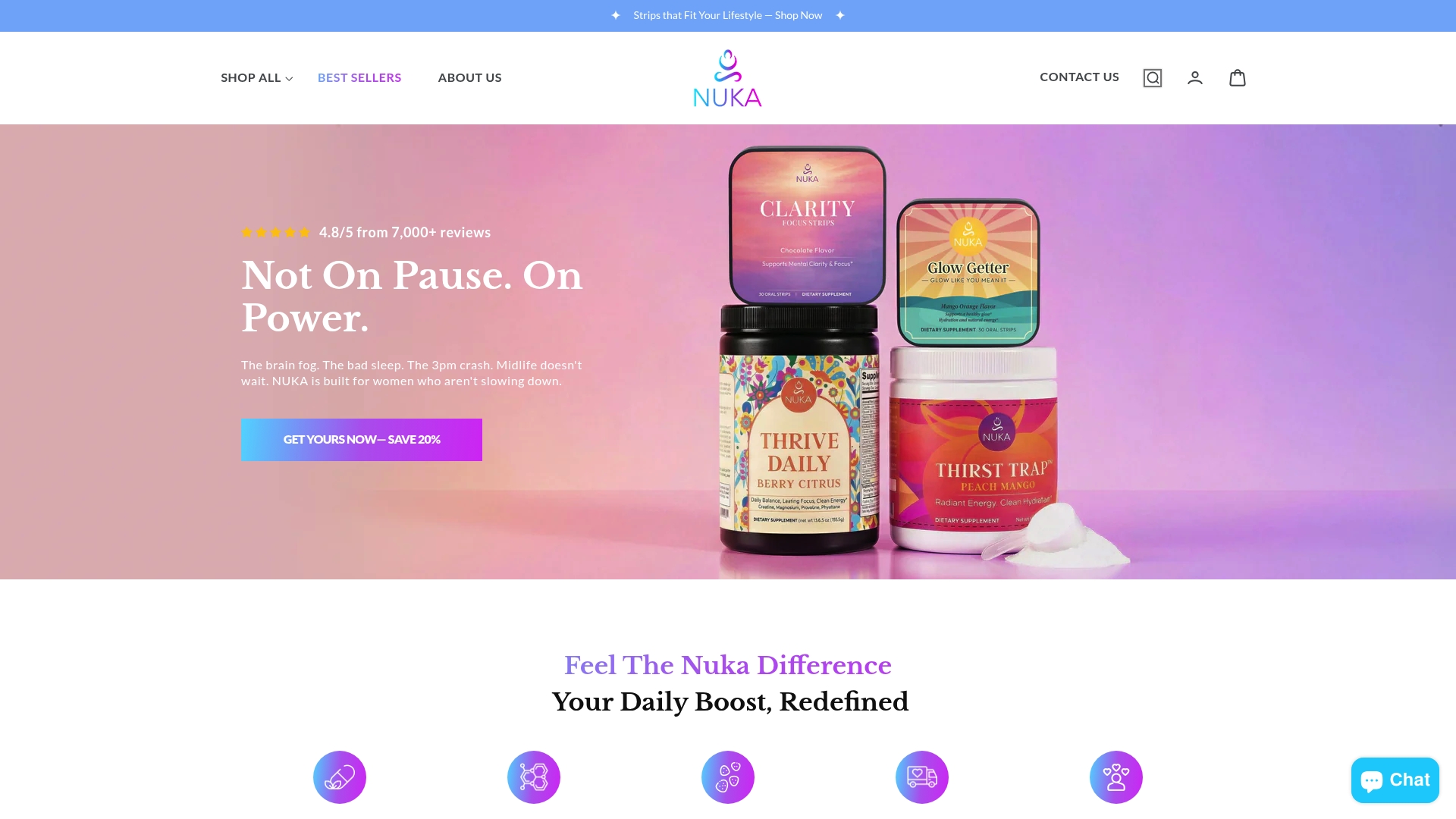
GLOW GETTER is the clearest starting point if skin and hair support is your priority, formulated as a single dissolvable strip you can toss in a bag without a second thought. If energy dips are the bigger issue, GO GIRL delivers a fast, portable lift for exactly the afternoons that used to send you to a coffee shop. Both are built around the same idea: plant-based ingredients, transparent labeling, and a format that actually fits into a day that doesn’t slow down for a pill routine. Check the product pages for current pack sizes and bundle pricing, and pick the strip that matches whichever goal feels most urgent right now.
Frequently Asked Questions
Do vegan supplement strips actually work as well as pills? For maintenance-level nutrients like B12 and D3, strips deliver comparable doses to many standard capsules. They’re not designed to replace high-dose therapeutic supplementation for a confirmed deficiency.
How long does it take to feel effects from a supplement strip? Energy strips with caffeine typically produce noticeable effects within 15 to 30 minutes. Micronutrient strips like B12 work more gradually, often taking several days to weeks of consistent use before you notice a difference in energy or mood.
Are all supplement strips vegan by default? No. Some use gelatin in the film base or lanolin-derived vitamin D3. Always check for explicit vegan certification or a vegan claim on the label rather than assuming.
Can I take multiple different supplement strips in one day? Generally yes, as long as you’re not duplicating the same active ingredient across products or exceeding recommended daily limits. Check combined totals for anything like caffeine or B6 across all products you use.
What’s a reasonable price per serving for a quality vegan strip? Pricing varies by active ingredient and testing standards, so compare cost per strip across brands rather than judging by box price alone, and weigh it against whether the brand publishes third-party testing.
This article is general information, not a substitute for advice from a qualified doctor. Consult a qualified healthcare professional about your own circumstances before acting on anything here.