

Traveling Women: Avoid These Supplement Strip Side Effects
Yes, supplement strips can cause side effects, and they’re generally tied to what’s dissolved into the film rather than the film itself. The most commonly reported reactions are gastrointestinal upset, headache, dizziness, and mild mouth irritation, most linked to active ingredients like caffeine, melatonin, or B vitamins. Severe symptoms, including trouble breathing, chest pain, or swelling, mean you stop use immediately and get medical care.
TL;DR:
- Supplement strips containing stimulants like caffeine or herbal botanicals can cause rapid increases in blood pressure, heart rate, and sleep disturbances if taken too close to bedtime.
- Proprietary or undisclosed ingredient blends make it impossible to gauge actual active doses, raising the risk of overdose or adverse reactions.
- Mild side effects such as mouth irritation, gastrointestinal upset, or allergic reactions are common, especially with flavoring agents or acidity levels in formulations.
- Long-term daily use of fat-soluble vitamins or stimulants can lead to accumulation in the body and increased risk of toxicity or cardiovascular strain.
- Reputable brands disclose exact ingredient amounts, avoid hidden blends, and include child safety and manufacturer contact details on packaging.
Table of Contents
- What Are Supplement Strips and How Does the Film Work?
- Why Do Strips Change How Fast Effects Hit?
- What Systemic Side Effects Show Up Most Often?
- Can Strips Cause Mouth Irritation or Staining?
- Which Ingredients Carry the Most Risk?
- How Do You Spot a Poorly Labeled Strip?
- What Should You Do If a Strip Causes a Reaction?
- How Can You Reduce Your Risk Before You Buy?
- Do Supplement Strips Carry Long-Term Risks?
- Can You Build a Tolerance or Dependency on Strips?
- How Do Side Effects Compare Across Strip Types?
- Are Supplement Strips Regulated Like Medications?
- Does the Dose on the Strip Actually Match What You Feel?
- Nukalove’s Perspective on Strip Safety and Transparency
- Travel-Ready Strips Built for Ingredient Transparency
- Sources
- FAQ
What Are Supplement Strips and How Does the Film Work?
Oral dissolving strips are thin films, often the size of a postage stamp, that carry vitamins, melatonin, caffeine, or other actives directly onto your tongue. Once placed against the tongue or inner cheek, the film breaks down in seconds to a couple of minutes, releasing its ingredients into saliva and, for some compounds, into the tissue lining the mouth. This is different from a capsule or gummy, which has to survive stomach acid and digestion before anything gets absorbed.
That difference in delivery route matters more for timing than for safety. A strip doesn’t make an ingredient inherently more dangerous; it just changes how fast that ingredient shows up in your system and how quickly you feel it.
Why Do Strips Change How Fast Effects Hit?
Bypassing part of the digestive process can speed absorption for certain ingredients. Sublingual B12 and melatonin, for instance, can enter the bloodstream faster through tissue under the tongue than through a swallowed tablet, according to Boots HealthHub’s coverage of dissolving vitamin films. Faster absorption often means a faster, sometimes sharper, peak effect.
That matters most for people sensitive to stimulants or sedatives. If a caffeine strip hits your bloodstream quicker than a cup of coffee would, the jittery feeling or racing heart can feel more intense, even at the same total dose. The practical fix is simple: treat timing like part of the dose. Skip stimulant strips within six hours of bedtime, and don’t take a sleep strip if you still need to drive or operate machinery. Our guide on sublingual versus oral absorption breaks down why melatonin strips can peak in as little as 20 to 23 minutes, much faster than a swallowed pill.
What Systemic Side Effects Show Up Most Often?
Most systemic reactions to supplement strips trace back to the active ingredients, not the delivery format, according to Drugs. The pattern of complaints tends to fall into a few predictable buckets.
- Gastrointestinal: nausea, stomach upset, diarrhea, or constipation, usually dose-related and tied to specific vitamins or minerals in the blend.
- Neurologic: headache, dizziness, or disrupted sleep, particularly with stimulant or melatonin formulations.
- Allergic reactions: hives, itching, or swelling of the lips, tongue, or throat, which can escalate quickly and need urgent attention.
Quick fact: Reported adverse events for oral supplement products commonly include skin reactions, digestive complaints, and, less often, blood sugar or vision changes, according to Drugs.com. Severity and frequency depend entirely on the formulation and your own health history. Someone with a sensitive stomach reacts differently to an iron-containing strip than someone without one, and a person on blood pressure medication reacts differently to a caffeine strip than someone who isn’t.
Can Strips Cause Mouth Irritation or Staining?
Direct contact with oral tissue is the main reason strips cause problems pills don’t. Because the film sits against your tongue or cheek while it dissolves, flavor agents, preservatives, and certain actives can irritate the mucosa before anything even reaches your bloodstream.
- Irritation or burning: often from mint or citrus flavoring agents, or from higher acidity in certain formulations.
- Lingering aftertaste: common with B vitamins and some herbal actives, usually harmless but occasionally unpleasant enough to affect compliance.
- Temporary staining: less common, but ingredients like methylene blue used in some specialty strips can leave a temporary tint on the tongue or teeth.
Pro Tip: If a strip leaves your mouth stinging or burning for more than a few minutes, don’t push through it. Rinse with water, skip the next dose, and check the ingredient list for alcohol content or unfamiliar flavor compounds before trying that product again.
Mild, short-lived irritation is usually not a medical emergency. Irritation that spreads, swelling anywhere in the mouth or throat, or a reaction that doesn’t fade within an hour needs a call to your pharmacist or doctor.
Which Ingredients Carry the Most Risk?
Not every strip carries the same risk profile, and the biggest red flags cluster around stimulants and prenatal formulas.
- Stimulants (caffeine, guarana, other stimulant botanicals): can trigger palpitations, tachycardia, and insomnia. The Cleveland Clinic notes that stimulant-based supplements can cause racing heart, restlessness, and sleep disruption, and people with heart conditions or anxiety disorders should talk to a clinician before using them.
- Prenatal or multivitamin strips: dosing precision matters here, and so does storage. Strips look and taste like candy to a toddler, and Drugs.
- Medication interactions: strips containing iron, calcium, or herbal actives can interact with prescription drugs. A pharmacist can check this in minutes, and it’s worth doing before you start any new strip regularly.
How Do You Spot a Poorly Labeled Strip?
Proprietary or “hidden” blends are the single biggest red flag on a supplement label, because you can’t judge dose, interaction risk, or even whether you’re getting enough of an active ingredient to matter, as detailed in Здравословни добавки за кафе: вкус, ползи и безопасност — Neurofuel™️. Undisclosed concentrations make it impossible to compare products or gauge your own tolerance.
- Check for exact active amounts, not just an ingredient list with no milligram figures attached.
- Look for allergen statements covering common triggers like soy, tree nuts, or gluten.
- Confirm stimulant content is stated in milligrams, not buried inside a “proprietary energy blend.”
- Find manufacturer contact information and child-safety warnings printed on the packaging.
Pro Tip: If a label leans on vague claims like “clinically proven” without naming a dose or a study, treat that as a warning sign rather than a selling point.
What Should You Do If a Strip Causes a Reaction?
Stop using the product right away if you notice hives, facial or throat swelling, chest pain, trouble breathing, or a racing heartbeat that doesn’t settle down. These aren’t symptoms to wait out.
- Save the packaging and note the exact product name and lot number.
- Write down the time you used it and every symptom you noticed, in order.
- Call 911 or go to urgent care for breathing trouble, swelling, or chest pain; call your primary care provider or pharmacist for milder, lingering symptoms.
DailyMed’s product listings include manufacturer safety instructions worth checking before you toss the box, since they often specify exactly what to do if irritation or an adverse reaction occurs.
How Can You Reduce Your Risk Before You Buy?
A little caution before you ever open the package prevents most bad reactions.
- Start with a single strip and track how you feel over the next few hours before assuming it’s safe to use daily.
- Avoid stacking multiple stimulant products, like an energy strip and your regular coffee, on the same day until you know your tolerance.
- Choose full ingredient disclosure over proprietary blends whenever exact dosing matters to you.
- Talk to a clinician or pharmacist first if you’re pregnant, nursing, managing a chronic condition, or taking regular medication.
Pro Tip: Keep a simple note on your phone logging which strip, what time, and how you felt. It takes thirty seconds and gives you (and any clinician you see later) a real record instead of a guess.
Do Supplement Strips Carry Long-Term Risks?
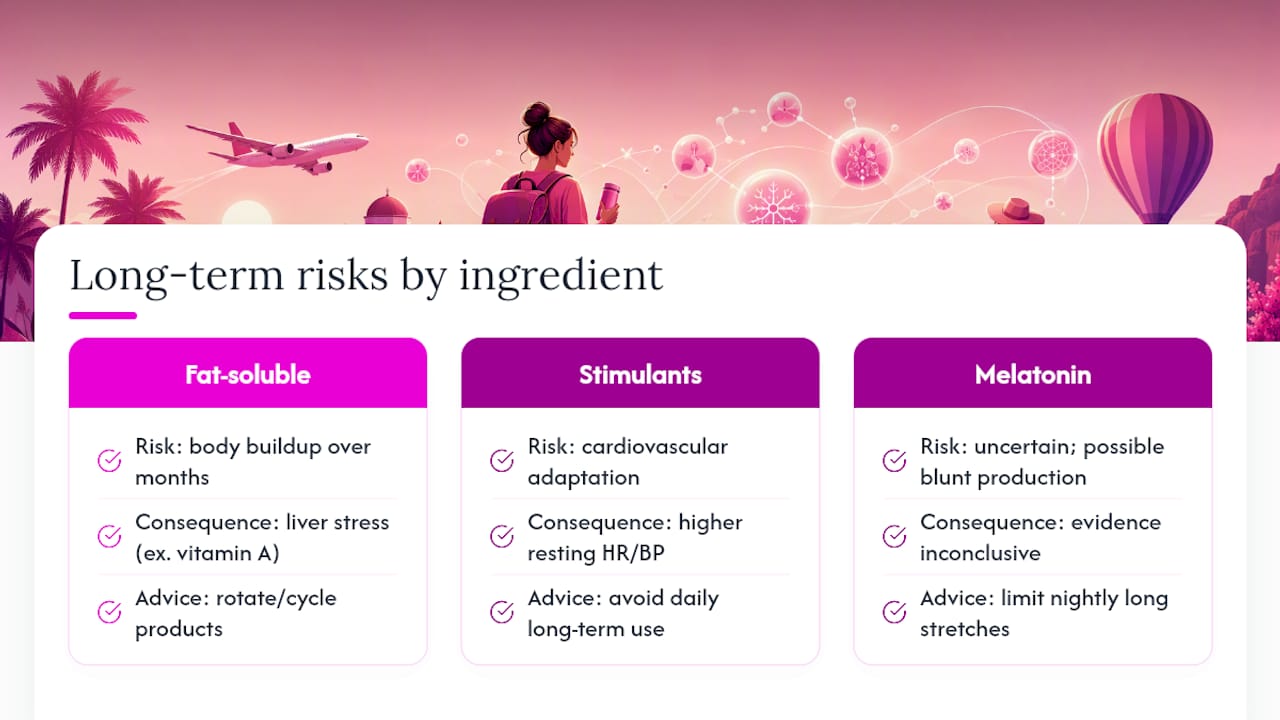
Most long-term concerns with supplement strips mirror the concerns with any daily supplement: cumulative dosing, not the film format itself. Taking a fat-soluble vitamin strip daily for months can lead to buildup in the body over time, since vitamins A, D, E, and K are stored rather than excreted the way water-soluble vitamins are. Excess vitamin A, for example, has been linked to liver stress with sustained high intake, and excess vitamin D can raise calcium to unhealthy levels.
Daily stimulant strip use raises a different long-term question: your cardiovascular system adapting to a steady stimulant load. Regular caffeine or stimulant botanical intake can contribute to elevated resting heart rate or blood pressure in people who are already borderline, and stopping suddenly after months of daily use can bring on withdrawal headaches and fatigue.
Melatonin strips used nightly for extended stretches raise questions researchers haven’t fully settled. Some clinicians worry that nightly use over many months may blunt your body’s own melatonin production, though the evidence here is still developing rather than conclusive.
The practical takeaway isn’t to avoid strips for months at a time. It’s to read the label for what’s actually in the formula, rotate or cycle products that contain fat-soluble vitamins or stimulants, and revisit your routine with a pharmacist if you’ve been using the same strip daily for more than a few months.
Can You Build a Tolerance or Dependency on Strips?
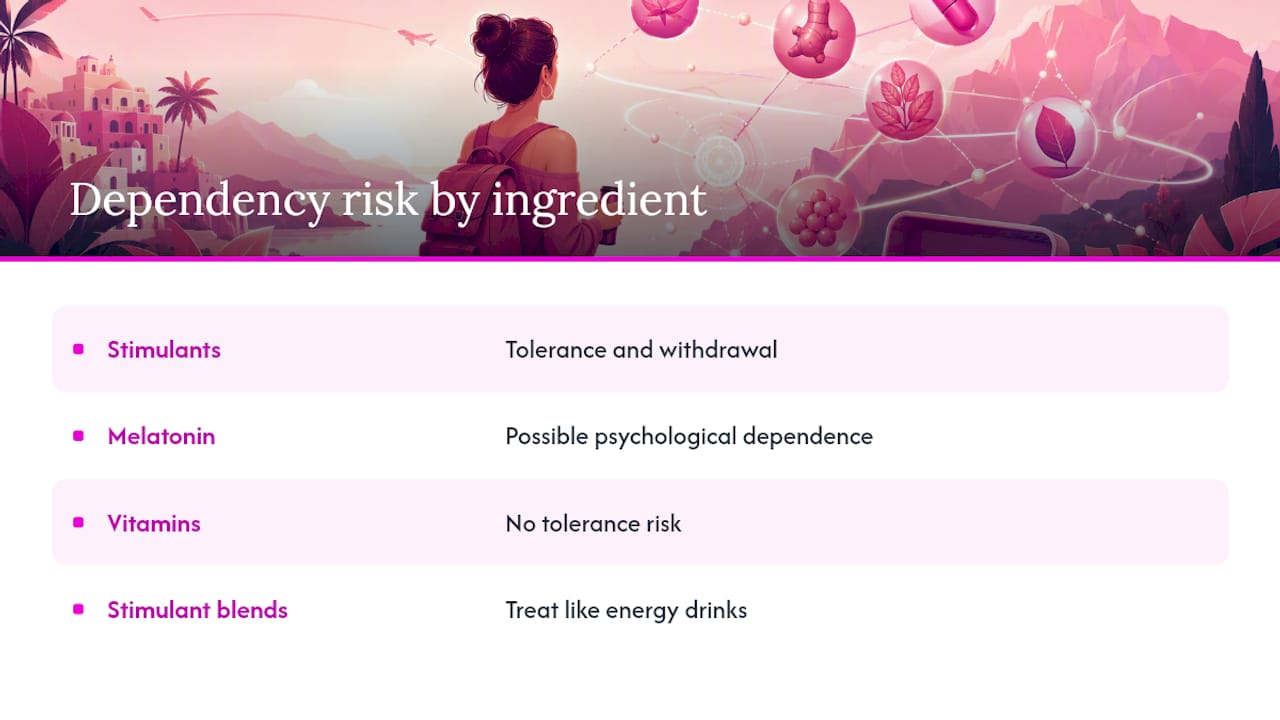
Tolerance and dependency risk in supplement strips tracks the specific active ingredient, not the strip format. Caffeine and other stimulant strips behave exactly like stimulant drinks or pills: regular daily use raises the threshold your body needs to feel the same jolt, and skipping a dose after weeks of daily use can trigger headache, irritability, and fatigue. That’s a real withdrawal pattern, even though caffeine isn’t classified as an addictive substance in the clinical sense.
Melatonin sits in a gray zone. It’s not habit-forming the way stimulants are, but relying on it nightly for sleep can create a psychological dependency where falling asleep without it feels harder, even if the biological mechanism isn’t the same as a true chemical dependency.
Vitamin and mineral strips carry essentially no dependency risk on their own. Nobody builds a tolerance to B12 or vitamin C the way they might to caffeine. The exception is anything formulated with added stimulants marketed as an “energy” or “focus” blend. Those products deserve the same caution you’d give a energy drink, because that’s functionally what they are, just delivered as a film instead of a can.
If you notice you need a strip just to feel normal, or you’re using more strips per day than the label recommends to get the same effect, that’s the signal to scale back and talk to a pharmacist rather than push through.
How Do Side Effects Compare Across Strip Types?
Not all strips carry the same risk profile, and lumping them together obscures more than it explains.
| Strip type | Most common side effects | Relative risk level |
|---|---|---|
| Vitamin/mineral strips (B12, C, multivitamin) | Mild GI upset, mouth aftertaste | Low |
| Melatonin/sleep strips | Grogginess, vivid dreams, headache | Low to moderate |
| Energy/caffeine strips | Palpitations, jitteriness, insomnia if timed poorly | Moderate to high |
| Prenatal strips | Nausea, dosing precision concerns, child-safety risk | Moderate (context-dependent) |
| Specialty/staining actives (e.g., methylene blue blends) | Temporary tongue or tooth staining, unusual taste | Low, but cosmetically noticeable |
Vitamin and hydration-focused strips sit at the gentler end of this spectrum because the actives are water-soluble and self-limiting; your body excretes what it doesn’t use. Stimulant strips sit at the riskier end because the same mechanism that gives you a quick energy lift is the mechanism that spikes heart rate in someone predisposed to it. Prenatal strips need a category of their own attention, not because the ingredients are more dangerous, but because dosing precision and child-safety storage carry higher stakes.
Are Supplement Strips Regulated Like Medications?
Supplement strips fall under the same U.S. Food and Drug Administration framework as other dietary supplements, which means they’re regulated as food products, not drugs. Manufacturers don’t need FDA approval before selling a strip, and the agency doesn’t verify a product’s safety or effectiveness before it reaches shelves. That’s a meaningfully lighter oversight standard than what a prescription medication goes through.
Quality control, in practice, comes down to the manufacturer. Reputable companies test in certified labs and disclose exact ingredient amounts, while others rely on proprietary blends that make it impossible to verify what you’re actually getting per strip. Third-party testing certifications, when a brand has them, are one of the few outside checks a consumer can look for.
DailyMed listings and Drugs.com monographs exist precisely because there’s a gap between “legal to sell” and “independently verified safe for everyone.” Reading those resources before trying a new strip gives you information the product’s own marketing copy won’t.
The practical rule: absence of FDA pre-approval doesn’t mean a product is unsafe, but it does mean the burden of checking ingredient quality and dosing accuracy falls on you, not a regulator, before you put a strip in your mouth.
Does the Dose on the Strip Actually Match What You Feel?
Dosage variation explains more side-effect complaints than any other single factor. Two strips from different brands can list the same “200mg caffeine” on the label and still produce different sensations, because absorption speed, individual body weight, and metabolism all shift how strongly that dose lands.
Manufacturing consistency matters too. Film-based delivery requires even distribution of the active ingredient across the strip during production; a poorly manufactured batch can have hot spots where one strip carries more of the active than its neighbor in the same box. This is more of a concern with smaller, less established brands than with companies running consistent, certified lab testing.
Splitting a strip in half to “half the dose” doesn’t reliably work the way it does with a scored tablet, because there’s no guarantee the active ingredient is distributed evenly across the film. If you’re sensitive to a particular ingredient, the safer move is choosing a product formulated at a lower total dose rather than trying to divide a full-strength strip yourself.
Nukalove’s Perspective on Strip Safety and Transparency
Many supplement brands aim to offer convenient, transparent products with preservative-free, vegan-friendly ingredient lists and certified lab testing, avoiding hidden blends that obscure dosing. Such products list exact amounts rather than vague proprietary claims, helping consumers make informed choices. Read the label, know your own sensitivities, and treat that transparency as the baseline, not the exception.
— NUKA
Travel-Ready Strips Built for Ingredient Transparency
Reading labels and checking dosing shouldn’t feel like detective work every time you want an energy lift, better focus, or a decent night’s sleep on the road. Some brands offer strips formulated for managing energy dips, sleep disruption, and menopause symptoms, with full ingredient disclosure instead of proprietary blends.
Our Energy Strips are built for an afternoon lift without guessing at hidden stimulant amounts, and our Oral Sleep Strips are formulated for restful sleep without next-morning grogginess. If focus or hydration is the goal, the full Nukalove product range lays out every ingredient and dose so you can check it against your own sensitivities before you buy. Browse the collections, read the label on each product page, and pick the strip that matches what you actually need this week.
Sources
- Drugs
- Drugs
- Appetite suppressants — Cleveland Clinic
- Office of Dietary Supplements — NIH
- DailyMed product information — U.S. National Library of Medicine
- Are melting vitamin strips the future of supplements? — Boots HealthHub
This article is general information, not a substitute for advice from a qualified doctor. Consult a qualified healthcare professional about your own circumstances before acting on anything here.
FAQ
Do Supplements Have Negative Side Effects?
Yes, most supplements carry some risk of side effects, and strips are no exception since the active ingredients, not the delivery format, drive most reactions. Common issues include gastrointestinal upset, headache, and allergic responses, according to Drugs.com.
Which Supplements Can Cause Dizziness or Vertigo?
Stimulant-containing strips and certain B-vitamin megadoses are among the more common triggers for dizziness, often tied to blood pressure or blood sugar shifts. The Cleveland Clinic links stimulant supplements to lightheadedness alongside insomnia and palpitations, so anyone prone to dizziness should start with a lower-stimulant option.
What Combinations of Supplements Should You Avoid Taking Together?
Stacking multiple stimulant sources, like a caffeine strip alongside energy drinks or stimulant medications, raises the risk of palpitations and insomnia. Combining high-dose calcium or iron strips with certain prescription medications can also blunt absorption, so checking with a pharmacist before combining any strip with your regular medication list is the safer move.
Which Two Vitamins Pose the Greatest Risk of Toxicity?
Vitamin A and vitamin D carry the highest toxicity risk because they’re fat-soluble and stored in the body rather than excreted daily. Regular high-dose intake of either through supplement strips over months can lead to symptoms ranging from nausea to more serious liver or calcium-related complications.