

Midlife Travelers: Stay Energized with Oral Strips and Timing Rules
The fastest way to stay energized while traveling is to protect your sleep, hydrate with electrolytes, and align your meals and light exposure to your destination’s clock instead of your home one. Add travel-format supplements like Nukalove strips when a quick boost or a sleep reset is out of reach. Harvard Health and Timeshifter-style jet-lag apps back this combination for a reason: it works on the body’s actual clock, not just its symptoms.
TL;DR:
- Proper hydration with electrolytes during travel improves water absorption and reduces fatigue caused by dehydration.
- Shifting sleep and meal times gradually before a trip can significantly shorten jet lag recovery.
- Using light exposure strategically upon arrival helps reset the circadian clock faster, especially with short outdoor sun sessions.
- A travel energy kit with electrolyte strips, protein snacks, and sleep aids supports maintaining energy and sleep quality on the move.
- Engaging in regular movement, deep breathing, and avoiding alcohol and late caffeine enhances circulation, mental clarity, and overall travel recovery.
Table of Contents
- What Actually Keeps You Energized While Traveling?
- How Should You Prepare Before a Trip?
- What Should You Do During the Flight or Drive?
- What Should You Eat and When to Stay Energized?
- How Do You Reset Jet Lag Fast?
- How Can You Improve Circulation While Traveling?
- How Do You Stay Mentally Sharp Without Overdoing Caffeine?
- What Belongs in a Travel Energy Kit?
- Travel Doesn’t Have to Drain You
- Travel-Ready Products Built for the Routine Above
- Where This Advice Comes From
- Sources
- FAQ
What Actually Keeps You Energized While Traveling?
Energy loss on the road rarely comes from one cause. It’s usually a stack of small deficits: a night of bad sleep, dehydration from cabin air, a skipped meal, hours of sitting still, and the mental static of navigating somewhere unfamiliar. Fix the stack, not just one layer, and the fatigue that usually hits by day two mostly doesn’t show up.
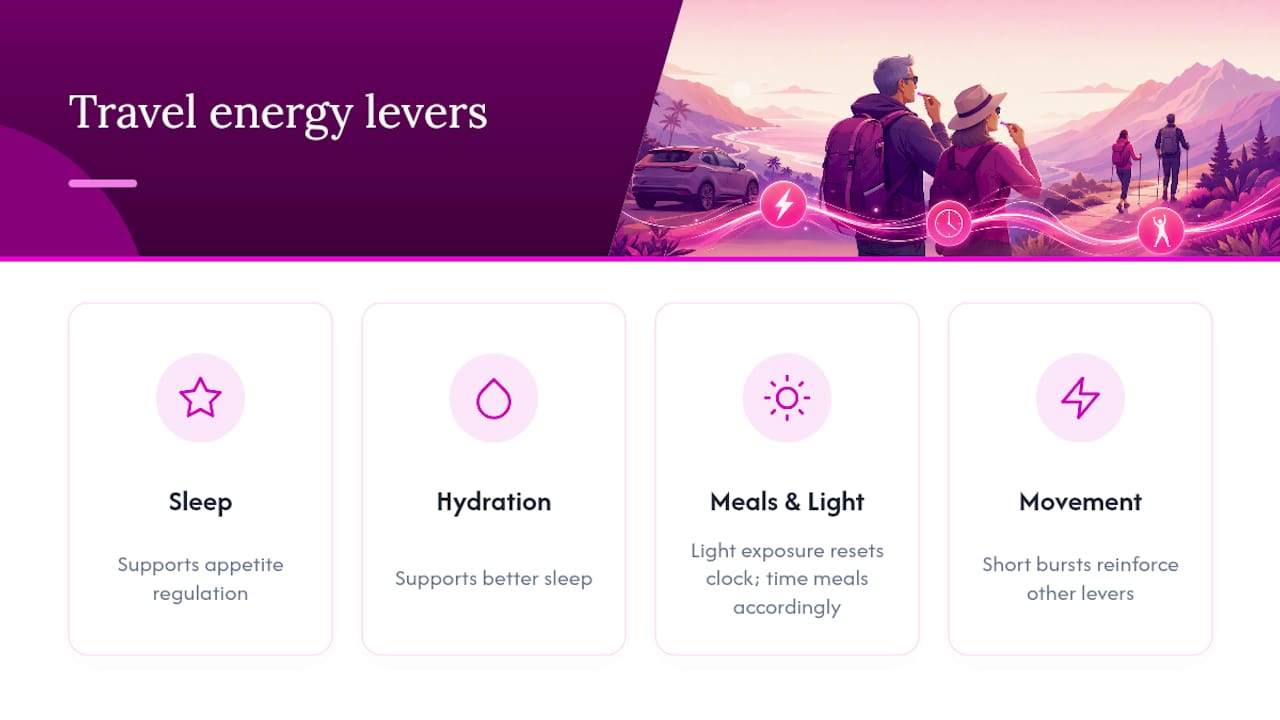
The four levers that matter most are sleep, hydration, meal and light timing, and short bursts of movement. Each one reinforces the others. Hydration supports better sleep, sleep supports appetite regulation, and light exposure resets the internal clock that governs both. None of these require a total lifestyle overhaul. They require timing.
How Should You Prepare Before a Trip?
Preparation starts two to three days out, not the morning of your flight. For long time-zone shifts, start shifting your sleep and mealtimes gradually rather than all at once. Moving bedtime incrementally each night toward your destination’s schedule gives your circadian rhythm a head start instead of a shock.
Sleep debt going into a trip compounds fast, so aim for at least seven hours a night in the days beforehand. A short wind-down routine with magnesium, if that works for your body, can help you fall asleep faster on those pre-trip nights when travel prep adrenaline tends to keep people wired.
Pack with intention:
- Single-serve electrolyte packets or powder for the flight and the first 24 hours
- Protein-forward snacks (nuts, jerky, protein bars) instead of vending-machine carbs
- A sleep mask, earplugs, and a travel pillow for real rest in transit
- Layers you can adjust as cabin and destination temperatures swing
- Travel-format supplements like oral strips that need no water or measuring, just in case hotel breakfast or airport food falls short
What Should You Do During the Flight or Drive?
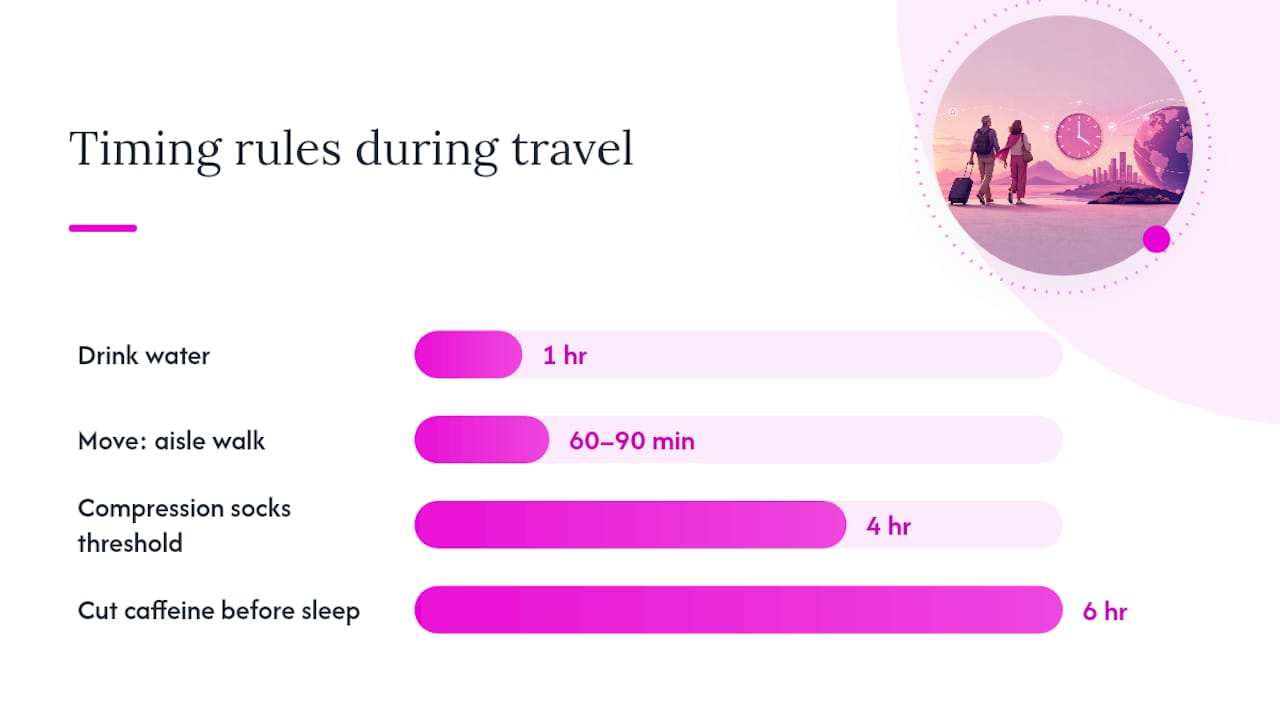
Cabin air runs drier than most homes, and that alone accelerates fatigue; for science-backed travel skincare tips to protect your skin and hydration during flights, see Barrier first travel skincare routine backed by flight studies. Drink water on a schedule rather than waiting for thirst, roughly one cup every hour you’re airborne, and treat plain water as only half the job. Electrolytes matter because sodium, potassium, and magnesium help water actually reach your cells instead of passing through, which is part of why plain water alone doesn’t always fix the sluggish, headachy feeling of travel dehydration.
A few more transit rules worth following:
- Skip alcohol in the air. It dehydrates faster at altitude and wrecks sleep quality even when it feels relaxing in the moment.
- Cut caffeine within about six hours of your planned bedtime at your destination, not your origin.
- Get up and walk the aisle every 60 to 90 minutes; ankle pumps and seated calf raises help if the seatbelt sign is on.
- Wear compression socks on flights over four hours to support circulation.
Pro Tip: *Pack a small bottle of fragrance-free moisturizer and lip balm.
For a deeper breakdown of hydration windows on long-haul flights, flight hydration tips built for real travel schedules walks through the specifics.
What Should You Eat and When to Stay Energized?
Meal timing works as a circadian cue almost as powerfully as light does. The moment you land, start eating on local time, even if your body insists it’s still 3 a.m. back home. One notable approach: eating a larger breakfast and skipping a heavy dinner for the first few days after a time-zone shift may speed up jet-lag recovery, according to research cited by nutrition experts. Protein at that first breakfast matters too, since it stabilizes blood sugar in a way that pastries and cereal simply don’t.
Electrolytes deserve a second mention here because timing changes their effect. A packet during the flight helps with in-transit dehydration; another one after landing, especially if you’ve had wine at dinner or sweated through a hot afternoon of sightseeing, resets you faster than water alone. Electrolyte timing tailored to travel days covers the specific windows worth targeting.
Pack snacks that actually sustain you:
- Nut butter packets or trail mix over granola bars loaded with added sugar
- Jerky or protein bars instead of airport candy
- Electrolyte powder over soda, which spikes blood sugar and then drops it
How Do You Reset Jet Lag Fast?
Jet lag resolves faster with a specific sequence, not just “give it a few days.”
- Pre-adjust before you fly. Shift sleep and meal times incrementally per day for a few days ahead of a major time-zone crossing.
- Control light exposure on arrival. Light is the single strongest signal for resetting your circadian clock. Seek morning sunlight if you traveled east; seek late-afternoon light if you traveled west. Roughly 20 minutes outdoors does most of the work.
- Use melatonin carefully, if at all. Doses between 0.3 and 3 mg taken close to the destination’s bedtime can help some travelers, but higher doses aren’t automatically better and can cause grogginess. Check with a clinician if you’re on other medications or have a sleep disorder.
- Fix the sleep environment. A mask, earplugs, and a cool room do more for hotel sleep than most people expect. Magnesium glycinate before bed is a common choice among travelers looking to support sleep quality without a sedative.
Apps built on circadian science, like Timeshifter-style tools, can generate a personalized light, caffeine, and sleep schedule for complex, multi-leg itineraries where doing the math yourself gets complicated.
How Can You Improve Circulation While Traveling?
Sitting for hours slows circulation and leaves legs stiff and swollen, which reads to your brain as generic fatigue even when sleep is fine.
- Run through a five-minute seated routine: ankle circles, seated marches, and shoulder rolls every hour or two.
- Once you land, take a 20 to 30 minute walk outdoors. It aids circulation and doubles as your light exposure for circadian reset.
- Wear compression socks on any flight or drive longer than four hours, and stretch your calves and hamstrings the moment you’re upright again.
How Do You Stay Mentally Sharp Without Overdoing Caffeine?
Cognitive fatigue while traveling often has more to do with decision overload than sleep debt. New airports, unfamiliar menus, constant small choices. That drains mental energy the same way physical exertion drains muscles.
A two to five minute breathing exercise (four seconds in, six seconds out) between activities resets your nervous system faster than a second coffee. Build in scheduled low-demand windows, meaning blocks of time with no decisions to make, especially on multi-city trips. Even a few minutes of journaling or a short guided meditation counts. For the neurological side of that foggy, unfocused feeling, why travel triggers brain fog and how to fix it breaks down what’s actually happening and what helps faster than another espresso.
What Belongs in a Travel Energy Kit?
A compact kit built around timing, not bulk, covers most travel energy gaps:
- Electrolyte powder with your first glass of water on landing, and again after alcohol or heavy sweating. THIRST TRAP Hydration Powder is built for exactly this kind of single-serve dosing.
- An energy strip for the early-afternoon slump, no water or measuring required. GO GIRL Energy Strips dissolve on the tongue in seconds.
- Magnesium, taken 30 to 60 minutes before bed to support sleep onset in an unfamiliar room. SLEEPY STRIPS Oral Sleep Strips are formatted for that exact window.
- Protein snacks, packed the night before so hunger never forces a bad airport-food decision.
Pro Tip: Dose your energy strip before the slump hits, not after. Most people wait until they’re already dragging, which means fighting an uphill battle instead of preventing one.
Travel Doesn’t Have to Drain You
Treat energy like a budget on a trip: you get a fixed amount each day, and every skipped meal or missed hour of sleep is a withdrawal you’ll feel by evening. Pick two or three anchors, maybe sleep, hydration, and one meal timed to the local clock, and protect those before anything else on the itinerary.
Try one change on your next trip. See what it does. Adjust from there.
— NUKA
Travel-Ready Products Built for the Routine Above
Some products are designed to be convenient for travel use, with oral strips that dissolve quickly and hydration powders that are easy to carry.
If jet lag or afternoon crashes are your biggest travel obstacle, the Energy Strips collection gives you a fast, precise dose without relying on another coffee you don’t actually want. For nights in unfamiliar beds, Oral Sleep Strips are formulated to support sleep onset without the grogginess a heavy-dose melatonin pill can leave behind. Browse the Energy Strips collection or check out Oral Sleep Strips before your next trip and build a kit around what your itinerary actually needs.
Where This Advice Comes From
This guide draws on Harvard Health’s jet-lag guidance, Euronews reporting on travel recovery, and a functional medicine take on travel essentials for hydration and gut support.
This article is general information, not a substitute for advice from a qualified doctor. Consult a qualified healthcare professional about your own circumstances before acting on anything here.
Sources
- How to avoid jet lag: tips for staying alert when you travel — Harvard Health
- Tired of jet lag? Experts share their top tips for travel recovery — Euronews (travel)
- Functional medicine travel essentials for energy and immunity — Dr. Greg
FAQ
Why Do I Feel So Much Better on Vacation?
Vacation often removes the decision fatigue and rigid scheduling of daily life, while better sleep, more walking, and consistent meal timing all support steadier energy than a typical workday.
What Is Travel Dysmorphia?
Travel dysmorphia describes the disorienting feeling of not recognizing your own routine, appearance, or mood while away from familiar surroundings. It often stems from disrupted sleep, dehydration, and the sensory overload of new environments rather than any physical change.
How Do You Get Rid of Travel Fatigue?
Rehydrate with electrolytes, get outside for 20 to 30 minutes of daylight, eat a protein-rich meal on the local schedule, and prioritize one full night of quality sleep. Most travelers feel a noticeable shift after applying all four.
Why Is My Anxiety So Bad When I Travel?
Travel disrupts routine, sleep, and blood sugar all at once, and each of those independently raises anxiety. Short breathing exercises, scheduled low-demand windows, and stabilizing meals address the physical triggers, not just the emotional ones.
Does Nukalove Have Products for Travel Energy?
Yes. Nukalove makes portable Energy Strips, Oral Sleep Strips, and single-serve Hydration Powder, all designed for dosing without water or measuring. Current prices are listed on each product page.