

Perimenopause Supplements That Actually Work in 2026
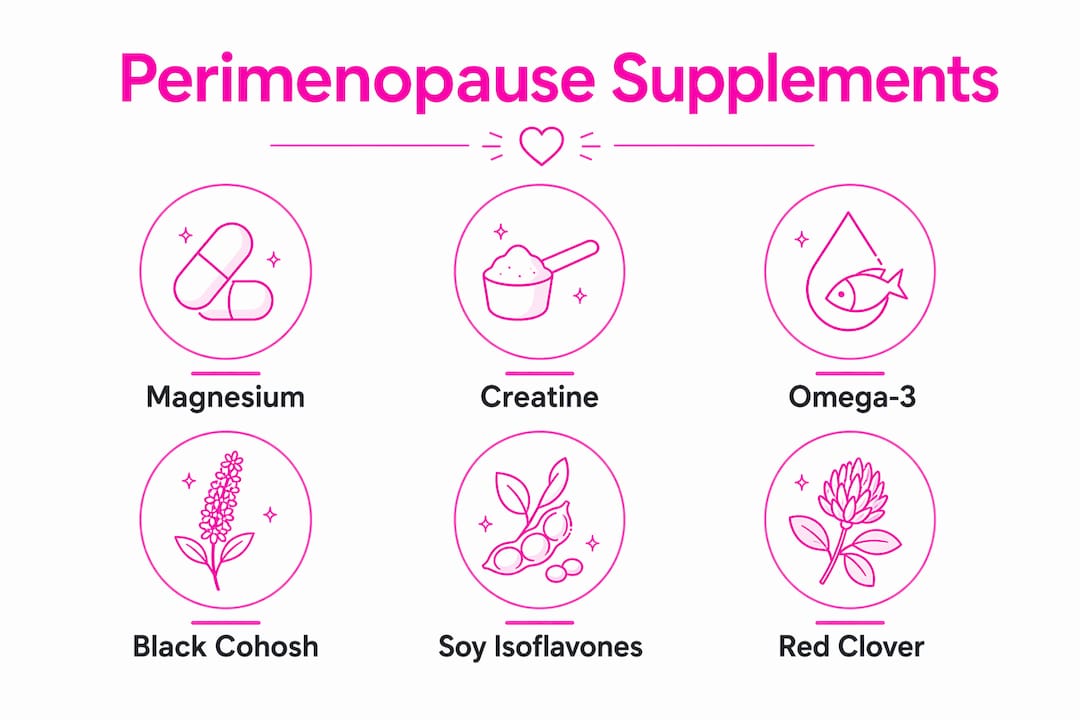
Magnesium glycinate, creatine, and omega-3 fatty acids are the perimenopause supplements with the strongest clinical backing right now. Magnesium glycinate at 300–400 mg daily improves sleep quality and reduces anxiety by supporting over 300 enzymatic processes in the body. Creatine at 5 g daily sharpens short-term memory and helps maintain muscle mass as estrogen declines. Omega-3 fatty acids, dosed at 1–2 g EPA/DHA daily, support mood stability and may modestly reduce hot flash frequency, with EPA-dominant formulas showing the most consistent results.
These three work on specific, measurable symptoms. They do not fix the underlying hormonal shift. Hormone therapy, particularly bioidentical estradiol and progesterone, remains the most effective intervention for core symptoms like hot flashes and brain fog. Supplements fill in around the edges: better sleep, steadier mood, sharper thinking. That distinction matters when you are deciding how to build your plan.
- Magnesium glycinate: 300–400 mg at bedtime for sleep and anxiety
- Creatine: 3–5 g daily, any time, for cognition and muscle maintenance
- Omega-3 fatty acids: 1–2 g EPA/DHA daily for mood and inflammation
- Vitamin D3: 2,000–5,000 IU daily for bone density and muscle function
- Black Cohosh: 20–40 mg twice daily for hot flash relief (mixed evidence)
- Soy isoflavones: 40–80 mg daily for vasomotor symptoms (moderate evidence)
Before adding any of these, talk to your doctor. Symptoms like irregular periods, mood swings, and brain fog overlap with thyroid disorders, depression, and other conditions that need their own treatment.
How do you know if you are in perimenopause?
Perimenopause does not announce itself cleanly. Most women notice it through a cluster of changes that seem unrelated at first: periods that arrive early, then late, then skip a month entirely; nights interrupted by sweating; mornings that feel foggy before the day has started.
The most common symptoms include:
- Irregular periods: Cycle length shifts by seven or more days, sometimes dramatically
- Hot flashes and night sweats: Affect an estimated 80% of women during the menopause transition
- Mood changes: Irritability, low mood, and anxiety tied to fluctuating estrogen and progesterone
- Brain fog: Difficulty concentrating or recalling words, linked to declining estrogen’s effect on brain energy metabolism
- Sleep disruption: Often driven by night sweats or progesterone changes affecting GABA receptors
- Vaginal dryness and reduced libido: Caused by falling estrogen levels affecting mucosal tissue
Clinicians typically diagnose perimenopause based on symptoms and age, since hormone levels fluctuate so much that a single FSH or estradiol test can be misleading. Symptom tracking over several cycles gives a clearer picture than any single blood draw. That said, testing can rule out thyroid dysfunction, which mimics perimenopause closely enough to fool both patients and their doctors. Getting that differential sorted before starting supplements is not optional. It changes everything about the right approach.
What treatment options actually exist for perimenopause symptoms?
The options range from well-proven to speculative, and knowing which is which saves you time and money.
Hormone therapy is the gold standard. Modern transdermal estradiol carries no increased blood clot risk, a meaningful update from older oral formulations that drove decades of fear. Micronized progesterone acts on GABA receptors in the brain, improving sleep and mood in ways that synthetic progestins simply do not replicate. For women without contraindications, hormone therapy addresses the root cause rather than the symptoms.
Treatment options by category:
- Hormone therapy (HRT): Bioidentical estradiol plus micronized progesterone; most effective for hot flashes, sleep, brain fog, and bone protection
- Non-hormonal prescription medications: SSRIs, SNRIs, and gabapentin have evidence for hot flash reduction in women who cannot use hormones
- Evidence-backed supplements: Magnesium glycinate, creatine, omega-3 fatty acids, and vitamin D3 address specific peripheral symptoms
- Botanical supplements: Black cohosh, soy isoflavones, and red clover have mixed evidence and no endorsement from the Menopause Society for hot flash relief
- Lifestyle modifications: Strength training, anti-inflammatory diet, and sleep hygiene are foundational and underused
- Cognitive behavioral therapy (CBT): Shown to reduce the distress caused by hot flashes even when it does not reduce their frequency
Supplements support peripheral symptoms but do not address the hormonal deficit at the core of perimenopause. The most effective plans combine hormone therapy where appropriate with targeted supplementation and lifestyle changes, not one or the other.
The most commonly used supplements for perimenopause, reviewed
The table below covers the six supplements that appear most often in clinical literature and expert guidance for the menopause transition.

| Supplement | Primary symptom target | Typical daily dose | Evidence strength |
|---|---|---|---|
| Magnesium glycinate | Sleep, anxiety, cramps | 300–400 mg | Moderate to strong |
| Creatine | Cognition, muscle mass | 3–5 g | Moderate to strong |
| Omega-3 fatty acids | Mood, inflammation, hot flashes | 1–2 g EPA/DHA | Moderate |
| Vitamin D3 | Bone density, muscle function | 2,000–5,000 IU | Strong for bone |
| Black cohosh | Hot flashes | 20–40 mg twice daily | Mixed |
| Soy isoflavones | Vasomotor symptoms | 40–80 mg | Moderate |
| Red clover isoflavones | Hot flashes, cardiovascular | 40–160 mg | Mixed to moderate |
Black Cohosh
Black cohosh is the most studied herbal supplement for hot flashes, but “most studied” does not mean “most effective.” It reduces hot flash frequency by approximately 26% in some trials, and roughly 40–50% of women report some relief. The problem is that results vary widely across studies, and the Menopause Society has not endorsed it. Liver toxicity, though rare, has been reported. If you try it, choose a single-ingredient product rather than a blended “menopause support” formula, and tell your doctor.
Key facts:
- Dose: 20–40 mg standardized extract, twice daily
- Avoid if you have a history of liver disease or estrogen-sensitive cancers
- Do not combine with hepatotoxic medications
Soy isoflavones
Soy isoflavones are phytoestrogens, plant compounds that bind weakly to estrogen receptors. They target vasomotor symptoms like hot flashes and night sweats, with moderate evidence supporting modest reductions in frequency. Women who metabolize equol (a soy metabolite) tend to respond better, though most Americans do not produce it efficiently. Safety data for women with a history of breast cancer is not conclusive, so this population should avoid soy isoflavones without explicit medical guidance.
Key facts:
- Dose: 40–80 mg daily
- Takes 8–12 weeks to show effect
- Prefer whole food sources (tofu, edamame) alongside or instead of supplements when possible
Red Clover
Red clover contains four isoflavones compared to soy’s two, which gives it a slightly broader phytoestrogenic profile. Evidence for hot flash reduction is mixed, with some trials showing benefit and others showing results no better than placebo. It may offer modest cardiovascular benefits by improving arterial flexibility, though this is not yet a clinical recommendation. Women on blood thinners should avoid red clover because it contains coumarin compounds that can interact with anticoagulants.
Key facts:
- Dose: 40–160 mg daily
- Avoid with warfarin or other anticoagulants
- Not recommended for women with hormone-sensitive conditions
Magnesium glycinate
Magnesium glycinate is one of the most practical supplements for perimenopause. The glycinate form absorbs well and is gentle on the stomach, unlike magnesium oxide, which mostly causes digestive upset. At 300–400 mg taken at bedtime, it supports over 300 enzymatic processes, including those that regulate cortisol, GABA activity, and muscle relaxation. Women who wake at 3 AM with racing thoughts often notice a difference within two weeks. Nukalove’s Sleepy Strips deliver magnesium glycinate in a fast-dissolving oral strip format, which is particularly useful when you are traveling and do not want to carry a pill bottle.
Key facts:
- Dose: 300–400 mg at bedtime
- Choose glycinate or bisglycinate form over oxide or citrate for sleep use
- Generally safe; reduce dose if loose stools occur
Omega-3 fatty acids
Omega-3 fatty acids matter more during perimenopause than most women realize. Estrogen has natural anti-inflammatory properties, and as levels fall, systemic inflammation rises. EPA-dominant omega-3 formulations at 1–2 g daily have consistent evidence for mood and inflammation reduction in perimenopausal women, and some data suggests a modest reduction in hot flash frequency. Choose purified fish oil to avoid contaminants, or prioritize whole food sources like salmon, sardines, and mackerel alongside supplementation. Taking omega-3s with vitamin D3 also improves D3 absorption, since both are fat-soluble.
Key facts:
- Dose: 1–2 g EPA/DHA daily
- EPA-dominant formulas outperform DHA-dominant for mood
- Blood-thinning effect at high doses; check with your doctor if you take anticoagulants
Creatine
Creatine is the supplement most women in perimenopause have never considered but probably should. Women naturally have 70–80% lower creatine stores than men, and that gap widens with age as estrogen decline reduces endogenous creatine synthesis in both brain and muscle tissue. At 3–5 g daily, creatine improves short-term memory, reduces brain fog, and supports muscle mass maintenance, particularly when combined with resistance training. Studies show cognitive benefits in adults aged 45–64 specifically. Nukalove’s Thrive Daily creatine powder makes it easy to hit that daily dose without the chalky texture of older creatine products.
Key facts:
- Dose: 3–5 g daily, timing does not matter
- Look for creatine monohydrate with a water-based wash (not acid-based) to avoid GI side effects
- Safe for long-term use; well-tolerated in women
Pro Tip: Single-ingredient supplements are always preferable to blended “menopause support” formulas. With a blend, you cannot verify the dose of any individual ingredient, and you cannot identify which one caused a side effect if something goes wrong.
Lifestyle approaches that make supplements work better
Supplements do not work in a vacuum. The women who get the most out of magnesium glycinate and creatine are almost always the ones doing the foundational work alongside them.

Strength training, blood sugar management, and sleep hygiene are what Stanford Lifestyle Medicine experts call foundational, not optional add-ons. Resistance training is the trigger that tells the body to use the protein and creatine you are giving it. Without that signal, even a well-dosed supplement stack delivers a fraction of its potential benefit.
Practical lifestyle strategies that complement perimenopause supplements:
- Strength training 2–3 times per week: Preserves muscle mass and bone density as estrogen falls; creatine and protein work significantly better with this in place
- Anti-inflammatory diet: Prioritize fatty fish, leafy greens, berries, and olive oil; reduce ultra-processed foods that drive the systemic inflammation estrogen used to suppress
- Blood sugar management: Perimenopause increases insulin resistance; eating protein and fiber at every meal stabilizes glucose and reduces mood swings tied to blood sugar crashes
- Sleep hygiene: Consistent sleep and wake times, a cool bedroom, and limiting alcohol (which fragments sleep architecture) amplify what magnesium glycinate does at night
- Stress reduction: Chronic cortisol elevation worsens hot flashes and disrupts sleep; yoga, meditation, and even a 30-minute walk three times a week measurably reduce cortisol
- Fiber intake: Aim for 25 g daily through whole foods; supports gut health, lowers LDL cholesterol, and improves insulin sensitivity during the transition
The lifestyle piece is harder than taking a pill. That is exactly why most women skip it. But as Harvard’s Dr. Jan Shifren puts it, “a half-hour walk with a friend three times a week will do so much more for your midlife symptoms and health than swallowing any supplement.” Supplements are most useful when they are filling a genuine nutritional gap, not substituting for habits that actually move the needle.
What experts and clinical evidence say about supplement safety
The supplement market for menopause is a $17 billion global industry, and it is expected to grow more than 5% annually through at least 2030. That scale creates real problems. Supplements do not require FDA approval, which means no regulatory body confirms that what is on the label is actually in the bottle, at the stated dose, or free from contaminants.
Harvard internist Dr. Pieter Cohen, whose research focuses on dietary supplements, describes the marketing around menopause supplements as “predatory,” noting that companies promote quick fixes while misleading women about how symptoms can best be managed. The Menopause Society’s 2023 position statement on non-hormonal therapies did not endorse any botanical supplement, including black cohosh, red clover, or soy isoflavones, for hot flash relief.
The placebo effect in hot flash trials is striking. Clinical data shows that placebos reduce hot flashes by up to 30%, even when measured objectively with skin temperature sensors. That does not mean the relief is imaginary. It means that anecdotal reports of supplement effectiveness are nearly impossible to interpret without a controlled trial.
Safety and quality guidance for choosing supplements:
- Look for USP or NSF certification on the label. These third-party organizations confirm that the product contains what it claims, at the stated dose, without harmful contaminants
- Choose single-ingredient products over blended formulas. Blended herbal products make it impossible to track dose or identify the source of a side effect
- Women with breast cancer history should avoid phytoestrogens (soy isoflavones, red clover) and black cohosh without explicit oncologist approval
- Check for drug interactions before starting: omega-3s at high doses thin blood, red clover interacts with anticoagulants, and St. John’s Wort (sometimes included in blends) interferes with dozens of medications
- Consult a healthcare provider before starting any supplement, particularly if you have thyroid disease, liver conditions, or are taking prescription medications. Symptom overlap with other conditions is real, and getting a proper evaluation before self-treating is the step most women skip
- Stop immediately and call your doctor if you notice unusual symptoms after starting a supplement, even if they seem mild or brief
The women most at risk from unsupervised supplement use are those with a history of hormone-sensitive cancers, liver disease, or cardiovascular conditions. For everyone else, the risk is more often financial than physical: spending money on products that do not work, while delaying conversations with a clinician who could actually help.
Understanding how hormones drive these symptoms in the first place can help you make smarter decisions about what to take and when. Nukalove’s guide on perimenopause and menopause symptoms breaks down the hormonal mechanics behind what you are feeling.
Key Takeaways
Magnesium glycinate, creatine, and omega-3 fatty acids offer the strongest clinical evidence for managing specific perimenopause symptoms, but none replace hormone therapy for addressing the underlying hormonal deficit.
| Point | Details |
|---|---|
| Hormone therapy remains primary | Bioidentical estradiol and micronized progesterone address root causes; supplements manage peripheral symptoms only. |
| Magnesium glycinate for sleep | 300–400 mg at bedtime supports over 300 enzymatic processes and reduces anxiety and sleep disruption. |
| Creatine for brain and muscle | Women have 70–80% lower creatine stores than men; 3–5 g daily improves cognition and muscle maintenance. |
| Quality certification matters | Choose USP or NSF certified, single-ingredient products; blended formulas make dose and safety tracking unreliable. |
| Lifestyle is foundational | Strength training, anti-inflammatory diet, and sleep hygiene amplify supplement benefits and reduce symptom burden independently. |
Nukalove makes it easier to stay consistent
Consistency is the part most supplement plans fail on. You buy the magnesium, the creatine, the omega-3s, and then you travel for work and leave half of them on the bathroom counter. Nukalove was built specifically for that problem. Every product is designed by women, for women in the menopause transition, and most come in compact oral strip form that fits in a carry-on, a gym bag, or a desk drawer.
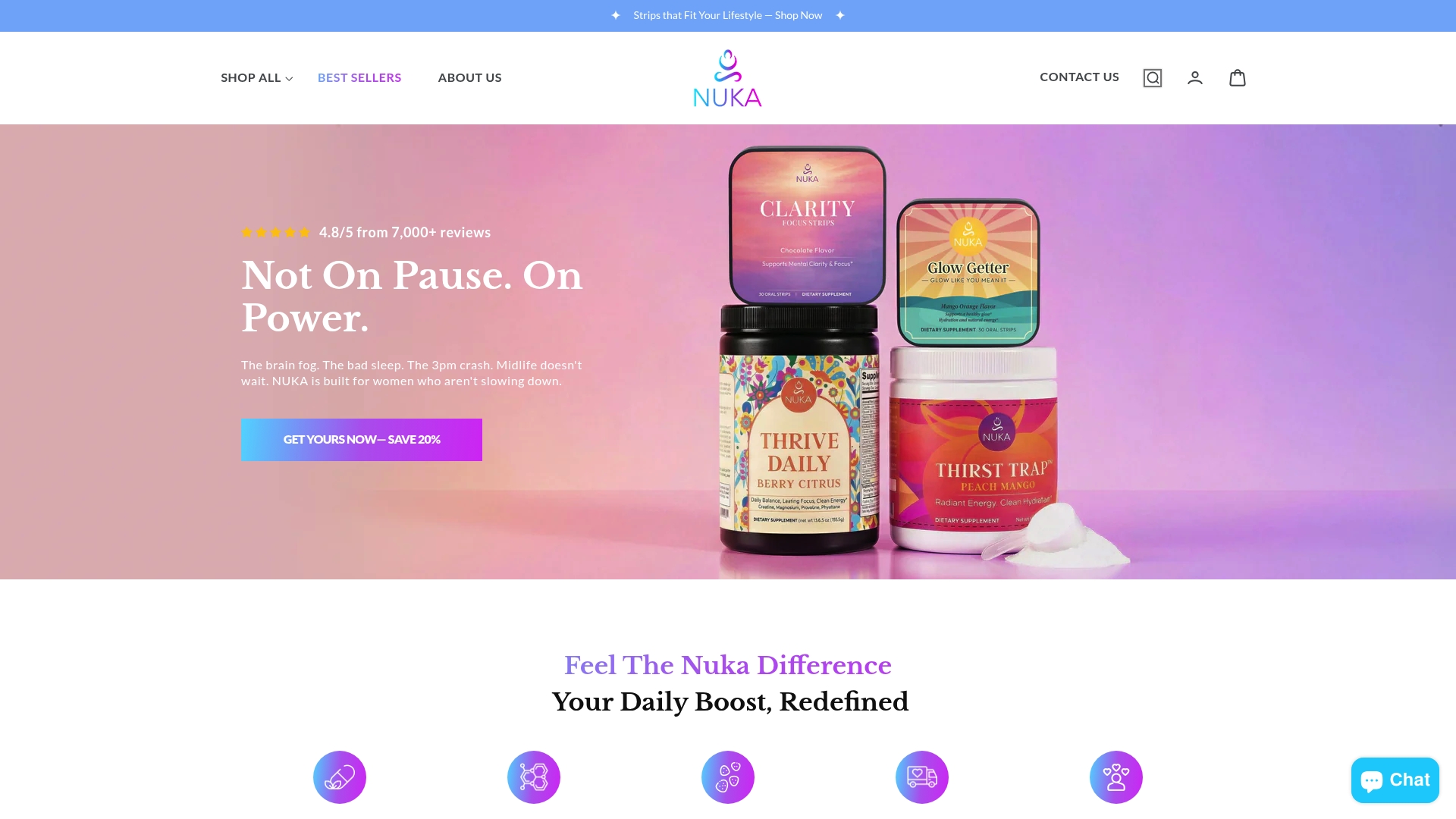
The No Pause Power Pack bundles the supplements most relevant to perimenopause symptom management into one convenient kit, so you are not managing five separate bottles. For sleep specifically, the Sleepy Strips deliver magnesium glycinate in a fast-dissolving format that works in under two minutes, no water required. Browse the full wellness collection to find what fits your specific symptoms and routine.