

Cut 90% of Packing Headaches: Pack Menopause Supplements with Oral Strips
Pack your daily supplements in your carry-on, not checked luggage, and favor tablets, gummies, single-serve sachets, or oral strips over powders and liquids. Solid supplements clear security in any quantity with no original container required. Liquids follow the 3-1-1 rule, and powders over 12 ounces may trigger separate screening. Keep one original bottle for anything unusual, like melatonin or herbal blends, and a labeled list for everything else. A compact format like NUKA’s oral strips sidesteps most of these problems outright.
TL;DR:
- Solid supplements like tablets and gummies are allowed in unlimited quantities in carry-on and checked luggage without needing to stay in original packaging.
- Powders over 12 ounces require separate screening, and liquids must follow the 3-1-1 rule, with containers of 3.4 ounces or less.
- Pre-measuring powders into single-serve pouches and using oral strips eliminates most security issues and reduces bulk.
- Temperature-sensitive supplements like probiotics and fish oils should be kept in cool, dark places or insulated pouches, especially in hot climates.
- Organizing supplements in one accessible pouch and labeling decanted containers streamline security checks and reduce packing errors.
Table of Contents
- What Does TSA Actually Allow Through Security?
- How Do You Pack Supplements for a Flight, Step by Step?
- Which Supplement Forms Travel Best?
- What’s the Best Way to Pack Powders and Liquids?
- Which Supplements Are Sensitive to Heat or Light?
- How Do You Organize Supplements for a Fast Security Check?
- What Should Be on Your Pre-Trip Supplement Checklist?
- Why Oral Strips Make Sense for Midlife Travelers
- What the Conventional Packing Advice Gets Wrong
- Travel-Ready Strips Built for This Exact Problem
- Sources
What Does TSA Actually Allow Through Security?
Solid supplements get the easiest pass through any checkpoint. Tablets, capsules, and gummies are allowed in carry-on or checked bags in unlimited quantities, and TSA does not require them to stay in original packaging. That’s good news if you’ve ever decanted your vitamins into a weekly pill organizer to save space.
Liquids and powders play by different rules, and this is where most travelers get flagged for extra screening.
- Liquid, gel, or aerosol supplements in carry-on must follow the 3-1-1 rule: each container 3.4 ounces (100 mL) or less, all fitting in one quart-sized bag.
- Powdered supplements have no strict quantity cap in carry-on, but any container larger than 12 ounces (350 mL) usually gets pulled for separate screening.
- Checked bags have no size limit for powders, which makes checked luggage the better home for a large tub of collagen or protein powder.
- Officers retain discretion over what counts as unusual or gets extra scrutiny, so a labeled container works in your favor even when it’s not required.
Our detailed breakdown of TSA vitamin rules covers edge cases like combination products and CBD, if you’re carrying anything outside the basics.
How Do You Pack Supplements for a Flight, Step by Step?
Start by listing what you actually need during the trip itself, not everything sitting in your medicine cabinet at home. A four-day trip doesn’t need your full 90-day supply of magnesium.
- Sort by priority. Prescriptions and anything you take daily go in carry-on first. Everything else is optional cargo.
- Decant into single-serve pouches or a pill organizer. Daily multivitamins, a sleep aid, and electrolyte mixes travel better pre-portioned than in bulky original bottles.
- Keep one original container for anything unusual. Melatonin, herbal sleep blends, or anything with an ingredient list an agent might not recognize on sight should have at least one labeled bottle nearby.
- Label every decanted container. A sharpie and masking tape works fine. Also snap a phone photo of the original label before you toss the bottle, so you have proof of contents if questioned.
- Document medically necessary liquids. If you’re carrying a liquid supplement above 3.4 ounces for a documented medical reason, bring supporting paperwork. TSA Cares exists specifically to help travelers navigate these situations before they reach the checkpoint.
Pro Tip: Take one photo of all your supplement labels laid outside by side before you leave home. If an agent asks what something is, you pull up the photo instead of digging through a pouch mid-line.
Which Supplement Forms Travel Best?
Not everything in your supplement drawer deserves a spot in your carry-on. The goal is a compact kit that covers real travel needs, not a duplicate of your home shelf.
- Solid forms win on convenience. Tablets, chewables, and gummies pass security fastest and never worry about the 3-1-1 rule.
- Oral strips and single-serve sachets solve the powder problem entirely. No scooping, no loose powder in your bag, nothing over 12 ounces to flag for screening.
- A reasonable travel stack looks like: a daily multivitamin, one electrolyte packet for dehydration on long flights, a probiotic sachet, a low-dose sleep aid if you use one, and zinc or vitamin C for immune support during a trip.
- Skip the full-size powder jars. A 2-pound tub of protein powder belongs in checked luggage, if you bring it at all.
- Prescription medications are still medications, not general supplements, so they need their own handling and, ideally, their original labeled container.
Our guide to carry-on friendly vitamins walks through specific product picks if you want a starting shopping list.
What’s the Best Way to Pack Powders and Liquids?
Powders and liquids cause more friction at security than anything else in a supplement bag, mostly because travelers bring full-size containers when a sachet would do the job.
- For powders, pre-measure into single-serve pouches whenever the product allows it. If you’re bringing a larger container in carry-on, plan for it to get pulled and screened separately once it crosses 12 ounces.
- For liquids, stay under 3.4 ounces per container for carry-on, or move larger bottles to checked luggage. Either way, use leak-proof caps and store them in a sealed quart bag.
- Rigid, small bottles beat flimsy ones for anything liquid. A strip of tape over the cap adds cheap insurance against a jostled suitcase.
- If you’re bringing a protein or collagen scoop, tape it to the outside of the container or skip it entirely and pre-measure into pouches instead.
Which Supplements Are Sensitive to Heat or Light?
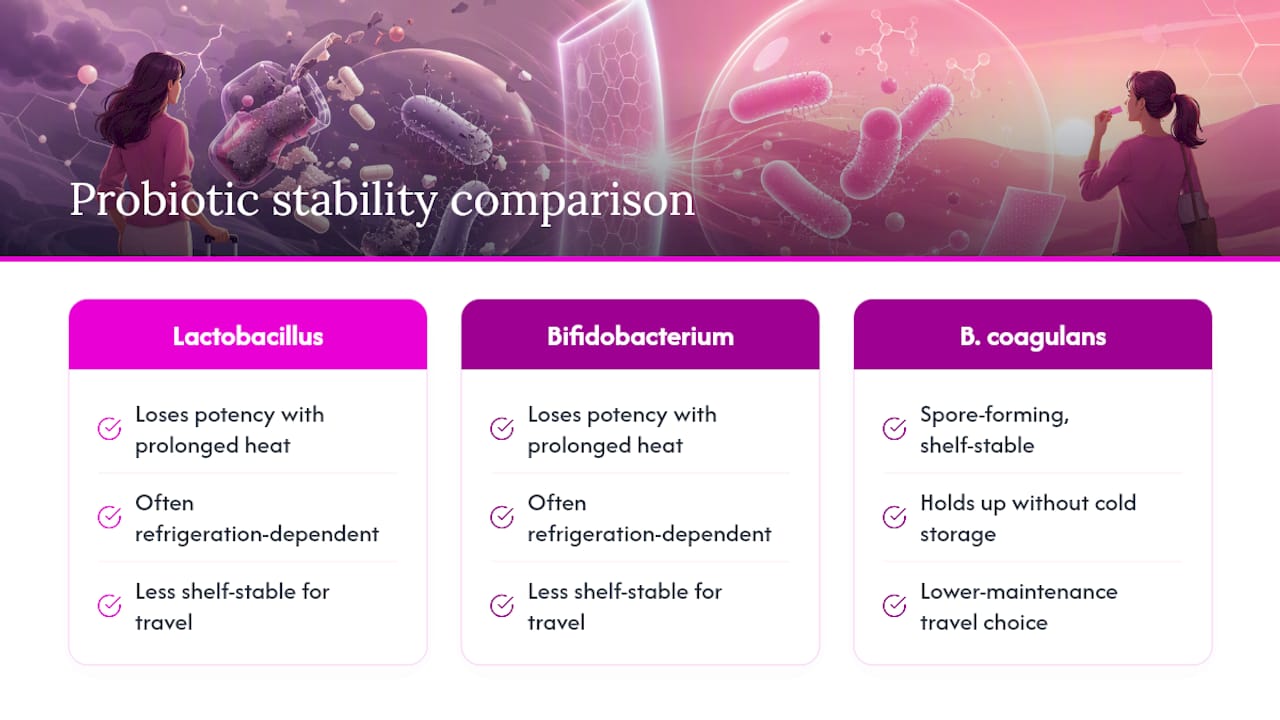
Not every supplement survives a hot car trunk or a sun-baked window seat equally well. Some probiotic strains lose potency under prolonged heat exposure, particularly refrigeration-dependent strains like certain Lactobacillus and Bifidobacterium species. Shelf-stable, spore-forming strains such as Bacillus coagulans hold up considerably better without cold storage.
Fish oil and liposomal formulas have their own vulnerability. Omega-3 oils oxidize under heat and light, which degrades both potency and shelf life over time.
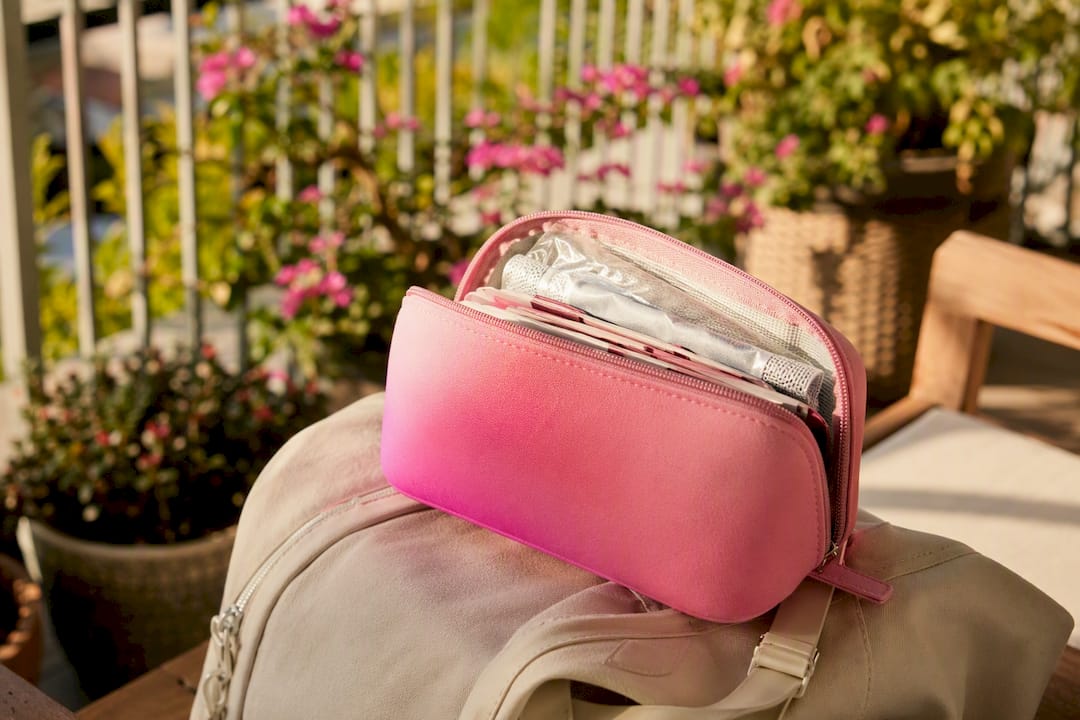
For a trip through a hot climate, an insulated pouch or a small ice pack protects anything temperature-sensitive. Short of that, keep these items in your carry-on, out of direct sunlight, and never in checked luggage sitting on a tarmac in July. If you have a choice between a shelf-stable formula and a refrigeration-dependent one for a trip, the shelf-stable version is simply the lower-maintenance travel companion.
How Do You Organize Supplements for a Fast Security Check?
Keep everything supplement-related in one accessible pouch rather than scattered across your bag. Separate powders and liquids into their own compartments so they’re easy to pull and scan individually.
- Bring a printed list or photo of your labels, especially for anything decanted out of its original bottle.
- Keep one original container for items likely to draw questions, like melatonin or an herbal blend with an unfamiliar name.
- If an agent asks about contents, answer plainly. Some items get swab-tested for explosive residue screening, which is routine and faster when your labeling is already clear.
- A weekly pill organizer works fine for short trips. For longer stays, daily blister packs or single-serve pouches hold up better since you’re not carrying one giant case through multiple airports.
Pro Tip: Put your pill organizer or pouch in an outer, easy-access pocket of your carry-on. Digging through a packed bag while a line builds behind you is how good organization falls apart at the checkpoint.
What Should Be on Your Pre-Trip Supplement Checklist?
- Pack carry-on essentials first: prescriptions, your daily multivitamin, a sleep aid if you use one, an electrolyte sachet, and a probiotic packet.
- Gather packing supplies: a travel pill case, a few resealable bags, single-serve sachets, and an insulated pouch if you’re headed somewhere hot.
- Handle pre-trip logistics: photograph your labels, check destination rules if you’re traveling internationally, and confirm any subscription refills will arrive before you leave.
Why Oral Strips Make Sense for Midlife Travelers
Nukalove built its entire product line around one observation: women managing menopause symptoms need supplements that work with a travel schedule, not against it. Oral strips dissolve on the tongue in seconds, with no water, no cap to fumble with in a middle airplane seat, and no loose powder that might spill inside a bag.
The compact, film-thin format mean a week’s worth of strips takes up less space than a single supplement bottle, and there’s no liquid to worry about under the 3-1-1 rule at all.
For sleep or focus products specifically, start with a conservative dose and check with your doctor before adding anything new to your routine, especially if you’re already managing other menopause-related treatments. Our jet lag guide for menopausal women goes deeper on timing sleep support around time zone changes.
What the Conventional Packing Advice Gets Wrong
Most travel guides treat supplement packing like a TSA compliance checklist and stop there. Follow the 3-1-1 rule, don’t overpack liquids, done. That’s necessary but incomplete. The bigger issue for most travelers isn’t getting flagged at security. It’s arriving with a bag of half-crushed tablets, a leaked fish oil bottle, or a powder tub too bulky to justify the space it took.
The rules matter, but format matters more. A traveler who swaps liquid melatonin and loose powder scoops for solid, single-serve, or strip formats has already solved 90 percent of their own packing problems before they reach the checkpoint. TSA compliance becomes almost automatic once you’re not carrying anything that needs measuring, scooping, or refrigerating.
If there’s one thing worth prioritizing above the rest, it’s this: pack for the trip you’re actually taking, not your entire home supplement shelf. Fewer containers means fewer decisions, fewer spills, and a faster line through security.
— NUKA
Travel-Ready Strips Built for This Exact Problem
If everything above sounds like more packing logistics than you want to manage on a Tuesday morning before a flight, that’s the point of switching formats. Nukalove makes oral strips specifically so you skip the pill organizer negotiations and liquid ounce math altogether.
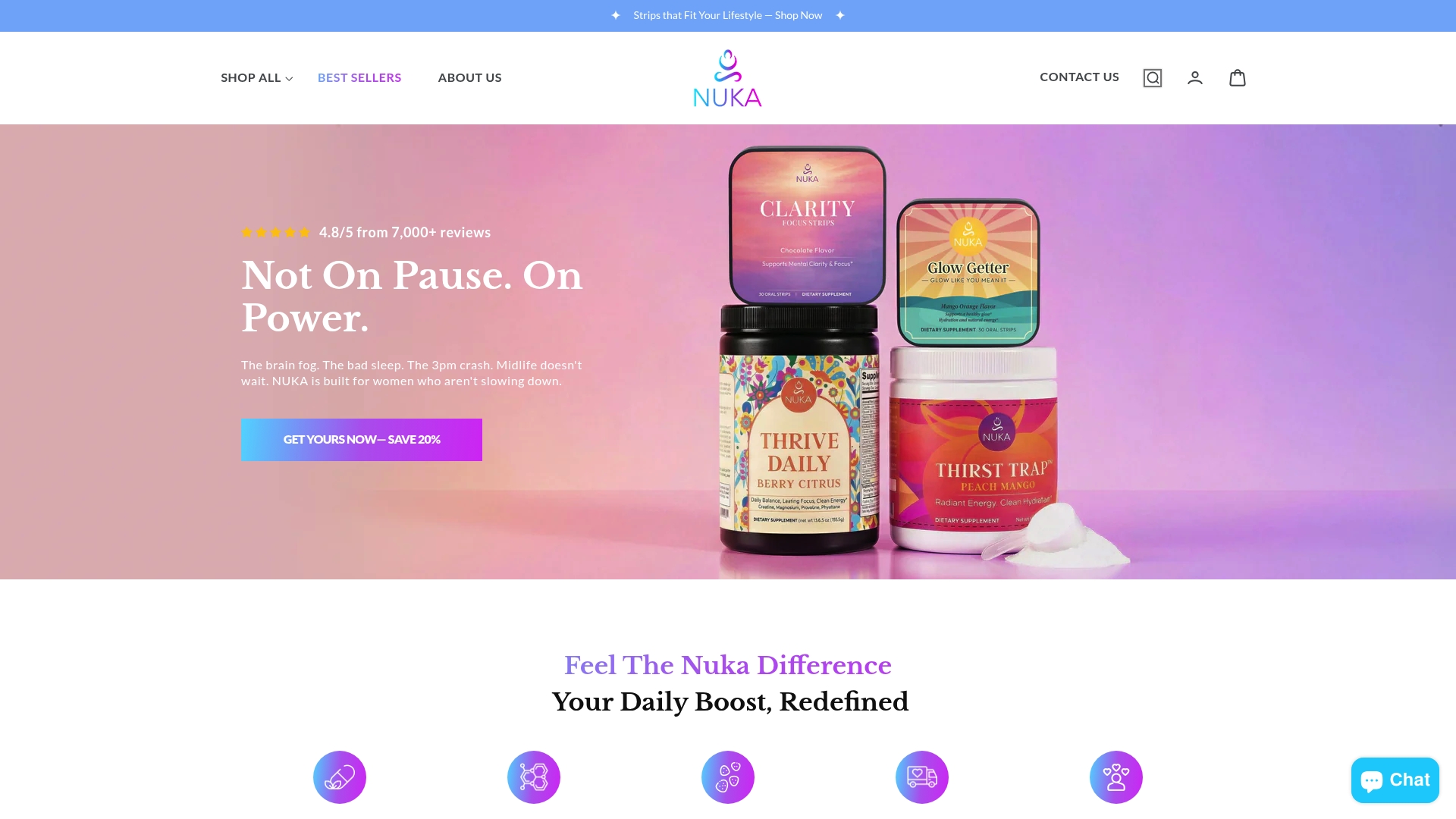
GLOW GETTER covers skin and hair support in a strip you can toss in a jacket pocket. SLEEPY STRIPS handle jet lag and disrupted sleep schedules without a liquid dropper or a countable pill count. CLARITY targets travel brain fog for early flights and long layovers. All three ship flat, shelf-stable, and require zero refrigeration or measuring.
Order a single pack or set up a subscription for recurring delivery timed to your travel calendar. Shop GLOW GETTER strips or check out SLEEPY STRIPS for your next trip before you start packing.
Sources
TSA’s own pages on carry-on vitamins, the liquids rule, and powder screening policy cover the official rules referenced throughout this guide. For more on how heat affects live-culture supplements, see the research on probiotic strain stability. If you’re managing broader travel health gear alongside supplements, Vitality’s guide to portable therapy tools covers adjacent packing considerations worth a look.
This article is general information, not a substitute for advice from a qualified doctor. Consult a qualified healthcare professional about your own circumstances before acting on anything here.