

Dissolves in Seconds: Oral Thin-Film Supplements for Midlife Women
Oral thin film supplements are postage-stamp-sized strips that dissolve on the tongue or inner cheek, delivering nutrients through the oral mucosa instead of the digestive tract. The main payoff is speed and convenience: no water, no swallowing, often faster onset than a capsule. The catch is that not every nutrient benefits equally, and dose ceilings, taste, and moisture stability all limit what a strip can realistically carry.
TL;DR:
- Oral thin films work best for low-dose actives like melatonin, B12, and vitamin D who benefit from rapid absorption and ease of use.
- The format is limited by dose ceilings, with most strips holding only a few milligrams of active ingredient, making high-dose supplements unsuitable.
- Formulation complexity and manufacturing controls mean that quality films require careful attention to taste-masking, moisture stability, and uniformity tests.
- Manufacturing methods like solvent casting and hot-melt extrusion influence scale, cost, and ability to include incompatible actives in multilayer films.
- They significantly improve compliance for travel, swallowing difficulties, or quick onset needs but are not a universal replacement for capsules or powders.
Table of Contents
- What Are Oral Thin Film Supplements, and What Formats Exist?
- How Do Oral Thin Films Work in the Body?
- What Goes Into a Supplement Film’s Formulation?
- How Are Oral Films Manufactured at Scale?
- Is an Oral Film Better Than a Capsule or Gummy?
- What Quality and Safety Standards Should a Film Supplement Meet?
- Which Supplement Categories Actually Suit Oral Film Delivery?
- Why We Chose Strips for Nukalove’s Formulas
- Do Oral Film Supplements Carry Allergen or Dosing Risks?
- Why Is Dosing Standardization Harder With Films Than Pills?
- What’s Next for Oral Film Technology?
- A Straight Answer on Where This Technology Actually Helps
- Try Nukalove’s Strip Formulas for Real-Life Convenience
- Sources
- FAQ
What Are Oral Thin Film Supplements, and What Formats Exist?
An oral thin film, sometimes shortened to OT For ODF (orodispersible film), is a thin polymer sheet loaded with an active ingredient that dissolves against the tongue or cheek lining. Manufacturers build them in a handful of distinct formats, and the differences matter more than most shoppers realize.
Orodispersible films are the general category: they disintegrate quickly anywhere in the mouth, usually within seconds, and release their contents into saliva for swallowing or partial mucosal absorption. Sublingual films are placed under the tongue, over a dense network of small veins that feed almost directly into systemic circulation. Buccal films sit against the inner cheek and tend to be mucoadhesive, meaning they stick in place longer for sustained, slower release rather than a quick hit. There’s also a fourth category worth knowing: oral-care films, which dissolve in the mouth but are meant for local effects like breath freshening rather than systemic absorption.
Physically, most strips measure somewhere in the range of a large postage stamp, thin enough to bend without cracking, and weigh a fraction of a gram. Texture varies by design intent:
- Fast-dissolving films vanish in seconds and are built for actives that need speed, like melatonin before bed or caffeine-based energy blends.
- Mucoadhesive films cling to the cheek or gum for a few minutes, useful when a formulator wants extended local exposure rather than an instant systemic spike.
- Hybrid films combine a fast-dissolving outer layer with a slower-releasing core, a strategy borrowed from pharmaceutical multilayer casting techniques.
The format dictates the use case. If the goal is rapid systemic onset, sublingual placement wins because it shortens the distance between absorption and bloodstream. If the goal is sustained local exposure, such as an oral-care ingredient meant to linger against the gums, buccal placement wins instead. This is also where the more familiar consumer term “dissolvable film vitamins” fits: it’s the everyday name for the same orodispersible technology described in formulation literature, just phrased for a shopper rather than a chemist.
How Do Oral Thin Films Work in the Body?
The core mechanism is transmucosal absorption: instead of traveling through the stomach and liver before reaching the bloodstream, an active ingredient placed under the tongue or against the cheek can cross a thin layer of mucosal tissue and enter circulation almost directly. That matters because it can bypass first-pass metabolism, the liver’s process of breaking down a portion of anything swallowed before it ever reaches general circulation.
Sublingual tissue is particularly permeable because of its dense, shallow blood supply. That’s why sublingual nitroglycerin has been used for chest pain relief for decades. It’s not folklore. It’s basic vascular geography, and it’s the same geography that supplement film makers are borrowing.
The clinical evidence for this advantage isn’t just theoretical. A crossover study on a 25,000 IU calcifediol (a vitamin D3 metabolite) orodispersible film found it produced comparable or superior absorption to a standard oral solution, measured by both peak concentration (Cmax) and total absorption over 72 hours (AUC).
That single data point tells you something important: the advantage is active-specific, not universal. Some nutrients show a meaningful bioavailability or speed advantage in film form. Others show essentially no difference from a standard capsule, because their absorption pathway doesn’t depend on avoiding first-pass metabolism in the first place.
Actives where transmucosal delivery tends to show real benefit include:
- Melatonin, which has a short half-life and benefits from faster, more predictable onset before sleep.
- Vitamin B12, which is poorly absorbed through the gut in some people and can take a partial shortcut via oral mucosa.
- Calcifediol (a vitamin D3 form), backed by the crossover data above.
- Low-dose iron, where smaller, more frequent mucosal exposure may reduce the gastrointestinal discomfort tied to larger oral doses.
Actives that don’t reliably benefit include anything requiring gram-level dosing, since a film simply can’t hold enough mass, and anything whose benefit depends on slow release through the gut, like many fiber-based or prebiotic ingredients.
What Goes Into a Supplement Film’s Formulation?
Every oral thin film starts with a polymer matrix, the “backbone” material that forms the actual sheet. Formulators pick a polymer based on how fast it needs to dissolve, how it feels on the tongue, and how it holds up to humidity during shipping and storage.
Pullulan is a common choice for premium, fast-dissolving films because of its clarity and clean mouthfeel, though it costs more than commodity alternatives. Maltodextrin (MDX) shows up frequently in nutraceutical strips because it’s inexpensive and disintegrates fast. Research on maltodextrin-based orodispersible films shows disintegration within one minute, with MDX often making up 40 to 80% of the film matrix, directly shaping both mechanical strength and how quickly it breaks down. HPMC (hydroxypropyl methylcellulose) offers more flexibility and better film integrity for strips that need to survive rougher handling. PVA and PVP are used less often in nutraceuticals but appear in pharmaceutical films where slower, more controlled release is the goal.
Plasticizers, usually glycerin or propylene glycol in small percentages, keep the film from cracking when it’s dry and flexible enough to bend without snapping in a pocket or purse. Here’s something most consumers never think about: residual water in the finished film acts as its own plasticizer. Manufacturing guidance on vitamin D film production generally targets 8 to 11% residual moisture to balance flexibility against mechanical strength, too dry and the strip is brittle, too wet and it degrades faster on the shelf.
Dose loading is where formulation gets genuinely difficult. A thin film has a hard ceiling on how much active ingredient it can hold before it becomes too thick, brittle, or slow to dissolve. Formulators get around this with microencapsulation to mask bitterness and control release, nanosuspensions to pack more active into less volume, or multilayer casting that separates incompatible ingredients into distinct layers of the same strip.
- Bitter actives like B12 or certain minerals typically require flavor-masking technology, not just added sweetener.
- Saliva stimulants (mild acids, certain flavor compounds) speed disintegration for people with naturally lower saliva flow.
- Disintegrants are chosen to balance speed against structural integrity during shipping.
Pro Tip: If a strip tastes unusually chemical or metallic, that’s often a sign the manufacturer skipped proper taste-masking rather than a flaw in the active ingredient itself.
How Are Oral Films Manufactured at Scale?
Three production methods dominate the industry, and each comes with distinct trade-offs for a brand deciding how to bring a product to market.
- Solvent casting is the most common method for nutraceutical films. A polymer solution containing the active ingredient is spread into a thin, even layer and dried under controlled airflow. It’s well suited to high-volume runs and gives formulators fine control over thickness, but drying time can bottleneck throughput.
- Hot-melt extrusion (HME) melts polymer and active together, then extrudes the mixture into a continuous film without solvents or a drying step. Research shows HME can achieve drug-loading levels up to roughly 21% by weight, useful for higher-dose actives that solvent casting struggles to accommodate.
- 3D printing is the newest method, still mostly confined to specialty and research applications. It allows precise, layer-by-layer construction, which opens the door to multilayer films that separate incompatible actives or personalize dosing strip by strip.
Regardless of method, a handful of process controls determine whether a batch turns out consistent or unusable. Coating thickness has to stay uniform across the entire sheet, since a variance of even a few microns changes dose per strip. Die-cutting precision determines whether every individual strip carries the same dose, and in-line quality control, weight checks, thickness sensors, sometimes near-infrared spectroscopy, catches problems before they reach packaging.
Scale-up brings its own headaches. Equipment that works fine for a lab-scale pilot batch often behaves differently at commercial width and speed, and reputable contract manufacturers typically require pilot runs before committing to full production. Minimum order quantities for commercial film runs often land in the tens to hundreds of thousands of strips, according to industry manufacturing guidance, which is worth knowing before a brand commits to this delivery format. Packaging matters just as much as the film itself: individual foil sachets protect against humidity far better than bulk pouches, since a single film exposed to open air can absorb moisture and degrade within days.
Is an Oral Film Better Than a Capsule or Gummy?
The advantages are real, but they’re not unconditional. Portability tops the list: a strip weighs almost nothing, needs no water, and survives a purse or carry-on without the leakage risk of a liquid or the bulk of a bottle. That translates into better compliance for people who forget to take capsules with meals, and it offers a discreet option for dosing in public without pulling out a pill bottle.
Faster onset is a genuine benefit for the right actives, as the calcifediol data above demonstrates, and film format also solves problems for people who have trouble swallowing pills, including some older adults and children.
The limitations are just as concrete. There’s a practical dose ceiling. Most active ingredients top out somewhere in the low tens of milligrams per strip, which rules out anything requiring gram-scale dosing, like most magnesium or fiber products. Taste and stability require real formulation skill; a poorly masked bitter active or a film stored in a humid bathroom cabinet can fail fast. And manufacturing complexity pushes cost per unit higher than a basic capsule, which shows up in retail pricing.
A quick decision checklist for evaluating whether a film fits your situation:
- Travel-heavy lifestyle? Films solve the water-and-bulk problem better than almost any other format.
- Need a low-dose, fast-acting nutrient like melatonin or B12? Films tend to shine here.
- Need a high-dose mineral or fiber supplement? A capsule or powder is still the more realistic choice.
- Sensitive to swallowing pills? Films offer a genuine workaround without needing liquid formulations.
What Quality and Safety Standards Should a Film Supplement Meet?
Dietary supplement oral films sold in the United States fall under FDA dietary supplement regulations, specifically the current good manufacturing practice requirements in 21 CFR Part 111. In practice, that means a legitimate manufacturer has to verify identity and strength of ingredients, control for contamination, and document batch records, the same baseline expected of any capsule or tablet supplement, just applied to a thinner, more moisture-sensitive product.
Moisture control is the single biggest stability risk specific to films. A strip that absorbs ambient humidity can soften, clump, or lose potency well before its printed expiration date. That’s why single-dose foil sachets with built-in desiccant properties have become close to standard for anything sold outside a climate-controlled retail environment, and why shelf-life testing needs to account for real-world handling, not just laboratory storage.
When evaluating a manufacturer or a finished product, a few quality checks are worth asking about directly:
- Content uniformity testing, confirming every strip in a batch carries a consistent, accurate dose.
- Disintegration and dissolution testing, verifying the strip breaks down within its stated timeframe, often within one minute for maltodextrin-based films.
- Tensile strength testing, ensuring the film survives packaging and shipping without cracking or tearing.
- Microbial limits testing, standard for any orally consumed product but particularly relevant given the moisture sensitivity of film matrices.
A brand that can’t answer basic questions about these four tests is one worth being cautious with.
Which Supplement Categories Actually Suit Oral Film Delivery?
Not every supplement category makes sense as a film. The ones that work best share a common trait: low milligram dosing paired with a benefit from either speed or convenience. Sleep aids built around melatonin are probably the clearest fit, since the active works at low doses and timing before bed rewards fast onset. Vitamin B12 and calcifediol-based vitamin D products follow close behind, both backed by absorption data discussed earlier. Low-dose iron formulations can work well for people who find standard iron capsules hard on the stomach. Certain probiotic strains formulated specifically for film stability exist, though this remains one of the more technically demanding applications given how sensitive live cultures are to processing heat and moisture. Oral-care actives, like breath-freshening or gum-health compounds, round out the realistic category list, since they benefit from local rather than systemic delivery.
For a brand or product manager evaluating a contract manufacturer (CMO) for a nutraceutical film project, a few questions separate the serious operators from the rest:
- Does the facility operate under cGMP with documented batch records?
- What flavor-masking technology do they have in-house, versus outsourcing to a third party?
- Have they run pilot-scale batches before committing to full production, and can they share disintegration or stability data from those runs?
- What packaging options do they offer for moisture protection, individual sachets versus bulk pouches?
Expect meaningful lead times. Formulation development and stability testing for a new film product commonly stretches across several months before a product is market-ready, and minimum order quantities for commercial runs often start in the tens of thousands of strips. Brands that skip pilot-scale testing to save time frequently discover moisture or taste problems only after a full production run, which is the single most expensive mistake in this category.
Why We Chose Strips for Nukalove’s Formulas
At Nukalove, we build products around one real constraint: women in midlife are busy, traveling, and tired of supplements that require water, refrigeration, or a full glass to swallow. Oral strip format solves that directly, no capsule to choke down at an airport gate, no powder to mix on a flight.
A few practical tips worth knowingwhether you’re using our strips or evaluating anyone else’s:
- Storage matters more than people think. Keep strips in their original sealed packaging, away from bathroom humidity or a hot car dashboard.
- Timing depends on the active. A sleep strip works best taken shortly before bed, while an energy or focus strip works better 20 to 30 minutes ahead of when you need the effect.
- Travel packing is straightforward. Strips pass through airport security without liquid restrictions, a detail we cover in more depth in our guide to packing supplements for travel.
For a deeper look at how absorption speed varies by active, our breakdown of sublingual versus oral absorption timing is worth a read.
Do Oral Film Supplements Carry Allergen or Dosing Risks?
Allergen risk in oral films comes primarily from the polymer base and flavoring system, not just the active ingredient. Films built on gelatin, for instance, aren’t suitable for anyone avoiding animal-derived ingredients, and flavor systems sometimes rely on compounds derived from tree nuts or soy that need to be disclosed clearly on packaging. Anyone with known food sensitivities should read the full ingredient list on a film supplement the same way they would a packaged snack, not just check the active-ingredient panel.
Dose accuracy is a separate concern, and it’s specific to how films are manufactured. Because the active ingredient has to be distributed evenly across a thin sheet before die-cutting into individual strips, any inconsistency in that coating step means some strips end up carrying slightly more or less active than the label states. This is precisely why content uniformity testing matters as much as it does, and why buying from manufacturers who document that testing is not optional caution, it’s a basic safeguard.
People on medications that interact with specific nutrients, blood thinners and vitamin K, for example, or thyroid medication and calcium, should apply the same caution to a film supplement as they would to any other delivery format. Faster absorption doesn’t change an interaction risk; if anything, it can make the timing of that interaction more pronounced. Checking with a pharmacist about timing relative to other medications is worth the five minutes it takes.
Why Is Dosing Standardization Harder With Films Than Pills?
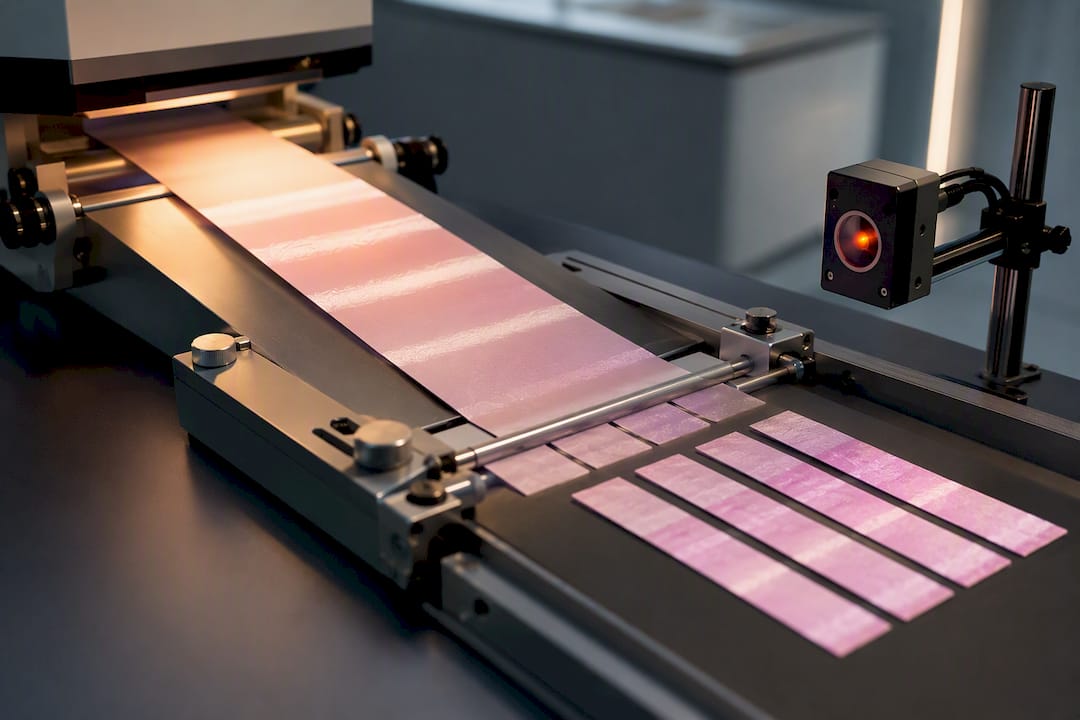
A tablet press produces thousands of identical, weighed doses with well-established, decades-old technology. A thin film has to achieve the same consistency across a continuous sheet that gets cut into individual doses afterward, and that geometry makes precision genuinely harder to hit.
The core challenge is that any variation in coating thickness during casting, even a few microns, translates directly into dose variation once the sheet is die-cut. A slightly thicker section of film carries more active ingredient than a thinner section right next to it. Manufacturers manage this with in-line thickness sensors and post-production content uniformity testing, but it demands tighter process control than capsule filling does.
Dose flexibility is the other half of the problem. A capsule manufacturer can offer a product in 5 mg, 10 mg, and 25 mg strengths relatively easily by adjusting fill weight. A film manufacturer has to essentially reformulate the film matrix for each strength, since changing active load without adjusting polymer ratio can affect disintegration time, flexibility, and taste. This is a major reason most oral film supplements ship in one or two fixed doses rather than the wide strength ranges common in capsule lines.
For brands, this means film format works best for actives where a single, well-researched dose serves most of the target audience, rather than products that need fine-tuned dosing across a wide range of individual needs. Consumers should expect fewer strength options on a film label than they’d find in a capsule aisle, and that’s a formulation reality, not a shortcoming specific to any one brand.
What’s Next for Oral Film Technology?
Personalization is the direction the category is heading, and 3D printing is the technology making it possible. Rather than casting one continuous sheet and cutting uniform doses, printing builds each strip layer by layer, which opens the door to multilayer films that separate incompatible actives into distinct zones of the same strip or adjust individual dosing without reformulating an entire production run.
That capability matters for supplement combinations that don’t play well together in a single layer, an antioxidant and a mineral that degrade each other on contact, for instance. Multilayer and tandem casting techniques already used in pharmaceutical development are starting to migrate into nutraceutical applications for exactly this reason, letting formulators combine actives that would otherwise need separate products entirely.
The bigger shift is toward films tailored to smaller, more specific populations rather than one-size-fits-all mass production. Research-stage work on printed films suggests a future where dose strength could be adjusted per batch based on population data (age group, typical body weight) without retooling an entire manufacturing line. That’s still mostly a research and pilot-scale capability rather than a mainstream commercial reality, but the underlying printing technology already exists and continues to mature. For a category built on convenience, the next real leap isn’t a faster-dissolving film. It’s a smarter one, capable of carrying more complex, better-targeted formulations without sacrificing the portability that makes strips worth choosing in the first place.
A Straight Answer on Where This Technology Actually Helps
The nutraceutical industry has a habit of treating every new delivery format as a universal upgrade, and oral thin films get caught in that same hype cycle more than they should. They’re not a better vitamin C, or a better magnesium, or a better fish oil. They’re a better melatonin, a better B12, a better vitamin D for people whose gut absorption struggles with standard capsules. That’s a narrower claim than most marketing suggests, and it’s the honest one.
What gets underestimated is how much the format itself changes behavior, not just absorption. A woman who skips her evening magnesium because she’s traveling without a water bottle isn’t skipping it because the pill doesn’t work. She’s skipping it because the format didn’t fit her day. That’s the real problem oral films solve, and it’s a bigger deal than most bioavailability charts suggest. The nutraceutical literature backs this up directly: improved compliance shows up as a genuine, measurable benefit of film formats, right alongside any pharmacokinetic edge.
Where we push back on industry enthusiasm is the idea that films are formulation-simple. They’re not. Getting taste, stability, and dose accuracy right on a thin sheet is arguably harder than doing it in a capsule, and any brand that treats film development as a quick reformulation of an existing product is going to ship something that tastes bad or falls apart in a humid glove compartment. The brands worth trusting are the ones who treat every active as its own formulation problem, not a drop-in swap.
— NUKA
Try Nukalove’s Strip Formulas for Real-Life Convenience
Nukalove built its entire product line around the format this article just walked through: fast-dissolving oral strips designed for women navigating energy dips, focus fog, restless nights, and hydration gaps, particularly during menopause, without needing a glass of water or a pill organizer.
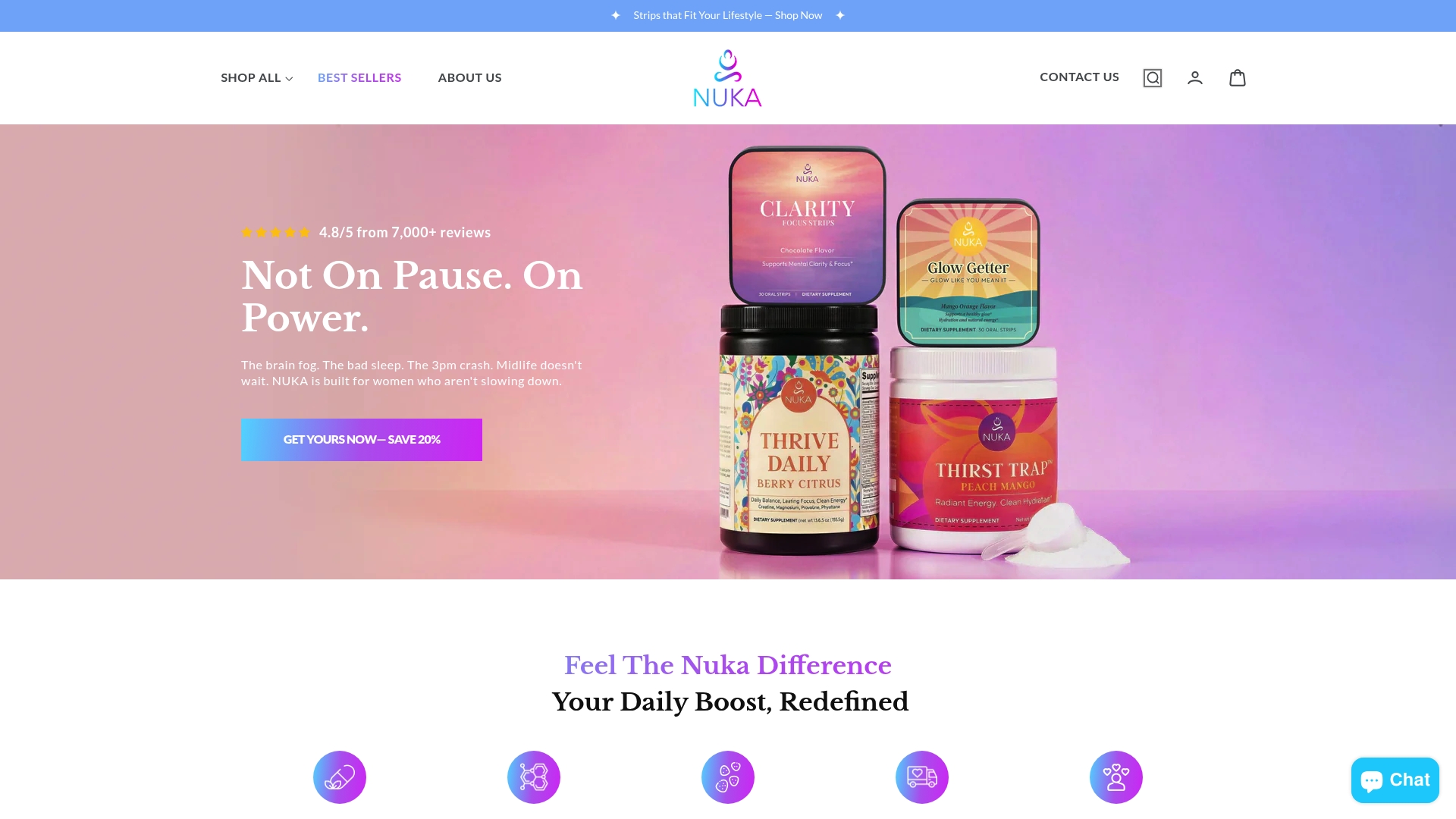
The lineup covers the situations that actually come up during a busy week or a cross-country flight. Energy Strips are built for that afternoon slump when coffee isn’t an option. Focus Strips use functional mushroom ingredients like lion’s mane and cordyceps for mental clarity without a jittery crash. Oral Sleep Strips are formulated for winding down at night, and Hydration Powder rounds out the collection for electrolyte replacement on travel days. Every formula is tested in labs, and the brand is built by women who understand why a strip beats a bottle of pills at 30,000 feet.
You can start with a single pack to test a formula, move to a bundled collection across the full product catalog, or set up a subscription for recurring delivery so you’re never digging through a suitcase for a refill. Check the Energy Strips collection to see current formulas and get your first pack on the way.
Sources
- Orodispersible Films: Current Innovations and Emerging Trends - PMC
- Orodispersible Film (ODF) Platform Based on Maltodextrin for Therapeutical Applications
- The dawning era of oral thin films for nutraceutical delivery: From laboratory to clinic.
This article is general information, not a substitute for advice from a qualified doctor. Consult a qualified healthcare professional about your own circumstances before acting on anything here.
FAQ
What Are Some Examples of Oral Thin Film Products?
Common examples include melatonin sleep strips, vitamin B12 strips, vitamin D (calcifediol) films, and low-dose iron strips, along with functional-mushroom focus blends and electrolyte-hydration strips. Nukalove’s Energy, Focus, Sleep, and Hydration Powder lines fall into this category, each targeting a different daily need through the same strip format.
What Is an Oral Film Medicine?
An oral film medicine is a thin, dissolvable strip that delivers a drug or supplement ingredient through the mouth, either sublingually or buccally, instead of requiring swallowing. Pharmaceutical examples include prescription films for nausea and certain neurological conditions, while supplement versions apply the same technology to vitamins, minerals, and botanicals.
How Are Mouth-Dissolving Films Made?
Commercial films are typically made through solvent casting, where a polymer solution containing the active ingredient is spread into a thin layer and dried, or hot-melt extrusion, which melts and extrudes the ingredients without solvents. Both methods require precise thickness control, since even minor variation changes the dose in each individual strip.
What Are Thin Films Used For?
Thin films deliver a wide range of actives, from prescription medications to dietary supplements, favored for fast onset, portability, and easier compliance among people who struggle with pills or liquids. In the supplement space specifically, they’re used most often for melatonin, B12, vitamin D, and hydration or energy blends, where low dosing and speed matter more than high milligram loads.
Do Oral Strips Actually Absorb Faster Than Pills?
For some actives, yes. Clinical data on a calcifediol orodispersible film showed comparable or superior absorption to a standard oral solution, but the advantage depends heavily on the specific ingredient and doesn’t apply universally across every nutrient.
How Much Do Nukalove’s Oral Strips Cost?
Current pricing for Nukalove’s Energy, Focus, Sleep, and Hydration Powder products is available directly on the product collection pages, since pricing can vary by bundle and format.