

4 Evidence Based Moves to Restore Natural Energy During Menopause
The most effective natural approach combines four moves: protect your sleep first, eat protein at every meal to stabilize blood sugar, strength train 2 to 3 times a week, and test for treatable causes like low iron, B12, or thyroid dysfunction before assuming it’s “just menopause.” Targeted supplements help once you know what you’re correcting. If night sweats are wrecking your sleep, hormone therapy is genuinely effective and worth a real conversation with your clinician. This guidance is built around the strongest evidence available, not the loudest wellness trend.
TL;DR:
- Strength training two to three times weekly with compound movements is essential to counteract muscle and mitochondrial decline linked to menopause fatigue.
- Testing for deficiencies in iron, B12, vitamin D, thyroid function, and blood sugar is crucial before supplementing, as correcting these yields fast improvements.
- Consuming 25 to 30 grams of protein at each meal and shifting toward a Mediterranean diet helps stabilize blood sugar and reduce energy crashes.
- Prioritizing sleep quality through room cooling, consistent schedules, and avoiding alcohol and caffeine has the greatest impact on daytime energy levels.
- Proven supplements like magnesium glycinate, methylated B vitamins, vitamin D, and ashwagandha can support energy and stress reduction when used appropriately.
Table of Contents
- Why Does Menopause Cause Such Low Energy?
- What Tests Should You Ask Your Doctor to Run?
- How Should You Eat to Keep Energy Steady?
- Which Exercise Actually Rebuilds Stamina?
- Why Is Sleep the Biggest Lever for Menopause Energy?
- What Supplements and Botanicals Actually Have Evidence Behind Them?
- What Does a Realistic Day Look Like?
- What is the perspective on natural energy during menopause?
- How portable oral strips can fit into this plan
- Selected Studies Worth Reading Further
- Sources
Why Does Menopause Cause Such Low Energy?
Estrogen does more than regulate your cycle. It helps your mitochondria, the structures inside your cells that produce energy, run efficiently. As estrogen declines during perimenopause and menopause, mitochondrial efficiency drops with it, and so does your cellular output of ATP, the molecule your body actually burns for fuel. That’s not a mood issue or a motivation problem. It’s a measurable shift in how your cells generate power, according to a Frontiers in Reproductive Health review on menopause fatigue.
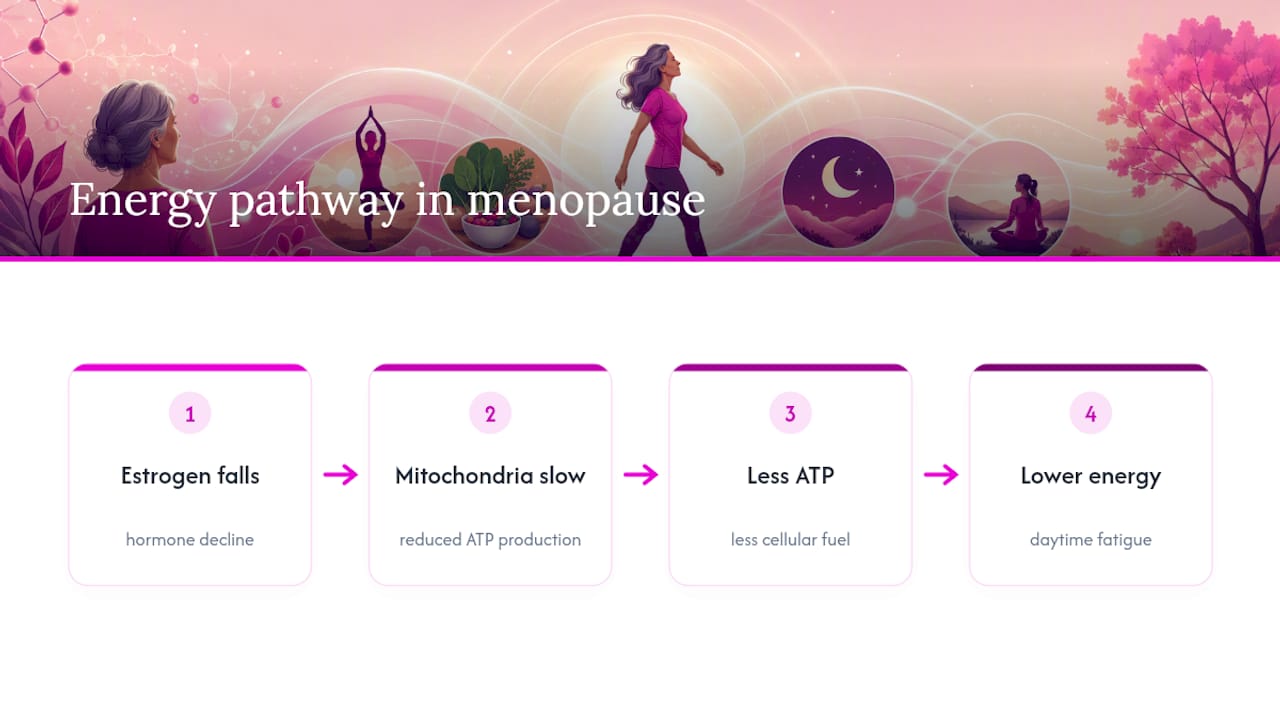
You’re also losing muscle mass faster than you did in your 30s, and muscle tissue is packed with mitochondria. Less muscle means less mitochondrial density overall, which compounds the fatigue problem your hormones already started. This is part of why strength training isn’t optional advice here. It’s a direct countermeasure to a specific biological mechanism.
Then there’s sleep. Night sweats and hot flashes fragment sleep architecture, and disrupted circadian rhythm makes it harder to fall into deep, restorative sleep stages, even on nights without a hot flash. For most women, this is the proximate cause of daytime exhaustion, even when hormone shifts are the root cause underneath.
By the numbers: Roughly 85% of women report fatigue during the menopause transition. That makes it one of the most common complaints of this life stage, not an outlier symptom.
Fatigue this widespread rarely has one cause. It usually stacks: hormonal decline, muscle loss, and broken sleep all pulling in the same direction at once.
What Tests Should You Ask Your Doctor to Run?
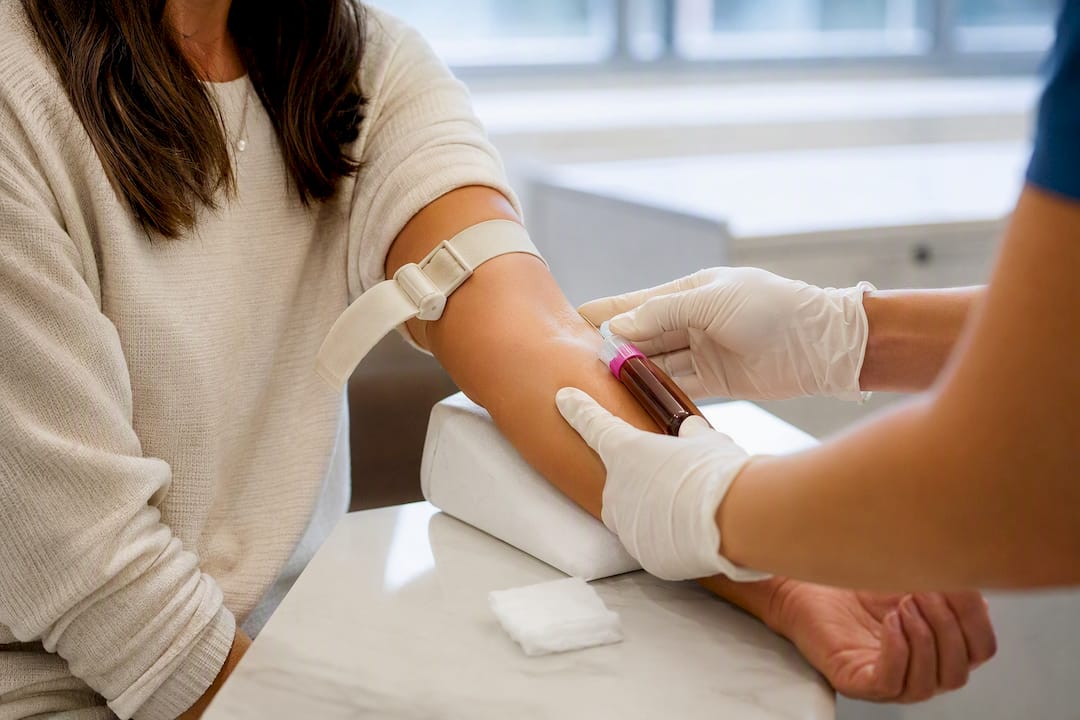
Before you assume your exhaustion is purely hormonal, rule out the medical causes that mimic it almost perfectly. A short panel of blood tests can save you months of guessing.
- CBC with ferritin: Iron deficiency causes fatigue that feels identical to menopausal exhaustion, and it’s common in women with heavy perimenopausal bleeding.
- Vitamin B12: Low B12 slows energy metabolism and is easy to miss, especially in women eating plant-forward diets.
- TSH and free T4: Thyroid dysfunction becomes more common in midlife and directly causes fatigue, weight changes, and brain fog.
- Vitamin D: Deficiency is widespread and linked to low energy, mood changes, and muscle weakness.
- Fasting glucose or HbA1c: Blood sugar dysregulation compounds energy crashes and often worsens during the menopause transition.
If you snore, wake gasping, or your partner notices pauses in your breathing, ask about a sleep apnea screening. Persistent low mood alongside fatigue deserves a conversation about depression, too, since the two often overlap and get misattributed to hormones alone.
Correcting a real deficiency, particularly iron or B12, tends to produce the fastest and most noticeable improvement in fatigue of anything on this list. But iron supplementation should start only after ferritin testing confirms you’re actually deficient. Excess iron is genuinely harmful, and “just try an iron pill” is bad advice without a blood draw first.
How Should You Eat to Keep Energy Steady?
Food timing and composition matter more during menopause than they did a decade ago, mostly because blood sugar swings hit harder when estrogen isn’t buffering the response the way it used to.
- Put protein on every plate. Aim for roughly 25 to 30 grams per meal, whether that’s eggs and Greek yogurt at breakfast, chicken or lentils at lunch, or fish and tofu at dinner. Protein slows glucose absorption and prevents the crash that follows a carb-heavy meal.
- Shift toward a Mediterranean-style pattern. Swap processed meats and refined grains for fish, legumes, olive oil, whole grains, and a wide variety of vegetables. Research comparing meal patterns to isolated supplements found whole-diet shifts produced better fatigue outcomes than relying on single nutrients alone.
- Add isoflavone-rich foods a few times a week. Tempeh, tofu, and edamame contain plant compounds that moderate daily isoflavone intake can meaningfully reduce severe hot flash frequency, which indirectly protects sleep and energy.
- Don’t skip meals hoping to “reset.” Long fasting windows tend to worsen afternoon energy slumps in women already dealing with blood sugar volatility. A protein-and-fiber snack between lunch and dinner, think apple with almond butter or cottage cheese with berries, prevents the 3 p.m. wall.
Pro Tip: Pair your morning coffee with food, not on an empty stomach. Caffeine on its own can spike cortisol and worsen the blood sugar dip that follows an hour later, which is exactly the crash you’re trying to avoid.
Staying hydrated matters here too. Even mild dehydration mimics fatigue symptoms almost exactly, and menopausal night sweats quietly deplete fluids and electrolytes overnight without you noticing until midafternoon.
Which Exercise Actually Rebuilds Stamina?
Cardio isn’t the answer most women reach for first, but it’s usually the wrong first move. Strength training does more to protect energy long term, because it directly counters the muscle loss and mitochondrial decline driving menopausal fatigue in the first place.
- Train 2 to 3 times a week with compound movements. Squats, rows, push presses, and deadlift variations recruit the most muscle per session and build the mitochondrial density that keeps energy stable.
- Start with 3 sets of 8 to 12 reps at a weight that challenges you by the last two reps. Progress by adding small amounts of weight every one to two weeks, not by adding more sessions.
- No equipment? No problem. Bodyweight squats, glute bridges, push ups against a wall or counter, and resistance bands cover most of the same movement patterns.
- Watch the cardio. Escalating high-intensity cardio to “fight” fatigue often backfires in midlife women, elevating cortisol and deepening the exhaustion you’re trying to solve. Walking daily for circulation and mood is fine and encouraged. Marathon training when you’re already depleted usually isn’t.
Two to three resistance sessions weekly is enough to preserve muscle mass and mitochondrial function without tipping into overtraining. More isn’t automatically better here.
Why Is Sleep the Biggest Lever for Menopause Energy?
If you fix only one thing on this list, fix sleep. Restoring sleep quality tends to produce the single largest jump in daytime energy of any intervention available, according to research on sleep and menopause outcomes, because it addresses the proximate cause of fatigue rather than just one contributing factor.
- Cool the bedroom down. Aim for 65 to 68°F, use moisture-wicking sheets, and keep a fan running. Night sweats hit harder in a warm room.
- Keep a consistent sleep and wake time, even on weekends. Circadian rhythm responds to consistency far more than to any single “sleep hack.”
- Cut evening alcohol and caffeine. Alcohol fragments deep sleep even when it helps you fall asleep faster, and caffeine’s half-life means a 3 p.m. cup can still be in your system at midnight.
- Layer bedding you can shed quickly. A lightweight top sheet plus a removable blanket beats one heavy comforter when hot flashes hit at 2 a.m.
- Ask about CBTi or a sleep study if insomnia persists beyond a few weeks, and don’t rule out discussing hormone therapy with your doctor if night sweats are the main disruptor. It remains one of the most effective treatments available for that specific symptom.
Pro Tip: Magnesium glycinate, taken 30 to 60 minutes before bed, is one of the lower-risk options for supporting sleep onset. It’s generally well tolerated and doesn’t carry the next-day grogginess some people get from other sleep aids.
What Supplements and Botanicals Actually Have Evidence Behind Them?
Not every bottle on the supplement aisle deserves your money. Here’s what the evidence actually supports, and where the caveats matter.
- Magnesium glycinate: Supports sleep and muscle recovery with a strong safety profile.
- Methylated B complex: Active forms like methylfolate and methylcobalamin tend to be better tolerated in women with common methylation gene variants, compared to standard folic acid and cyanocobalamin.
- Vitamin D: Worth supplementing only if bloodwork confirms deficiency, not as a blanket “everyone needs it” recommendation.
- CoQ10 and creatine: Both support cellular energy production directly, with creatine also showing benefits for strength training recovery.
- Omega-3 fatty acids: Support mood and reduce inflammation, both of which affect perceived energy levels.
- Ashwagandha: A 2026 double-blind trial found 56 days of daily ashwagandha root extract produced significant improvements in perceived stress, hot flash frequency, and quality of life compared to placebo, making it one of the better-supported adaptogens for menopause energy.
- Rhodiola: Commonly used for fatigue, with a longer history of use in stress physiology research.
- Probiotics: An emerging area of interest. Certain probiotic strains may increase circulating estrogen levels over months, pointing to a gut-based pathway worth watching, though it’s early evidence rather than a settled recommendation.
Worth remembering: the biggest safety rule here is test before you treat. Iron, in particular, should never be supplemented without a ferritin test confirming you actually need it.
Before combining anything with prescription medications, run it by your clinician, and lean toward formulations with transparent, evidence-ranked ingredient lists over trendy blends with unclear dosing.
What Does a Realistic Day Look Like?
- Morning: Eggs with vegetables and a side of berries, or Greek yogurt with nuts. Coffee with food, not before it.
- Midday: A 20 to 30 minute resistance session (or your rest day), followed by a lunch built around fish, chicken, or legumes plus a big serving of vegetables.
- Afternoon: A protein and fiber snack around 2 to 3 p.m. to prevent the slump, plus a short walk outside for light exposure and circulation.
- Evening: A Mediterranean-style dinner with tofu, tempeh, or fish a few nights a week. Cool the bedroom, dim the lights an hour before bed, and take magnesium glycinate 30 to 60 minutes before sleep if you use it.
What is the perspective on natural energy during menopause?
This guidance is based on evidence rather than trend cycles, providing straightforward information instead of another wellness fad. Hormone therapy has a real place for women whose night sweats are the primary problem, and we’d rather point you toward that conversation with your doctor than pretend a supplement replaces it.
— NUKA
How portable oral strips can fit into this plan
None of the strategies above require a large pill organizer, and the products are designed for moments when a full supplement routine falls apart: mid flight, between meetings, or halfway through a trip when your usual cabinet is far away.

Precise dosing matters more in midlife than most women realize, especially when you’re layering magnesium, B vitamins, or adaptogens on top of an already full day. A strip you can take in seconds beats a supplement you forget because it’s buried in a suitcase. Our Glow Getter oral strips support daytime energy without the crash of another coffee, and our Deep ZZZs sleep strips are built for exactly the wind-down routine described above. If you’re on prescription medication, talk to your clinician before adding anything new. Ready to see what fits your routine? Browse the full NUKA lineup and start with the one symptom that’s bothering you most.
Selected Studies Worth Reading Further
- Frontiers in Reproductive Health: menopause fatigue and mitochondrial function
- PMC: ashwagandha RCT on stress and menopause symptoms
- PMC: isoflavones, curcumin, and probiotics review
- PubMed: Mediterranean diet and fatigue outcomes
- Bone Health Sacramento: menopause and bone loss
This article is general information, not a substitute for advice from a qualified doctor. Consult a qualified healthcare professional about your own circumstances before acting on anything here.
Sources
- Frontiers in Reproductive Health — menopause fatigue / mitochondrial link
- PMC — Ashwagandha RCT 2026
- PMC review — isoflavones and curcumin evidence
- PubMed — Mediterranean diet and fatigue outcomes