

Menopause Insomnia Remedies That Actually Work
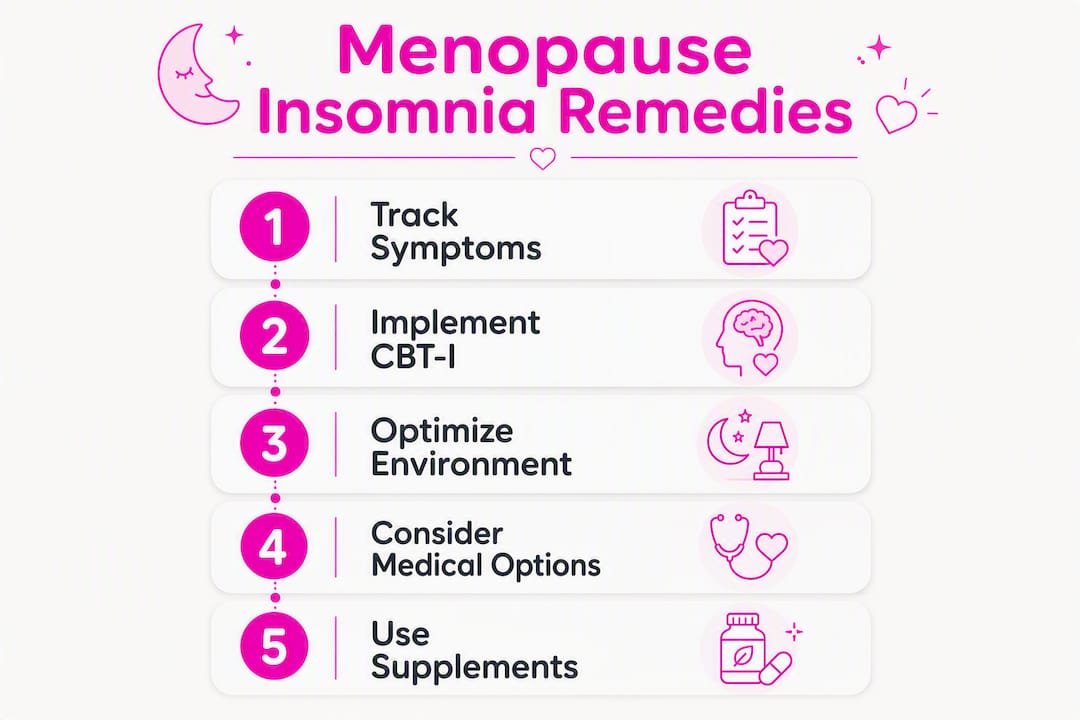
Sleep problems during menopause are among the most reliably treatable symptoms women face, yet most go unaddressed for years. The remedies with the strongest evidence are Cognitive Behavioral Therapy for Insomnia (CBT-I), targeted sleep-hygiene and circadian-reset habits, Hormone Replacement Therapy (HRT) when hot flashes and night sweats are driving awakenings, and a personalized supplement stack. Sleep problems affect a significant portion of women during the menopausal transition, and women with moderate-to-severe hot flashes are more likely to report significant sleep disruption.
What you can try tonight:
- Lower your bedroom temperature to a cool, comfortable level and switch to moisture-wicking sheets
- Set a fixed wake time and hold it every day, including weekends
- Cut caffeine by early afternoon (see how caffeine timing affects menopause sleep)
- Try a low dose of melatonin cautiously if circadian disruption is the issue
- Ask your clinician about HRT if night sweats are waking you multiple times per night
- Request a CBT-I referral or explore a validated digital CBT-I program
A note on safety: no supplement or prescription medication should be started without reviewing your current medications and health history with a clinician.
Table of Contents
- Why menopause disrupts your sleep: the physiology behind it
- The most effective menopause insomnia remedies start with CBT-I
- Medical options: when HRT and prescription medications make sense
- Supplements and OTC options: what the evidence actually says
- Your practical nightly toolkit for fewer awakenings
- How Nukalove DEEP ZZZS™ oral sleep strips fit into a menopause sleep plan
- When to see a clinician: red flags and questions to bring
- Key Takeaways
- Sleep solutions built for women in midlife
- DEEP ZZZS™ sleep strips: a practical option for menopausal women
- Authoritative sources and further reading
- The perspective on menopause sleep that most articles miss
Why menopause disrupts your sleep: the physiology behind it
The core drivers are vasomotor symptoms, falling estradiol, circadian rhythm shifts, and a higher risk of primary sleep disorders that often go undiagnosed. Understanding which one is hitting you hardest is the fastest route to the right fix.

Hot flashes and night sweats fragment sleep by triggering brief arousals, sometimes dozens per night, even when you don’t fully wake. Falling estradiol levels are directly linked to these vasomotor events, and lower estradiol also reduces the amount of REM sleep and slow-wave sleep your brain can generate. Higher follicle-stimulating hormone (FSH) levels that accompany this decline are associated with more frequent nocturnal awakenings.
The circadian disruption piece is underappreciated. Estrogen plays a role in regulating melatonin secretion and core body temperature rhythm. When estrogen drops, the body’s internal clock becomes less precise, making it harder to fall asleep at a consistent time and easier to wake at 3 AM with a racing mind.
Menopause also raises the risk of obstructive sleep apnea and restless legs syndrome, both of which can look a lot like vasomotor insomnia on the surface. Loud snoring, gasping, or uncontrollable leg sensations at night are not hot-flash symptoms, and treating them as such wastes months.
Common symptom patterns and their likely drivers:
- Waking drenched and unable to fall back asleep: vasomotor (hot flashes/night sweats)
- Difficulty falling asleep with racing thoughts: anxiety, cortisol dysregulation, or circadian shift
- Waking to urinate repeatedly: bladder changes, possibly addressable with vaginal estrogen
- Daytime exhaustion despite time in bed: possible sleep apnea or restless legs
Pro Tip: Track the timing of your awakenings and any associated symptoms for one to two weeks before your next clinician visit. A simple notes-app log — time awake, what woke you, how you felt — can cut the diagnostic guesswork in half.
The most effective menopause insomnia remedies start with CBT-I
CBT-I is the gold-standard first-line treatment for chronic insomnia and produces durable benefits for menopausal women that often outlast medication by months. Randomized trials show it improves total sleep time, reduces time awake after sleep onset, and sustains remission at six months or longer in peri- and postmenopausal women. A single component like sleep restriction can produce short-term gains, but the full program delivers larger and more lasting results.
CBT-I core components, applied to menopause:
- Stimulus control: Use the bed only for sleep and sex. If you’re awake for more than 20 minutes, get up and do something calm until you feel sleepy. This breaks the conditioned association between your bed and wakefulness.
- Sleep restriction: Temporarily compress your time in bed to match your actual sleep time, then gradually extend it as sleep efficiency improves. Counterintuitive but highly effective.
- Cognitive restructuring: Challenge the catastrophic thoughts that follow a bad night (“I’ll be useless tomorrow”). Replacing those thoughts with realistic ones reduces the anxiety that makes the next night worse.
- Relaxation training: Progressive muscle relaxation, diaphragmatic breathing, or body-scan meditation before bed lowers the physiological arousal that hot-flash awakenings amplify.
- Sleep hygiene and circadian reset: Morning bright light exposure, a fixed wake time, limited late naps, and exercise timing are the behavioral levers that reset your circadian clock. These daytime habits are as important as anything you do at bedtime.
Where to access CBT-I:
- A licensed psychologist or behavioral sleep medicine specialist (ask your primary care provider for a referral)
- Telehealth platforms that offer CBT-I with trained therapists
- Validated digital programs such as Sleepio or the VA’s free online CBT-I Coach app
Pro Tip: Combine short-term environmental fixes (cooling the bedroom, moisture-wicking bedding) with CBT-I from the start. The environmental changes reduce the frequency of hot-flash awakenings while CBT-I retrains your brain’s response to them. Neither works as well alone.

Medical options: when HRT and prescription medications make sense
HRT is often the most effective option when night sweats and hot flashes are the primary cause of sleep disruption. When estrogen therapy reduces vasomotor symptoms, sleep fragmentation drops with them. That’s not a secondary benefit; it’s the mechanism.
Common prescription pathways:
- Systemic HRT (estrogen ± progestogen): Reduces hot flashes and directly improves sleep quality in many randomized trials. Natural micronized progesterone has specific sleep-supporting properties beyond its role as a uterine protectant, making it the preferred progestogen for women with sleep concerns.
- Vaginal estrogen: Targets bladder and urethral tissue without significant systemic absorption. Useful when nocturia (waking to urinate) is the main sleep disruptor.
- Nonhormonal prescriptions: Low-dose SSRIs/SNRIs (such as paroxetine or venlafaxine), gabapentin, and clonidine reduce vasomotor symptoms and improve sleep when HRT is unsuitable or declined. Each carries its own side-effect profile and requires careful clinical evaluation.
When HRT may not be appropriate (discuss with your clinician):
- Personal or strong family history of hormone-sensitive cancers
- History of blood clots or stroke
- Uncontrolled cardiovascular disease
- Active liver disease
When to escalate to a clinician:
| Situation | Why it matters |
|---|---|
| Sleep disruption causes daytime impairment | Signals severity beyond lifestyle management |
| Loud snoring, gasping, or witnessed apneas | Possible obstructive sleep apnea requiring a sleep study |
| Uncontrollable leg sensations at night | Restless legs syndrome needs separate evaluation |
| Hot flashes are severe and unresponsive to initial measures | May warrant HRT or nonhormonal prescription |
| Nocturia persists after behavioral changes | Vaginal estrogen or bladder evaluation may help |
The individualized risk-benefit conversation with your clinician is not optional here. HRT decisions depend on your health history, symptom severity, and personal preferences, and the evidence base has shifted significantly in the past decade toward a more favorable view of HRT for healthy women under 60 who are within ten years of menopause onset.
Supplements and OTC options: what the evidence actually says
The OTC options with the best evidence for menopause-related sleep problems are melatonin, magnesium glycinate, and select herbal agents. Most others have limited or mixed data, and a few carry real safety flags.
Melatonin can help when circadian disruption is contributing to sleep-onset difficulty. It’s recommended cautiously as a short-term aid, with daytime grogginess a real risk at higher doses. Start at 0.5–1 mg taken 30–60 minutes before bed rather than the 5–10 mg doses common in US products. More is not better with melatonin.
Magnesium is where form matters enormously. Magnesium oxide is poorly absorbed and unlikely to help sleep or mood; it’s also the form found in most cheap supplements. Magnesium glycinate has better bioavailability and is the preferred form for sleep support. It supports sleep onset and maintenance, particularly in women who are deficient, which is common in midlife. For more on magnesium forms and sleep, the differences in absorption are significant.
| Supplement | Evidence level | Common dose/form | Main safety cautions |
|---|---|---|---|
| Melatonin | Moderate | 0.5–1 mg, standard-release | Daytime grogginess; avoid high doses; short-term use |
| Magnesium glycinate | Moderate | magnesium glycinate | Loose stools at high doses; check kidney function |
| Valerian root | Mixed/weak | magnesium extract | Drug interactions; avoid with sedatives or alcohol |
| Chamomile | Weak | Tea or extract | Generally safe; rare allergic reactions |
| Black cohosh | Mixed | Standardized extract | Possible liver concerns; drug interactions; not for hormone-sensitive conditions |
| L-theanine | Emerging | low dose | Generally well-tolerated; mild sedation |
Valerian has a long history of use but inconsistent trial results. It may help with sleep onset for some women, particularly when anxiety is a factor. Avoid combining it with other sedatives, alcohol, or prescription sleep medications.
Black cohosh is sometimes used for hot flash reduction, which indirectly supports sleep. Evidence is mixed, and there are documented concerns about liver toxicity with long-term use. It’s not appropriate for women with hormone-sensitive conditions.
Clinicians increasingly recommend matching ingredients to the specific sleep problem: L-theanine for ruminative pre-sleep anxiety, magnesium glycinate for sleep onset and maintenance, and low-dose melatonin for circadian re-entrainment. A single-ingredient approach often underperforms a thoughtfully chosen combination.
Your practical nightly toolkit for fewer awakenings
Environmental and routine changes are the fastest wins you can make without a prescription. They won’t fix severe vasomotor insomnia on their own, but they reduce the frequency and intensity of awakenings enough to make everything else work better.
Bedroom environment:
- Keep ambient temperature at a cool, comfortable level; cooler temperatures are generally better for sleep
- Use moisture-wicking sheets and pajamas (bamboo or technical fabrics outperform cotton for night sweats)
- A bedside fan or cooling mattress pad can lower skin temperature during a hot flash without waking a partner
- Hydration and electrolyte balance affect night-sweat intensity; staying well-hydrated through the day (not just before bed) matters
Pre-bed routine:
- A cool or lukewarm shower 60–90 minutes before bed lowers core body temperature and signals sleep onset
- Layer bedding so you can shed covers quickly during a hot flash without fully waking
- Avoid spicy foods, alcohol, and heavy meals within 2–3 hours of bed; all three raise core body temperature and trigger vasomotor events
- Finish exercise at least 4 hours before bedtime; morning or early afternoon workouts support circadian rhythm without raising nighttime body temperature
For travel or late-night dosing: Oral supplement strips dissolve quickly without water, which makes them genuinely useful when you wake at 3 AM and don’t want to turn on lights, find a glass, or swallow a capsule. That convenience is not trivial when you’re half-asleep and trying not to fully wake your brain.
Pro Tip: Perimenopause and postmenopause have different hormonal profiles, and supplement timing can matter. Postmenopausal women tend to have more stable (though lower) hormone levels, while perimenopausal women experience fluctuations. If you’re perimenopausal, track whether your worst nights cluster around your cycle and time relaxation tools or supplements accordingly.
How Nukalove DEEP ZZZS™ oral sleep strips fit into a menopause sleep plan
Oral sleep strips occupy a specific and useful niche: fast-acting, travel-friendly supplemental support for sleep initiation and relaxation. They are not a replacement for CBT-I, HRT, or a clinician evaluation. They’re a practical tool for the nights when you need something that works quickly and doesn’t require a glass of water or a bedside lamp.
For menopausal women, the ingredient priorities in a sleep strip are:
- Bioavailable magnesium (glycinate form, not oxide) for sleep onset and maintenance
- L-theanine for pre-sleep anxiety and ruminative thinking that follows a hot-flash awakening
- Low-dose melatonin where appropriate, for circadian re-entrainment rather than sedation
- No unnecessary fillers or high-dose sedating compounds that leave you groggy the next morning
Safety checklist before using any sleep supplement strip:
- Not for long-term use as a substitute for treating chronic insomnia
- Avoid combining with alcohol, prescription sedatives, or benzodiazepines
- Consult your clinician if you take any prescription medications, including antidepressants or blood pressure medications
- Not a substitute for a sleep study if sleep apnea is suspected
Nukalove’s DEEP ZZZS™ strips are designed with menopausal women specifically in mind, in a format that fits in a purse, a carry-on, or a nightstand drawer. For women who travel frequently or simply want a no-fuss option at 2 AM, the format solves a real problem. For a broader look at non-melatonin sleep support options, there are additional ingredient combinations worth considering depending on your specific pattern.
When to see a clinician: red flags and questions to bring
Self-care is a legitimate starting point for menopause-related sleep problems. It stops being sufficient when sleep disruption is causing real daytime impairment, when symptoms suggest a primary sleep disorder, or when hot flashes are severe enough to override behavioral and environmental measures.
Red flags that warrant prompt evaluation:
- Loud snoring, gasping, or choking during sleep (reported by a partner)
- Excessive daytime sleepiness that affects driving or work
- Uncontrollable urge to move your legs at night, especially with crawling sensations
- Sudden significant weight gain or loss alongside sleep changes
- Nocturia that persists after consistent behavioral changes
Questions to bring to your clinician:
- Am I a candidate for HRT given my health history?
- Can you refer me to a CBT-I specialist or a validated digital program?
- Do my symptoms warrant a sleep study to rule out apnea?
- Are any of my current medications affecting my sleep?
- Could vaginal estrogen help with nighttime urination?
What your clinician may recommend:
- A home or in-lab sleep study if apnea is suspected
- Systemic or vaginal estrogen, with or without progesterone
- A trial of a nonhormonal prescription (gabapentin, low-dose SSRI/SNRI, clonidine)
- A referral to a behavioral sleep medicine specialist for CBT-I
- Review of current medications for sleep-disrupting side effects
This article is general health information, not medical advice. Confirm current treatment options and their suitability for your situation with a qualified clinician.
Key Takeaways
The most effective approach to menopause insomnia combines CBT-I, targeted environmental changes, and either HRT or a personalized supplement stack matched to your specific symptom pattern.
| Point | Details |
|---|---|
| CBT-I is first-line treatment | Randomized trials confirm durable remission lasting months, outperforming medication long-term. |
| HRT targets the root cause | When hot flashes drive awakenings, HRT reduces vasomotor symptoms and sleep fragmentation directly. |
| Magnesium form matters | Choose glycinate over oxide; oxide is poorly absorbed and unlikely to improve sleep. |
| Match supplements to your pattern | L-theanine for anxiety-driven waking, magnesium glycinate for onset/maintenance, low-dose melatonin for circadian issues. |
| Nukalove DEEP ZZZS™ | Travel-friendly oral sleep strips designed for menopausal women, with bioavailable ingredients for fast-acting nighttime support. |
Sleep solutions built for women in midlife
Most sleep advice is written for a generic adult. Nukalove was built specifically for women navigating menopause, by women who understand that midlife doesn’t pause for a bad night’s sleep. The evidence is clear that menopause-related insomnia responds best to a layered approach: behavioral therapy, environmental controls, medical options when warranted, and a supplement stack that’s matched to your actual symptoms. What’s often missing is the convenience piece, a solution that works at 2 AM when you’re half-awake and don’t want to fumble with a pill bottle.
That’s the gap Nukalove’s oral strip format was designed to fill. Products like DEEP ZZZS™ are built around bioavailable ingredients in a format that travels anywhere and dissolves in seconds. They complement clinical care; they don’t replace it. And for women who are already doing the hard work of CBT-I or HRT, having a reliable, portable sleep tool for the rough nights makes the whole plan more sustainable.
DEEP ZZZS™ sleep strips: a practical option for menopausal women
Nukalove’s DEEP ZZZS™ oral sleep strips are designed for women who want fast-acting sleep support without a pill, a glass of water, or a trip to the kitchen at midnight. Each strip dissolves on the tongue and delivers a targeted blend of sleep-supporting ingredients, including bioavailable magnesium, L-theanine, and low-dose melatonin, formulated specifically for the sleep disruption patterns common in menopause.
They’re compact enough for a carry-on, a gym bag, or a nightstand drawer, and they’re built for the real-life version of menopause: unpredictable, inconvenient, and not always at home. Use them as part of a broader sleep plan that includes behavioral strategies and, where appropriate, clinical care. If you’re on prescription sedatives or other medications, check with your clinician before adding any supplement.
Visit the DEEP ZZZS™ product page to see the full ingredient list and find out when they’re available. For persistent insomnia, pair them with a CBT-I program and a conversation with your clinician.
Authoritative sources and further reading
- Insomnia in Postmenopausal Women: How to Approach and Treat — PMC clinical review covering diagnosis and treatment options for postmenopausal insomnia
- Optimizing Sleep Across the Menopausal Transition — PMC systematic review on CBT-I efficacy and behavioral interventions in peri/postmenopausal women
- Sleep Problems and Menopause: What Can I Do? — National Institute on Aging patient-facing guidance on sleep aids and behavioral strategies
- NCCIH: Melatonin — What You Need to Know — NIH National Center for Complementary and Integrative Health overview of melatonin evidence and safety
- HHS Women’s Health Resources — U.S. Department of Health and Human Services hub for women’s health guidance and federal clinical resources
The perspective on menopause sleep that most articles miss
The conventional framing of menopause insomnia is that it’s a symptom to manage, something to get through. That framing leads women toward single-fix thinking: one supplement, one medication, one trick. The evidence doesn’t support that approach, and neither does the experience of women who actually get their sleep back.
What works is a stack. Not a supplement stack specifically, but a layered approach where behavioral therapy addresses the conditioned arousal, environmental changes reduce the frequency of vasomotor triggers, and medical or supplement options fill the gaps. CBT-I is underused because it requires effort and access. HRT is underused because of fear that the evidence no longer supports for most healthy women under 60. Supplements are overused as a first resort when they should be a complement.
The other thing most articles miss: the daytime matters as much as the nighttime. Morning light exposure, exercise timing, and caffeine cutoffs are not soft suggestions. They are the levers that reset a circadian clock that menopause has destabilized. Skipping them while obsessing over bedtime routines is like fixing a leak with a bucket instead of the pipe.
Nukalove’s approach, building convenient, travel-ready tools that fit into a real woman’s real life, makes sense precisely because the behavioral and environmental work is already hard enough. You don’t need more friction at 2 AM.