

Travel Ready Menopause Hydration Powders: What to Check on Labels
A menopause hydration powder can genuinely help in specific moments: after a drenching night sweat, during a run of hot flashes, or on a long travel day when you’re barely drinking water. For most other hours of the day, plain water and food still cover your electrolyte needs. If you have high blood pressure, heart disease, or take diuretics or blood pressure medication, check with your clinician before adding one regularly.
TL;DR:
- Menopause-related hot flashes and night sweats can deplete fluids and electrolytes, especially if they occur frequently or heavily soak clothing and bedding.
- For women managing symptoms, a hydration powder with modest sodium, potassium, and magnesium can replenish lost minerals after intense sweating episodes.
- Women with blood pressure, heart issues, or on diuretics should consult a clinician before using electrolyte powders regularly to avoid health risks.
- Most menopause-specific formulas include additional ingredients like collagen or adaptogens, but electrolyte content remains the primary function to evaluate on labels.
- Travel-friendly formats like oral strips or single-serve sachets suit menopause symptoms better than bulk powder tubs, providing quick relief during hot flashes or night sweats.
Table of Contents
- How Menopause Changes Fluid Balance and Body Temperature
- Which Electrolytes Matter and How to Read the Label
- When to Reach for a Powder and How to Mix It
- Safety, Medications, and When to Stop
- What Menopause-Friendly Hydration Actually Looks Like
- Small Habits That Make Hydration Easier
- Try a Travel-Friendly Way to Stay Hydrated
- Sources
- FAQ
How Menopause Changes Fluid Balance and Body Temperature
Estrogen does more than regulate your cycle. It helps manage how your body distributes fluid and how it responds to heat, which is why the drop in estrogen during perimenopause and menopause throws both systems off balance at once. The physiological shifts of menopause directly affect thermoregulation, and that’s the mechanical reason hot flashes and night sweats happen at all: your internal thermostat narrows its comfort zone, so smaller temperature shifts trigger a full sweating response.
A single bad night sweat can soak through sheets and pajamas. Do that three or four times in one night, several nights a week, and you’re losing real fluid and sodium on a schedule your body didn’t have to manage before menopause. Daytime hot flashes stack the same losses on top of normal sweat from heat, exercise, or stress.
The tricky part is knowing when it’s actually electrolyte depletion versus just a rough night. A few signals point to genuine fluid or electrolyte loss rather than ordinary fatigue:
- Dizziness or lightheadedness when you stand up quickly
- Muscle cramps, especially in the calves or feet, that show up after a sweaty episode
- Thirst that doesn’t go away even after drinking water
- Headache paired with a dry mouth and darker urine
- A lingering, foggy tiredness that a full night’s sleep doesn’t fix
If you’re seeing two or more of these after a heavy sweating episode, that’s a reasonable moment to reach for something with sodium and potassium in it rather than water alone. Water rehydrates volume, but it doesn’t replace the minerals you sweated out, and drinking large amounts of plain water without electrolytes can actually dilute your sodium levels further if losses were significant.
Which Electrolytes Matter and How to Read the Label
Three minerals do almost all the work in a hydration powder: sodium, potassium, and magnesium. Sodium is the one you lose the most of in sweat, and it’s also the one most hydration powders lean on hardest. Endurance athletes are often told to replace 300 to 600 milligrams of sodium per hour during heavy, prolonged sweating. That range exists for marathon runners and people training in extreme heat for hours. It has nothing to do with what a woman managing hot flashes or a red eye flight needs.
For everyday menopause use, look for a modest amount of sodium, potassium, and magnesium per serving appropriate to occasional use, avoiding high-dose ranges designed for endurance athletes. That’s enough to matter after a real sweat episode without pushing your daily sodium intake into territory that causes problems for people who are sodium sensitive.
Sodium note: these ranges assume a healthy adult using a powder occasionally, not daily as a water replacement. If you’re mixing one in every day, your total sodium intake from food plus powder deserves a second look.
Beyond the core three, most menopause-specific formulas add something extra, and this is where label literacy really pays off:
- Collagen peptides show up for skin and joint support, though evidence for meaningful skin change from oral collagen in midlife women is still limited and mixed.
- Adaptogens like ashwagandha or rhodiola get added for stress and mood support. Interest is high, but rigorous evidence specific to menopause symptoms is still thin, and dosing varies wildly between brands.
- Hyaluronic acid is marketed for skin hydration, but oral doses in a drink mix are a different animal from the injectable or topical forms studies usually test.
None of these extras are useless, but they’re add ons, not the reason you’d choose a powder in the first place. The electrolyte content is the job the product actually needs to do.
Pro Tip: Check the magnesium form on the label before you check the dose. Magnesium oxide and magnesium citrate are cheap and common, but they’re also the forms most likely to cause loose stools in sensitive people. Magnesium glycinate or chelated forms tend to sit easier if you already have a touchy gut.
Sugar and sweeteners are the last thing to scan for. A powder loaded with sugar alcohols like erythritol or maltitol for a “no sugar” claim can cause bloating or GI upset in some people, particularly if you’re already dealing with the digestive changes that often show up around menopause. If a label lists more than one or two sugar alcohols, or if the ingredient list runs longer than a paragraph, that’s usually a sign you are paying for filler rather than function. Reputable labeling standards require nutrition facts and full ingredient disclosure, so the information to compare formats is always on the package if you take thirty seconds to read it.
When to Reach for a Powder and How to Mix It
You don’t need an electrolyte powder every time you feel thirsty. Reserve it for situations where losses are real and concentrated: a night with multiple soaking sweats, a stretch of three or more hot flashes within a couple of hours, a full day of travel with recycled airplane air and skipped meals, or any day your appetite is so low you’re barely eating.
For routine use, mix toward the lower end of the label’s suggested concentration, especially the first few times you try a new formula. Most powders are designed to dissolve in 12 to 16 ounces of water. Going lighter on the water makes the drink more concentrated and can actually slow absorption and irritate your stomach, which defeats the purpose.
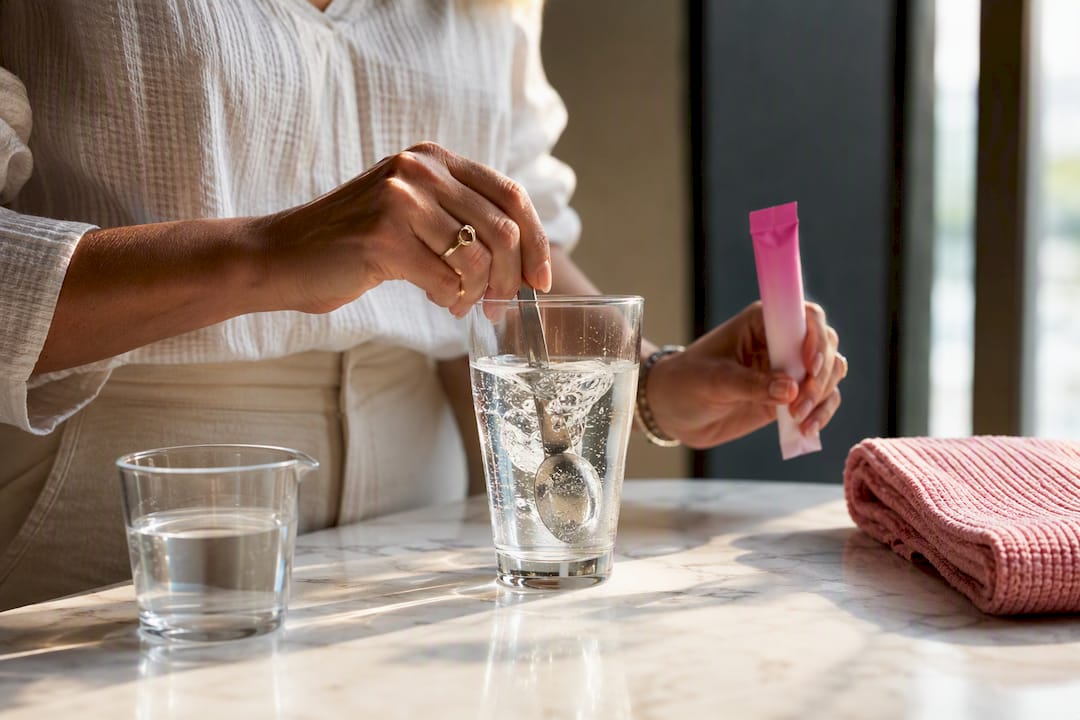
Sip it over 20 to 30 minutes rather than drinking it all at once. A slow sip lets your gut absorb the fluid and sodium gradually, which is gentler and more effective than a fast gulp that can trigger nausea, particularly overnight when you’re half asleep and dehydrated.
Here’s a simple sequence for after a heavy night sweat:
- Change out of damp clothing before you do anything else. Sitting in cold, wet fabric makes the next hot flash worse.
- Drink 8 ounces of water first if you’re not reaching for a powder immediately. Plain water gets things moving while you decide if you need more.
- Mix one serving of hydration powder at the lower end of the recommended concentration and sip it over the next half hour.
- Wait 30 to 60 minutes before considering a second serving. Most nights, one is enough.
- If cramps, dizziness, or a racing heart persist after that, treat it as a signal to call your clinician rather than reach for a third dose.
Travel days follow the same logic on a longer timeline: one serving in the morning, one mid-afternoon if you’re sweating or dealing with dry cabin air, and food with some natural sodium and potassium (think a banana, salted nuts, or broth) alongside it rather than relying on the powder to do all the work.
Safety, Medications, and When to Stop
Hydration powders are not risk-free for everyone, and the group that needs to be most careful is women managing blood pressure or heart conditions. Extra sodium from a daily supplement can push blood pressure higher in people who are already sodium sensitive, and the American Heart Association has flagged that electrolyte products marketed for hydration can quietly add up if used every day rather than situationally.
Medications complicate the picture further. If you take a diuretic, an ACE inhibitor, or an ARB for blood pressure, your body is already adjusting how it handles sodium and potassium. Layering a hydration powder on top of those medications without knowing your baseline levels can push potassium or sodium out of range in either direction, and the symptoms of too much can look a lot like the symptoms of too little.
Stop using a hydration powder and seek care if you notice:
- Swelling in your ankles, hands, or face that wasn’t there before
- A new or worsening irregular heartbeat or palpitations
- Fainting or near fainting spells
- Sudden, unexplained weight gain over a day or two, which can signal fluid retention
If you’re on any regular medication for blood pressure, kidney function, or heart health, ask your clinician whether a basic metabolic panel makes sense before you start using an electrolyte powder regularly. It’s a simple blood test, and it gives you an actual baseline instead of a guess. The Office of Dietary Supplements also publishes tolerable upper intake levels for magnesium and potassium, which is worth a look if you’re combining a hydration powder with a separate magnesium or potassium supplement, since the totals can stack faster than people expect.
What Menopause-Friendly Hydration Actually Looks Like
Some wellness brands built around the stages of menopause think about hydration products differently than general sports nutrition companies.
The biggest design decision is format. Most electrolyte products are tubs of powder that need a scoop, a shaker bottle, and counter space. That doesn’t travel well, and menopause symptoms don’t wait for you to get home and dig out your gear. We prioritize oral strips and single-serve sachets specifically because a hot flash on a plane or a night sweat in a hotel room doesn’t come with a blender.
The right hydration product for menopause isn’t the one with the most electrolytes. It’s the one you’ll actually have with you when you need it, at a sodium level that fits into the rest of your day rather than maxing it out.
A few things we’d tell any reader evaluating a formula, ours or anyone else’s:
- Match the serving size to your actual sweat losses, not to an athlete’s chart.
- Favor modest, daily-appropriate sodium over the high-dose ranges built for marathon training.
- Check the magnesium form if you know you’re sensitive to certain compounds.
- Treat any hydration powder as a tool for specific moments, not a replacement for water and food day to day.
If you take medication for blood pressure or a heart condition, talk to your clinician before making any electrolyte powder a regular habit, ours included. That conversation takes ten minutes and removes the guesswork.
— NUKA
Small Habits That Make Hydration Easier
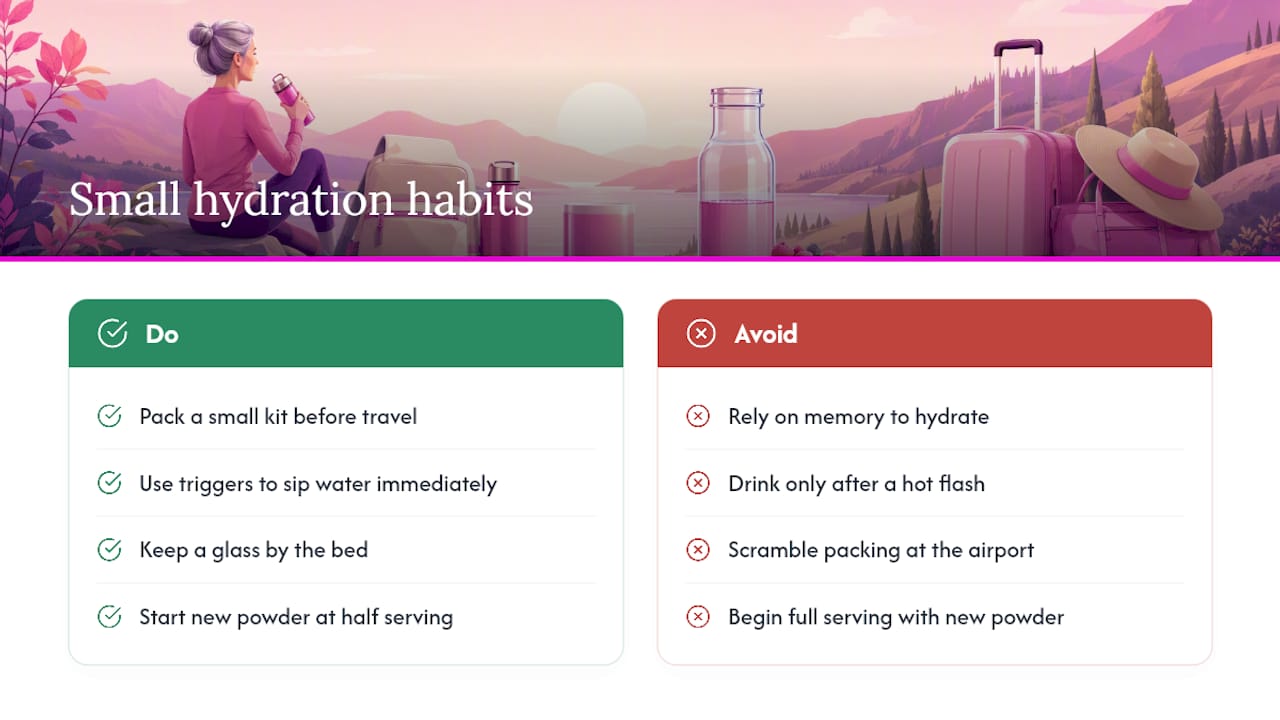
You don’t need a perfect system, just a few automatic habits. Keep a small kit ready: a couple of hydration sachets or strips, a refillable bottle, and a potassium-rich snack like a banana or unsalted nuts, packed and ready before a hot day or a trip rather than scrambled together at the airport.
Build in small triggers instead of relying on memory. Sip water the moment a hot flash starts, not after it passes. Keep a glass by the bed and drink from it before you fall back asleep after a night sweat, so you’re not starting the next day already behind on fluid.
If you know magnesium tends to upset your stomach, start with half a serving of any new powder for the first few tries. Your gut adjusts faster than you’d think, and a smaller starting dose tells you a lot about tolerance before you commit to a full serving.
Try a Travel-Friendly Way to Stay Hydrated
If the idea of measuring powder into a shaker bottle during a hot flash at 2 a.m. sounds like the last thing you want to manage, that’s exactly the gap Nukalove built its format around. Our oral strips dissolve without water, mixing, or cleanup, which matters more than it sounds like when you’re half asleep or standing in an airport security line.
If you want to try one, the safest way is to start after a real trigger rather than as a daily habit right out of the gate: a heavy night sweat, a stretch of hot flashes, or a long travel day are the moments this guide already flagged as genuinely useful. Use one serving, note how you feel over the next hour, and adjust from there based on your own tolerance and any medications you’re managing. For a full walkthrough on timing strips around a hot flash specifically, our guide on what to drink after a hot flash breaks down the exact sequence. Browse the Glow Getter strip lineup to see current formats and get started.
Sources
This guide draws on a clinical overview of menopause physiology, government nutrient fact sheets from the Office of Dietary Supplements, heart-health guidance from the American Heart Association, federal labeling regulations, and evidence-informed reporting on electrolyte powder formulation and testing.
This article is general information, not a substitute for advice from a qualified doctor. Consult a qualified healthcare professional about your own circumstances before acting on anything here.
- Menopause overview — NCBI Bookshelf
- The best electrolyte powders, tested by registered dietitians — Men’s Health
- Office of Dietary Supplements — NIH
- Electrolytes can give the body a charge, but try not to overdo it — American Heart Association
FAQ
How Do You Stay Hydrated During Menopause?
Drink water consistently through the day, eat foods naturally rich in potassium and sodium, and reach for an electrolyte powder specifically after heavy sweating episodes like night sweats or multiple hot flashes rather than as a constant replacement for water.
What Do Japanese Women Commonly Use for Menopause Symptoms?
Soy-based foods like tofu, miso, and edamame are a traditional dietary staple in Japan and contain isoflavones that some research links to milder menopause symptoms, though this is a dietary pattern rather than a hydration strategy specifically.
What Menopause Supplement Has Drew Barrymore Mentioned Taking?
Celebrity supplement endorsements change often and aren’t independently verified for accuracy, so it’s worth checking a primary, current source directly rather than relying on secondhand claims, and discussing any specific product with your own clinician.
Is There a Menopause Supplement That Actually Works?
No single supplement works for every symptom or every woman, but targeted approaches, like electrolyte formulas for hydration-related fatigue and cramping or soy isoflavones for hot flash frequency, have more supporting evidence than broad “menopause support” blends with long, unfocused ingredient lists.
Can a Hydration Powder Replace Plain Water Every Day?
No. Most daily hydration needs are still best met with water and food, and a best practice from health-system guidance is to reserve electrolyte powders for situational, higher-loss moments rather than routine daily use.