

Calm Menopause Itch Within a Day With Travel Friendly Fixes
Declining estrogen thins your skin’s outer barrier and lets moisture escape faster than it can be replaced, which is the main reason menopause-related itchy skin shows up in the first place. Fragrance-free moisturizer with ceramides, a lukewarm colloidal oatmeal soak, and a cool compress handle most flare-ups within a day. See a clinician if you notice broken skin, spreading rash, or itching that disrupts sleep for more than a week or two.
TL;DR:
- Moisturizing immediately after bathing with ceramides, glycerin, or hyaluronic acid significantly enhances skin hydration and reduces menopause-related dryness.
- Using lukewarm colloidal oatmeal baths and cool compresses provides quick relief for localized and surface nerve-triggered itchiness.
- Internal hydration habits, including drinking water and consuming omega-3 fatty acids, are crucial for restoring and maintaining skin barrier health.
- Over-the-counter hydrocortisone can ease localized inflammation temporarily, but persistent or spreading rashes require medical evaluation and possible prescription treatment.
- Consistent daily routines, combining gentle cleansers, timely moisturization, and environmental adjustments like humidifiers, prevent itch recurrence effectively.
Table of Contents
- Why Menopause Causes Itchy Skin (And How to Tell If That’s What’s Going On)
- Topical and At-Home Remedies for Fast Relief
- Internal Supports and Daily Habits That Rebuild Your Skin Barrier
- OTC Options and When to See a Doctor
- A Daily Routine to Keep Itch From Coming Back
- What Nuka Love Sees Across Menopause Skin Concerns
- Our Take: What Actually Moves the Needle
- How Nuka Love Fits Into Your Skin-Care Routine
- Sources
Why Menopause Causes Itchy Skin (And How to Tell If That’s What’s Going On)
Estrogen does more for your skin than most people realize. It helps regulate oil production, supports collagen that keeps skin plump, and maintains the lipid barrier that locks moisture in. When estrogen drops during perimenopause and menopause, that barrier weakens, and skin loses water faster than it can hold onto it. The result is a dryness that often crosses the line into genuine itch, a pattern confirmed by clinical reporting on menopause-related skin barrier dysfunction.
Not all itching is the same, though, and location matters. Generalized dry-skin itch tends to show up on the arms, legs, and torso, and gets worse after hot showers or in dry winter air. Vulvovaginal itch is a separate issue tied to thinning vaginal tissue and reduced lubrication, and it usually needs its own targeted care rather than a body lotion. Itching that comes with a rash, welts, or is confined to one small patch may point to eczema, allergic contact dermatitis, or another skin condition entirely rather than menopause itself.
A few patterns are worth noting:
- Itch that worsens at night often means it is barrier-related, since skin loses more water while you sleep.
- Itch triggered by wool, synthetic fabric, or hot water usually signals irritant sensitivity, not disease.
- Itch paired with fatigue, weight change, or jaundice deserves medical attention, since it could reflect a systemic issue unrelated to hormones.
Topical and At-Home Remedies for Fast Relief
You don’t need a prescription to calm most menopausal itch. You need the right ingredients applied the right way.
- Moisturize on damp skin, not dry skin. Look for ceramides, glycerin, hyaluronic acid, or plain petrolatum. Applying moisturizer within a few minutes of toweling off traps water in the skin instead of letting it evaporate, a small timing detail that Cleveland Clinic dermatologists say meaningfully improves results.
- Take a colloidal oatmeal bath. Use lukewarm, not hot, water, and limit soaks to 10 to 15 minutes a few times a week. Hot water strips natural oils and can make itching worse afterward.
- Apply a cool compress to hot spots. A damp washcloth from the fridge on an itchy patch for five to ten minutes calms surface nerve signals fast, and it works well as a bedside trick if itching wakes you up.
- Use over-the-counter 1% hydrocortisone sparingly. It’s fine for short bursts of localized, inflamed itching, generally no more than a week or two without a doctor’s input, according to Mayo Clinic guidance on itchy skin treatment. Avoid using it on broken skin or the face without medical advice.
- Cut out fragrance and harsh soap. Switch to gentle, non-foaming cleansers and fragrance-free laundry detergent, and choose breathable cotton over synthetic fabric, especially for sleepwear.
Pro Tip: Keep a pair of thin cotton gloves by your bed. If you tend to scratch in your sleep, wearing them overnight protects your skin from damage while your moisturizer does its work.
Internal Supports and Daily Habits That Rebuild Your Skin Barrier
Topical fixes handle the surface. Rebuilding the barrier from the inside takes a little longer, but it’s what keeps itch from coming back.
Water intake matters more than most women assume, and so does cutting back on alcohol and caffeine, both of which pull moisture out of skin over time. Dietary fat matters too. Omega-3-rich foods like salmon, walnuts, and flaxseed support the lipids your skin barrier depends on. Some women turn to evening primrose oil or fish oil supplements, and while a few small studies suggest botanical extracts like chamomile, calendula, and lavender carry real anti-inflammatory and antipruritic activity, the research pool notes dosing and standardization still vary widely, so treat these as adjunct options rather than proven fixes.
Your environment plays a role too:
- Run a humidifier in your bedroom, especially in winter when indoor heating dries the air.
- Lower the thermostat a few degrees at night, since heat plus dry air is a common trigger for nocturnal itching.
- Stay ahead of hot flash-related dehydration with steady water intake rather than catching up after the fact, a habit outlined in more detail in Nuka Love’s guide to hydration timing after hot flashes.
If you’re considering a supplement routine, especially for stress or balance during menopause, run it by a clinician first, particularly if you’re on other medications; top adaptogens for women in midlife can be a helpful part of self-care.
OTC Options and When to See a Doctor
Oral antihistamines can help take the edge off itching, especially at night, since the sedating type doubles as a sleep aid when itch is keeping you up. The tradeoff is daytime grogginess, so non-drowsy formulas are the better daytime pick. Topical 1% hydrocortisone remains your go-to for localized flare-ups, but it isn’t built for large areas or long-term use. If your itch isn’t responding, a clinician can prescribe stronger topical steroids or other targeted treatments.
Some symptoms shouldn’t wait for a routine appointment:
- A rash that spreads, blisters, or oozes
- Skin that’s broken from scratching and shows redness, warmth, or pus
- Itching that’s sudden, widespread, and unexplained
- Itch paired with fatigue, night sweats beyond typical hot flashes, or unexplained weight change
Hormone replacement therapy is worth a conversation with your doctor if skin symptoms are one piece of a bigger menopausal picture. Estrogen-based therapy has been shown to improve skin hydration and thickness in some women, which can ease itch as a side benefit, per NCBI clinical guidance on menopause and hormone therapy, though it’s a decision that depends on your full symptom picture and personal risk factors, not skin alone.
A Daily Routine to Keep Itch From Coming Back
Consistency beats any single product here. A simple routine, followed most days, does more than an expensive serum used occasionally.
- Morning: Gentle cleanser, then a ceramide-rich moisturizer, then sunscreen if you’re heading outside.
- Shower or bath: Keep water lukewarm and under 10 minutes. Long, hot showers are one of the most common itch triggers dermatologists see.
- Right after drying off: Apply moisturizer within three minutes, while skin is still slightly damp.
- Evening: Reapply a heavier cream or ointment before bed, especially on elbows, shins, and hands.
- Seasonal adjustment: Add a humidifier once heating season starts, and swap to richer moisturizer as humidity drops.
Small, repeatable habits like these, paired with breathable fabric choices, are what Cleveland Clinic’s home remedy guidance points to as the most reliable first line of defense against recurring itch.
What Nuka Love Sees Across Menopause Skin Concerns
Skin itch rarely travels alone. Women dealing with menopausal itch often mention crepey texture and heat intolerance in the same breath, which is why it’s worth reading alongside our guides on crepey skin remedies and heat intolerance during menopause.
Skin barrier problems don’t stop for travel days. A cross-country flight, a dry hotel room, or a long car ride through arid climate can undo a week of careful skin care in a matter of hours.
For women who travel often, the fix isn’t carrying a suitcase of bottles. It’s picking compact formats, oral hydration strips, travel-size ceramide creams, sachets instead of jars, that survive a carry-on bag and a security line without leaking or taking up space.
Our Take: What Actually Moves the Needle
Most menopause skin advice treats itch like a cosmetic annoyance you fix with a fancier lotion. That undersells what’s happening. This is a barrier-function problem, and barrier repair takes layered effort: topical care, internal hydration, and patience, not a single miracle ingredient.
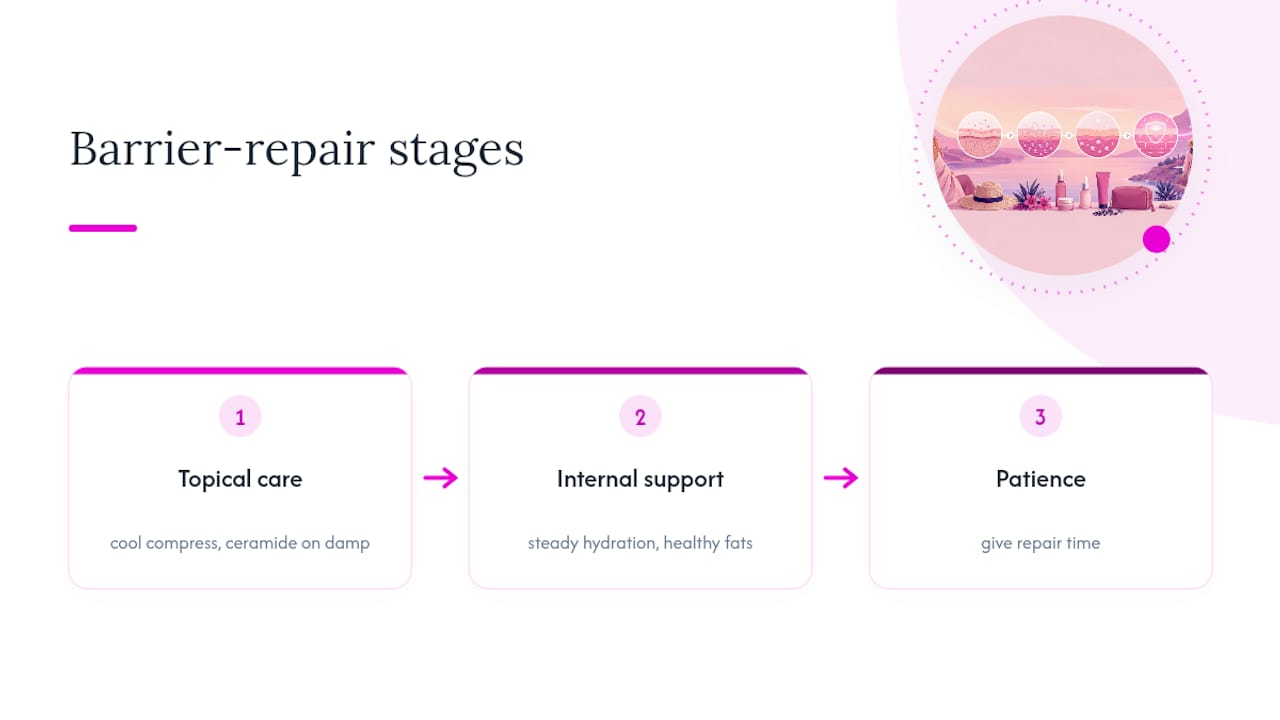
Where conventional advice falls short is the “just moisturize more” reflex. More product on a broken barrier is like repainting a wall with holes in it. The order matters: calm inflammation first with a cool compress or short hydrocortisone use, then rebuild with ceramide-based moisturizer applied on damp skin, then support the process internally with steady hydration and healthy fats.
If you only do one thing differently after reading this, make it timing. Moisturizing within minutes of a shower, staying ahead of dehydration instead of reacting to it, matters more than which specific cream sits in your bathroom cabinet.
— NUKA
How Nuka Love Fits Into Your Skin-Care Routine
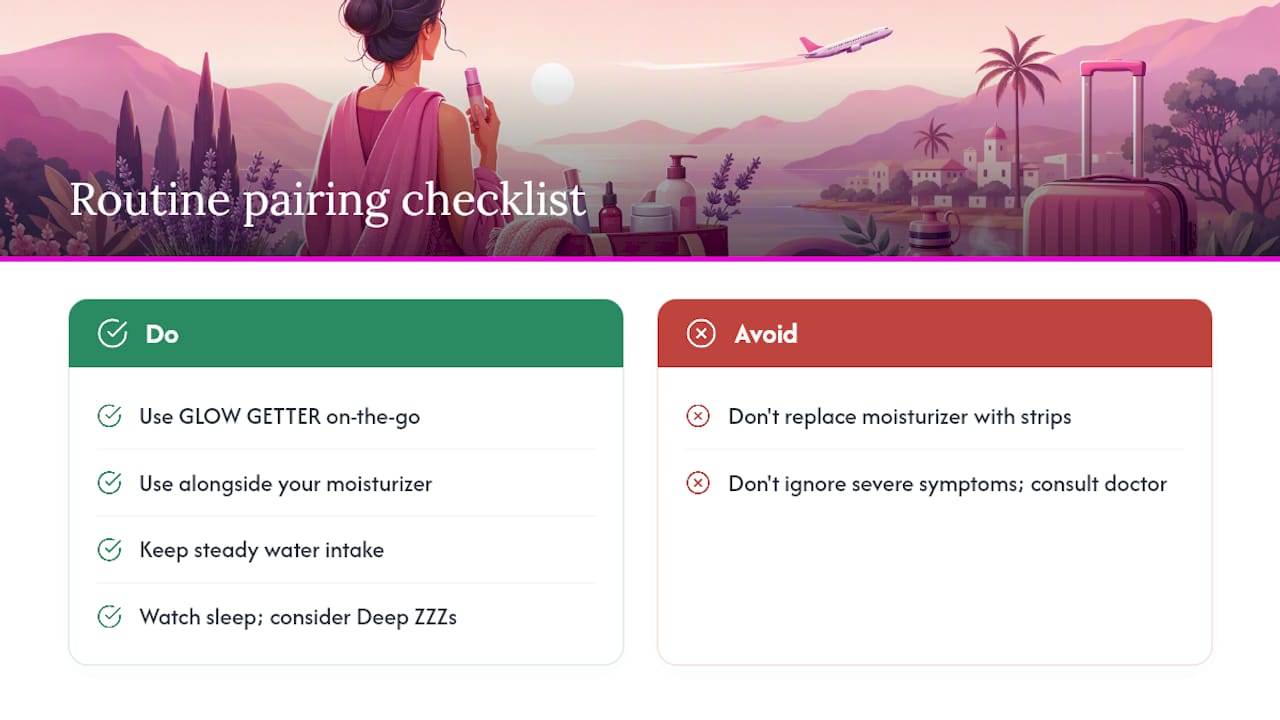
Topical care handles the surface. What you put into your body between showers, during travel, or after a hot flash plays a role too, and that’s where GLOW GETTER earns its spot in a purse or carry-on. It’s a compact oral strip designed as an on-the-go complement to your moisturizer routine, not a replacement for it, giving you a fast way to support skin from the inside during a long flight, a dry hotel stay, or the stretch of time between your morning and evening skin routine.
Pair it with steady water intake and you’ve covered both sides of the barrier-repair equation: what goes on your skin and what supports it internally. If nighttime itching is tied to disrupted sleep, keep an eye on Deep ZZZs oral sleep strips, coming soon from Nuka Love. For persistent or severe symptoms, talk to your doctor. For everything else, start with Nuka Love’s full product lineup and build a routine that travels as easily as you do.
This article is general information, not a substitute for advice from a qualified doctor. Consult a qualified healthcare professional about your own circumstances before acting on anything here.
Sources
- Itchy skin: Diagnosis & treatment - Mayo Clinic
- Menopause itching: Causes, types, home remedies, and treatments - Medical News Today
- Here’s how menopause affects your skin and hair - Cleveland Clinic
- Review: Medicinal plants with antipruritic potential - PMC