

20–30 Minute Relief for Midlife Women: Hydration Strips for Travel
Oral electrolyte strips and single-serve hydration powders can genuinely help. They speed up rehydration after a hot flash, a sweaty flight, or a hard workout, and they often ease the fatigue, headache, and brain fog that come with fluid loss. What they cannot do is treat menopause itself, since electrolytes replace minerals, not hormones. If you have heart, kidney, or blood pressure issues, check with a clinician before adding one to your routine.
TL;DR:
- Hydration strips dissolve quickly in the mouth and provide rapid relief from dehydration symptoms like headache and dizziness within 20 to 30 minutes.
- Powders mixed into water deliver higher doses of electrolytes, making them suitable for prolonged dehydration after heavy sweating or travel.
- During menopause, hormonal shifts reduce the body’s water retention, increasing the importance of electrolyte replacement for hot flashes, night sweats, and exercise.
- People with kidney, heart, or blood pressure issues should consult a doctor before using electrolyte products due to potential mineral and sodium imbalances.
- Nukalove designs portable, waterless hydration products optimized for women managing menopause-related fluid loss during travel, exercise, and hot flashes.
Table of Contents
- What Are the Real Hydration Strips Benefits?
- How Do Hydration Strips and Powders Actually Work?
- Why Does Menopause Change Your Hydration Needs?
- Are Hydration Strips Safe? What to Check First
- How to Pick and Use the Right Format
- What Does the Research Say About Hydration and Menopause?
- Could Hydration Strips Cause Side Effects During Menopause?
- Why Nukalove Built Travel-Ready Hydration for Women
- Which Nukalove Hydration Option Fits Your Day?
- Sources
- FAQ
What Are the Real Hydration Strips Benefits?
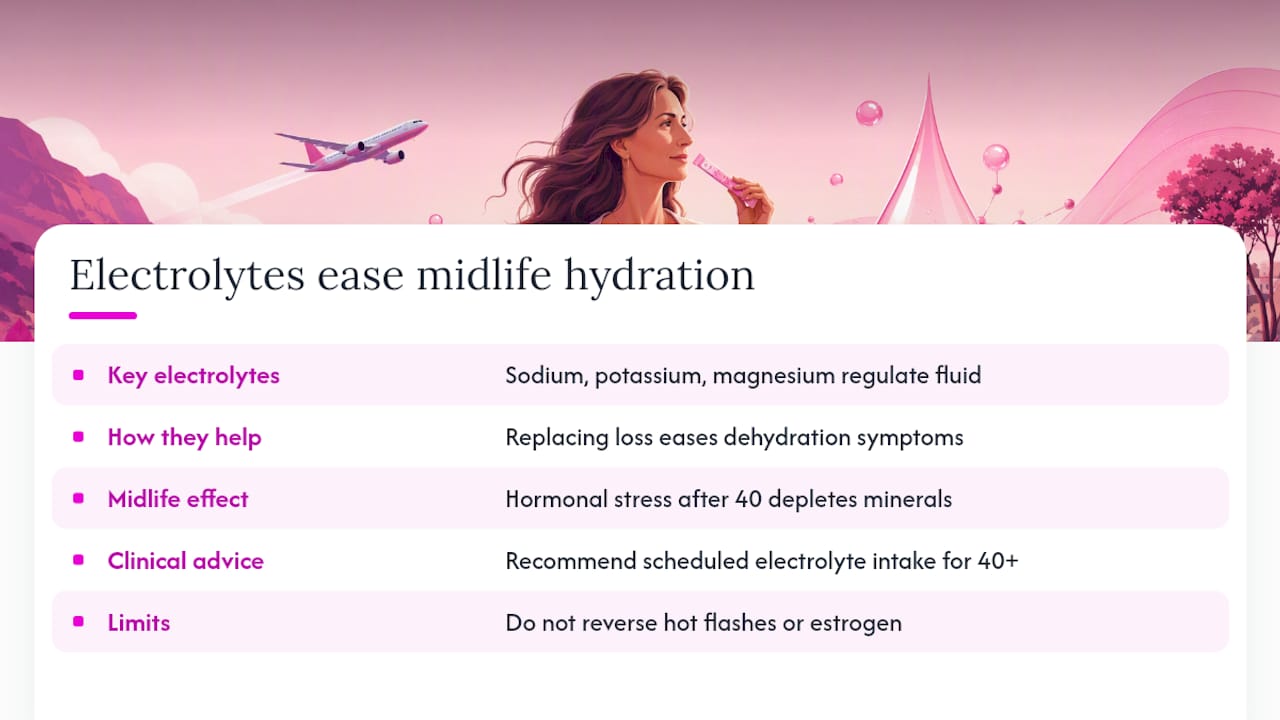
The biggest hydration strips benefits come down to speed, portability, and mineral replacement your body actually needs during hormonal shifts. Sodium, potassium, and magnesium regulate how much fluid your cells hold onto, how your nerves fire, and how your muscles contract. When you lose those minerals through sweat, a night sweat, or a bout of stomach illness, water alone won’t put them back. Electrolytes support fluid balance and can ease dehydration-driven symptoms, including the headaches, lightheadedness, and fatigue that show up when your mineral levels dip.
Here’s what that looks like in practice:
- Fast relief for common symptoms. Headache, dizziness, and midafternoon fatigue often improve within 20 to 30 minutes of replacing lost electrolytes.
- On-the-go dosing. A strip dissolves on your tongue in seconds, no water bottle or mixing required.
- Higher-dose flexibility. Powders mixed into water deliver a larger electrolyte load, useful after heavy sweating or a full day of travel.
- Better follow-through. A pocket-sized format means you’re more likely to actually use it instead of skipping hydration altogether.
Reality check: these products work best when dehydration or mineral depletion is the actual cause of how you feel. If your hot flashes are relentless regardless of how hydrated you are, that’s a hormonal issue, not a fluid one. Electrolyte strips address the fallout of menopause, like the sweating and fluid loss, not the hormonal shifts driving it.
How Do Hydration Strips and Powders Actually Work?
The mechanism differs more than most people realize, and it explains why you’d reach for one format over the other. Oral strips dissolve against the mucosal lining of your mouth, which allows some electrolytes to enter your bloodstream faster than a swallowed capsule would. Powders take the more traditional route: you mix them into water, drink the solution, and your gut absorbs the electrolytes over the following 20 to 40 minutes alongside the fluid itself.
That difference matters for timing. A strip gives you a quick, low-dose boost when you’re mid-flight or stuck in a meeting with no water in sight. A powder delivers a bigger dose and pairs it with actual fluid volume, which makes it the better pick when you’re seriously depleted, say, after two hours of exercise in the heat or a full day of travel-related sweating.
Look for a short, recognizable ingredient list:
- Sodium and potassium for fluid balance and nerve function.
- Magnesium for muscle relaxation and, often, better sleep.
- B vitamins for the energy dip that frequently rides alongside dehydration.
- Additives to skip: added sugar, artificial dyes, and stimulants like high-dose caffeine, which can worsen dehydration rather than fix it.
Pro Tip: Keep one strip in your bag for quick top-ups and one powder packet in your suitcase for the bigger rehydration jobs, like a full travel day or a hot outdoor event.
Why Does Menopause Change Your Hydration Needs?
Hormonal shifts during perimenopause and menopause change how your body handles fluid, and that’s not a minor detail. Falling estrogen affects the receptors that help your cells hold onto water, which means you can be measurably dehydrated without feeling especially thirsty. Add in hot flashes and night sweats, which cause repeated, often uncounted fluid losses across a single night, and you’ve got a recipe for the kind of “quiet” dehydration that shows up the next morning as brain fog or stiff joints.
A few groups tend to notice the difference most:
- Women dealing with frequent hot flashes or heavy night sweats.
- Frequent travelers, especially on flights, where cabin air accelerates fluid loss.
- Anyone exercising regularly through perimenopause, when sweat rate and thirst signals often stop matching up.
- Women who notice recurring dizziness, headaches, or afternoon fog that improves after drinking water.
If you’re eating a varied diet and drinking water steadily throughout the day, you may not need a dedicated product most days. But on high-sweat days, travel days, or after a rough night of hot flashes, a targeted electrolyte source closes a gap that plain water alone often can’t. Related reading: Drink 1 Cup After a Hot Flash: Hydration Rules for Menopause.
Are Hydration Strips Safe? What to Check First
Most healthy adults tolerate electrolyte strips and powders without issue, but a few conditions call for a conversation with your doctor first.
- Kidney disease or heart failure. Both affect how your body handles sodium and potassium, and extra electrolytes can shift that balance in the wrong direction.
- Diuretics, ACE inhibitors, or potassium-sparing medications. These common midlife prescriptions already alter your mineral levels, so adding more without guidance isn’t a good idea.
- High blood pressure. Sodium content matters here more than for most people, so check the label closely before choosing a product.
Once you’ve cleared those, the label itself tells you most of what you need to know. Check sodium per serving, added sugar (some powders pack in as much as a soda), caffeine content, and whether the brand discloses third-party testing. Clinicians warn against drinking large volumes of plain water without replacing electrolytes after heavy sweating, since that can dilute your blood sodium to dangerously low levels. If you experience confusion, severe nausea, or a headache that doesn’t improve with rehydration, that’s a signal to call a doctor rather than reach for another packet. More on this in Electrolyte Drink Side Effects: What You Need to Know.
How to Pick and Use the Right Format
Choosing between a strip and a powder mostly comes down to how depleted you are and how much control you want over dosing.
Start with the label: a balanced sodium-to-potassium ratio, low added sugar, and a clear ingredient list without vague terms like “proprietary blend.” Magnesium is worth having in your rotation for cramping or sleep support, though it’s often better dosed separately from your daytime hydration product so you’re not overloading on it during the day.
For timing, a few rules of thumb hold up well:
- After a hot flash or night sweat: reach for a strip immediately, then follow with a full glass of water.
- Before and after flights: one strip pre-boarding, one powder packet mixed with your first glass of water on arrival.
- Around exercise: a powder before or during longer sessions, a strip afterward if you’re short on time.
- Daily scheduled hydration: since thirst cues weaken with age, some women do better setting a reminder to hydrate rather than waiting to feel thirsty.
For travel specifically, public-health guidance recommends packing oral electrolyte powders for trips where illness or heat could cause serious fluid loss, and strips work well as the lighter, no-mixing option for day trips or flights. Check expiration dates before long trips, since heat and humidity can degrade some formulas faster than others.
Pro Tip: Pack two formats for longer trips: a sleeve of strips for the plane and daytime sightseeing, and a few powder packets for after a long, hot day when you need a bigger rehydration push. More label-reading tips live in Travel Ready Menopause Hydration Powders: What to Check on Labels.
What Does the Research Say About Hydration and Menopause?
The evidence base here is more grounded than flashy wellness marketing might suggest, but it’s also narrower than some brands imply. Electrolytes During Menopause: What Research Says lays out the core finding clearly: sodium, potassium, and magnesium regulate fluid balance, nerve signaling, and muscle function, and replacing them eases dehydration-related symptoms. That’s a physiological fact, not a menopause-specific one, but it applies with particular force during midlife because hormonal shifts change how much fluid your cells retain in the first place.
Reporting on hydration after 40 notes that stress and hormonal changes can deplete minerals like magnesium and potassium faster than in earlier decades, which is part of why plain water sometimes isn’t enough. Clinical guidance from hydration specialists echoes this, recommending scheduled electrolyte intake for women in their 40s and beyond precisely because thirst cues become less reliable with age.
None of this means electrolyte strips reverse hot flashes or restore estrogen levels. The evidence supports a narrower, still useful claim: they help your body hold onto and use fluid more efficiently once you’ve lost water and minerals through sweating, which is exactly what happens during a hot flash or a night sweat. Readers looking for deeper research can start with PubMed Central’s archive of clinical literature on electrolyte physiology.
Could Hydration Strips Cause Side Effects During Menopause?
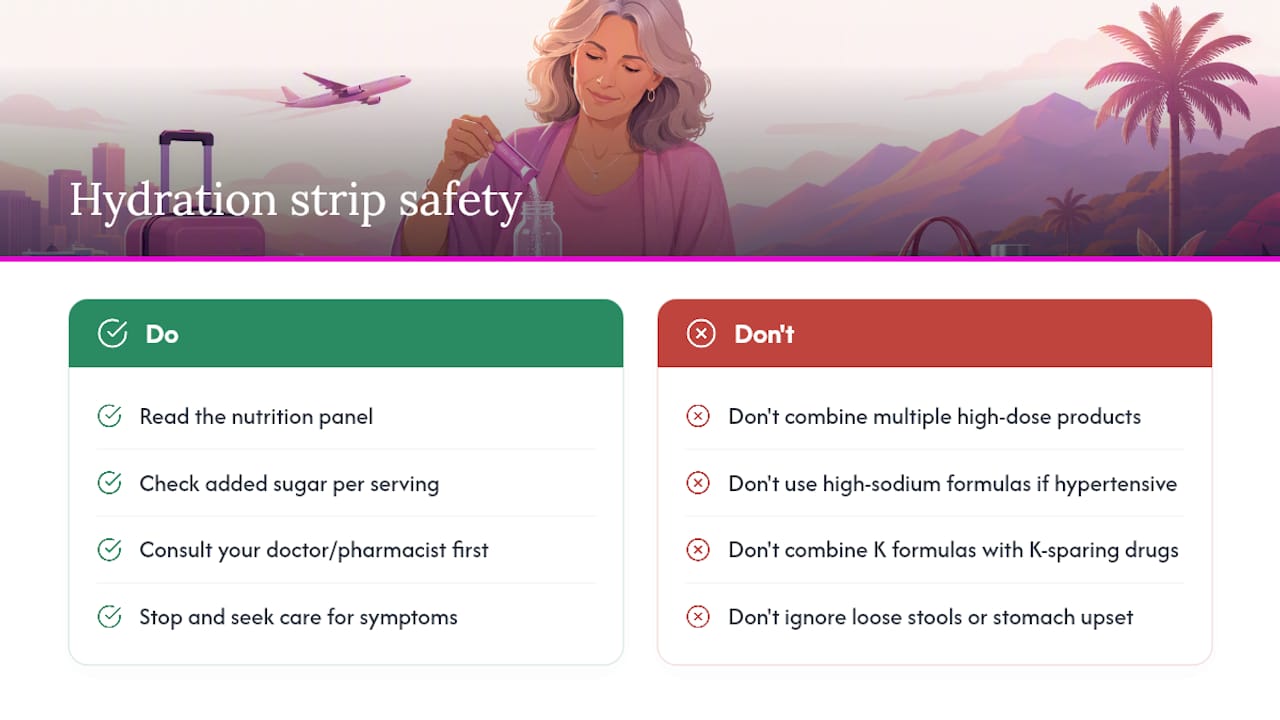
Side effects are uncommon at recommended doses, but a few midlife-specific factors deserve attention. Sodium content is the biggest one: women managing blood pressure, especially those on antihypertensive medication, can see numbers creep up if they’re using a high-sodium powder multiple times a day without adjusting their diet elsewhere.
Sugar is the second issue. Some flavored powders carry meaningful added sugar per serving, which matters if you’re also managing blood sugar swings, a common midlife concern as insulin sensitivity shifts. Read the nutrition panel the same way you would a snack label.
Overuse is the less obvious risk. Taking multiple high-dose electrolyte products in a single day, on top of a normal diet, can push sodium or potassium intake higher than intended, particularly for anyone on diuretics or blood pressure medication. Magnesium in large amounts can also cause loose stools or stomach upset, which some women mistake for an unrelated digestive issue during perimenopause.
Interactions are worth flagging directly. Potassium-containing formulas can compound the effect of potassium-sparing diuretics or ACE inhibitors, both common prescriptions in midlife, and that combination should go through a doctor or pharmacist first. If you notice muscle weakness, an irregular heartbeat, or swelling after starting a new electrolyte product, stop and get it checked rather than assuming it will pass. For most healthy women without these conditions, a well-formulated strip or powder used a few times a week carries low risk.
Why Nukalove Built Travel-Ready Hydration for Women
Nukalove is women owned and built around one problem: menopause doesn’t pause for travel, work, or a busy afternoon. Every product is designed as a fast, pocket-sized strip or powder you can use without water, planning, or mixing bowls. That practical focus, covered in posts like Pocket Oral Strips for Women With Menopause Heat Intolerance and Electrolytes for Menopause: What You Need to Know, shapes every formula decision we make, from sodium ratios to how fast a strip dissolves.
— NUKA
Which Nukalove Hydration Option Fits Your Day?
If a hot flash just hit and you need something now, an oral strip is built for exactly that moment: no water, no mixing, dissolved in seconds. When you’re facing a longer stretch of depletion, a full travel day, a hard workout, or a stretch of bad night sweats, Thirst Trap hydration powder delivers a bigger dose of electrolytes and B vitamins mixed into water for sustained rehydration.
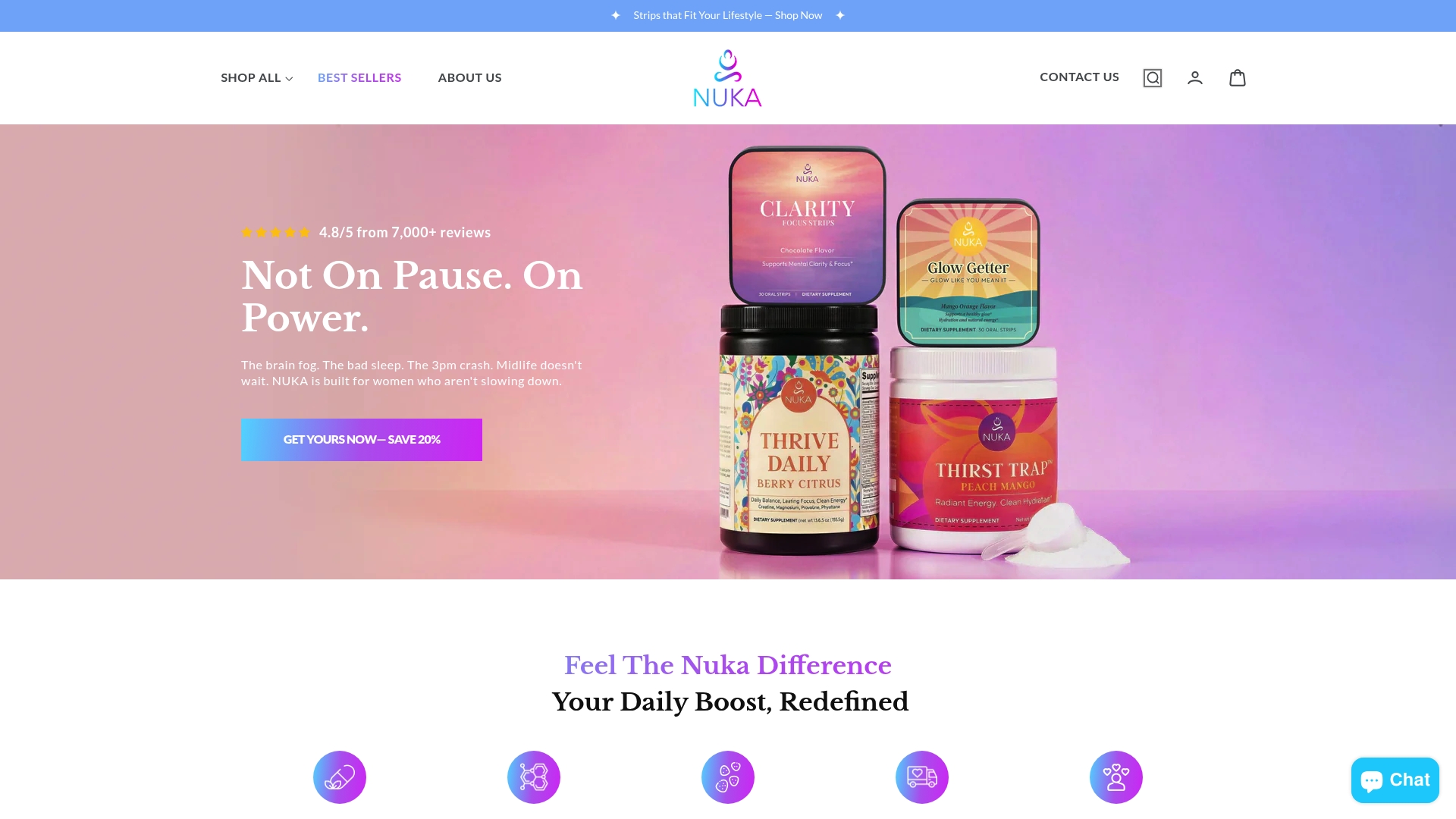
For a quick top-up during flights or errands, keep a sleeve of oral strips in your bag. For longer trips or bigger sweat sessions, pack Thirst Trap alongside them so you’ve got both a fast fix and a deeper rehydration option. If you manage a heart, kidney, or blood pressure condition, or take diuretics or ACE inhibitors, check with your clinician before adding either to your routine. Browse the full lineup on the Nukalove product catalog and pick what matches your week.
This article is general information, not a substitute for advice from a qualified doctor. Consult a qualified healthcare professional about your own circumstances before acting on anything here.
Sources
- Electrolytes During Menopause: What Research Says
- Perimenopause and dehydration: Why your hydration needs change in your 40s — Hydration Bar MD
- CDC travel health kit guidance — oral electrolyte solution powder
- Hydration after 40: Why water isn’t enough & what to do - Los Angeles Times
FAQ
Do Hydration Strips Actually Work?
Yes, for symptoms caused by dehydration or mineral loss, like fatigue, headache, or dizziness after sweating. Electrolytes ease these dehydration-driven symptoms but don’t treat menopause’s hormonal causes directly.
Are Hydration Strips Better Than Electrolyte Drinks?
Strips are more portable and lower dose, which makes them better for quick top-ups without water. Powders, including Thirst Trap, deliver a higher electrolyte dose mixed with fluid, making them the stronger choice after heavy sweating or a full travel day.
Can Hydration Strips Help With Hot Flashes?
They can’t stop a hot flash, but they help replace the fluid and sodium you lose through the sweating that comes with one. Using a strip right after a hot flash, followed by water, is a practical way to head off the fatigue that often follows.
Are Hydration Strips Safe for Daily Use?
Most healthy women can use them regularly, but anyone with kidney disease, heart failure, high blood pressure, or on diuretics should check with a doctor first. Always check sodium and sugar content per serving before making them a daily habit.
How Much Do Nukalove Hydration Products Cost?
Current pricing for Thirst Trap hydration powder and Nukalove’s oral strips is listed on the product pages directly. Prices vary by product line and bundle size.