

How to Stop Hot Flashes on Planes: A Traveler's Playbook
The fastest way to stop a hot flash on a plane is to strip off a layer, point the overhead vent straight at your face and neck, and sip cold water while breathing slowly through your nose. If you carry a discreet oral strip for fast relief, use it the moment you feel the flush start, not after it peaks.
Do these things in order:
- Remove or unzip your outer layer immediately.
- Angle the air vent onto your neck and face.
- Take slow, deep breaths (in for four counts, out for six).
- Sip cold or electrolyte water.
- Use a handheld fan, cooling wipe, or oral strip if you packed one.
A hot flash on a plane isn’t a mystery. It’s a chain reaction of dry cabin air, cortisol, and body heat with nowhere to escape. Break one link and the whole thing calms down faster.
Anything liquid you bring for cooling has to follow the TSA’s 3-1-1 rule: containers of 100 ml (3.4 oz) or smaller, packed where you can grab them fast.
Key Takeaways
Preventing hot flashes on planes takes layered clothing, steady hydration, airport stress control, and a fast-acting relief tool ready at your seat.
| Point | Details |
|---|---|
| Layer strategically | Wear moisture-wicking layers you can remove one at a time as your temperature shifts. |
| Hydrate deliberately | Drink roughly 8 oz of water per flight hour and pack electrolytes to fight cabin dryness. |
| Manage airport stress | Arrive early and use paced breathing since cortisol alone can trigger a flush. |
| Follow the in-seat sequence | Remove layers, aim the air vent, sip cold water, then use a fan or cooling wipe. |
| Carry Nuka Love strips | Pack GLOW GETTER or GO GIRL oral strips for TSA-friendly, fast-acting relief mid-flight. |
Table of Contents
- How to Prevent Hot Flashes on Planes Before You Even Board
- What Should You Do at the Airport to Stay Cool?
- What to Do When a Hot Flash Hits Mid-Flight
- When Should You See a Doctor About Flight-Triggered Hot Flashes?
- What Belongs in Your Flight Hot-Flash Kit?
- Flying Doesn’t Have to Mean Fighting Your Body
- Pack Discreet Relief: Nuka Love Oral Strips for Flights
- Frequently Asked Questions
- Sources
How to Prevent Hot Flashes on Planes Before You Even Board
Most flying hot flashes solutions start on the ground, not in your seat. Clinicians who treat menopause symptoms in flight consistently point to anticipatory management: preparing your body and your bag for the specific stress of air travel before you’re strapped into 17B.
Hydration is the biggest lever. Cabin air runs drier than a desert, and dehydration is one of the fastest ways to provoke a flush. Aim for about 8 ounces of water per hour of flight time, and carry electrolyte packets instead of relying on plain water alone, since cabin humidity amplifies fluid loss beyond what you’d lose on the ground.
Pro Tip: Cut your last caffeinated drink or glass of wine at least four hours before boarding. Both are vasodilators, meaning they widen blood vessels and intensify the exact overheating sensation you’re trying to avoid.
What to pack for easy access:
- A palm-sized portable fan
- Cooling spray or wipes in TSA-legal containers
- An empty refillable water bottle to fill after security
- Compact oral strips (Nuka Love’s GLOW GETTER, GO GIRL, or CLARITY) tucked in an outer pocket
- Moisture-wicking layers you can peel off one at a time
Authoritative menopause-travel guidance backs this exact combination: layered clothing, a portable fan, and steering clear of spicy food, caffeine, and alcohol before and during the flight.
8 oz of water per hour of flight time is the rough hydration benchmark most travel-menopause guides recommend for combating cabin dehydration.
Protein-rich snacks matter more than people think. Sticking close to your normal routines, hydration, steady meals, some movement, does more to prevent travel-triggered flushes than any single gadget you pack.
What Should You Do at the Airport to Stay Cool?
Dealing with hot flashes traveling starts well before boarding. Airport stress raises cortisol, and cortisol acts on the hypothalamus, your brain’s internal thermostat, which can trigger a hot flash even in a perfectly air-conditioned terminal. Rushing through security with five minutes to spare is practically an invitation.
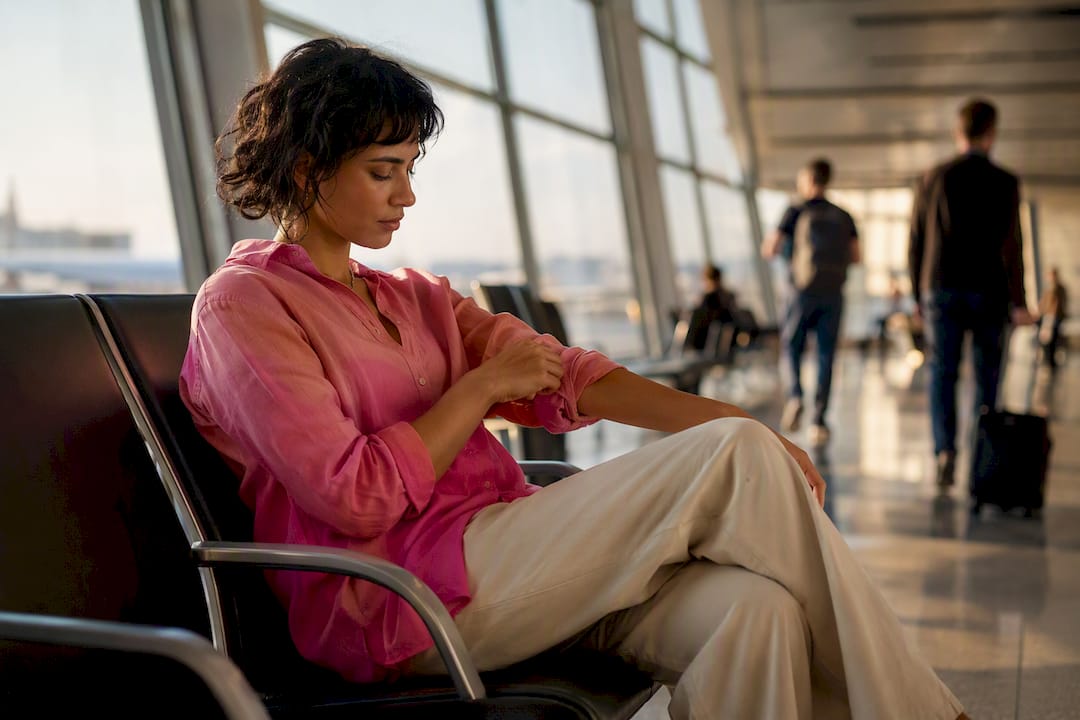
Give yourself extra buffer time. Arriving early isn’t just about avoiding a missed flight, it’s about avoiding the adrenaline spike that comes with sprinting to a gate. Find a quiet corner of the terminal instead of the loudest bar near your gate, and if you have a long layover before an overnight leg, protect that wind-down window the same way you would at home.
Pro Tip: Duck into a restroom before boarding and splash cool water on your wrists and the back of your neck. Those areas sit close to blood vessels near the skin’s surface, so cooling them brings quick relief.
Practical airport moves:
- Fill your empty water bottle after clearing security.
- Practice slow paced breathing while you wait at the gate.
- Pack cooling sprays and wipes in your personal item, not checked luggage.
- Request an aisle seat if you haven’t already. It makes moving and cooling off far easier mid-flight.
What to Do When a Hot Flash Hits Mid-Flight
Managing hot flashes while flying comes down to a sequence, not a single trick. Follow these steps in order the moment you feel the flush building:
- Remove your outer layer and loosen anything tight around your collar or waist.
- Turn the overhead air vent directly onto your face and neck.
- Sip cold or electrolyte water in small, steady mouthfuls.
- Use a handheld fan or a cooling wipe on your pulse points.
- Use a discreet oral strip, GLOW GETTER or GO GIRL from Nuka Love, if you packed one for fast, portable relief.
- Practice paced breathing until the flush subsides.
On long-haul or overnight flights, the calculus changes slightly. Try to time any sleep attempt to your destination’s schedule rather than your departure time zone, and use an eye mask and earplugs to protect that sleep window once you commit to it. Aisle seating and short walks every couple of hours, paired with compression socks, cut down on the secondary discomfort that stacks on top of hot flashes during a nine-hour flight.
Pro Tip: If you’re seated next to someone you don’t know, a quiet word to the flight attendant, “I run warm, could I get extra ice water?”, solves most of the problem without drawing attention.
Keep a chill pack in an insulated pouch inside your personal item, along with any mist spray under the 100 ml limit. Once a flush peaks, a fan alone often isn’t fast enough to reverse it, which is exactly why a compact oral supplement or cooling spray earns its space in your bag.
When Should You See a Doctor About Flight-Triggered Hot Flashes?
If hot flashes on planes wreck your sleep for days afterward, or you can’t function until you’ve recovered from a single flight, that’s not just a travel problem. It’s a sign your baseline symptom management needs a second look.
Travel doesn’t cause menopause, but it reliably stacks the deck: poor sleep, dehydration, alcohol, and stress all pile onto vasomotor symptoms you already have. Bring these questions to your next appointment if flying consistently sets off severe episodes:
- How often do flushes hit during or after travel, and how severe are they?
- Does a specific flight length or time zone shift make things worse?
- Is your current treatment plan actually being followed on travel days?
- Would short-term preventive dosing or adjusted HRT timing around a trip help?
Many clinicians treat repeated travel-triggered flares as useful data, a signal that baseline control needs adjusting, not evidence that you should stop flying.
What Belongs in Your Flight Hot-Flash Kit?
Pack your personal item with: a portable fan, TSA-compliant cooling wipes or spray, an empty refillable water bottle, electrolyte sachets, a moisture-wicking base layer with a cardigan you can shed, compact oral strips like Nuka Love’s GLOW GETTER or GO GIRL, and any daily medications.
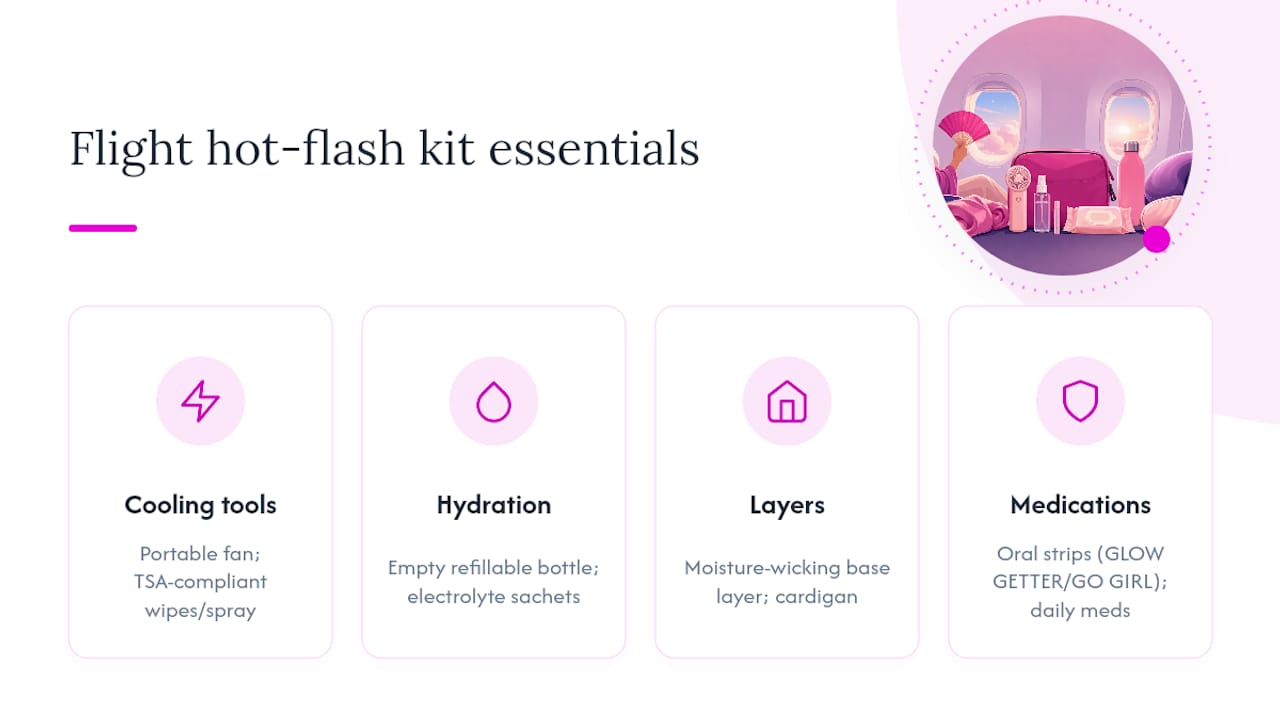
Keep every liquid under 100 ml (3.4 oz) in your clear TSA bag so security doesn’t slow you down. Request an aisle seat for easier movement, and stash your cooling tools in the seatback pocket or an easy-reach jacket pocket, not the overhead bin.
Flying Doesn’t Have to Mean Fighting Your Body
Hot flashes on planes are common, not a personal failing, and they don’t have to ground your travel plans. A little packing forethought buys you real confidence at 35,000 feet. Skipping a trip because of menopause symptoms costs you more than the flush itself ever would.
Pack Discreet Relief: Nuka Love Oral Strips for Flights
Cooling sprays and fans handle the environment around you. They don’t always touch what’s happening inside your body when a hot flash is already building. That’s where a fast, dissolvable option earns its spot in your personal item.

Nuka Love makes oral strips designed for exactly this kind of moment: GLOW GETTER, GO GIRL, and CLARITY dissolve on your tongue in seconds, need no water, and fit flat in a wallet or seatback pocket. Place the strip on your tongue as soon as you feel a flush start, not once it’s peaked, since faster action means faster relief. They’re solid, not liquid, so they sail through security with zero TSA hassle, unlike sprays or gels capped at 100 ml. Pair one with a sip of cold water and a few slow breaths, and dispose of the wrapper discreetly in your seatback pocket trash. Browse the full lineup on the Nuka Love site or head straight to the GLOW GETTER product page to build your travel kit before your next flight.
Frequently Asked Questions
Why do hot flashes seem worse on planes than on the ground? Dry cabin air, altitude, cramped seating, and airport stress stack on top of your baseline symptoms, which tends to intensify flushes compared to a normal day at home.
Can airplane temperature settings actually trigger hot flashes? Cabin temperature and airflow control matter a lot. A stuffy cabin traps heat near your body, while a working air vent aimed at your neck and face can shorten a flush considerably.
Is it safe to use an oral strip like Nuka Love’s on a flight? Yes. Oral strips are solid, dissolve on the tongue without water, and carry no TSA liquid restrictions, which makes them one of the more discreet flying hot flashes solutions available.
What should I avoid eating or drinking before a flight to reduce hot flashes? Skip spicy food, caffeine, and alcohol for at least a few hours before boarding, since all three can widen blood vessels and intensify overheating.
When do flight-triggered hot flashes mean I should see a doctor? If episodes disrupt your sleep for days afterward, happen on nearly every flight, or feel far more severe than your usual symptoms, bring that pattern to a clinician for a treatment review.
This article is general information, not a substitute for advice from a qualified doctor. Consult a qualified healthcare professional about your own circumstances before acting on anything here.
Sources
- TSA: Liquids, aerosols, and gels (3-1-1 rule)
- Travel + Leisure: Menopause travel fabrics and routines (2026)
- Fodor’s: How I travel through perimenopause and hot flashes
- Women In Balance: Menopause-friendly travel ideas (2026)