

Hot Flash Remedies: Quick Relief and Medical Options
The fastest ways to reduce hot flashes combine immediate cooling tactics with proven medical treatments for persistent or severe symptoms. Start with practical steps you can use right now, then escalate to hormone therapy or FDA-approved nonhormonal drugs like Brisdelle or Veozah if lifestyle changes aren’t enough. According to Johns Hopkins Medicine, clinicians focus on symptom management tailored to the individual because triggers and physiology vary substantially from woman to woman.
Start here, right now:
- Carry a small portable fan and use it the moment a flash begins
- Sip cold water throughout the day and keep a glass on your nightstand
- Dress in layers you can peel off quickly; natural fibers like cotton breathe better than synthetics
- Identify and avoid your personal triggers (spicy food, caffeine, alcohol, hot rooms)
- If symptoms are frequent or severe, schedule a visit with your OB-GYN or a menopause specialist
The American College of Obstetricians and Gynecologists (ACOG), Mayo Clinic, and the North American Menopause Society (NAMS) all recognize hot flashes as the most common menopausal symptom, affecting the majority of women during the menopausal transition. You have real options at every level of severity.
Table of Contents
- What do hot flashes actually feel like, and how long do they last?
- Lifestyle changes that genuinely reduce hot flashes
- What medical treatments are available for hot flashes?
- Do complementary therapies and supplements actually help?
- When should you see a doctor about hot flashes?
- How strong is the evidence behind common remedies?
- Key Takeaways
- What most hot flash advice gets wrong
- Nukalove makes on-the-go symptom support actually portable
- Useful sources and further reading
What do hot flashes actually feel like, and how long do they last?
A hot flash is a sudden wave of intense heat that spreads across the chest, neck, and face, often followed by sweating, skin flushing, and a rapid heartbeat. Many women describe the feeling as being drenched from the inside out. After the heat peaks, a chill or shiver frequently follows as the body overcorrects its temperature.
Individual episodes can last several minutes. The broader picture is less tidy: hot flashes can begin during perimenopause, years before the final menstrual period, and continue for several years in many women, with a smaller group experiencing them into their 60s and beyond. Severity and frequency vary widely based on factors including smoking history, body weight, and race (research consistently shows Black women report more frequent and severe hot flashes than white women).
| Phase | Typical Onset | Average Duration |
|---|---|---|
| Perimenopause | 2 years before last period | Variable; flashes begin and increase |
| Early menopause | Around the final menstrual period | Peak frequency and intensity |
| Late menopause / postmenopause | 1+ years after last period | Gradual decline over years |
| Extended course | Any postmenopausal stage | Up to 10+ years in some women |
Night sweats are essentially hot flashes that occur during sleep. They disrupt sleep quality, which compounds the fatigue, mood changes, and cognitive fog that many women already associate with the menopausal transition. Understanding the full arc of symptoms is a good starting point for anyone navigating perimenopause and menopause.
Lifestyle changes that genuinely reduce hot flashes
Lifestyle modifications are the first-line approach recommended by Johns Hopkins Medicine, ACOG, and the National Institute on Aging before any medication is considered. They won’t eliminate hot flashes for everyone, but they reduce frequency and severity for many women and cost nothing.
Cooling tactics that work in the moment
- Keep a portable fan in your bag; use it at the first sign of warmth
- Apply a cool, damp cloth to the back of your neck or wrists
- Sip cold water rather than hot beverages throughout the day
- Lower your bedroom thermostat to 65–68°F and use lightweight, moisture-wicking sheets
- Shower before bed with lukewarm (not hot) water to pre-cool your core temperature
Triggers worth testing and tracking
Memorial Sloan Kettering Cancer Center recommends tracking triggers as a core nonhormonal strategy. Common culprits include spicy foods, caffeine, alcohol, cigarette smoke, and overheated rooms. Not every woman reacts to the same triggers, which is why a simple log matters. Keep a small notebook or use your phone’s notes app: jot down the time, what you ate or drank, your stress level, and the room temperature before each flash. Two weeks of data will reveal patterns most women don’t notice otherwise.
Sleep, activity, and weight
Keeping the bedroom cool is the single most effective sleep intervention for night sweats. Beyond that, regular aerobic exercise (brisk walking, cycling, swimming) supports overall menopausal health, though the direct evidence for exercise reducing hot flash frequency is mixed. Maintaining a healthy weight does appear to help: women who are overweight or obese tend to experience more frequent and severe flashes, likely because body fat insulates heat.
Paced breathing for immediate relief
Slow, paced breathing at roughly 6 breaths per minute (inhale for 5 counts, exhale for 5 counts) is one of the few mind-body techniques with consistent trial support for reducing hot flash intensity in the moment. Practice it for 2–3 minutes when a flash starts.
Pro Tip: Pre-cool a small cooling towel in a zip-lock bag in your hotel mini-fridge when traveling. Pair it with a fast-dissolving hydration oral strip from Nukalove’s THIRST TRAP hydration powder for quick rehydration on the go — no water bottle required.
What medical treatments are available for hot flashes?
When lifestyle changes aren’t enough, prescription options range from highly effective hormone therapy to several FDA-approved nonhormonal drugs. The right choice depends on your symptom severity, health history, and personal preferences.

Hormone therapy (estrogen)
Estrogen therapy is the most effective treatment for hot flashes, according to Mayo Clinic. For women who still have a uterus, a progestogen is added to protect the uterine lining against cancer. Hormone therapy also helps with vaginal dryness, sleep disruption, and bone density.
The risks are real and worth discussing with your clinician: increased risk of blood clots, stroke, breast cancer (with combined estrogen-progestogen), and gallbladder disease. The risk-benefit balance is generally more favorable for women who start within approximately 10 years of their last menstrual period or before age 60. The standard guidance from the National Institute on Aging is to use the lowest effective dose for the shortest time that remains effective, always in consultation with a physician.
FDA-approved nonhormonal prescriptions
Brisdelle (low-dose paroxetine): The FDA has approved this low-dose SSRI specifically for menopausal hot flashes. It works at a lower dose than antidepressant use and is a reasonable option for women who cannot or prefer not to use hormones. It should not be combined with tamoxifen, as the interaction reduces tamoxifen’s effectiveness.
Veozah (fezolinetant): Also FDA-approved, fezolinetant is a neurokinin 3 (NK3) receptor antagonist that works directly in the brain’s temperature-regulation center. It’s the first in a new drug class for hot flashes. Because of a rare risk of liver injury, ACOG guidelines require baseline liver function tests and follow-up tests at 1, 2, 3, 6, and 9 months after starting therapy.
Other frequently used nonhormonal prescriptions
SSRIs and SNRIs (such as venlafaxine, escitalopram, and desvenlafaxine) are used off-label and reduce hot flash frequency and severity in trials, though less dramatically than estrogen. Gabapentin, an anticonvulsant, is particularly useful for women whose hot flashes are worst at night, since drowsiness is a common side effect. Clonidine, a blood pressure medication, has modest evidence and is generally considered a second- or third-line option due to side effects including dizziness and dry mouth.
Safety note: Some medications prescribed for unrelated conditions, including certain blood pressure and cholesterol drugs, can trigger or worsen hot flashes. A full medication review with your clinician can reveal modifiable contributors you might not have considered.
| Treatment | Effectiveness | Onset | Common Side Effects | Best Candidate | Access | Evidence Strength |
|---|---|---|---|---|---|---|
| Estrogen (HT) | Highest | 2–4 weeks | Clots, breast cancer risk (with progestogen), stroke | Women near menopause onset, no hormone-sensitive cancer | Prescription | Strong RCT support |
| Brisdelle (paroxetine) | Moderate | 2–4 weeks | Nausea, sexual dysfunction | Women avoiding hormones; not with tamoxifen | Prescription | FDA-approved |
| Veozah (fezolinetant) | Moderate–high | 1–4 weeks | Liver risk (monitor), abdominal pain | Women avoiding hormones; liver monitoring required | Prescription | FDA-approved |
| SSRIs/SNRIs | Moderate | 2–4 weeks | Nausea, insomnia, sexual dysfunction | Women with comorbid mood symptoms | Prescription (off-label) | Moderate RCT support |
| Gabapentin | Moderate | 1–2 weeks | Drowsiness, dizziness | Women with nighttime flashes | Prescription (off-label) | Moderate RCT support |
| Clonidine | Low–moderate | 2–4 weeks | Dizziness, dry mouth, fatigue | Second/third-line; limited by side effects | Prescription (off-label) | Weaker evidence |
Do complementary therapies and supplements actually help?
Some do, modestly. Others have real safety concerns that get buried in wellness marketing. Here’s an honest breakdown.
Mind-body therapies with the best evidence
Cognitive behavioral therapy (CBT) and clinical hypnosis have some of the most consistent evidence among complementary approaches, according to Mayo Clinic. CBT doesn’t reduce the number of hot flashes so much as it reduces how much they bother you, which is a meaningful distinction. Hypnosis has shown reductions in both frequency and perceived severity in several trials. Both are low-risk and worth considering, especially for women managing anxiety or sleep disruption alongside hot flashes.
Acupuncture and relaxation approaches
Acupuncture results are mixed. Some women report genuine relief; controlled trials show smaller effects. It’s low-risk, and if you’re already open to it, there’s little downside to trying a course of treatment while other strategies take effect.
Supplements: what the evidence says
- Soy isoflavones: Modest, inconsistent reductions in frequency; works better for some women than others
- Black cohosh: Some trial support, but evidence is inconsistent; rare cases of liver injury have been reported
- Vitamin E: Minimal evidence; high doses carry a bleeding risk
- Dong quai: Has hormone-like activity and should be avoided by women with hormone-sensitive conditions
- Herbal teas: Some women find hormone-balancing teas a useful adjunct for relaxation, though clinical evidence for hot flash reduction specifically is limited
Supplements are not regulated by the FDA for safety or efficacy. That means no standardized dosing, no guaranteed purity, and no requirement to prove they work before hitting store shelves. Always tell your clinician what you’re taking, especially if you’re on other medications or have a hormone-sensitive condition.
A 2026 meta-analysis of randomized controlled trials found that complementary and alternative therapies show variable effects with considerable heterogeneity across studies. Improvements were most consistent for hot flash frequency, but prediction intervals were wide, meaning the benefit any individual woman experiences could range from substantial to negligible. Larger, higher-quality trials consistently show smaller effects than smaller ones.
When should you see a doctor about hot flashes?
Most hot flashes are a normal part of the menopausal transition, but some situations call for prompt evaluation.
See a clinician soon if you notice:
- Sudden, severe hot flashes that appear out of nowhere after years without symptoms
- Hot flashes accompanied by chest pain, shortness of breath, or heart palpitations that feel new or alarming
- Symptoms severe enough to disrupt work, sleep, or daily functioning despite lifestyle changes
- Hot flashes that begin before age 40 (premature ovarian insufficiency needs evaluation)
For women with comorbidities, a history of hormone-sensitive cancer, or complex medication regimens, a menopause specialist (often a gynecologist with NAMS certification) is a better starting point than a general practitioner. Your primary care physician or OB-GYN is appropriate for straightforward cases.
What your clinician will evaluate
Clinicians assess symptom history, timing, and severity; review your current medications (since some drugs worsen hot flashes); and conduct a targeted physical exam. If fezolinetant is being considered, baseline liver function tests are required. For hormone therapy, a risk assessment covering cardiovascular history, clotting history, and cancer history is standard.
Questions to bring to your appointment
- Am I a candidate for hormone therapy given my health history?
- Which nonhormonal prescription has the best evidence for my symptom pattern?
- What monitoring will I need, and how often?
- How long before I should expect to feel a difference?
- Are any of my current medications contributing to my hot flashes?
- What are the drug interaction risks with my existing prescriptions?
Pro Tip: Log your hot flashes for two weeks before your appointment: time of day, severity on a 1–10 scale, and any likely trigger. Clinicians make better decisions with data, and this 5-minute daily habit gives them exactly what they need.
How strong is the evidence behind common remedies?
The evidence hierarchy for hot flash treatments is fairly clear, even if it doesn’t always match what wellness culture promotes.
Hormone therapy has the strongest and most consistent RCT support of any treatment. Several nonhormonal prescriptions, including Brisdelle and Veozah, carry FDA approval based on clinical trial data. SSRIs, SNRIs, and gabapentin have moderate RCT support from off-label use studies. Complementary therapies and supplements occupy a much murkier tier.
The 2026 meta-analysis published in Archives of Gynecology and Obstetrics is the most current large-scale synthesis of complementary and alternative therapy trials. Its core finding: heterogeneity across studies was considerable, and wide prediction intervals make it impossible to reliably predict individual response. This is not a reason to dismiss these therapies entirely. It is a reason to treat them as adjuncts rather than primary treatments and to track your own response carefully.
ACOG, Mayo Clinic, and NAMS all recommend a personalized, trial-and-error approach supervised by a clinician. That framing matters because it shifts the goal from finding “the best remedy” to finding what works for your specific physiology, trigger profile, and health history. No single treatment works for every woman, and the clinician’s job is to help you navigate that efficiently.
For deeper reading, the highest-quality sources are the National Institute on Aging’s patient guide, the Mayo Clinic’s diagnosis and treatment overview, Johns Hopkins Medicine’s menopause expert Q&A, ACOG’s clinical guidance, and the 2026 meta-analysis in Archives of Gynecology and Obstetrics. These are listed with links in the sources section below.
Key Takeaways
The most effective approach to hot flash management combines immediate cooling tactics, trigger tracking, and clinician-supervised medical treatment when lifestyle changes fall short.
| Point | Details |
|---|---|
| Start with lifestyle changes | Cooling tactics, trigger avoidance, and paced breathing are first-line and risk-free. |
| Hormone therapy leads on effectiveness | Estrogen is the most effective treatment; use the lowest dose for the shortest effective time. |
| Two FDA-approved nonhormonal options exist | Brisdelle (paroxetine) and Veozah (fezolinetant) are approved for women who cannot or prefer not to use hormones. |
| Supplements need clinical oversight | Supplements aren’t FDA-regulated for efficacy; black cohosh, vitamin E, and dong quai carry specific safety risks. |
| Nukalove for on-the-go support | Nukalove’s portable oral strips and hydration powders offer fast-absorbing adjunct support for busy women managing symptoms day-to-day. |
What most hot flash advice gets wrong
The conventional framing of hot flash management tends to split into two camps: “just try some herbs and breathe deeply” on one side, and “get on hormones immediately” on the other. Both are oversimplifications that leave a lot of women stuck.
The herbs-and-breathing camp underestimates how disruptive severe hot flashes actually are. A woman waking up four times a night drenched in sweat is not going to solve that with chamomile tea and a ceiling fan. The evidence for most supplements is genuinely weak, and pretending otherwise wastes time women could spend on treatments that actually work.
The “just take hormones” camp, meanwhile, ignores that a meaningful number of women either can’t use hormone therapy (due to hormone-sensitive cancer history, clotting disorders, or other contraindications) or simply don’t want to. For them, the nonhormonal prescription options, particularly Veozah and the SSRI/SNRI class, represent real, clinically validated alternatives that don’t get nearly enough attention in mainstream wellness coverage.
What actually works is a layered approach: start with lifestyle changes because they’re free and low-risk, add a nonhormonal prescription if symptoms are interfering with your life, and consider hormone therapy if you’re a good candidate and symptoms are severe. The tracking piece is underrated. Two weeks of logging hot flash timing, triggers, and severity gives a clinician far more to work with than a vague description of “a lot of hot flashes.” That data often changes the treatment recommendation entirely.
Portable, fast-absorbing support products like Nukalove’s oral strips fit into this picture as a practical adjunct for busy women who need something they can use anywhere, without water, without a pill organizer, and without a pharmacy run. They’re not a replacement for medical care. They’re what you reach for at 2 PM in a meeting when a flash hits and your options are limited.
Nukalove makes on-the-go symptom support actually portable
Managing hot flashes on a busy day, in a meeting, on a plane, or at the gym means you need relief options that travel with you. Nukalove’s oral strips and hydration powders are designed exactly for that moment: fast-absorbing, compact, and no water required for the strips.
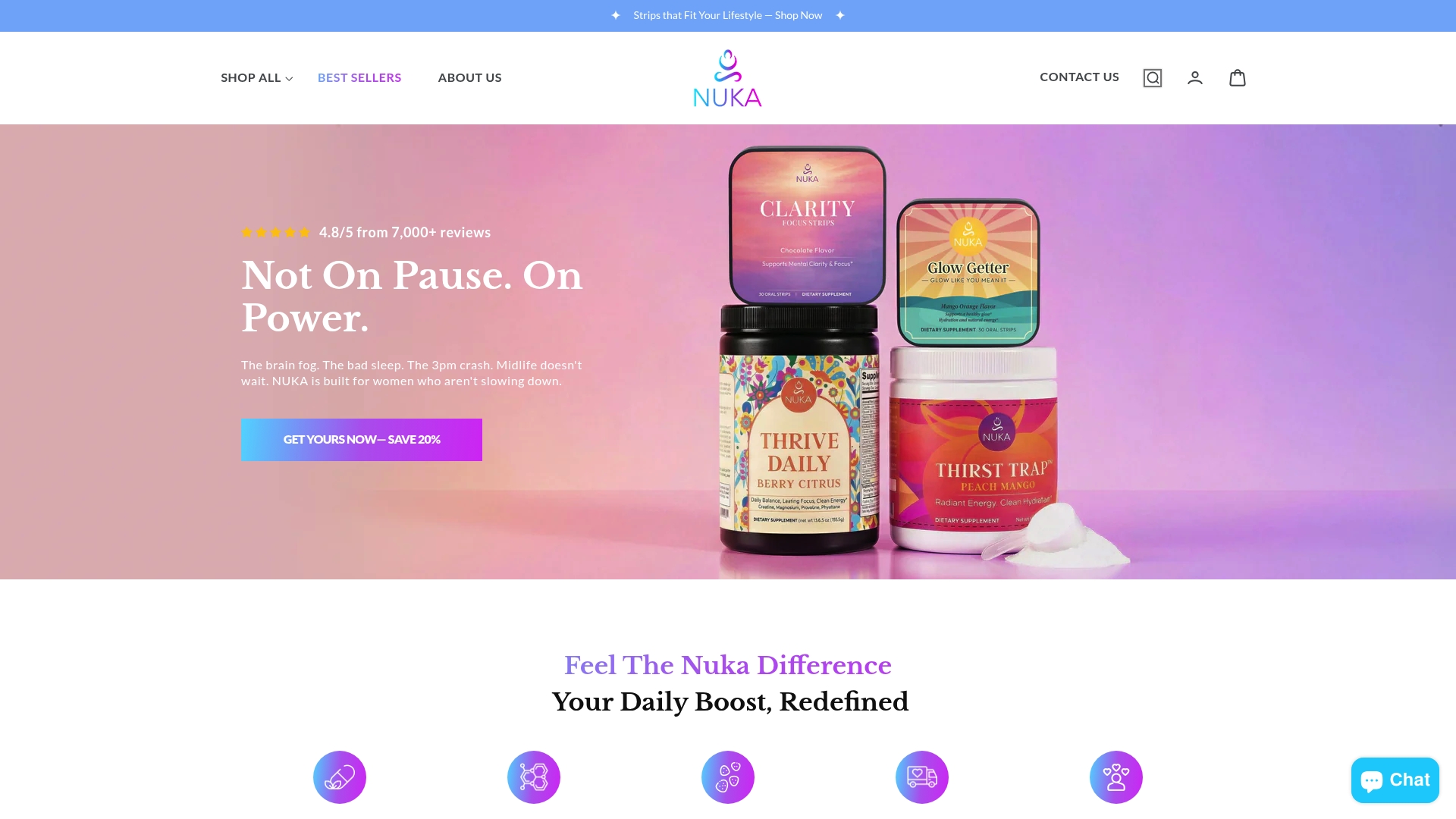
The No Pause Power Pack bundles four menopause-focused wellness products into one travel-ready kit, covering energy, hydration, sleep, and focus. It’s built for women who are already managing a lifestyle plan or working with a clinician and want adjunct support that fits in a carry-on. Nukalove is a women-owned brand built specifically for every stage of menopause, and every product is designed to be as easy to use as it is to pack.
Browse the full Nukalove wellness collection to find the formats that fit your routine, or start with the No Pause Power Pack for a complete daily kit.
Useful sources and further reading
The sources below are the highest-quality references used in this article. Each is patient-facing, evidence-based, and free to access.
| Source | Why It’s Useful |
|---|---|
| National Institute on Aging: Hot Flashes | Comprehensive patient guide covering lifestyle, nonhormonal meds, and hormone therapy with plain-language explanations |
| Mayo Clinic: Hot Flashes Diagnosis & Treatment | Clinically detailed overview of all treatment categories, including FDA approvals and evidence quality |
| Johns Hopkins Medicine: Managing Hot Flashes | Expert Q&A format; strong on personalization, trigger tracking, and medication review |
| ACOG: Ob-Gyn’s Top Tips for Managing Hot Flashes | Clinical guidance on supplement safety, fezolinetant monitoring, and nonhormonal options |
| Memorial Sloan Kettering: Managing Hot Flashes Without Hormones | Practical nonhormonal strategies for women with hormone-sensitive cancer histories |
| 2026 Meta-Analysis: Complementary & Alternative Therapies | Most current systematic review of CAM trials; essential for understanding evidence quality and heterogeneity |
| Nukalove | Brand resource for portable oral strip and wellness bundle products designed for menopausal women |
This article is general health information, not medical advice. Confirm current treatment guidelines and your individual options with a qualified clinician or your physician.