

Flight Hydration in 3 Steps for Midlife Women, TSA Friendly Packing
The best flight hydration routine has three moving parts: arrive already hydrated, sip water on a schedule instead of waiting to feel thirsty, and bring a TSA-friendly electrolyte option for anything longer than three or four hours. Skip the heavy alcohol and salty snacks, and you’ll land feeling like yourself instead of a raisin. This isn’t guesswork. It’s the same guidance behind the peer-reviewed research on long-haul dehydration, practical advice from Cleveland Clinic, and the packing logistics NUKA builds its travel strips around.
TL;DR:
- Drinking steadily the day before flight with added electrolytes and avoiding alcohol significantly reduces dehydration risk during long flights.
- Using oral electrolyte strips or powders is practical, TSA-friendly, and more effective than plain water after four hours of flying.
- Consuming protein-rich or water-rich snacks and avoiding salty, gas-producing foods helps prevent bloating and stomach discomfort at altitude.
- Maintaining a water intake of approximately 8 ounces per hour and pairing it with electrolytes is essential, especially when drinking caffeine and alcohol.
- Most travelers underhydrate before flying, so a consistent, pre-flight hydration routine is critical to avoid feeling dehydrated upon arrival.
Table of Contents
- Why Flying Dries You Out Faster Than You Think
- Your Hour-by-Hour Hydration Routine for Long Flights
- Electrolytes or Plain Water: Which Do You Actually Need?
- What to Eat and Drink to Avoid Bloating at 35,000 Feet
- How Many Ounces of Water Do You Really Need Per Hour?
- Why NUKA Builds Its Travel Products Around This Exact Routine
- The Part of This Advice Most Travelers Get Backwards
- Pack Smarter With NUKA’s Travel-Ready Hydration Strips
- Sources
Why Flying Dries You Out Faster Than You Think
Cabin air typically sits at 10 to 20 percent humidity, drier than most deserts, and that single fact drives almost everything else that happens to your body at 35,000 feet. The CAA’s physiology of flight guidance estimates that respiratory water loss can climb from around 160 mL per hour in normal humidity to as much as 360 mL per hour in a dry cabin. That’s more than double, just from breathing.
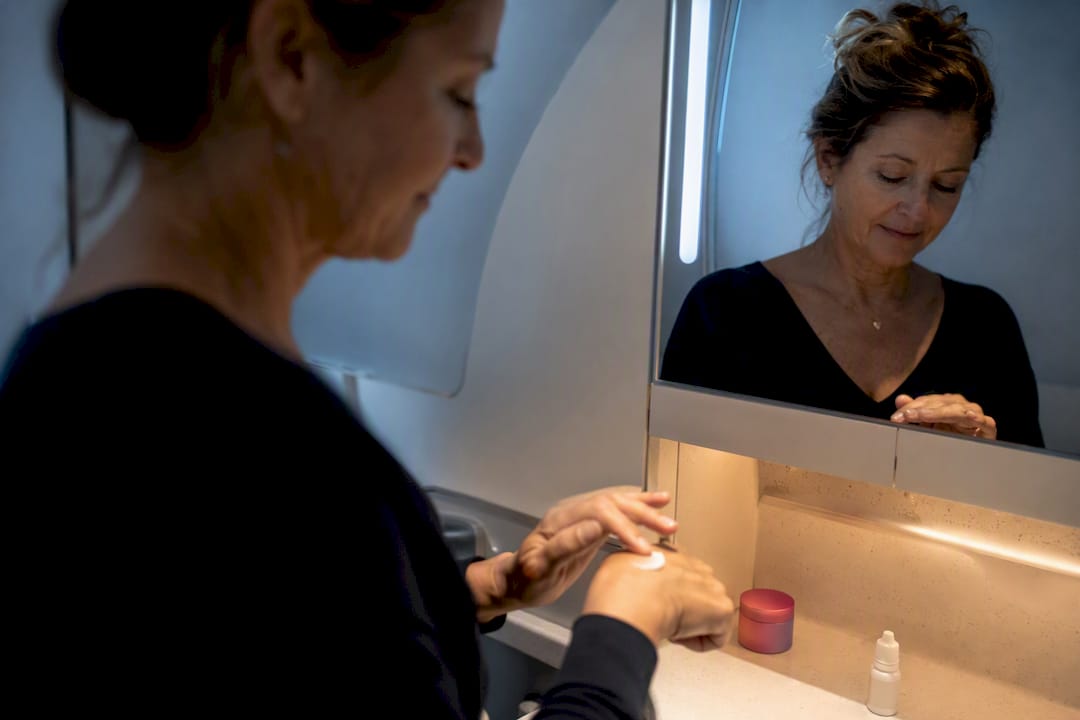
Most of what you notice first isn’t true systemic dehydration. It’s surface dryness: a scratchy throat, tight skin, eyes that feel sandy by hour three. Cleveland Clinic notes this discomfort shows up fast, which is why packing eye drops and a travel-size moisturizer matters as much as the water bottle.
Cabin pressure adds a layer of general fatigue and bloating, but for most healthy travelers it isn’t the main driver of serious dehydration. The real culprit is simple respiratory water loss, hour after hour, compounded if you’re also skipping fluids because you don’t want to deal with the restroom line.
Your Hour-by-Hour Hydration Routine for Long Flights
Waiting until you’re thirsty is already too late. Thirst typically kicks in after you’ve lost around 2 percent of your body weight in fluid, so a scheduled sipping habit beats reactive drinking every time.
Before you fly:
- Start drinking steadily the day before your flight, not just the morning of.
- On long-haul trips, add an electrolyte mix the evening before departure to top off your reserves.
- Skip the pre-flight cocktail. Alcohol the night before compounds cabin dehydration the next day.
At security:
- Carry an empty refillable bottle and fill it after the checkpoint.
- Pack electrolyte powders or oral strips in their original packaging. They clear TSA screening easily since they’re not liquids.
- Toss in eye drops and a small lotion for the dry-cabin symptoms Cleveland Clinic flags most often.
During the flight:
- Sip small amounts every hour rather than chugging a full bottle twice.
- Cut back on fluid volume right before you plan to sleep, then increase electrolyte concentration slightly instead. Less volume means fewer wake-ups for the restroom.
- Stand and stretch every couple of hours. It won’t fix dehydration, but it helps circulation and reduces swelling.
After landing:
- Keep drinking water for the rest of the day.
- Choose a meal with protein and electrolytes rather than something salty and heavy.
- Give your body a beat to catch up before layering on jet lag adjustments.
Electrolytes or Plain Water: Which Do You Actually Need?
Sodium and potassium help your body hold onto the fluid you drink instead of losing it straight to the restroom. That’s the whole logic behind electrolyte use on planes. In a simulated 10-hour flight study, volunteers drinking about 960 mL total still showed a 6 to 9 percent drop in plasma volume, which suggests water intake alone doesn’t always keep pace with what a long flight demands.
For a two-hour domestic hop, plain water is fine. Once you’re past four or five hours, especially with any alcohol or heavy walking through terminals beforehand, electrolytes start to earn their place. Some controlled studies even found electrolyte-carbohydrate solutions preserved plasma volume better than water by itself.
Single-serve powders and oral strips are the practical answer here. They’re compact, they clear security without a second look, and you can mix a strip into whatever bottle you fill after the checkpoint. If you’re building your own version, keep it simple: a pinch of salt, a splash of juice for potassium, and water. Just check the sodium content on packaged versions. Low-sodium formulas may not have the same fluid retention effect as the balanced mixes used in research on flight hydration.
What to Eat and Drink to Avoid Bloating at 35,000 Feet
Certain foods work against you the moment cabin pressure changes how gas moves through your gut. GoodRx recommends skipping beans, lentils, broccoli, cabbage, onions, and Brussels sprouts before you fly. Salty snacks are just as much of a problem. They pull water toward digestion and leave you thirstier an hour later.
What works better:
- Protein-forward snacks like nuts, jerky, or a hard-boiled egg
- Water-rich fruit such as oranges, grapes, or cucumber slices
- Tomato juice, which carries some natural electrolytes if you want an occasional mixer
Pro Tip: Pack snacks in smaller portions than you think you need. A full bag of anything salty or dense tends to sit heavy at altitude, and you’ll drink less water when your stomach already feels full.
How Many Ounces of Water Do You Really Need Per Hour?
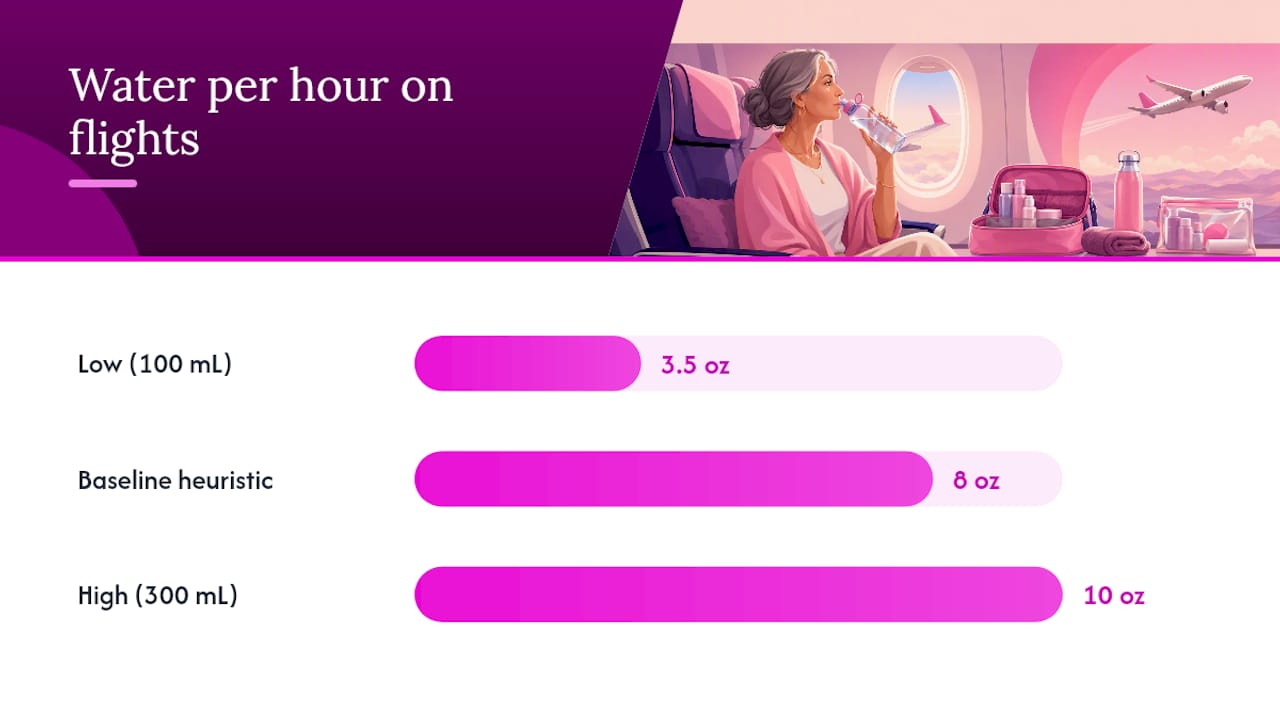
Research on long-haul flights points to roughly 100 to 300 mL per hour, which is about 3.5 to 10 ounces, as a reasonable range depending on flight length and your own body size. A simpler heuristic some travel-health sources use is about 8 ounces per hour as a baseline if you’d rather not do math at 30,000 feet.
Alcohol and caffeine both work against that plan. Match each drink one-to-one with water, and cut caffeine roughly six hours before you intend to sleep on board. Overdoing water intake isn’t smart either. If you have a heart or kidney condition, talk to your doctor about what range fits you, since older adults and people managing chronic conditions often need a different target than the general guidance above.
Why NUKA Builds Its Travel Products Around This Exact Routine
NUKA is a women-owned wellness brand built specifically for the hydration and energy needs that show up differently once women hit their late 30s and beyond. Travel is where that shows up hardest: cabin air doesn’t care about your schedule, and neither does a hot flash at cruising altitude.
Every packing step in the routine above lines up with a format problem. Powders and oral strips travel better through airport security than liquids ever will, supporting common traveler strategies like the empty-bottle-then-refill trick.
A few resources worth a closer look if you want to go deeper:
- Electrolyte timing for long flights, for the hour-by-hour breakdown
- Managing hot flashes on planes, for travelers dealing with both heat and dehydration
- Hydration sachets for menopause travel, for a packing-list deep dive
The Part of This Advice Most Travelers Get Backwards
Most hydration advice for flying treats water intake like the only variable that matters. It isn’t. The travelers who land feeling worst usually didn’t skip water. They skipped the day before the flight, showed up already behind, then tried to fix it with three cups of water during boarding and called it done.
That’s backwards. The evidence on plasma volume loss during long flights suggests the deficit builds slowly and steadily, which means the fix has to be steady too. A rushed liter at the gate doesn’t undo 18 hours of under drinking the day before.
The other overrated piece of advice is treating electrolytes as optional extras for athletes. On a flight past the four or five hour mark, they’re doing real work, not just adding flavor to your water. If you’re a woman managing hot flashes or hormonal shifts on top of normal flight dehydration, that gap matters even more.
Start the day before you fly. Sip on a schedule instead of a feeling. Pack something with electrolytes that can clear security without a hassle. That’s the whole system, and it works better than any single “miracle” drink you’ll see recommended at the gate.
— NUKA
Pack Smarter With NUKA’s Travel-Ready Hydration Strips
This routine is made easier to follow with oral strips that dissolve in seconds, require no water or mixing, and slide through TSA screening without a second glance since they’re not classified as liquids. That’s the practical edge over powders that need stirring or bottled drinks you can’t bring past the checkpoint.

Working it into the routine above is simple. Use a strip the morning of your flight to top off before boarding, keep one in your bag for a mid-flight boost around hour four or five, and pair another with your first big glass of water after landing. If you’re managing a chronic health condition, check with your doctor before adding any new supplement to your travel kit. Ready to build your own kit? Start with GLOW GETTER oral strips and pack them next to your boarding pass, not at the bottom of your carry-on.
Sources
- Up in the Air: Evidence of Dehydration Risk and Long-Haul Flight on Athletic Performance — PMC
- CAA — Physiology of flight (guidance for health professionals)
- GoodRx — Best food to eat before flying
- Liquid I.V. — Hydration for flying: what to drink before, during, after