

Energy Supplements for Women: Menopause Travel Guide
If you’re in perimenopause or menopause and your energy is tanking, the fastest, safest first move is this: get bloodwork done (ferritin, B12, 25-OH vitamin D, TSH), and while you’re arranging that, consider a personalized nutrition plan alongside travel-ready oral strips or single-serve powders that list exact ingredient doses and carry third-party testing certificates. Guessing at deficiencies wastes time and money. Targeting them works.
Two immediate steps:
- Get tested first. Order or request ferritin, CBC, B12, 25-OH vitamin D, and TSH. Clinicians recommend testing before targeted repletion so you’re not masking a deeper cause.
- Use travel-ready formats now. Oral strips and single-serve powders that show milligram amounts per serving, bioavailable forms, and a COA (certificate of analysis) are your safest bridge while you wait for results.
Nukalove, a women-owned brand built specifically for menopausal wellness, formats its products as compact oral strips and single-serve powders, which makes them easy to carry through airports and pack into a purse without a second thought.
Pro Tip: Methylated forms matter. Look for methylcobalamin (B12) and methylfolate rather than cyanocobalamin and folic acid — the methylated versions are better absorbed, especially if you have an MTHFR gene variant common in women over 40.

Table of Contents
- Which energy supplements for women actually support menopausal energy?
- Symptoms that should send you to the lab before you buy anything
- Safety limits and drug interactions you need to know
- How to choose travel-friendly oral strips and powders
- Best timing and pairing strategies for strips and powders
- When to call your doctor instead of adding another supplement
- Key Takeaways
- What most energy advice for menopausal women gets wrong
- Nukalove’s travel-ready lineup for menopausal energy
- Useful sources and where to learn more
Which energy supplements for women actually support menopausal energy?
Sustainable energy in menopause depends on supporting mitochondrial function, thyroid health, and hormonal balance — not chasing stimulant spikes that crash an hour later. Think of it in four systems: oxygen delivery, ATP production, hormonal/thyroid support, and stress resilience. The right ingredients address one or more of those systems directly.
| Ingredient | Primary mechanism | Typical onset | Best for |
|---|---|---|---|
| Iron (ferrous bisglycinate) | Oxygen transport via hemoglobin | 4–8 weeks | Women with heavy periods, low ferritin |
| Methylcobalamin (B12) | Nerve function, red blood cell formation | 2–6 weeks | Vegans, metformin users, brain fog |
| Methylfolate | DNA synthesis, red blood cell support | 4–8 weeks | MTHFR variants, fatigue with B12 deficiency |
| Vitamin D3 | Muscle function, mood regulation | 6–12 weeks | Deficiency-confirmed fatigue |
| Magnesium glycinate | ATP synthesis, sleep, muscle recovery | 1–4 weeks | Poor sleep, muscle tension, headaches |
| CoQ10 (ubiquinol) | Mitochondrial electron transport | 4–8 weeks | Statin users, women over 45 |
| Creatine monohydrate | ATP regeneration, cognitive support | 2–4 weeks | Physical and mental fatigue |
| Ashwagandha | Cortisol regulation, stress resilience | 4–8 weeks | Chronic stress, disrupted sleep |
| Rhodiola rosea | Fatigue reduction under stress | 2–4 weeks | Mental fatigue, endurance |
| Caffeine + L-theanine | Alertness without jitter | 30–60 minutes | Afternoon slumps, focus |
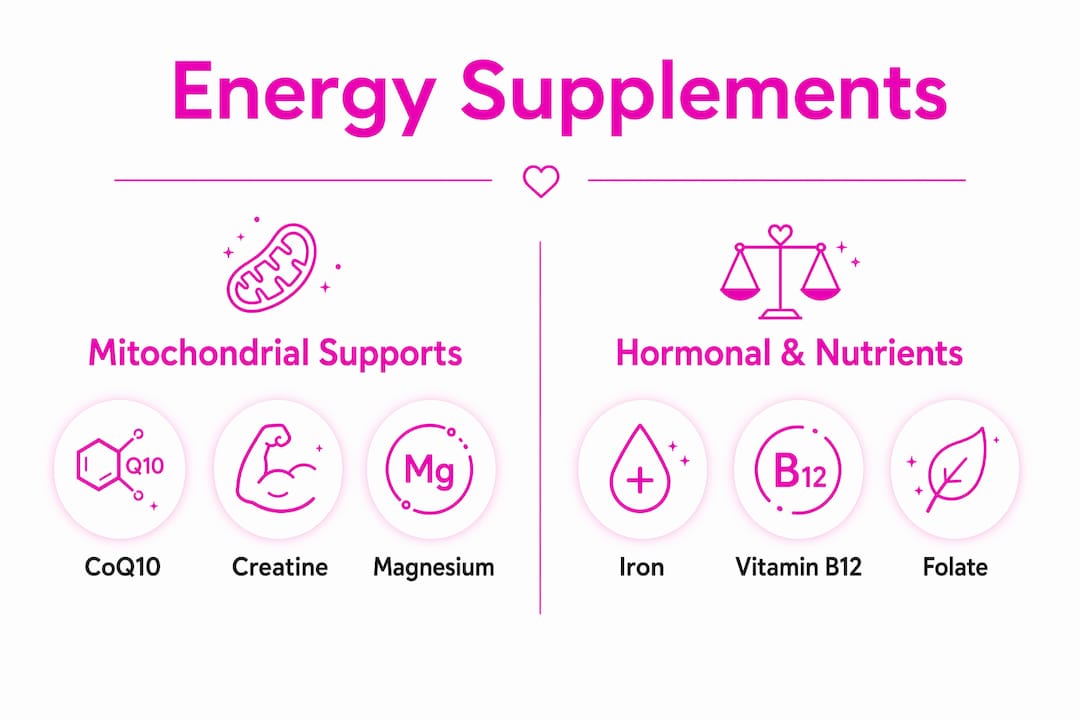
B12, folate, vitamin D, and magnesium are the most common nutrient gaps tied to low energy in women, and they’re also the easiest to address with well-formulated strips or powders. Creatine and CoQ10 round out the mitochondrial support picture, particularly for women over 45 or anyone on a statin.
Pro Tip: Ubiquinol is the active, reduced form of CoQ10 — it absorbs significantly better than ubiquinone, especially after age 40 when the body’s conversion efficiency drops.
Symptoms that should send you to the lab before you buy anything
Doctor-written guidance maps specific symptom clusters to the most likely nutrient causes. Use this as your pre-purchase checklist:
- Heavy periods, brittle nails, restless legs, shortness of breath on exertion → test ferritin and CBC first. Iron deficiency is a common nutritional cause of fatigue in women, particularly those of childbearing age.
- Brain fog, tingling in hands or feet, vegan or vegetarian diet, long-term metformin use → test serum B12 and methylmalonic acid.
- Persistent muscle weakness, low mood, frequent illness, bone aches → test 25-OH vitamin D.
- Poor sleep, muscle cramps, tension headaches → magnesium intake is likely low; dietary assessment plus supplementation trial is reasonable.
- Fatigue that doesn’t improve with sleep, unexplained weight changes, cold intolerance → add TSH to your panel; thyroid dysfunction is common in perimenopause and is often missed.
What to request: ferritin, CBC, serum B12, 25-OH vitamin D, and TSH. Discuss results with a clinician before starting high-dose iron or any thyroid-directed therapy — both carry real risks when used without confirmed deficiency.
Safety limits and drug interactions you need to know
The most common mistake women make with energy supplements is stacking without checking. Here’s what actually matters:
- Iron: Never supplement high-dose iron without a confirmed low ferritin. Iron overload is a real risk, and excess iron won’t improve energy in women with normal stores.
- Thyroid medications (levothyroxine): Separate iron, calcium, and magnesium by at least four hours. These minerals bind to the medication and reduce absorption significantly.
- HRT stacking: Most B-vitamins, magnesium, and adaptogens are compatible with hormone replacement therapy, but confirm with your prescribing clinician before adding anything new.
- Anticoagulants (warfarin, etc.): High-dose omega-3s and some adaptogen blends can affect clotting. Get a medication interaction review before adding these.
- Adaptogen cautions: Ashwagandha and rhodiola may interact with certain antidepressants and sedatives. If you’re on SSRIs or benzodiazepines, check with your clinician first.
- Caffeine: Menopause often amplifies caffeine sensitivity. Strips or powders with more than 100 mg per serving without a clear warning label are a red flag.
Harvard Health and other clinical sources consistently emphasize food-first, with supplements used to correct documented deficiencies or bridge genuine gaps. Pause all non-essential supplements at least two weeks before elective surgery and before starting any new prescription medication.
Warning: Always bring your supplement list to any clinician appointment. “Natural” does not mean interaction-free.
Pro Tip: Pair iron supplements with vitamin C (50–100 mg) to improve absorption, and take them away from coffee, tea, and dairy, which all inhibit uptake.
How to choose travel-friendly oral strips and powders
The format matters as much as the formula. Here’s what to check on the label before you buy:
What a trustworthy label shows:
- Exact milligram or microgram amounts per serving (not just “proprietary blend”)
- Named bioavailable forms (methylcobalamin, not just “B12”; ferrous bisglycinate, not just “iron”)
- Third-party COA or testing seal (NSF, USP, or brand-published COA)
- Clear expiration date and storage instructions
- Full allergen statement
- Dosing instructions that specify timing
Oral strips vs. single-serve powders at a glance:
| Feature | Oral strips | Single-serve powders |
|---|---|---|
| Absorption speed | Fast (sublingual/buccal) | Moderate (GI tract) |
| TSA-friendly | Yes — no liquids | Yes — sealed sachets |
| Shelf stability | High (foil-sealed) | High (moisture-sealed) |
| Dose flexibility | Fixed per strip | Adjustable by scoop/sachet |
| Best for | Quick-dissolve vitamins, adaptogens, caffeine blends | Creatine, magnesium, electrolytes |
Red flags to walk away from:
- “Proprietary blend” with no individual amounts listed
- More than 150 mg caffeine per serving with no warning
- No COA link or third-party seal anywhere on the packaging
- Vague ingredient names like “herbal energy complex” with no species or form specified
Best timing and pairing strategies for strips and powders
B-complex vitamins and energy-supporting botanicals work best in the morning; magnesium supports recovery and sleep when taken in the evening. That single rule covers most of the timing decisions you’ll face.
How to use strips and powders effectively:
- Morning (with or just after breakfast): B12 strip, adaptogen strip (ashwagandha or rhodiola), creatine powder mixed into water or juice.
- Early afternoon (before 2 PM): Caffeine + L-theanine strip if you need a focus lift. Avoid after 2 PM if sleep is already disrupted.
- Evening (30–60 minutes before bed): Magnesium powder or strip. Pair with sleep strips if circadian disruption is part of your fatigue picture.
- With food or water: Powders dissolve best in 8–12 oz of water. Pair with a hydration powder when traveling in dry cabin air or hot climates.
- Iron timing: Take separately from other supplements, away from coffee and dairy, with a small vitamin C source.
Travel-specific packing tips:
- Keep strips in their original foil packaging until use — humidity degrades them faster than heat.
- Carry single-serve powder sachets in a small zip-lock labeled with supplement names for customs clarity.
- If you carry prefilled supplement organizers across international borders, bring a printed copy of your recent lab values and a clinician note listing what you take and why.
Pro Tip: Adaptogens and mitochondrial supports like CoQ10 and creatine typically need 2–8 weeks of consistent daily use before you notice a real difference. Track your symptoms in a notes app before you start so you have a baseline to compare.
When to call your doctor instead of adding another supplement
Some symptoms need a clinician, not a supplement. Know the difference.
Go to urgent care or call your doctor today if you have:
- Shortness of breath at rest or with minimal activity
- Chest pain or palpitations
- Severe dizziness or fainting
- Sudden, significant cognitive changes
Schedule a routine appointment if you have:
- Fatigue that hasn’t improved after 4–6 weeks of addressing sleep, hydration, and diet
- Lab results showing low ferritin (under 30 ng/mL is commonly associated with fatigue), low B12, or abnormal TSH
- Symptoms that match more than one deficiency cluster from the list above
At that appointment, request ferritin, CBC, B12, 25-OH vitamin D, and TSH if you haven’t had them recently. Also ask for a medication interaction review if you’re on HRT, thyroid meds, or anticoagulants. Expect 2–8 weeks before most nutrient repletion strategies produce noticeable energy changes — adaptogens and mitochondrial supports sit at the longer end of that window.
Key Takeaways
Targeted nutrient testing before supplementing, combined with travel-ready formats that show exact doses and third-party testing, is the most reliable path to sustainable menopausal energy.
| Point | Details |
|---|---|
| Test before you supplement | Order ferritin, CBC, B12, 25-OH vitamin D, and TSH before starting targeted repletion. |
| Prioritize the right ingredients | Iron, methylated B12/folate, vitamin D, magnesium, CoQ10, and creatine address the core menopausal energy systems. |
| Read labels carefully | Require exact milligram amounts, named bioavailable forms, and a third-party COA on every product. |
| Time your supplements | Take B-vitamins and adaptogens in the morning; magnesium in the evening; separate iron from thyroid meds by four hours. |
| Nukalove for travel | Nukalove’s oral strips and single-serve powders are built for menopausal women and designed to pack in a carry-on. |
What most energy advice for menopausal women gets wrong
The supplement industry loves to sell energy as a feeling you can buy in a bottle. What it rarely tells you is that the feeling you’re chasing — that steady, clear-headed, capable energy — is almost always downstream of something biological that needs to be identified, not just masked.
The women who see the most consistent improvement aren’t the ones who buy the most supplements. They’re the ones who got their ferritin tested, found out it was at 14 ng/mL, corrected it over three months, and then felt like a different person. Or they discovered their TSH was creeping up, got it addressed, and suddenly the magnesium and B12 they were already taking started working the way they were supposed to.
Travel-friendly formats like oral strips and single-serve powders are genuinely useful — not because the format is magic, but because consistency is what drives results, and you’re far more likely to stay consistent with something that fits in your carry-on. At Nukalove, that’s the whole design philosophy: ingredients that address real menopausal biology, in formats that go where you go.
Nukalove’s travel-ready lineup for menopausal energy
Nukalove is a women-owned brand that formulates specifically for menopausal stages, with every product designed to fit in a carry-on, a purse, or a gym bag.
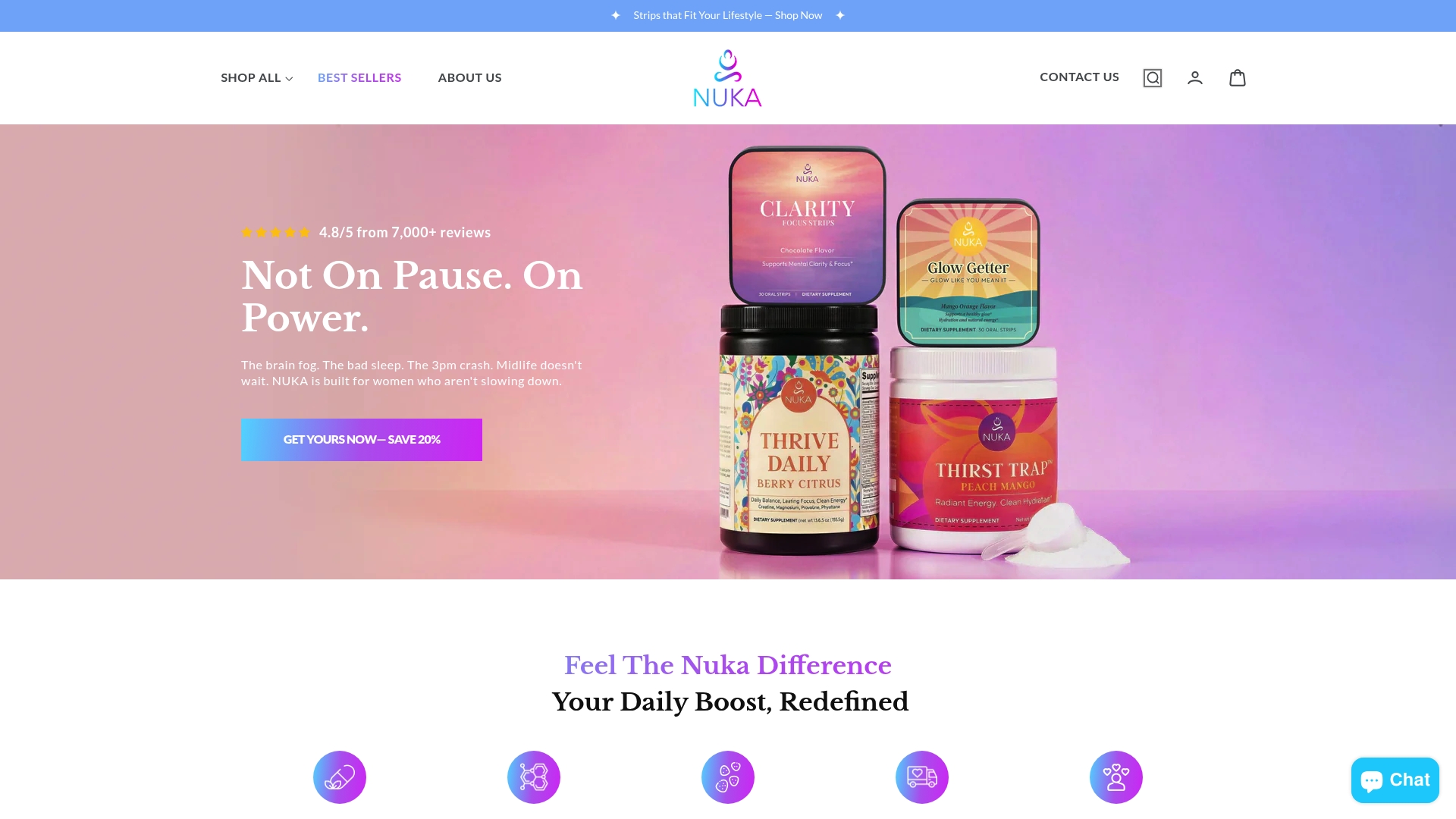
Here’s how the lineup maps to the checklist above:
- GO GIRL Energy Strips — afternoon pick-me-up strip for a clean focus lift without a crash. Ideal for the 1–2 PM slump on travel days.
- CLARITY Focus Strips — designed for brain fog days; pairs well with a morning B12 strip routine.
- THRIVE DAILY Creatine Powder (Berry Citrus) — single-serve creatine sachets for mitochondrial and cognitive support. Mix into your morning water bottle.
- No Pause Power Pack™ — a curated 4-product bundle built for menopausal wellness, covering energy, focus, and recovery in one travel-ready pack.
- RECLAIM YOUR DAY Bundle — combines energy and focus strips for all-day coverage; the simplest way to start if you want a single purchase that handles morning and afternoon.
All products list ingredient amounts per serving. Check labs and confirm with your clinician before adding targeted iron or high-dose single nutrients. Browse the full lineup at Nukalove and find the format that fits your routine.
Useful sources and where to learn more
- NIH Office of Dietary Supplements — fact sheets on iron, B12, vitamin D, magnesium, and CoQ10 with dosing and safety data.
- CDC — Iron Deficiency — prevalence data and clinical context for iron deficiency in women.
- Harvard Health — Vitamins and Minerals for Energy — food-first guidance with supplement context.
- Naturem Doctor-Written Guide — symptom-to-nutrient mapping written by clinicians.
- Keatley MNT — Best Vitamins for Energy for Women — registered dietitian review with testing recommendations.
- Meto Blog — Energy-Boosting Vitamins and Minerals — timing and form guidance for core energy nutrients.
- Takeroon — Best Women’s Supplements for Energy — adaptogen and mitochondrial support context with onset timelines.
- Nukalove Menopause Symptom Guide — explains how hormonal shifts in perimenopause and menopause affect energy directly.
This article is general information, not medical advice. Confirm current dosing guidelines and any supplement-drug interactions with your clinician or a registered dietitian before starting a new regimen.