

Electrolytes vs Water: Simple Rules for When to Choose Each
For most daily needs, plain water is the right call. Switch to an electrolyte drink when you have large, rapid losses of both fluid and salt — heavy sweating during prolonged exercise, working outdoors in heat, or losing fluids through vomiting or diarrhea. That single rule covers the vast majority of situations most people will ever face.
When plain water is usually enough:
- Routine daily hydration (desk work, errands, light activity)
- Exercise lasting less than one hour at moderate intensity
- Normal eating throughout the day (food replaces most electrolytes naturally)
- Mild thirst after a short walk or light workout
When you likely need electrolyte-containing fluids:
- Endurance exercise or intense training lasting more than one to two hours
- Working or exercising in hot, humid conditions with heavy sweating
- Vomiting or diarrhea lasting more than a few hours
- Recovering from a night of significant alcohol consumption
- Directed by a clinician due to a medical condition
Safety warning: Drinking large amounts of plain water during a long endurance event without replacing sodium can cause hyponatremia — a dangerous drop in blood sodium that produces severe headache, confusion, and in serious cases, seizures. If you or someone near you shows those symptoms, seek emergency care immediately.
Key Takeaways
Plain water covers most daily hydration needs; electrolyte drinks become necessary when sweat, illness, or heat creates large, rapid losses of both fluid and sodium that food and water alone cannot quickly replace.
| Point | Details |
|---|---|
| Water for most situations | Routine activity, exercise under one hour, and normal eating rarely require electrolyte drinks. |
| Electrolytes for heavy losses | Prolonged exercise over one to two hours, heat exposure, or vomiting/diarrhea calls for sodium-containing fluids. |
| ORS for illness | Pedialyte and similar oral rehydration solutions are clinically formulated for GI losses — sports drinks are not a substitute. |
| Hyponatremia is a real risk | Drinking excessive plain water during long endurance events without sodium replacement can cause dangerous low blood sodium. |
| Nukalove for travel and menopause | Compact, low-sugar hydration formats from Nukalove are designed for the episodic, on-the-go needs of midlife women. |
Table of Contents
- What electrolytes are and why your body needs them
- How to tell whether you need electrolytes or just water
- Symptoms that signal a problem and when to get help
- Comparing your options: water, sports drinks, ORS, coconut water, and homemade mixes
- How to use electrolyte drinks safely: timing and amounts
- A simple DIY electrolyte recipe and what to look for when shopping
- Hydration during menopause: hot flashes, night sweats, and travel
- A note from Nukalove
- Nukalove hydration solutions for women on the move
- Sources
What electrolytes are and why your body needs them
Electrolytes are charged minerals found in your blood, urine, and other body fluids. The main ones are sodium, potassium, calcium, and magnesium. Each carries an electrical charge that your cells use to do real work: firing nerve signals, contracting muscles, keeping your heart beating in rhythm, and pulling water into the right compartments so your tissues stay properly hydrated.
Sodium is the dominant electrolyte in sweat, which is why it matters most during heavy exercise or heat exposure. Potassium works inside cells to balance sodium’s effects. Magnesium supports muscle relaxation and hundreds of enzyme reactions. Calcium is involved in both muscle contraction and nerve transmission.
Water and electrolytes are not interchangeable — they work together. Water carries electrolytes through the body, and electrolytes determine how water is distributed across cells and tissues. Drink only water when electrolytes are depleted, and the fluid may not reach the places it needs to go. That’s why electrolyte loss from heavy sweating often shows up as muscle cramps, early fatigue, or a noticeable drop in performance even before you feel seriously thirsty.
How to tell whether you need electrolytes or just water
The fastest mental shortcut: think about the type of loss. Sweat is sodium-rich. If you’re losing a lot of sweat, you’re losing sodium, and water alone won’t fully replace it. Routine water loss through breathing and light activity is covered by water plus a normal diet.
By activity duration and intensity:
- Under one hour, moderate effort: water is sufficient for most people
- Over an extended duration of intense or repeated sessions: consider a sodium-containing electrolyte drink
- Multi-hour endurance events (running, cycling, hiking): electrolytes are often advisable to support hydration and performance
By environment:
- Comfortable indoor temperature: water handles it
- Hot or humid conditions, outdoor labor, or direct sun exposure: electrolyte needs rise significantly, even at lower exercise intensities
By illness:
- Vomiting or diarrhea: plain water is not enough. Oral rehydration solutions (ORS) replace both fluid and the salts lost through GI losses, which have a different composition than sweat
Health and medication considerations:
- People on diuretics, ACE inhibitors, or with kidney or heart disease have altered electrolyte handling and should ask their clinician before changing their hydration routine
- A high-sodium diet may partially offset sweat losses; a very low-sodium diet may increase the need for replacement
Pro Tip: Pre-hydrate before predictable heavy sweating rather than waiting until you’re thirsty. Drink 16 ounces of water or a light electrolyte drink one to two hours before a long run, outdoor shift, or hot yoga class. Thirst is a lagging indicator — by the time it hits, you’re already behind.
Symptoms that signal a problem and when to get help
Early dehydration and mild electrolyte loss feel similar and are easy to catch before they become serious.
Mild, manageable signs:
- Dark yellow urine (pale yellow is the target)
- Thirst, dry mouth, or mild headache
- Muscle cramps during or after exercise
- Fatigue or light-headedness when standing up quickly
These usually respond to drinking water or a light electrolyte drink and resting.
Red flags that need medical attention:
- Severe headache that doesn’t improve with fluids
- Confusion, slurred speech, or disorientation
- Fainting or seizures
- Inability to keep any fluids down for more than a few hours
- Rapid or irregular heartbeat
For vomiting or diarrhea that is mild and short-lived, small, frequent sips of ORS are the right move. If a child or older adult cannot keep fluids down, is showing signs of severe dehydration (sunken eyes, no tears, very dry mouth), or has had significant losses for more than 24 hours, go to urgent care or an emergency room.
Vulnerable groups need extra attention. Young children lose proportionally more fluid than adults. Older adults have a blunted thirst response and may not recognize dehydration early. People on diuretics or with kidney disease can develop electrolyte imbalances from both under- and over-replacement.
Comparing your options: water, sports drinks, ORS, coconut water, and homemade mixes
Not all electrolyte-containing drinks are built for the same job. Choosing the wrong one for your situation can mean too much sugar, not enough sodium, or a concentration that doesn’t actually help.
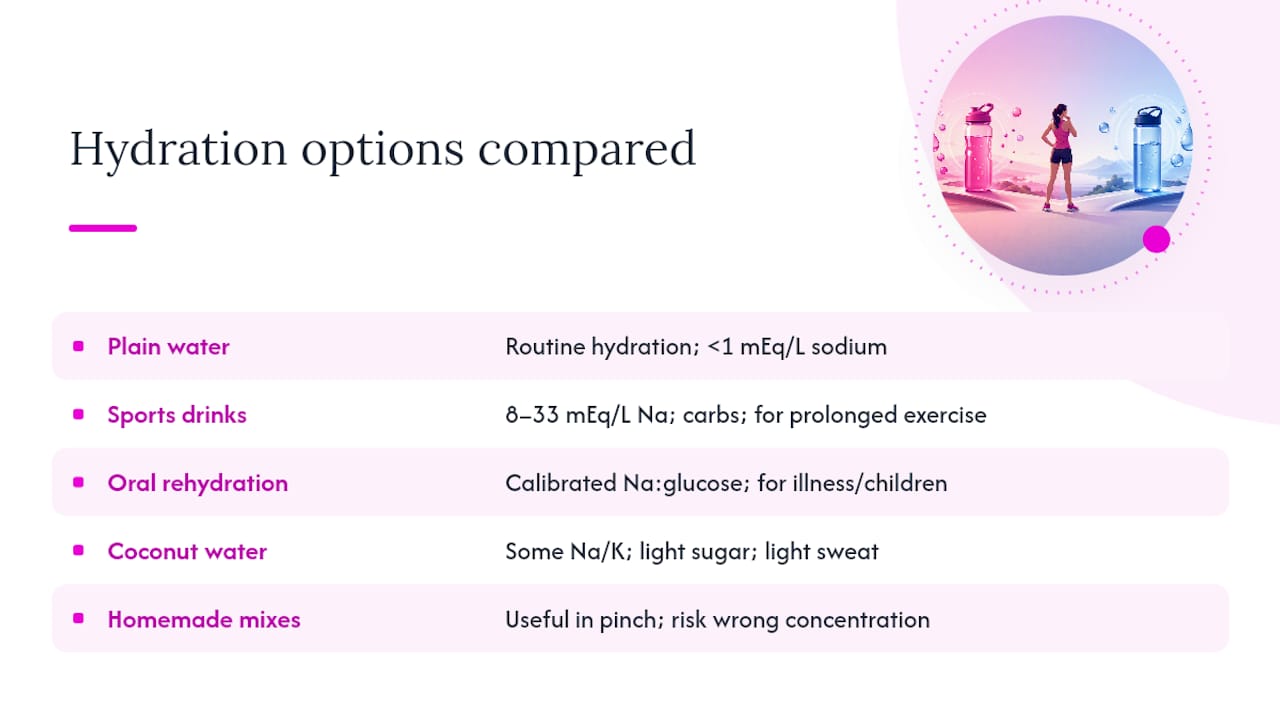
Plain water is the right choice for the majority of situations. Zero calories, zero sugar, and it handles routine hydration perfectly. Its limitation is that it contains essentially no sodium (less than 1 mEq/L), so it cannot replace what heavy sweating removes.
Commercial sports drinks (the brightly colored bottles you see at every checkout counter) typically contain sodium in the range of 8–33 mEq/L along with carbohydrates. That combination genuinely helps during prolonged exercise by fueling muscles and replacing sweat losses simultaneously. The downside: they were designed for athletes, and the sugar and calorie load makes them unnecessary for most everyday use. Sipping one during a 30-minute walk adds calories without a meaningful benefit.
Oral rehydration solutions like Pedialyte are clinically formulated to maximize intestinal absorption using a specific sodium-to-glucose ratio. They’re the right tool for illness-related fluid loss — vomiting, diarrhea, or fever — and for children. Their sodium content is calibrated for rehydration, not performance, so they’re not ideal as a sports drink.
Coconut water sits in the middle. It contains natural potassium and some sodium, with a lighter sugar load than most sports drinks. It works well for light-to-moderate sweat replacement but doesn’t deliver enough sodium for heavy losses or clinical rehydration. Think of it as a pleasant everyday option when you want something beyond plain water.
Homemade electrolyte mixes can work in a pinch and are easy to make (see the recipe section below). The risk is getting the concentration wrong — too much salt causes nausea; too little doesn’t help.
Pro Tip: *Check the sodium per serving on the label, not just the front-of-pack claims. A drink marketed as an “electrolyte water” may contain less sodium than a banana.
How to use electrolyte drinks safely: timing and amounts
Timing matters as much as what you drink. Drink before and during expected heavy sweating, not just after. By the time you feel very thirsty during a long event, you’ve likely already lost one to two percent of body weight in fluid — enough to affect performance.
A practical timing framework:
- Before: 16 oz of water or a light electrolyte drink one to two hours before prolonged exertion
- During: Sip regularly (roughly every 15–20 minutes during intense activity), matching your pace to your sweat rate — not drinking as fast as possible
- After: Replace losses based on how much you sweated; urine color returning to pale yellow is a reliable sign you’re back on track
For children and older adults, smaller and more frequent sips work better than large volumes at once. Infants with diarrhea or vomiting should be managed with clinician guidance — the volumes and ORS concentrations for infants differ from adult recommendations.
The risk of overdrinking is real and underappreciated. Exercise-associated hyponatremia develops when fluid intake exceeds the body’s ability to excrete it, particularly during events lasting more than two hours. Drinking to thirst rather than on a fixed schedule is a safer strategy for most endurance athletes than forcing large volumes.
A simple DIY electrolyte recipe and what to look for when shopping
When you need a quick electrolyte solution and don’t have a commercial product on hand, this basic recipe is modeled on ORS principles:
Basic DIY electrolyte drink (one serving, approximately 1 liter):
- 1 liter of clean water
- ½ teaspoon of table salt (approximately 1,000 mg sodium)
- 2 tablespoons of sugar or honey (provides glucose to aid absorption)
- Juice of one lemon or lime (adds potassium and flavor)
Use this for short-term replacement only — not as a substitute for medical ORS in serious illness, and not for infants without clinician guidance.
When shopping for commercial electrolyte products, check for:
- Sodium content of at least 100 mg per serving for sweat replacement
- Carbohydrate percentage under 8% for exercise use (higher concentrations slow gastric emptying)
- Added sugars: if you don’t need the fuel, look for sugar-free electrolyte options that use minimal sweeteners
- Serving size: many bottles contain two or more servings — the label numbers may be per serving, not per bottle
For travel packing, consider:
- Single-serve ORS packets (Pedialyte powder packs, WHO-formula sachets)
- Electrolyte tablets that dissolve in water
- Compact, low-sugar hydration powders or strips designed for on-the-go use
Hydration during menopause: hot flashes, night sweats, and travel
Hot flashes and night sweats are not just uncomfortable — they create real, episodic fluid and electrolyte losses that most hydration advice ignores entirely. A single significant night sweat can leave you waking up mildly dehydrated and low on sodium before the day even starts.

The pattern matters: losses during menopause tend to be unpredictable and clustered at night, which means standard “drink throughout the day” advice doesn’t fully account for what’s happening. Understanding how menopause changes electrolyte needs is a practical first step.
Practical strategies for menopausal women:
- Keep a glass of water on the nightstand and drink it before getting up after a night sweat
- After heavy night sweats, a low-sugar electrolyte drink in the morning can help restore sodium and potassium faster than water alone
- During travel — especially long flights with dry cabin air — hydration needs increase; portable hydration sachets or compact electrolyte formats are easier to pack than full bottles
- Avoid relying on caffeinated drinks to compensate for fatigue from poor sleep; caffeine has a mild diuretic effect that can worsen losses
If you’re on a diuretic, blood pressure medication, or have kidney disease, check with your clinician before adding electrolyte supplements to your routine. Some medications alter how the kidneys handle sodium and potassium, and supplementing without guidance can push levels in the wrong direction.
Nukalove’s travel-friendly hydration formats are designed specifically for this kind of on-the-go, unpredictable need — compact enough to fit in a carry-on, no measuring required.
A note from Nukalove
Nukalove is a women-owned and operated wellness brand built around one core belief: that midlife women deserve solutions designed for them, not adapted from products built for 25-year-old male athletes. Our focus on travel-ready, easy-to-use formats came directly from listening to women who are managing hot flashes on a red-eye flight, dealing with night sweats before a morning meeting, or trying to stay sharp during a long travel day without carrying a bag full of bottles.
The guidance in this article reflects an evidence-based, clinician-first approach. We believe in pointing you toward medical care when symptoms are serious, and in giving you practical tools for the everyday moments in between.
Nukalove hydration solutions for women on the move
Plain water handles most days. But when a night sweat wakes you at 3 AM, or you’re three hours into a flight with dry recycled air and a headache building, you need something you can actually use in that moment — not a 32-oz bottle you left at home.
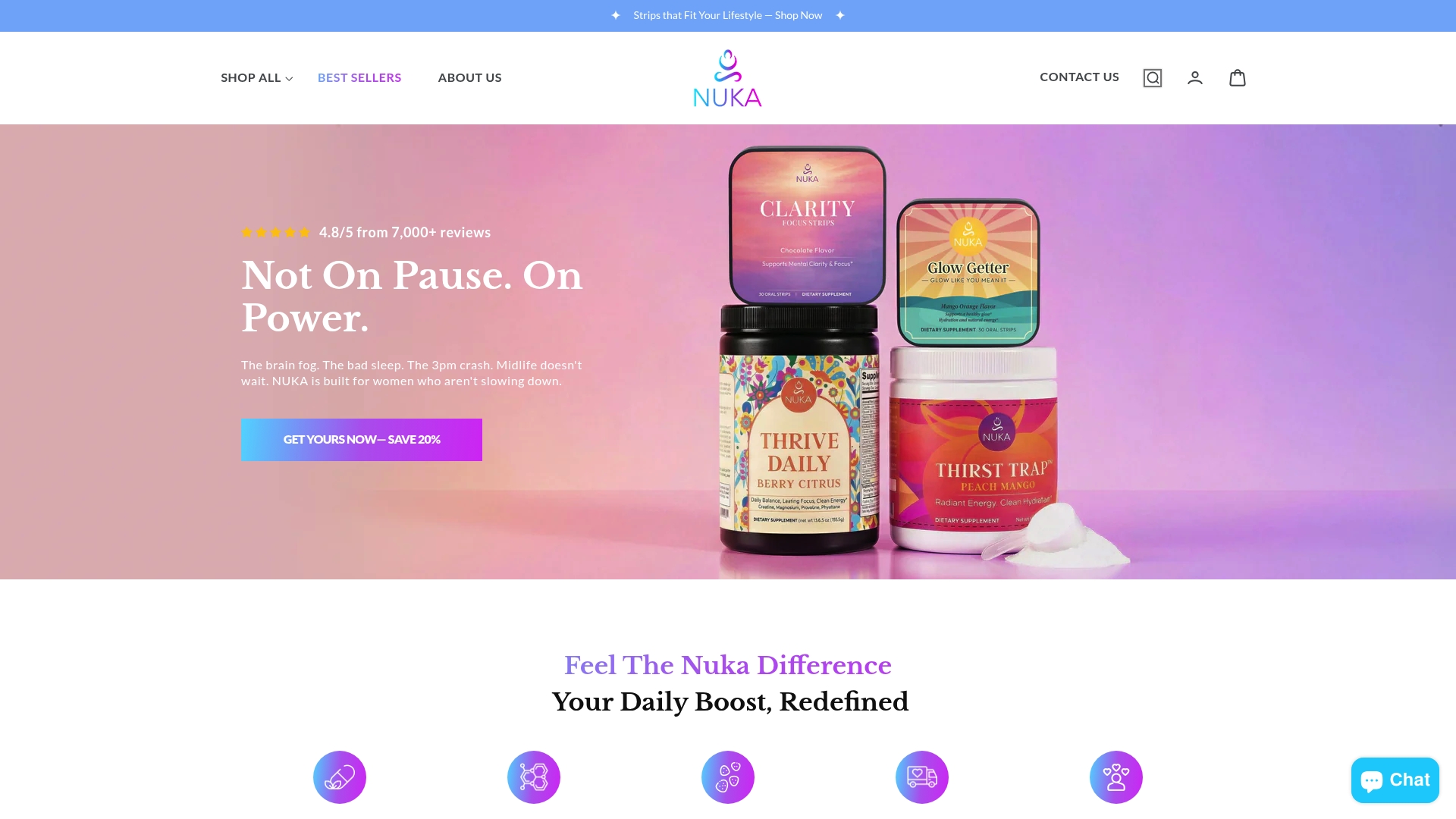
Nukalove’s wellness collection includes compact hydration formats built for exactly these situations: low-sugar powders and portable options that slip into a purse, carry-on, or gym bag without a second thought. The THIRST TRAP Hydration Powder delivers electrolytes in a single-serve format designed for women managing the unpredictable fluid losses that come with menopause, travel, and active days. No measuring, no bulk, no guesswork about whether you packed enough.
Browse the full wellness collection and find the format that fits your routine.
Sources
- Fluid and Electrolyte Balance: MedlinePlus
- Hyponatremia - Nephrology - MSD Manual Professional Edition
- CDC MMWR: Oral rehydration therapy guidance
- When to Pick Electrolyte Drinks Over Water - Scripps Health
- Do I need electrolyte drinks? • The Nutrition Source
This article is for general informational purposes only and is not a substitute for professional medical advice. If you have a health condition, take medications, or are experiencing severe symptoms, consult your clinician before changing your hydration routine.