

Stop Menopause Dry Mouth: 5 Travel Friendly Fixes
Menopause-related dry mouth responds well to a layered approach: frequent water sips, xylitol gum for saliva stimulation, saliva substitute sprays or gels for immediate relief, and strict oral hygiene to protect your teeth. Most women manage it with these habits alone. See a dentist and your doctor if dryness persists, you notice new cavities or mouth sores, or you want to discuss medication changes, hormone therapy, or prescription saliva stimulants.
TL;DR:
- Regular hydration through small water sips and water-rich foods supports saliva flow and reduces dryness symptoms.
- Chewing sugar-free gum with xylitol stimulates saliva while also helping to prevent cavities.
- Using alcohol-free saliva substitutes, sprays, or gels provides immediate relief, especially overnight or during the day.
- Persistent dry mouth with new cavities, sores, or difficulty swallowing requires prompt dental or medical evaluation and may need medication adjustments or hormone therapy.
- Preventative oral care, including fluoride treatments and frequent dental checkups, is crucial to protect teeth when saliva production declines.
Table of Contents
- Why Menopause Causes Dry Mouth in the First Place
- What Dry Mouth Feels Like and Why It’s Risky
- Your Step-by-Step Toolkit for Immediate Relief
- When to Loop In Your Doctor or Dentist
- Protecting Your Teeth When Saliva Runs Low
- How Portable Relief Fits Into Your Routine
- A Note on Patience and Small Habits
- Try Nukalove’s Travel-Ready Relief Between Remedies
- Where This Article’s Information Comes From
- Sources
- FAQ
Why Menopause Causes Dry Mouth in the First Place
Your salivary glands have estrogen receptors, and when estrogen drops during perimenopause and menopause, those glands often produce less saliva. A clinical review on menopausal oral health confirms this hormone-saliva connection, and it’s a big reason why xerostomia (the clinical term for chronic dry mouth) shows up so often during this transition. But hormones rarely act alone. Several other factors tend to pile on:
- Antihistamines, antidepressants, and diuretics are common medications that reduce saliva production as a side effect
- Not drinking enough water, especially if you’re cutting back to manage bladder urgency or night sweats
- Mouth breathing, whether from congestion, allergies, or sleep habits
- Regular alcohol or caffeine intake, which both have a drying effect on oral tissue
- General aging changes in gland tissue that compound the hormonal shift
If you take a drying medication and you’re also perimenopausal, the two effects can stack, making symptoms feel worse than either cause alone would explain.
What Dry Mouth Feels Like and Why It’s Risky
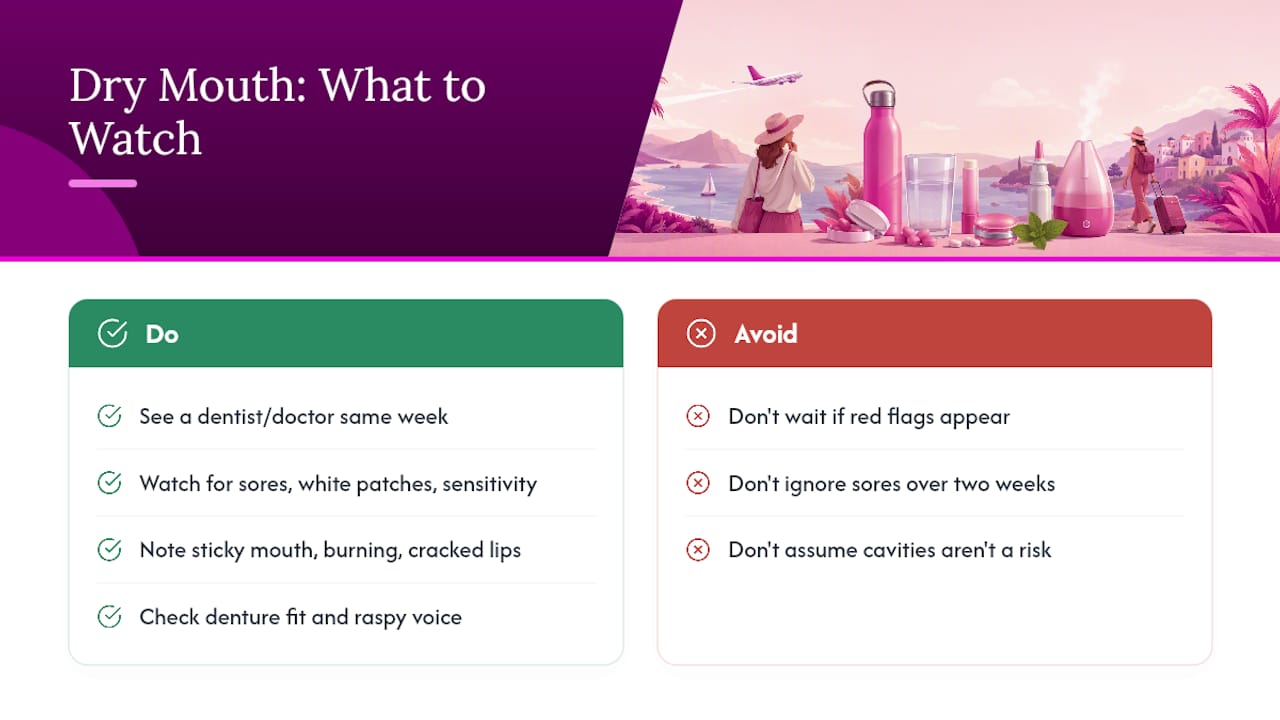
Dry mouth shows up as a sticky or cotton-like feeling, trouble swallowing dry foods, a burning sensation, cracked lips, bad breath, or a change in how food tastes. Some women notice their dentures fit loosely or their voice sounds raspy by afternoon.
The real concern isn’t comfort. It’s your teeth. MedlinePlus notes that saliva neutralizes acid and washes away food particles, so when flow drops, cavity risk and gum infections climb fast. Left unmanaged for months, low saliva can also open the door to oral thrush and accelerate enamel breakdown around old fillings.
Watch for these red flags: sores that don’t heal within two weeks, white patches on your tongue or cheeks, sudden tooth sensitivity, or difficulty swallowing solid food. Any of these warrants a same-week dental or medical visit, not a wait-and-see approach.
Your Step-by-Step Toolkit for Immediate Relief
Start with the basics before reaching for anything specialized.
- Sip water constantly, not in big gulps. Keep a bottle nearby and take small sips every 15 to 20 minutes rather than chugging a glass twice a day. Water-rich foods like cucumber, melon, and soup count too. Our guide on hydration rules after a hot flash breaks down timing if night sweats are draining your fluid levels.
- Chew sugar-free gum or mints with xylitol. Chewing mechanically stimulates saliva flow, and xylitol adds a bonus: it actively fights the bacteria that cause cavities while your mouth gets wetter.
- Try sucking on ice chips or sugar-free popsicles, especially during the day when hot flashes hit. Tart, sugar-free flavors like lemon can jump-start saliva faster than plain water.
- Use a saliva substitute matched to the moment. Sprays work well for quick daytime relief. Gels with carboxymethylcellulose or glycerin last longer, which makes them the better pick for overnight dryness. Rinses fall in between. Always choose alcohol-free formulas, since alcohol-based mouthwashes strip moisture further.
- Fix your environment. Run a bedside humidifier, practice breathing through your nose instead of your mouth, and keep a lip balm on your nightstand. Cleveland Clinic recommends skipping spicy or acidic foods when your mouth is already irritated.
Pro Tip: A simple glycerin-and-water spray, kept in a small travel bottle, can double as an on-the-go moisture fix between meals. It’s not a substitute for a commercial saliva product, but it works in a pinch when you’re out and forgot yours.
When to Loop In Your Doctor or Dentist
If home measures aren’t cutting it after a few weeks, or you’re seeing new decay at checkups, it’s time for a medical conversation rather than another product swap.
- Ask for a medication review. If a prescription is drying you out, your doctor may be able to switch you to an alternative or adjust timing. Taking a drying medication earlier in the day, rather than at night, can reduce nighttime dry mouth and cavity risk.
- Understand where HRT fits. Some studies in the same clinical review show hormone replacement therapy increasing saliva flow for certain women, but xerostomia by itself isn’t a strong enough reason to start HRT. That decision should weigh your full symptom picture and health history with your doctor.
- Ask about prescription sialogogues. Pilocarpine and cevimeline stimulate saliva glands directly and can help when other methods fall short, according to Mayo Clinic. Both carry contraindications, including asthma, uncontrolled hypertension, and narrow-angle glaucoma, so they require monitoring and aren’t right for everyone.
Protecting Your Teeth When Saliva Runs Low
Cavity prevention becomes non-negotiable once saliva flow drops, since you’ve lost your mouth’s built-in defense system.
- Brush twice daily with a soft-bristle brush and fluoride toothpaste, and don’t skip flossing even when your gums feel sensitive
- Switch to alcohol-free mouthwash, and ask your dentist about a prescription-strength fluoride gel for nightly use
- Book dental visits every three to four months instead of twice a year, so your dentist can catch decay early and apply fluoride varnish as needed
- If you wear dentures, wet them before inserting and consider a saliva-replacing gel on the fitting surface to cut down on soreness
- Watch for white patches or a burning tongue, which can signal a fungal infection that needs treatment
- Limit sticky, sugary snacks between meals, since they linger longer on teeth when there’s less saliva to clear them
The American Dental Association notes that evidence for specific topical treatments is limited, which is exactly why prevention habits carry more weight than any single product.
| Prevention step | How often | Why it matters |
|---|---|---|
| Fluoride toothpaste brushing | Twice daily | Rebuilds enamel weakened by low saliva |
| Alcohol-free mouthwash | Daily | Avoids further drying of oral tissue |
| Dental checkups | Every 3 to 4 months | Catches cavities before they spread |
| Fluoride varnish (professional) | As recommended by dentist | Adds a protective barrier between visits |
How Portable Relief Fits Into Your Routine
Consistency is easier when relief travels with you. Some products on the market are designed as fast-dissolving oral strips and hydration powders that fit in a purse or carry-on, offering options during a flight, a workday, or a hot flash at 2 a.m.
- Oral strips dissolve in seconds for a quick moisture boost between meetings or errands
- Hydration powders support fluid intake, which indirectly helps saliva production over the day
- Compact packaging means you can keep relief in your bag instead of leaving it in a bathroom cabinet
- These products work alongside dental prevention and clinician guidance, not instead of them
If heat intolerance is part of your symptom mix, our piece on pocket-friendly oral strips for hot flash relief covers how portable formats help when symptoms hit without warning. And if nighttime dryness disrupts sleep alongside other menopause symptoms, our sleep remedies guide covers overnight strategies that pair well with a bedside humidifier.
A Note on Patience and Small Habits
Dry mouth during menopause rarely resolves overnight, and no single product fixes it alone. What works is stacking small habits: sipping water on a schedule, keeping xylitol gum in reach, and tracking which triggers make it worse. Bring that log to your next dentist or doctor visit. This is common, manageable, and gets easier with a routine that sticks.
— NUKA
Try Nukalove’s Travel-Ready Relief Between Remedies
Some brands make portable oral supplement strips and hydration powders aimed at women managing menopause symptoms on the go, offering options that balance relief and convenience.
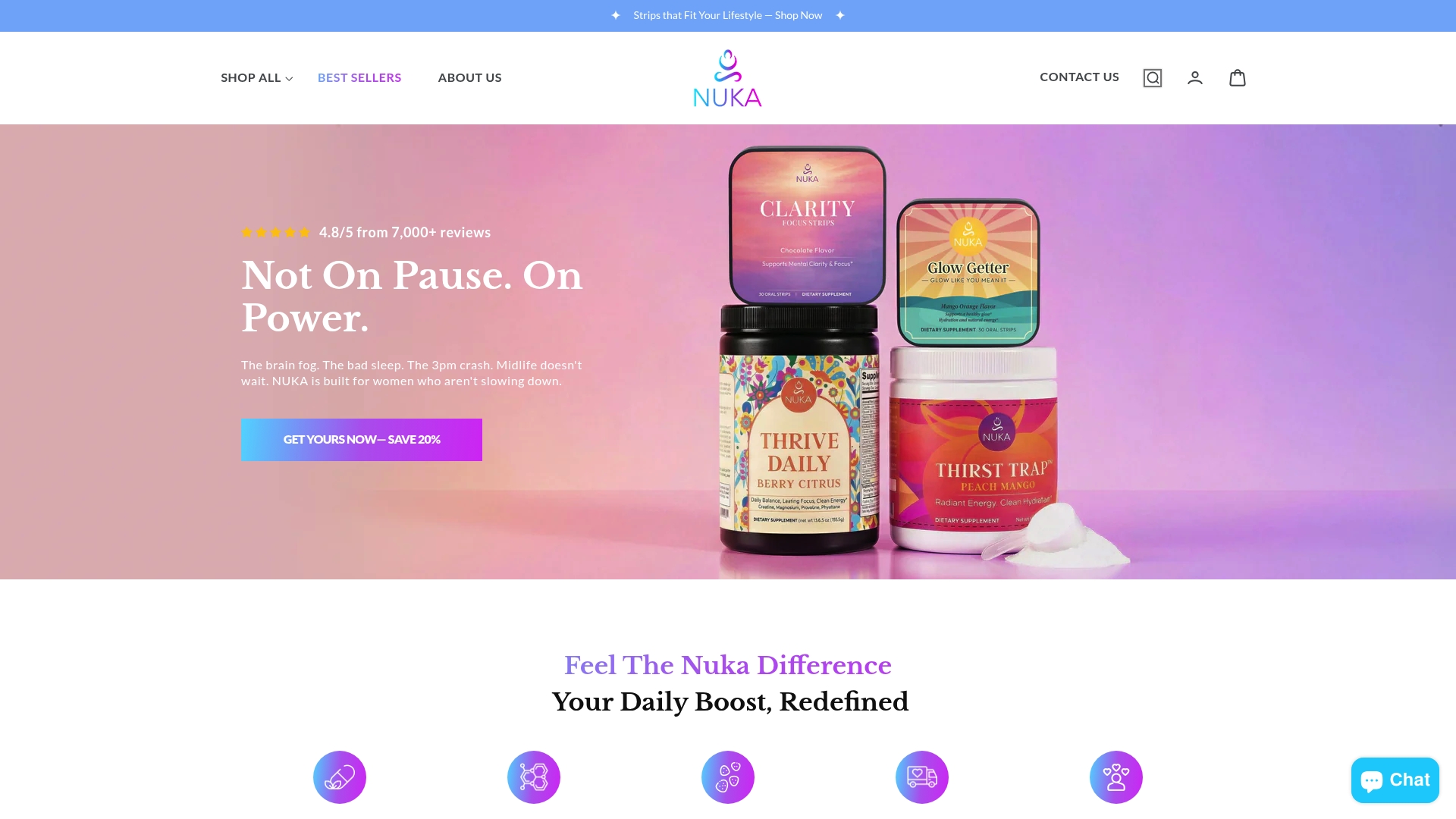
If you’re piecing together a routine from the steps above, two products map directly onto what you just read. THIRST TRAP hydration powder is designed for the frequent-sipping habit that supports saliva production, with electrolytes and B-vitamins mixed in. Our oral strips dissolve fast for mid-day moisture when you’re between meetings, on a flight, or simply don’t have water handy. Neither replaces a saliva substitute prescribed by your dentist or a conversation with your doctor about medication timing, but both travel well in a bag where a bulky spray bottle doesn’t. Browse the full lineup on our product collection page and consider a bundle if you’re packing for a trip. Your mouth doesn’t take a vacation from menopause, so your relief shouldn’t either.
Where This Article’s Information Comes From
For deeper reading beyond this guide, these sources cover the clinical and dental side of dry mouth management in detail.
- MedlinePlus: patient-facing guidance on causes, home remedies, and when dry mouth signals a bigger problem
- Mayo Clinic: clinical overview of diagnosis and treatment options, including prescription sialogogues
- Cleveland Clinic: practical daily management and prevention advice
- PMC review on menopausal xerostomia: the clinical research connecting estrogen decline to reduced saliva flow
- American Dental Association: dental-specific guidance on topical treatments and prevention
None of these replace a visit with your own dentist or physician, especially if symptoms are new, worsening, or paired with other health changes.
Sources
- Xerostomia and menopausal oral health review
- Dry mouth (MedlinePlus)
- Dry mouth: diagnosis & treatment (Mayo Clinic)
- Dry mouth (xerostomia) (Cleveland Clinic)
- American Dental Association: Xerostomia
FAQ
Does dry mouth from menopause go away?
For many women, symptoms ease somewhat once hormone levels stabilize after menopause, but they don’t always disappear completely. Consistent habits like hydration and xylitol gum tend to matter more than waiting it out, and persistent cases benefit from a medical evaluation to rule out medication side effects.
What vitamin am I lacking if I have dry mouth?
Dry mouth during menopause is usually tied to hormonal changes rather than a single vitamin deficiency, though B-vitamin and iron shortfalls can sometimes contribute to oral dryness in general. A blood test with your doctor is the only reliable way to confirm whether a nutrient gap is playing a role.
What are some natural remedies for dry mouth during menopause?
Sugar-free xylitol gum, frequent water sips, and a bedside humidifier are the most accessible natural options, and xylitol specifically helps stimulate saliva while lowering cavity risk. Tart, sugar-free flavors like lemon and glycerin-water sprays can also offer quick, low-effort relief between meals.
What is a quick cure for dry mouth?
There’s no instant cure, but sucking on ice chips, chewing xylitol gum, or using a saliva substitute spray brings relief within minutes. For a fast option you can carry anywhere, a dissolving oral strip works well when water isn’t within reach.