

Dizziness in Menopause: Causes, Fixes, and Warning Signs
Yes, menopause can cause dizziness, and for a lot of women it’s one of the most disorienting symptoms of the whole transition. Falling estrogen levels affect the inner ear, blood vessel tone, and blood sugar regulation, all of which can make you feel lightheaded, off balance, or like the room just tilted. That said, not every dizzy spell during perimenopause is hormonal. Sometimes it’s the first sign of something else that needs its own workup.
Here’s what to do right now if you’re feeling dizzy:
- Sit or lie down immediately, ideally with your legs elevated
- Sip water slowly, don’t gulp it
- Note what you were doing when it started (standing up fast? hot flash? skipped lunch?)
- Start jotting down the time, duration, and any other symptoms
One study found dizziness is associated with anxiety in a large percentage of peri and postmenopausal women, which tells you this symptom rarely shows up alone. If you also have chest pain, fainting, slurred speech, facial drooping, or sudden hearing loss, skip the home remedies and get urgent medical care.
Key Takeaways
Menopause-related dizziness usually stems from hormonal shifts affecting the inner ear and blood pressure regulation, but persistent or severe episodes always warrant a medical workup to rule out other causes.
| Point | Details |
|---|---|
| Hormones affect balance | Falling estrogen impacts inner-ear receptors and vascular tone, increasing dizziness risk. |
| Match the pattern | BPPV, vestibular migraine, orthostatic hypotension, and anxiety-related dizziness each need different fixes. |
| Red flags need urgent care | Chest pain, fainting, slurred speech, or sudden hearing loss mean go to the ER, not home remedies. |
| Track before you treat | A 48 to 72 hour symptom journal speeds up diagnosis and makes doctor visits far more productive. |
| Daily habits reduce frequency | Steady hydration, regular meals, slow standing, and paced breathing cut down on episodes regardless of cause. |
| Nukalove supports the daily layer | Portable oral strips like Glow Getter and Sleepy Strips help manage energy and sleep disruption alongside medical care. |
Table of Contents
- What Causes Dizziness in Menopause?
- What Type of Dizziness Do You Have?
- When Should You See a Doctor for Dizziness?
- How Can You Manage Menopause Dizziness at Home?
- What Medical Treatments Actually Help?
- What Should You Do in the First 48 to 72 Hours?
- Who’s Behind This Guide?
- Why the “It’s Just Menopause” Framing Falls Short
- Simple Support for the Symptoms That Show Up Between Doctor Visits
- Frequently Asked Questions
- Sources
What Causes Dizziness in Menopause?
Estrogen doesn’t just regulate your cycle. It also acts on receptors inside your inner ear, where your vestibular system lives, the structure responsible for telling your brain which way is up. As estrogen drops, research on the menopause-vertigo connection suggests the inner ear becomes more vulnerable to balance disruptions, including a higher susceptibility to conditions like BPPV and vestibular migraine.
Hot flashes add another layer. When one hits, your blood vessels dilate rapidly to release heat, blood pressure can dip, and you sweat out fluid and electrolytes fast. That combination, vasodilation plus fluid loss, is a near-perfect recipe for the lightheaded, swimmy feeling many women describe right after a flash. If you stand up during or right after one, you’re stacking a second problem on top: orthostatic hypotension, where blood pressure drops when you shift position and your brain gets a brief lag in blood flow.

Estrogen also has a hand in regulating the hypothalamus, including a cluster of neurons (called KNDY neurons) tied to temperature control and hot flash triggering. When that thermostat gets erratic, it doesn’t just affect temperature. It ripples into blood vessel tone and autonomic nervous system stability, both of which factor into dizziness.
A few indirect contributors deserve mention too:
- Poor sleep from night sweats, which impairs balance processing the next day
- Anxiety, which both causes and worsens dizziness in a feedback loop
- Blood sugar swings from irregular eating
- Medication side effects, especially blood pressure drugs that were dosed before menopause changed your baseline
- Low vitamin D, B12, or iron, all of which show up more often after menopause and all of which can independently cause lightheadedness
What Type of Dizziness Do You Have?
Not all dizziness is the same, and figuring out which pattern you have determines what actually fixes it. Here are the five patterns most likely to show up during menopause.
- BPPV (benign paroxysmal positional vertigo). Brief, intense spinning that lasts seconds, triggered by rolling over in bed or tipping your head back. This is mechanical, tiny calcium crystals in the inner ear have shifted out of place, and it’s fixed with a specific repositioning technique called the Epley maneuver, performed by a clinician or physical therapist.
- Vestibular migraine. Episodes that last hours, sometimes a full day, often without a headache at all. Light sensitivity, sound sensitivity, and brain fog are the giveaways. Because it rarely presents with classic migraine pain, it gets missed or mislabeled constantly.
- Orthostatic hypotension. Dizziness specifically tied to standing up, confirmed with a simple orthostatic blood pressure check (lying, then sitting, then standing). Hydration and a slower transition to standing usually help.
- Meniere’s disease. Vertigo combined with ringing in the ears, ear fullness, or hearing changes. This pattern needs an ENT evaluation, not home management, since it involves fluid pressure changes in the inner ear.
- Anxiety-related dizziness. A vague, floaty, “not quite right” feeling that often worsens with stress and improves with slow breathing. The relationship runs both directions, dizziness fuels anxiety and anxiety amplifies dizziness, which is why breathing exercises and vestibular therapy both show up as treatments.
When Should You See a Doctor for Dizziness?
Some dizziness needs a same-day appointment, and some needs an ambulance. Know the difference.
Get emergency care immediately if you experience:
- Chest pain or heart palpitations alongside dizziness
- Fainting or near-fainting with no clear trigger
- Slurred speech, facial drooping, arm weakness, or vision loss
- Sudden hearing loss in one ear
For dizziness that’s persistent but not acutely dangerous, a primary care visit typically starts with orthostatic vitals (blood pressure lying, sitting, standing), a review of your current medications, and basic labs. According to NIH guidance on dizziness workups, that usually means a CBC, thyroid panel, glucose, vitamin D, and B12.
From there, referrals branch out. Positional spinning or hearing changes typically route to an ENT. Prolonged episodes with light sensitivity point toward neurology for a vestibular migraine workup. Dizziness paired with palpitations or fainting often warrants a cardiology referral to rule out arrhythmia.
Pro Tip: Bring your symptom log to the appointment instead of trying to describe it from memory. “Dizzy for 20 minutes after standing, twice this week” gets you a faster, more accurate diagnosis than “I’ve been dizzy a lot lately.”
How Can You Manage Menopause Dizziness at Home?
Most menopause-related dizziness responds well to a handful of consistent daily habits. None of these require a prescription, and most take less than a few minutes to build into your routine.
- Hydrate steadily, not all at once. Sip water throughout the day rather than chugging a bottle after a hot flash. When flashes are heavy, replace electrolytes too, sodium and potassium losses from sweating are part of why post-flash dizziness happens. Our guide to electrolytes for menopause breaks down what to look for.
- Eat on a schedule. Long gaps between meals let blood sugar dip, which mimics or worsens dizziness. Pair protein, fat, and fiber at each meal to keep glucose steadier for longer.
- Protect your sleep environment. Keep the bedroom cool, use moisture-wicking sheets, and stick to a consistent bedtime. Night sweats that interrupt sleep repeatedly are linked to next-day balance problems.
- Practice the slow-stand technique. Before fully rising from bed or a chair, pause on the edge for 10 to 15 seconds. This small delay gives your blood pressure time to adjust and meaningfully cuts down on orthostatic dizziness.
- Use paced breathing to interrupt anxiety spikes. Try a 4-2-6 pattern, inhale for four counts, hold for two, exhale for six. This activates your parasympathetic nervous system and can shorten an anxiety-dizziness episode.
- Try gentle vestibular exercises if cleared. Simple gaze-stabilization and balance drills can retrain your inner ear. If any exercise makes dizziness worse or triggers new symptoms, stop and check with a clinician instead of pushing through.
- Get vitamin D tested before supplementing. Deficiency is common after menopause and has been linked to BPPV in some reviews of otoconia health. Ask your doctor about iron or B12 too if fatigue or pallor accompany the dizziness.
Pro Tip: If caffeine seems to make your hot flashes and dizziness worse, it’s not your imagination. Caffeine can trigger vasodilation similar to a hot flash. Our breakdown of caffeine and menopause covers how to tell if it’s a trigger for you specifically.
What Medical Treatments Actually Help?
Hormone replacement therapy is often the first medical option raised, and for good reason. Because estrogen receptors sit directly in vestibular structures, restoring estrogen levels can improve balance-related symptoms for some women, though evidence on this varies by individual and requires weighing personal risk factors like cardiovascular history or prior breast cancer. This is a conversation for your doctor, not a decision made from a blog post.
For vestibular migraine, treatment usually means identifying and managing triggers (skipped meals, poor sleep, certain foods) alongside preventive medications when episodes are frequent enough to disrupt daily life. Nausea and acute vertigo sometimes get short-term symptomatic medication on top of that.
For BPPV, the Epley maneuver performed in a clinic setting resolves most cases, often within one or two sessions, though some patients need a repeat treatment if crystals shift again. Vestibular rehabilitation therapy, a structured program of balance and gaze exercises supervised by a physical therapist, tends to show steady improvement over several weeks for people whose dizziness doesn’t resolve with a single mechanical fix.
Here’s a rundown of what to expect from each option:
- HRT: Can improve some vestibular symptoms, but requires individualized risk assessment
- Epley maneuver: Often resolves BPPV in one to two sessions
- Vestibular rehab: Gradual improvement over weeks, best for persistent imbalance
- Vitamin D correction: Test first, then supplement only if deficient
What Should You Do in the First 48 to 72 Hours?
If dizziness has just started, use the next two to three days to gather information before your appointment.
- Avoid driving until you know your dizziness isn’t triggered by sudden movement or standing
- Check your blood pressure lying down, then sitting, then standing, ideally at the same time each day
- Eat small, regular meals and track how you feel an hour after each one
- Practice the slow-stand technique every time you get up
- Log every episode using the fields below
| Field | What to record |
|---|---|
| Time and date | When the episode started |
| Trigger | Standing up, hot flash, head movement, stress, or unknown |
| Duration | Seconds, minutes, or hours |
| Associated symptoms | Ringing in ears, headache, nausea, vision changes |
| Sleep and hydration | Hours slept, water intake that day |
Call your primary care doctor if episodes continue past 72 hours. Go to urgent care or an ER immediately if you develop chest pain, fainting, slurred speech, or sudden hearing loss at any point.
Who’s Behind This Guide?
Nukalove is a women-owned wellness brand built specifically for the realities of midlife, energy dips, sleep disruption, brain fog, and yes, dizziness that shows up out of nowhere during a meeting or a flight. We built our content around what women in perimenopause and menopause actually ask their doctors, cross-referenced against published research like the vestibular studies cited throughout this guide.
If you want to keep reading, a few of our other pieces connect directly to what’s covered here:
- Hydration sachets for menopause: what to pack when hot flashes hit while you’re away from home
- Menopause brain fog: the cognitive symptoms that often show up alongside balance issues
- Energy supplements for women: travel-friendly options for the fatigue that often accompanies dizzy spells
For deeper reading on the ENT side of things, Otology and Neurotology’s overview of menopause-related dizziness is worth a look if you want the specialist’s angle on when to seek a referral.
Why the “It’s Just Menopause” Framing Falls Short
The phrase “it’s just menopause dizziness” does more harm than good. It’s technically true that hormonal shifts are often the driver, but that framing lets both patients and clinicians stop asking questions too early. Menopause doesn’t usually create a new problem out of nothing. More often, it exposes a vulnerability that was already there: a slightly low vitamin D level, a blood pressure medication that was fine ten years ago but isn’t dosed right for your current physiology, an anxiety pattern that’s been simmering quietly.
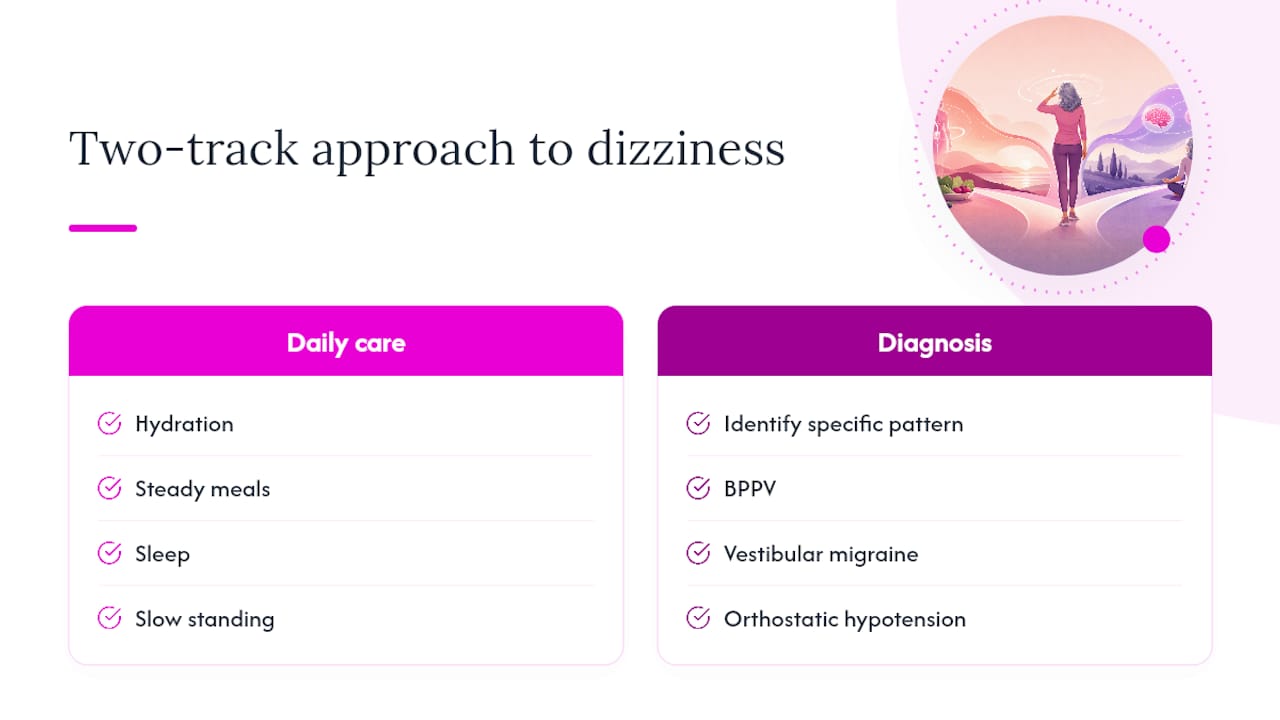
What the evidence actually supports is a two-track approach. Track one is the daily maintenance stuff, hydration, steady meals, sleep, slow standing, that reduces frequency and severity regardless of the underlying cause. Track two is figuring out which specific pattern you have, because BPPV, vestibular migraine, and orthostatic hypotension get treated completely differently. Skipping track two and just white-knuckling through with lifestyle tweaks alone is where most women get stuck for months longer than necessary. Start the symptom journal this week. It’s the single fastest way to turn “I keep getting dizzy” into an actual diagnosis.
Simple Support for the Symptoms That Show Up Between Doctor Visits
Nukalove built its oral strip format for exactly the kind of days when dizziness, fatigue, or brain fog hit and you don’t have time to mix a drink or swallow six pills. Our Glow Getter and Clarity strips dissolve in seconds, no water needed, which matters when you’re mid flight, mid meeting, or just trying to get through a hot flash without derailing your whole day.

These strips aren’t a treatment for vestibular disorders, and they won’t replace the workup your doctor should run if dizziness persists. What they’re built for is the daily maintenance layer: steady energy, better focus, and support for the sleep disruption that so often compounds balance problems. If night sweats are wrecking your sleep and making next-day dizziness worse, our Sleepy Strips are worth a look. Browse the full wellness collection and pick the strip that matches what’s actually disrupting your week.
Frequently Asked Questions
Is dizziness normal in menopause? It’s common, not automatically dangerous. Hormonal shifts, hot flashes, and blood pressure changes explain a lot of cases, but persistent or worsening dizziness still deserves a medical evaluation to rule out other causes.
How long does menopause dizziness typically last? It varies widely. For many women, episodes track with hot flash frequency and ease up as hormone levels stabilize post-menopause. For others, an underlying issue like BPPV or vestibular migraine needs specific treatment before it resolves.
Can low blood sugar cause dizziness during menopause? Yes. Skipped or delayed meals cause blood sugar dips that mimic or worsen dizziness, and menopause can make blood sugar regulation less stable. Eating on a consistent schedule with protein and fiber helps prevent this.
Does dehydration from hot flashes really cause dizziness? It does. Hot flashes trigger rapid vasodilation and sweating, both of which can drop blood pressure and reduce fluid volume at the same time, a combination that commonly produces lightheadedness.
Should I try HRT specifically for dizziness? That depends on your full health picture. HRT may help some vestibular symptoms tied to estrogen decline, but it carries individual risks that need to be weighed with your doctor rather than decided based on dizziness alone.
What tests will my doctor likely run for dizziness? Expect orthostatic blood pressure checks, a medication review, and basic labs covering CBC, thyroid function, glucose, vitamin D, and B12. Results guide whether you’re referred to ENT, neurology, or cardiology.
This article is general information, not a substitute for advice from a qualified doctor. Consult a qualified healthcare professional about your own circumstances before acting on anything here.
Sources
- Dizziness in peri- and postmenopausal women is associated with anxiety: a cross-sectional study
- Can menopause cause dizziness?
- Dealing with dizziness — NIH News in Health