

Stop Menopause Dehydration Headaches in 1–2 Hours, Travel Tips
Yes, even mild dehydration can cause or worsen headaches during perimenopause and menopause, and it is often reversible. Sip water, cool down, and rest somewhere shaded for an hour or two before assuming the worst. Most people with a true dehydration headache feel noticeably better once fluids are back on board. If the pain lingers or feels unusual, that is your signal to look further.
TL;DR:
- Thirst signals become less reliable during menopause due to hot flashes and sweating, increasing the risk of dehydration-related headaches.
- Drinking small sips of water and resting in a cool place typically relieves dehydration headaches within one to two hours.
- Persistent or severe headaches, confusion, or inability to keep fluids down require immediate medical attention rather than home remedies.
- Using a hydration diary helps differentiate dehydration headaches from hormonal migraines by tracking patterns and response to fluids.
- Portable electrolyte sachets are recommended for quick rehydration after hot flashes or heavy sweating, especially during travel or hot days.
Table of Contents
- What a dehydration headache feels like and quick at-home checks
- Why menopause raises the risk: hot flashes, thermoregulation, and fluid balance
- How to tell dehydration from a hormonal migraine: timing, response test, and a short diary
- Immediate self-care for a suspected dehydration headache
- Prevention: a menopause-friendly hydration plan for real life
- When to see a doctor or seek urgent care
- NUKA’s practical guidance for travel-ready hydration
- A note on patience and partnership with your body
- Staying topped up between hot flashes and travel days
- Sources
- FAQ
What a dehydration headache feels like and quick at-home checks
A dehydration headache usually shows up as a dull, diffuse ache rather than a sharp, one-sided pain, and it tends to get worse when you bend over, stand up quickly, or move your head suddenly. It is rarely accompanied by visual changes or the throbbing, pulsing quality that defines a migraine.
A few signs point specifically to fluids as the culprit:
- Dark yellow urine or noticeably less frequent urination than usual
- A dry mouth or dry lips that don’t resolve with a sip of water
- Lightheadedness or dizziness when standing
- General fatigue that came on alongside the headache
Before reaching for medication, run a quick self-check. Look at your urine color, think back to whether you had a hot flash, workout, or sweaty night recently, and consider whether alcohol or a diuretic medication is in the mix. According to Harvard Health, a water-deprivation headache typically eases within one to two hours of drinking a moderate amount of water, which makes fluid response one of the most useful clues you have. If your headache fits this pattern and fades with rehydration, dehydration was likely playing a real role. If it does not budge, that is worth paying attention to as you read on.
Why menopause raises the risk: hot flashes, thermoregulation, and fluid balance
Menopause changes the way your body manages heat, and that shift has a direct line to hydration. As estradiol falls, the brain’s temperature control center becomes more sensitive to small changes in core body temperature, triggering the vasodilation and sweating episodes known as hot flashes. A thermoregulation review describes this KNDy neuron mechanism as the driver behind hot flashes, and it means your body can start sweating in response to temperature shifts that would not have registered before menopause.

Hot flashes affect roughly 50 to 80 percent of women during the menopause transition, and each episode of sweating represents fluid loss you may not be tracking.
That matters because thirst signals themselves become less reliable with age, so many women underdrink without noticing until a headache or dizziness flags the problem. A hot flash overnight or a warm afternoon at work can quietly tip someone from adequately hydrated to mildly dehydrated within a few hours.
Hormonal volatility can worsen migraine during perimenopause, and hydration is one modifiable trigger rather than a full explanation for every menopause headache.
This is worth sitting with, because it cuts both ways. Hydration is genuinely one of the more fixable pieces of the headache puzzle, but it is not the whole story. Women with a history of migraine, particularly menstrual migraine, often find that hormonal swings during perimenopause make headaches more frequent regardless of how well hydrated they are. Fluids are a lever worth pulling, not a guarantee.
How to tell dehydration from a hormonal migraine: timing, response test, and a short diary
The clearest way to separate a dehydration headache from a hormonal migraine is to run a simple test and then watch what happens.
- When a headache starts, drink small sips of water over 20 to 30 minutes rather than chugging a full glass at once.
- Move somewhere cool, sit or lie down, and rest for one to two hours without pushing through activity.
- Check whether the pain eases. According to Cleveland Clinic, improvement after gradual rehydration is a practical diagnostic clue that dehydration was a meaningful factor.
- If the pain persists despite rest and fluids, or if you notice visual aura, one-sided throbbing, or nausea, treat it as a separate issue worth discussing with a clinician.
Pro Tip: Keep a short diary for one to two weeks tracking fluid intake, urine color, hot flashes, caffeine, sleep, medications, and headache timing. It only takes a minute a day and gives your clinician real patterns to work with instead of guesswork.
Pairing this response test with a written log gives you and any clinician you see useful discriminating data. A headache that reliably fades with sips and rest is behaving like a dehydration headache. One that shows up regardless of hydration status, especially alongside aura or focal neurological signs, points toward something that needs its own evaluation rather than another glass of water.

Immediate self-care for a suspected dehydration headache
Once you suspect dehydration is behind the pain, the first moves are simple and low risk.
- Sip small amounts of plain water steadily rather than drinking a large volume all at once, since rapid intake can trigger nausea.
- Move out of heat and direct sun, use a fan or cool compress, and stop any physical exertion.
- Sit or lie down in a quiet, cool space and give your body time to recover, generally an hour or two.
- If you have been sweating heavily or vomiting, a low-sugar electrolyte drink can help replace lost sodium and potassium.
- Use an over-the-counter pain reliever if needed, but avoid caffeine-containing formulas while you are still working out whether dehydration is the cause.
A few things to avoid: energy drinks, high-sugar sports drinks, and large amounts of caffeine can all make a headache worse or mask what your body is telling you. Cleveland Clinic also notes that severe dehydration, marked by an inability to keep fluids down, confusion, or fainting, may require IV fluids and urgent medical care rather than home treatment. Know the difference between a headache that responds to rest and water and one that is getting worse despite your efforts.
Prevention: a menopause-friendly hydration plan for real life
Generic advice to drink eight glasses of water a day does not account for how much your needs shift with hot flashes, activity level, climate, medications, and underlying health conditions. A better approach is to build habits around your actual patterns rather than a fixed number.
- Carry a water bottle and take a few sips right after a hot flash or night sweat, when fluid loss is highest.
- Check urine color once or twice a day. Pale yellow is the target; dark yellow is a signal to drink more.
- Schedule water around workouts, travel days, and sleep, since these are the times fluid loss tends to spike.
- If you take diuretics or have kidney, heart, or blood pressure conditions, check with your clinician before adding electrolyte supplements to your routine.
Pro Tip: Pack a few low-sugar electrolyte sachets in your bag or suitcase. They take up almost no space and give you a fast option after a sweaty flight, a long walk, or a rough night of hot flashes.
Electrolyte powders can help replace sodium and potassium after heavy sweating, but choose low-sugar options and treat them as a supplement to water, not a replacement for it. For more on adjusting fluid habits around hot flashes specifically, see our guide on hydration after a hot flash, and if swelling or water retention is part of your picture, this piece on water retention during menopause covers why fixed targets don’t work for everyone. Night sweats also respond well to practical fixes: breathable sleepwear, a cooling pillow cover, and water on the nightstand can prevent the slow overnight dehydration that shows up as a morning headache.
When to see a doctor or seek urgent care
Most dehydration headaches resolve with fluids and rest, but certain symptoms mean you should not wait it out at home.
- A sudden, severe headache unlike any you have had before
- Confusion, fainting, seizure, or difficulty speaking
- Vision changes, especially one-sided or accompanied by numbness
- Inability to keep fluids down due to vomiting
Beyond emergencies, recurring headaches that do not improve after rehydration deserve a clinician’s attention. This is especially true if you have a history of migraine, are starting or adjusting hormone therapy, or take medications that affect blood pressure or fluid balance, since Cleveland Clinic points out that assessment should weigh headache characteristics, menopause stage, and medication history together. Bring a hydration diary, your current medication list, and notes on when headaches tend to start. That gives your clinician something concrete to work from instead of a vague description after the fact.
NUKA’s practical guidance for travel-ready hydration
Reading a hydration powder label takes about ten seconds once you know what to look for. Check added sugar first, since many electrolyte mixes carry more than you’d expect for what is essentially a hydration aid. Sodium and potassium content matter more than flashy claims on the front of the package, and fewer artificial additives generally means a cleaner ingredient list.
- Favor low-sugar electrolyte blends over sports drinks marketed for exercise.
- Pack enough single-dose sachets for the length of your trip, plus a couple extra for hot flashes or delayed flights.
- Use one dose after a heavy sweating episode rather than waiting until you feel unwell.
- Look for compact, single-serve formats that fit in a purse or carry-on without adding bulk.
For a closer look at what to scan for on packaging, our label-reading guide for travel hydration powders breaks it down step by step. Portability is the whole point: a sachet or oral strip that fits in a jacket pocket is far more likely to get used than a routine that requires a kitchen counter and a blender.
A note on patience and partnership with your body
Hydration is one of the few menopause symptoms you can actually influence in the moment, and that is worth taking seriously. But headaches rarely have a single cause, and treating every one as a hydration problem can delay real answers if something else is going on. Track your patterns, notice what responds to water and rest, and loop in a clinician when the picture doesn’t add up. You know your body’s baseline better than anyone.
— NUKA
Staying topped up between hot flashes and travel days
A dehydration headache is frustrating precisely because it is preventable, and that is where a fast, portable option earns its place in your bag. Some brands make hydration powders and oral strips designed for moments like a hot flash on a plane, a long meeting with no water break, or a hike where carrying extra bottles isn’t practical.
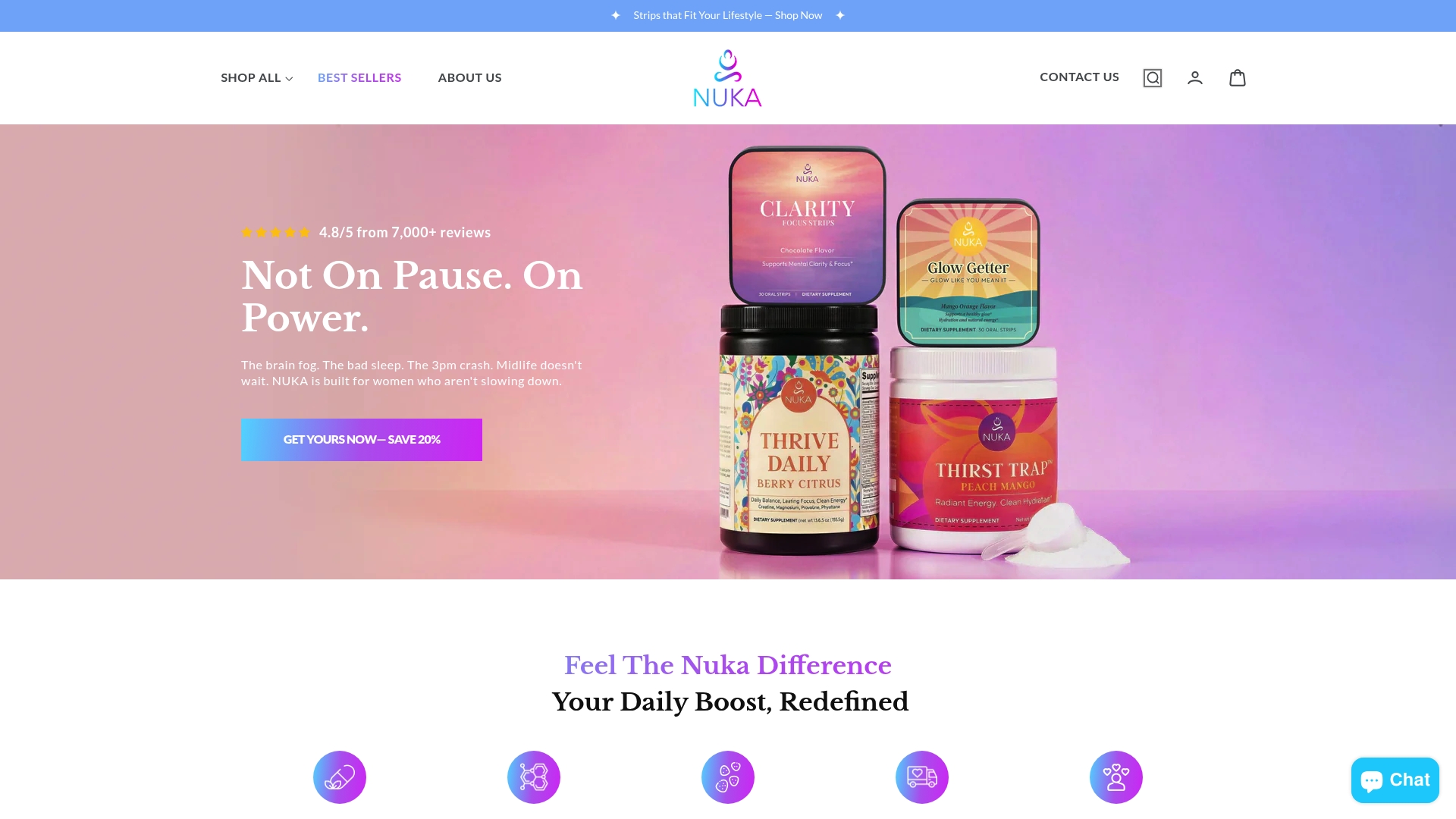
A single sachet dissolved in water after a sweaty episode replaces what you just lost without requiring a full meal or a trip to the kitchen. Browse the hydration powder and full product lineup to find a format that fits your routine, whether that’s a sachet for your travel bag or an oral strip for days when even mixing a drink feels like one step too many.
This article is general information, not a substitute for advice from a qualified doctor. Consult a qualified healthcare professional about your own circumstances before acting on anything here.
Sources
- Can dehydration cause headaches? - Harvard Health
- Dehydration headache: What it is, symptoms & treatment - Cleveland Clinic
- Effects of menopause on temperature regulation - NCBI/PMC review
FAQ
What does a hormonal headache feel like?
Hormonal headaches, including menstrual or perimenopausal migraine, often feel like a throbbing, one-sided pain that can come with nausea, light sensitivity, or visual aura. This differs from a typical dehydration headache, which tends to be duller and more widespread and improves with fluids and rest.
Can menopause cause bad headaches?
Menopause can worsen headaches for some women because falling and fluctuating estrogen affects the brain’s pain pathways and temperature regulation, and the resulting hot flashes increase fluid loss that can compound headache risk. Not every woman experiences worse headaches during menopause, and the pattern varies with individual hormone history and prior migraine tendency.
Can estrogen trigger headaches?
Estrogen fluctuations, rather than estrogen itself, are the more consistent trigger, since sharp drops in estrogen are linked to migraine in women with a history of hormonal headaches. This is why headaches often shift in frequency or intensity during perimenopause, when estrogen levels swing rather than decline smoothly.
What are the symptoms of dehydration during menopause?
Common symptoms include dark urine, dry mouth, fatigue, dizziness, and headache, and menopause can make these easier to miss because hot flashes cause fluid loss you may not immediately connect to thirst. Checking urine color and drinking fluids soon after a hot flash or sweaty night are simple ways to catch dehydration early.