

Best Time to Take Electrolytes for Menopausal Women
The best time to take electrolytes depends on what your body is doing, not the clock. There is no single universal window that works for everyone. Timing should match your activity, environment, and symptoms — and for women navigating menopause, that calculation shifts more often than most guides acknowledge.
The occasions where electrolytes genuinely help:
- Before long or hot exercise well in advance to prevent early fatigue and hyponatremia
- During extended workouts lasting over an hour, especially in heat
- After heavy sweating, vomiting, or diarrhea to restore what you lost
- First thing in the morning if you woke up drenched from night sweats
- On travel days, particularly flights, where cabin air accelerates fluid loss
Pro Tip: Oral strips dissolve on your tongue in seconds, no water required. They slip into a carry-on pocket or a small purse pouch, which makes them the most practical option when you are mid-flight or between meetings and cannot mix a powder.
Table of Contents
- When exactly should you take electrolytes?
- How menopause changes your hydration needs
- Which format works best for travel?
- What should you look for on the label?
- Practical daily routines and travel tips
- Who should be careful with electrolyte supplements?
- Key Takeaways
- The case for keeping it simple
- Nukalove’s hydration products, built for this
- Useful sources and further reading
When exactly should you take electrolytes?
Timing by scenario matters more than a general rule.

Before exercise: Sports dietitians recommend pre-loading well before very long or hot workouts and in the days leading up to endurance events. The goal is to arrive at the starting line already balanced, not playing catch-up mid-run.
During exercise: Electrolyte intake during extended sessions lasting over an hour is generally recommended, especially in heat or for heavy sweaters. Sip steadily rather than downing a large dose at once. Rapid consumption of concentrated solutions can trigger nausea; slow intake improves absorption and tolerance.
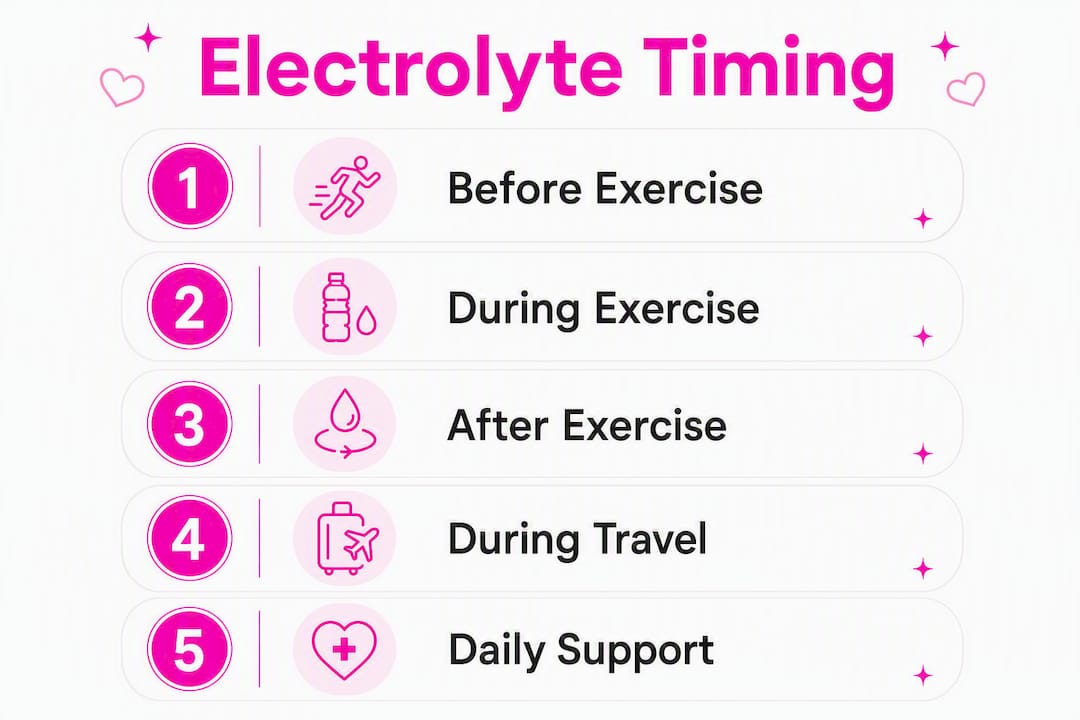
After exercise or illness: Post-workout is when sodium plus fluids work together to pull water back into your cells. After vomiting or diarrhea, the priority is the same. Expect noticeable symptom relief within 20–30 minutes of a well-formulated dose, though full rehydration takes longer.
Travel and flying: Cabin humidity on commercial flights typically sits well below comfortable levels, which accelerates dehydration quietly. Take a strip or small electrolyte serving before boarding and again mid-flight on trips over three hours.
Night sweats: If hot flashes are waking you up soaked, a low-sugar electrolyte option before bed or immediately upon waking covers both scenarios. Avoid high-sugar formulas close to sleep — they can disrupt blood sugar and make rest harder.
Pro Tip: Body cues are reliable guides. Dark urine, persistent thirst, muscle cramps, and dizziness are all signals to reach for electrolytes rather than plain water alone.
Situations where electrolyte replacement is clinically recognized as helpful: intense exercise over 60–90 minutes, heavy sweating, illness-related fluid loss (vomiting or diarrhea), prolonged heat exposure, and recovery after alcohol.
How menopause changes your hydration needs
Menopause does not just affect hormones. It shifts fluid balance in ways that make consistent hydration harder to maintain.
Hot flashes and night sweats cause repeated, unpredictable fluid and mineral loss throughout the day and night. The vasomotor symptoms that define perimenopause and menopause mean your electrolyte needs can spike at 2 AM just as easily as during a workout. Clinical commentary specifically notes higher dehydration risk during menopause and the value of portable formats for consistent mineral intake during travel or symptom flares.
Medications add another layer. GLP-1 agonists, increasingly prescribed for weight management during midlife, can increase fluid loss and alter electrolyte balance. Certain blood pressure medications and hormone therapies carry similar effects. If you are on any of these, your baseline need for minerals is higher than the general guidance suggests.
Which minerals matter most for this stage:
- Potassium supports muscle function and helps counterbalance sodium’s effect on blood pressure, a concern for many women in midlife
- Magnesium plays a role in sleep quality, muscle relaxation, and reducing cramp frequency — all directly relevant to menopause symptoms
- Sodium is necessary but should stay moderate for daily use; reserve higher-sodium formulas for heavy sweating or endurance events
If you are experiencing frequent night sweats, taking medications that affect fluid balance, or noticing persistent fatigue and cramping, discuss your electrolyte needs with your clinician before adding daily supplementation. Menopause-related hydration changes are real, but the right mineral levels vary by individual health profile. Read more about electrolytes and menopause for a deeper look at the research.
Which format works best for travel?
Portability is not a minor convenience. It is the difference between staying consistent and skipping supplementation entirely when your routine is disrupted.
| Format | Best occasion | Portability | Key nutrients | Sugar/additives | Speed of effect |
|---|---|---|---|---|---|
| Oral strips | Travel, night sweats, on-the-go | Excellent — fits in a pocket | Sodium, potassium, magnesium | Typically low to none | Fast — dissolves in seconds |
| Powder sachets | Home, gym bag, hotel room | Good — single sachets are compact | Sodium, potassium, magnesium | Varies widely; check label | Moderate — needs water to mix |
| Ready-to-drink | Post-workout, convenience | Poor — liquid restrictions, bulk | Sodium, potassium | Often higher sugar | Immediate but heavy |
Portable formats help users stay consistent with hydration, which matters more than precise timing. Oral strips clear TSA liquid rules entirely, need no refrigeration, and do not require a cup or bottle. Powders are a solid home or gym-bag option but depend on having water and a vessel handy. Ready-to-drink bottles are convenient post-workout but impractical on a plane or in a meeting.
For women managing menopause symptoms across changing environments, strips are the format that removes every friction point. You can read more about travel-friendly supplement options that fit this kind of routine.
What should you look for on the label?
Reading a supplement label takes two minutes and saves you from products that look clean but are not.
Key items to check:
- Sodium: present in most formulas; aim for moderate amounts (around 200–500 mg per serving) for daily use, higher only for endurance or heavy sweat scenarios
- Potassium: look for at least 100–200 mg per serving
- Magnesium: 20–80 mg per serving is a reasonable daily range
- Chloride: often paired with sodium; supports fluid balance
- Sugar: dietitians recommend lower-sugar formulations — under a few grams per serving for daily use
- Artificial additives: dyes, sweeteners, and fillers add nothing; skip them
- Serving size and instructions: one strip or one sachet should be a complete serving, not a partial dose
One thing electrolytes will not do: give you energy on their own. Electrolytes without macronutrients supply no calories. Products marketed for “energy” are adding carbohydrates or caffeine to do that work. If you want to understand how caffeine interacts with menopause symptoms, especially near bedtime, the research on caffeine and menopause is worth reading before you choose a formula.
Pro Tip: For daily hydration support, choose a lower-sodium, sugar-free formula. Save the higher-sodium options for days when you have a long workout, a hot outdoor event, or a stomach bug.
For a curated breakdown of sugar-free electrolyte options, Nukalove’s guide covers the label criteria in detail.
Practical daily routines and travel tips
Turning guidance into a habit is the part most articles skip.
Morning routine:
- Wake up and assess: is your urine dark or are you feeling sluggish? Take a strip or mix a low-sugar powder before coffee.
- If you had night sweats, prioritize electrolytes before plain water — your cells need minerals to hold the fluid you are about to drink.
- Follow with a full glass of water.
Exercise-day routine:
- One to two hours before a long or hot workout, take a serving with water.
- During workouts over 60 minutes, sip a diluted electrolyte solution or take a strip at the halfway point.
- Within 30 minutes post-workout, take another serving alongside food that includes some sodium and carbohydrates.
Travel packing tips:
- Pack one strip per travel day plus two extras for delays or unexpected heat.
- Store strips in a small zip pouch in your personal item — they are flat, lightweight, and TSA-friendly.
- Take one strip before boarding and one mid-flight on long hauls.
Pro Tip: Strips do not expire quickly and are unaffected by temperature swings in luggage holds — a real advantage over powders that can clump or liquids that can leak.
Who should be careful with electrolyte supplements?
Most healthy women can use electrolyte supplements without issue. A few situations call for caution or a conversation with your doctor first.
Conditions and medications that change the equation:
- Kidney disease: impaired kidneys cannot regulate potassium and sodium excretion normally; excess supplementation can be dangerous
- Heart failure: fluid and sodium balance is tightly managed; additional electrolytes can interfere
- Hypertension: high-sodium formulas can raise blood pressure; choose low-sodium options and confirm with your prescriber
- ACE inhibitors or potassium-sparing diuretics: these medications already raise potassium levels; adding a potassium-rich supplement can push levels too high
- Hormone therapies: some affect fluid retention and mineral balance; discuss with your prescriber before adding daily supplementation
Symptoms that need medical attention, not a supplement:
- Severe dizziness or fainting
- Persistent vomiting or diarrhea lasting more than 24 hours
- Confusion or disorientation (a sign of hyponatremia, which is low blood sodium)
- Chest pain or irregular heartbeat alongside dehydration symptoms
Electrolyte supplements are a wellness tool, not a treatment. If you are managing a chronic condition, on prescription medications that affect fluid balance, or experiencing symptoms beyond typical dehydration, speak with your clinician before starting regular supplementation. This article is general information, not medical advice.
Key Takeaways
Timing electrolytes to your activity, environment, and symptoms is more effective than following a fixed daily schedule — and for menopausal women, a portable, sugar-free format makes consistency far easier to maintain.
| Point | Details |
|---|---|
| Timing is situational | Take electrolytes before long/hot exercise, during workouts over 60–90 minutes, after fluid loss, or when night sweats strike. |
| Menopause raises the stakes | Hot flashes, night sweats, and certain medications increase dehydration risk and mineral needs, especially potassium and magnesium. |
| Read the label carefully | Look for moderate sodium (around 200–500 mg), at least 100–200 mg potassium, low sugar, and no unnecessary additives. |
| Strips win for travel | Oral strips are TSA-friendly, need no water, and dissolve in seconds — the most consistent format for women on the move. |
| Nukalove’s THIRST TRAP and oral strips | Nukalove’s hydration powder and strip formats are built around these label and portability criteria for menopausal women. |
The case for keeping it simple
Most electrolyte content is written for endurance athletes or gym-goers in their twenties. The advice is not wrong, but it misses something important for women in perimenopause and menopause: your hydration needs are not predictable. A night sweat at 3 AM, a hot flash during a work presentation, a cross-country flight with dry recycled air — these are not edge cases. They are Tuesday.
The obsession with precise timing misses the bigger point. Consistency matters more than precision. A format you will actually use, wherever you are, beats the theoretically optimal formula sitting in your kitchen cabinet. That is why the strip format is not a gimmick for this audience. It is a practical answer to a real problem: your hydration needs are unpredictable, your schedule is full, and you should not have to carry a shaker bottle to stay balanced.
The mineral priorities also shift in midlife. Magnesium for sleep and muscle cramps, potassium for blood pressure and heart function, moderate sodium for daily balance — these are not the same priorities as a 25-year-old athlete. Choosing a formula built around those needs, rather than adapting an athlete’s product, is the smarter move.
Nukalove’s hydration products, built for this
Nukalove’s THIRST TRAP Hydration Powder in Peach Mango is formulated with the mineral balance this audience actually needs: moderate sodium, potassium, magnesium, and no unnecessary sugar or artificial additives. It mixes easily at home or in a hotel room. For travel days, the GLOW GETTER oral strips and Nukalove’s hydration strip line dissolve on your tongue in seconds, fit flat in any bag, and clear every TSA checkpoint without a second thought.
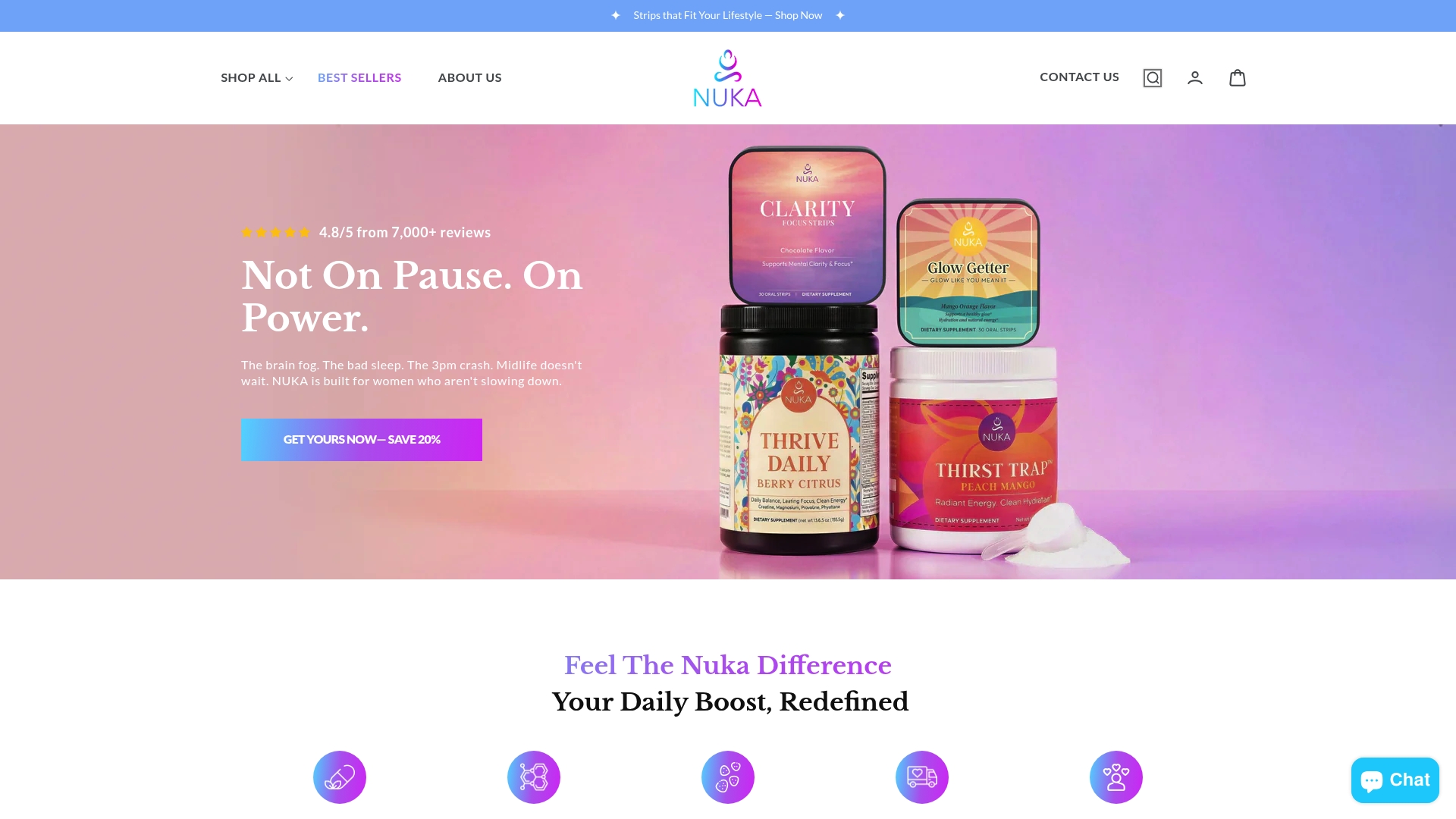
Both formats are designed by a women-owned brand that focuses specifically on menopause-stage wellness. The full wellness collection includes strips for sleep, focus, and skin support alongside hydration, so you can build a travel pack that covers more than one symptom without adding bulk. Browse the collection at Nukalove.com and find the format that fits your routine.
Useful sources and further reading
- Sports and Hydration for Athletes: Q&A with a Dietitian — Johns Hopkins Medicine: foundational guidance on electrolyte loss through sweat and exercise
- When Is the Best Time to Drink Electrolytes? — Verywell Health: covers timing scenarios and what electrolytes do and do not provide
- The Best Time to Take Electrolytes — EatingWell: sports dietitian guidance on pre-loading and endurance timing
- Best Time to Drink Electrolytes for Hydration — EatingWell: clinical checklist of scenarios where electrolyte replacement helps
- Dietitians Say This Is the Best Time to Drink Electrolytes — Prevention: label-reading and sugar guidance from registered dietitians
- When to Drink Electrolytes for Max Benefits — Self: menopause-specific hydration risk and portable format rationale
- Do Electrolytes Really Boost Hydration? — Northwestern Medicine: clinical perspective on consistency vs. precision in hydration
- Electrolytes Before or After Workout — The Manual: dosing behavior and GI tolerance guidance
- Hydration for Health: What Your Body Actually Needs — PeaceHealth AI Blog: clinician-informed overview of basic hydration needs
- Electrolytes for Menopause — Nukalove Blog: Nukalove’s deep-dive on mineral needs specific to menopause stages