

Best Perimenopause Supplements: What Actually Works in 2026
The best perimenopause supplements for real, evidence-backed support are magnesium glycinate, omega-3 fatty acids (EPA+DHA), creatine monohydrate, vitamin D3, and calcium, which have consistent clinical data addressing key perimenopause challenges like disrupted sleep, brain fog, mood swings, muscle loss, and bone health. Everything else on the shelf deserves a much harder look before you spend money on it.
Here is the honest context you need before diving in. Up to 80% of women in the menopause transition experience hot flashes, yet no dietary supplement has proven more effective than a placebo for treating them. The placebo effect alone can reduce hot flash frequency by up to 30%, which explains why so many women swear by herbal blends that clinical trials cannot validate. That does not mean supplements are useless. It means you need to know which ones are doing real work and which ones are riding the placebo wave.
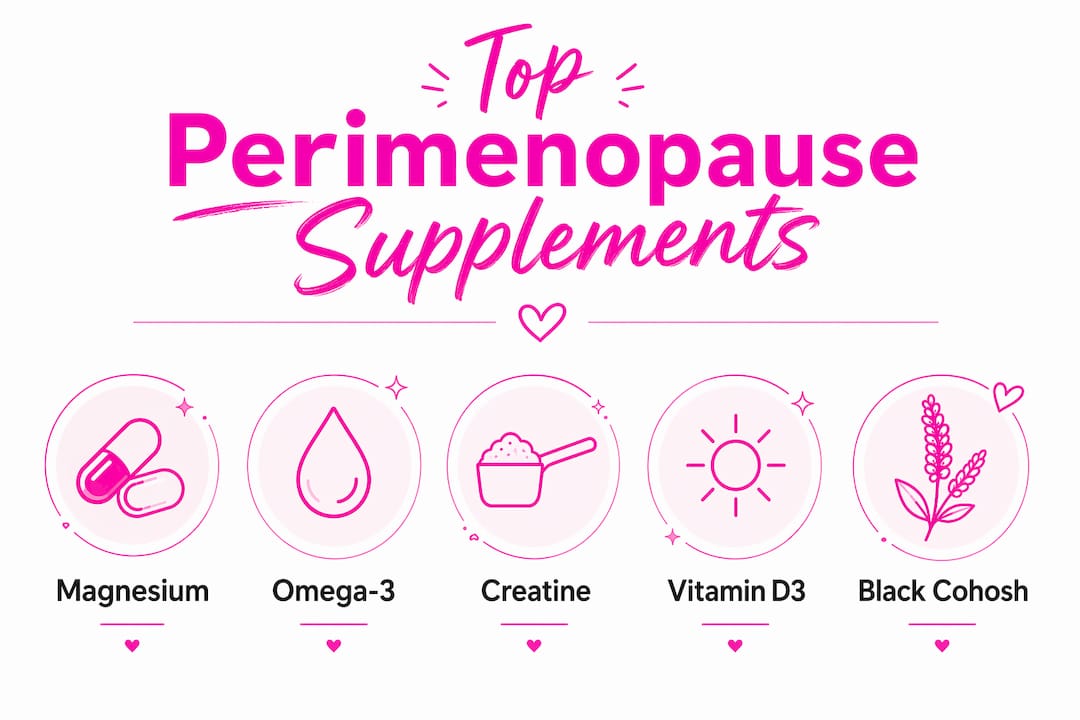
Key supplements with genuine clinical support for perimenopause:
- Magnesium glycinate (300–400 mg): sleep quality, anxiety reduction, muscle function
- Omega-3 fatty acids (EPA+DHA combined): mood stability, cardiovascular protection, inflammation
- Creatine monohydrate: cognitive performance, muscle mass preservation, energy metabolism
- Vitamin D3: bone density, immune function, mood regulation
- Calcium: bone mineral density, works synergistically with vitamin D3
- Black cohosh: mixed but promising evidence for vasomotor symptoms and mood
- Estradiol and micronized progesterone: not supplements, but the clinical gold standard for symptom relief
What are the best perimenopause supplements backed by clinical evidence?
The supplement market targeting women in perimenopause has ballooned into a $17 billion global industry, and the marketing is often more impressive than the science. Cutting through that noise requires looking at what clinical trials actually show, not what the label promises.
Magnesium glycinate
Magnesium glycinate at 300–400 mg daily is one of the most consistently useful supplements during perimenopause. The glycinate form absorbs better than magnesium oxide and is gentler on the digestive system. Clinical evidence supports its role in improving sleep onset, reducing anxiety, and easing the muscle tension that often spikes when estrogen starts fluctuating. Timing matters here: take it in the evening, roughly an hour before bed, to get the most out of its calming effects.

Omega-3 fatty acids (EPA+DHA)
Omega-3 fatty acids, specifically the EPA and DHA forms found in fish oil and algae-based supplements, have clinical evidence supporting mood stability, cognitive performance, and cardiovascular protection during perimenopause. EPA tends to drive the anti-inflammatory and mood benefits; DHA is the structural fatty acid your brain relies on. A combined daily dose of EPA+DHA at clinical trial validated levels is standard for mood and cardiovascular benefits. If you are on blood thinners, check with your doctor before starting, since omega-3s have mild anticoagulant effects.

Creatine monohydrate
Creatine is the supplement most women in perimenopause have never considered, and it may be the most underused one on this list. Estrogen decline reduces the brain’s own creatine synthesis, and creatine monohydrate supplementation can help offset that drop to support both cognition and muscle mass. The cognitive benefits are particularly relevant: Research in women shows improvements in working memory and mental fatigue with clinically studied doses. It is also one of the most studied, safest supplements available, with decades of data behind it.
Vitamin D3 and calcium
Vitamin D3 and calcium are the paired foundation for bone health during perimenopause, when estrogen decline accelerates bone turnover. Vitamin D3 is preferred for improving serum levels; clinicians recommend testing before supplementing to guide dosing. Calcium supplementation should complement dietary intake without exceeding safe levels to avoid risks like kidney stones.
Black cohosh
Black cohosh shows mixed but promising results for vasomotor symptoms and mood disorders in clinical trials. German health authorities have approved black cohosh for menopausal symptoms at therapeutic doses consistent with clinical studies for short-term use. The safety profile is generally positive for short-term use, but liver toxicity has been reported in rare cases, so women with liver conditions should avoid it. Quality varies enormously between products, which is a real problem with any botanical supplement.
Pro Tip: Choose standalone, single-ingredient supplements over blended “menopause support” formulas. Blends rarely contain therapeutic doses of any individual ingredient, and you have no way to know what is actually driving any effect you notice.
| Supplement | Primary benefits | Evidence level | Typical dose | Key cautions |
|---|---|---|---|---|
| Magnesium glycinate | Sleep, anxiety, muscle function | Strong | 300–400 mg/day | Loose stools at high doses |
| Omega-3 (EPA+DHA) | Mood, cognition, cardiovascular | Strong | — | Mild blood-thinning effect |
| Creatine monohydrate | Cognition, muscle mass, energy | Strong | 3 g/day | None significant at standard doses |
| Vitamin D3 | Bone density, mood, immunity | Strong | Test-guided | Toxicity at very high doses |
| Calcium | Bone mineral density | Moderate-Strong | — | Kidney stones with excess |
| Black cohosh | Hot flashes, mood | Mixed | — | Rare liver toxicity; avoid with liver disease |
| Dong quai / evening primrose | Hot flashes | Weak | Varies | Drug interactions; limited efficacy data |
Many botanical supplements like dong quai and evening primrose oil lack consistent clinical proof and can interact with common medications including blood thinners and antidepressants. The appeal of “natural” is understandable, but natural does not mean safe or effective. Third-party testing seals like USP or NSF are the minimum bar for any supplement you consider, because the FDA does not regulate supplements the way it regulates drugs.
For a deeper look at perimenopause symptoms and how they connect to the hormonal shifts driving them, that context helps you match supplements to what your body is actually experiencing.
How does hormonal therapy compare to supplements for perimenopause relief?
Supplements support your health during perimenopause. Hormonal therapy treats the root cause. That distinction matters when you are deciding how to build your approach.
Estradiol is the primary estrogen your body produces before menopause, and replacing it with systemic hormone therapy remains the most effective clinical treatment for hot flashes, night sweats, and the sleep disruption they cause. Clinical symptoms and history, not blood tests alone, guide perimenopause diagnosis and treatment decisions. No supplement addresses estrogen decline directly the way hormonal therapy does.
The progesterone side of hormonal therapy deserves attention too. Synthetic progestins differ significantly from bioidentical micronized progesterone in both safety profile and effects. Micronized progesterone binds to GABA receptors in the brain, producing a calming effect that synthetic progestins do not replicate. Modern hormone therapy protocols increasingly favor transdermal estradiol (patch, gel, or spray) combined with micronized progesterone, because transdermal delivery bypasses liver metabolism and reduces clot risk compared to oral estrogen.
Common hormonal therapy options and their key characteristics:
- Transdermal estradiol (patch, gel, spray): bypasses liver metabolism, lower clot risk than oral forms, preferred delivery route in current clinical guidelines
- Oral estradiol: effective but associated with higher clot and stroke risk than transdermal forms
- Micronized progesterone (Prometrium): bioidentical, calming via GABA binding, more favorable safety profile than synthetic progestins
- Synthetic progestins (e.g., medroxyprogesterone acetate): older formulations, associated with higher breast cancer risk in some studies, less favorable than micronized progesterone
- Low-dose vaginal estrogen: addresses genitourinary symptoms (dryness, urinary urgency) with minimal systemic absorption, appropriate even for women who cannot use systemic HRT
Pro Tip: Hormonal therapy is not one-size-fits-all. The right formulation, dose, and delivery route depend on your symptom profile, health history, and risk factors. Work with a clinician who specializes in menopause medicine, not just a general practitioner who prescribes HRT occasionally.
Supplements and hormonal therapy are not competing choices. Many women use both: hormonal therapy to address the core hormonal deficit, and supplements like magnesium, omega-3s, and creatine to support the metabolic and cognitive changes that hormones alone do not fully resolve. The women who get the best outcomes tend to treat these as complementary layers, not an either-or decision.
What metabolic changes during perimenopause should shape your supplement strategy?
Perimenopause is not just a hormonal event. It is a metabolic event that affects insulin sensitivity, fat distribution, cardiovascular risk, and brain function simultaneously. Supplements that address only hot flashes miss most of what is actually happening in your body.
Insulin sensitivity declines as estrogen drops, which shifts fat storage toward the abdomen and raises cardiovascular risk. Bone turnover accelerates because estrogen normally suppresses the cells that break down bone. Brain creatine synthesis falls. Muscle protein synthesis becomes less efficient, making it harder to maintain lean mass even with the same exercise routine. These are systemic changes, and your supplement strategy should reflect that.
Metabolic challenges and the supplements that address them
Insulin sensitivity and fat distribution: Omega-3 fatty acids reduce triglycerides and support insulin signaling. Magnesium plays a direct role in glucose metabolism; low magnesium is associated with impaired insulin sensitivity. Neither is a replacement for diet and exercise, but both support the metabolic machinery that perimenopause disrupts.
Brain fog and cognitive decline: Creatine monohydrate addresses the drop in brain creatine synthesis directly. Omega-3 DHA supports neuronal membrane integrity. These two together form the strongest evidence-based combination for cognitive support during perimenopause.
Muscle mass and strength: Creatine is the most studied supplement for preserving muscle mass and function in aging populations. Combined with resistance training, it helps offset the accelerated muscle loss that begins in perimenopause. Protein intake adequacy matters here too, though that is a dietary factor rather than a supplement.
Bone density: Vitamin D3 and calcium work together to slow the bone loss that accelerates when estrogen declines. Vitamin K2 (specifically MK-7) is increasingly recognized for directing calcium into bone rather than arteries, though the evidence base is less mature than for D3 and calcium.
Lifestyle factors that complement supplementation for metabolic health during perimenopause:
- Resistance training at least 2–3 times per week: the single most effective intervention for preserving muscle mass and bone density
- Protein intake of at least 1.2 g per kilogram of body weight daily: supports muscle protein synthesis that becomes less efficient with estrogen decline
- Sleep quality: poor sleep worsens insulin resistance, cortisol dysregulation, and cognitive performance; magnesium glycinate and sleep support products can help here
- Anti-inflammatory diet: emphasizing fatty fish, vegetables, legumes, and whole grains supports the same pathways omega-3s target
- Stress management: chronic cortisol elevation worsens insulin resistance and accelerates bone loss; this is not a soft recommendation
The women who navigate perimenopause best are not the ones who find the perfect supplement stack. They are the ones who treat supplementation as one layer of a broader strategy that includes movement, sleep, nutrition, and clinical care.
How Nukalove approaches perimenopause wellness practically
Nukalove was built by women, for women navigating every stage of menopause, and the product design reflects a specific insight: the best supplement is the one you actually take consistently. That sounds obvious, but it is where most supplement routines fall apart. Capsule bottles get left at home. Powders require a blender. Timing gets complicated when you are traveling or working long days.
Nukalove’s oral strip format dissolves directly on the tongue, bypasses the need for water or preparation, and fits in a wallet or carry-on pocket. For perimenopause specifically, that convenience matters because symptom management is not a one-day event. It is a daily practice that has to fit into real life, not an idealized wellness routine.
The Nukalove wellness collection addresses the specific gaps that perimenopause creates: energy and focus during the day, sleep quality at night, and the skin and cognitive changes that come with hormonal shifts. The No Pause Power Pack bundles products targeting these needs together, which simplifies the decision-making that can make supplement routines feel overwhelming.
Practical guidelines for safe and effective supplement use during perimenopause:
- Start with one supplement at a time, not a full stack simultaneously, so you can identify what is actually working and catch any adverse reactions early
- Track your symptoms before and after starting a new supplement, using a simple daily log; subjective improvement without tracking is hard to distinguish from placebo
- Check for interactions with any medications you take, particularly blood thinners, antidepressants, and thyroid medications, before adding botanicals
- Choose third-party tested products with USP, NSF, or Informed Sport certification; these seals confirm the product contains what it claims and nothing it should not
- Revisit your stack every six months with your clinician; what you need in early perimenopause may differ from what supports you two years later
- Do not rely on supplements alone for severe symptoms; hot flashes, significant sleep disruption, and mood disorders that affect daily function deserve clinical evaluation, not just a supplement adjustment
Pro Tip: If you are considering a “menopause support blend,” check whether any single ingredient reaches its clinically studied dose. Most blends spread the formula so thin across multiple ingredients that none of them hits the threshold where the research shows benefit. A standalone magnesium glycinate product at 300–400 mg will outperform a blend containing 50 mg of magnesium alongside seven other underdosed herbs.
For women who want to go deeper on the mental health dimension of perimenopause, the best books on women’s mental health offer evidence-backed frameworks that complement what supplements and clinical care can do. And if brain fog and focus are your primary concern, resources on cognitive support through nutrition can help you understand how omega-3s, creatine, and magnesium fit into a broader cognitive health strategy.
The Nukalove No Pause Power Pack was designed specifically for women in perimenopause who want convenient, travel-ready support without the guesswork of building a supplement routine from scratch. Visit Nukalove to see the full range.
Key Takeaways
The most effective perimenopause supplement strategy combines magnesium glycinate, omega-3 fatty acids, creatine monohydrate, vitamin D3, and calcium for metabolic, cognitive, and bone health, while recognizing that no supplement matches hormonal therapy for treating hot flashes directly.
| Point | Details |
|---|---|
| No supplement beats placebo for hot flashes | Placebos reduce hot flash frequency by up to 30%; no dietary supplement outperforms this benchmark. |
| Five supplements have strong clinical backing | Magnesium glycinate, omega-3s, creatine, vitamin D3, and calcium address the real metabolic and cognitive shifts of perimenopause. |
| Hormonal therapy addresses the root cause | Transdermal estradiol and micronized progesterone treat estrogen decline directly; supplements play a supportive, complementary role. |
| Blended products rarely reach therapeutic doses | Single-ingredient supplements with third-party certification (USP or NSF) are safer and more effective than multi-herb blends. |
| Perimenopause is a metabolic event | Insulin sensitivity, bone turnover, muscle loss, and brain creatine synthesis all shift; supplement strategy should address these systemic changes. |