

Beat the 2 p.m. Afternoon Menopause Slump with Travel Oral Strips
The safest way through a menopause-related afternoon slump is a layered approach: talk to your ob-gyn first about hormone or prescription options if hot flashes or insomnia are driving your fatigue, build in sleep, hydration, and meal-timing habits that support steady energy, and keep a travel-ready oral strip on hand for the moments you need a fast, portable lift. Strips support the plan. They don’t replace it.
TL;DR:
- Hormone therapy is the most effective treatment for moderate to severe vasomotor symptoms that cause daytime fatigue during menopause.
- Lifestyle habits like consistent sleep, balanced meals, and hydration can significantly reduce midday energy dips, especially when combined with targeted short-term strategies.
- Oral strips provide a portable, fast-acting option to temporarily boost energy, but they should complement, not replace, medical treatment and lifestyle adjustments.
- Menopause supplements lack rigorous regulation; ensure products have third-party testing, clear ingredient labels, and no undisclosed hormones before use.
- Persistent fatigue with other concerning symptoms or medication interactions requires timely medical consultation to rule out underlying health issues.
Table of Contents
- Why Menopause Raises the Risk of an Afternoon Slump
- What Do Doctors Recommend First for Menopause Fatigue?
- Practical Lifestyle Habits That Fight Midday Fatigue
- Are Menopause Supplements and Oral Strips Actually Regulated?
- How Do Travel-Ready Oral Strips Fit Into an Energy Plan?
- When Should You See Your Ob-Gyn About Afternoon Fatigue?
- Nukalove’s Perspective: Convenience Paired With Clinical Guidance
- Try Nukalove’s Go Girl Energy Strips for an Afternoon Reset
- Sources
- FAQ
Why Menopause Raises the Risk of an Afternoon Slump
Menopause fatigue is not the same animal as the regular post-lunch dip everyone gets. It has a hormonal engine behind it, and that engine runs at night, which is why the crash shows up hours later at 2 p.m.
Falling estrogen and progesterone destabilize the body’s temperature regulation and circadian rhythm, which is why hot flashes and night sweats tend to cluster overnight. A woman who wakes four or five times a night from a hot flash isn’t getting restorative sleep, even if she’s technically in bed for eight hours. That sleep debt catches up with her the following afternoon, often right when cortisol naturally dips and focus starts to fade anyway.
Hormonal swings during perimenopause and menopause also directly affect mood and alertness, independent of sleep loss. That’s a double hit: disrupted rest plus a nervous system that’s already working harder to regulate itself.
The most common triggers behind a menopausal afternoon crash include:
- Hot flashes that interrupt deep sleep cycles, even briefly
- Night sweats that require getting up to change clothes or bedding
- Insomnia from anxiety or racing thoughts tied to hormonal shifts
- Blood sugar swings that hit harder when sleep is already compromised
What Do Doctors Recommend First for Menopause Fatigue?
Clinicians generally start with the option that has the strongest evidence behind it: systemic hormone therapy. For women with moderate to severe hot flashes and night sweats, hormone therapy is widely considered the most effective treatment available, and reducing those nighttime disruptions is often the single biggest lever for fixing daytime energy. Benefits and risks vary by age, dose, and personal health history, which is exactly why the FDA convened an expert panel in 2025 specifically to reassess how hormone therapy risk should be communicated and individualized.
Hormone therapy isn’t the only clinical route. For women who can’t or don’t want to use hormones, nonhormonal prescriptions, including certain antidepressants, gabapentin, and clonidine, can meaningfully reduce hot flash frequency. When insomnia is the main driver of fatigue rather than hot flashes alone, cognitive behavioral therapy for insomnia is a well-supported nonpharmacologic option that clinicians increasingly recommend before reaching for medication.
Here’s what tends to get prioritized in a clinical setting:
- Systemic hormone therapy for moderate to severe vasomotor symptoms
- Nonhormonal prescriptions when hormones aren’t appropriate
- CBT for insomnia when disrupted sleep is the primary complaint
- Ongoing monitoring since ACOG treats these decisions as individualized, not one-size-fits-all
The Cleveland Clinic and ACOG are consistent on this point: prescription hormone therapy and select medical treatments remain the most reliable way to address the vasomotor symptoms that underlie most menopause-related daytime fatigue. Bring this list to your ob-gyn rather than guessing your way through it alone.
Practical Lifestyle Habits That Fight Midday Fatigue
Medical treatment addresses the root cause, but daily habits determine how you actually feel at 2 p.m. on a Tuesday, whether you’re at your desk or in a hotel lobby.
Start with sleep timing. Going to bed and waking at consistent times, even on weekends, helps stabilize a circadian rhythm that’s already being pulled around by hormonal shifts. If you nap, keep it under 30 minutes and take it early afternoon so it doesn’t sabotage nighttime sleep.

Food and hydration matter more than most women expect. A blood sugar crash after a heavy, carb-dense lunch mimics menopause fatigue almost exactly, so a smaller meal with protein and fiber tends to hold energy steadier through the afternoon. When you’re traveling, dehydration compounds fatigue fast, and electrolytes can matter as much as water intake on a flight or long drive.
Try this sequence when the slump hits:
- Step outside or near a window for five minutes of natural light and movement
- Do a short set of stretches or a brisk walk to reset circulation
- Practice a slow cooling breath if a hot flash is part of the fatigue
- Reassess your last meal and adjust the next one accordingly
Pro Tip: If you rely on caffeine, shift your last cup to before 2 p.m. Menopausal women often report higher sensitivity to caffeine’s effect on sleep, so a late-afternoon coffee that never bothered you at 30 can wreck your sleep at 47. For more on timing caffeine around hormonal changes, see this caffeine and menopause guide.
Are Menopause Supplements and Oral Strips Actually Regulated?
No. The FDA does not review or approve dietary supplements for safety or effectiveness before they reach shelves, which means the burden of accurate labeling falls on the manufacturer, not a government checkpoint.
That regulatory gap matters because evidence for many popular menopause botanicals is thin. A 2026 systematic review covering complementary therapies for menopause symptoms found that most supporting evidence is low to very low certainty, even though it didn’t flag major safety concerns. Older data on specific botanicals like black cohosh and soy isoflavones tells a similar story: some trials show modest benefit, but results across studies are inconsistent.
None of that means every supplement is useless, but it does mean you need to evaluate products with real scrutiny. Before buying anything, check for:
- Third-party testing or a Certificate of Analysis backing up label claims
- Clear ingredient amounts rather than a vague “proprietary blend”
- No hidden hormone-like compounds not disclosed on the label
- A quick check against your current medications for interaction risk
How Do Travel-Ready Oral Strips Fit Into an Energy Plan?
Oral strips dissolve on the tongue without water, which is the entire appeal for a woman managing menopause symptoms between flights, meetings, or a packed travel itinerary. There’s no cup to find, no pill to choke down dry, and no waiting on a slow-digesting capsule.
Oral strip products are designed to be used the moment a slump hits, whether that’s midafternoon at your desk, right before walking into a client meeting, or the second symptoms creep in on a long car ride. A few practical notes worth knowing:
- Skip mixing strips with alcohol, and check with your pharmacist or ob-gyn about interactions with any prescription you’re on
- Keep strips in their original sealed packaging to protect them from heat and humidity, both common travel-bag hazards
- TSA allows solid oral strips in carry-on bags without the liquid restrictions that slow you down at security
Pro Tip: Keep a strip in whatever bag you never leave home without, your purse, laptop bag, or car console, so the option is there before the slump fully sets in, not after.
When Should You See Your Ob-Gyn About Afternoon Fatigue?
Persistent daytime exhaustion deserves a real conversation with your ob-gyn, especially alongside abnormal bleeding, unexplained weight loss, or fatigue that doesn’t improve with better sleep and diet. Those combinations can point to something beyond typical menopause symptoms.
When you go in, ask directly:
- Is hormone therapy appropriate for my age, history, and symptom severity?
- Could anything I’m taking, including supplements, interact with a treatment you’re considering?
- What tests should we run to rule out thyroid issues or other causes of fatigue?
Be upfront about every supplement you use. Clinical commentary on supplement disclosure gaps suggests many women simply don’t mention their botanical or supplement use to their doctor, and clinicians don’t always ask. That silence is where interaction risks hide.
Nukalove’s Perspective: Convenience Paired With Clinical Guidance
This brand was created based on feedback from women managing menopause on the road, seeking solutions that work with their bodies without requiring a kitchen counter and a glass of water. The products include travel-ready oral strips designed for midlife hormonal changes.
That said, these strips are never presented as substitutes for professional medical advice. Lab testing and transparent labeling are emphasized to ensure convenience does not come at the cost of product clarity. A strip can support your afternoon but should not be the only plan for managing menopause.
— NUKA
Try Nukalove’s Go Girl Energy Strips for an Afternoon Reset
The GO GIRL Energy Strips are designed to provide a fast-dissolving option for moments when energy dips and a kitchen is not nearby. They dissolve on the tongue in seconds, requiring no water or waiting.
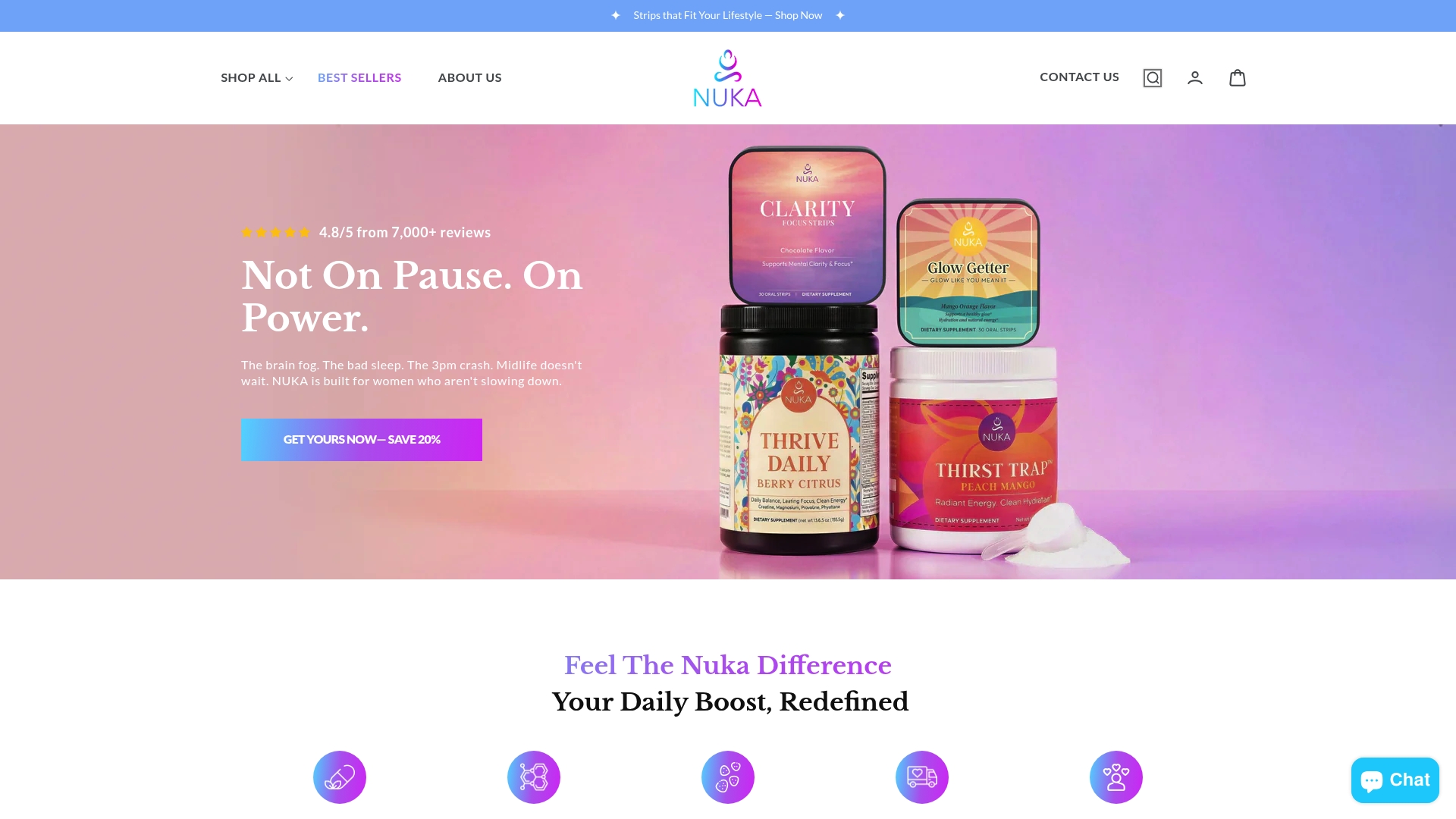
For women who want a fuller travel kit, the RECLAIM YOUR DAY bundle pairs energy support with focus and hydration strips, so you’re covered whether the slump shows up as brain fog, dehydration, or straight-up exhaustion. Both are built as supportive tools within a safety-first plan. Neither replaces a conversation with your ob-gyn about hormone therapy or prescription options if your symptoms are severe. Browse the full energy strips collection to find the format that fits your routine, and bring any product you’re considering to your next appointment so your clinician can weigh in on interactions before you rely on it daily.
Sources
- Systematic review (2026) on complementary therapies for menopausal symptoms
- Cleveland Clinic / ACOG guidance on bioidentical hormones and supplements
- Botanical and dietary supplements review (PMC, 2005)
- FDA expert panel on menopause and hormone replacement therapy (2025)
This article is general information, not a substitute for advice from a qualified doctor. Consult a qualified healthcare professional about your own circumstances before acting on anything here.
FAQ
Is It Safe to Combine Hormone Therapy With Energy Supplements?
Combining hormone therapy with a supplement or oral strip is often fine, but it depends entirely on the specific ingredients and your personal health history. Always run any supplement by your ob-gyn or pharmacist first, since natural labeling doesn’t guarantee an absence of interactions.
What Causes the Afternoon Energy Crash During Menopause?
The crash usually traces back to disrupted overnight sleep from hot flashes or night sweats, compounded by hormonal shifts affecting mood and alertness. Blood sugar dips after lunch can make the same crash feel worse than it would outside of menopause.
How Do Nukalove’s Oral Strips Fit Into a Menopause Energy Plan?
Nukalove’s GO GIRL Energy Strips are designed as a fast, portable option for the moment fatigue hits, particularly useful while traveling or away from a kitchen. They’re meant to support an existing plan built around clinical care and lifestyle habits, not to replace prescription treatment for vasomotor symptoms.
When Should I See a Doctor Instead of Relying on Lifestyle Changes?
See your ob-gyn if fatigue persists despite better sleep and diet, or if it’s paired with abnormal bleeding or unexplained weight loss. These signs warrant an evaluation beyond typical menopause management.
Do Menopause Supplements Actually Work for Energy?
Evidence for most botanical supplements remains low to very low certainty, according to a 2026 systematic review, though some women report modest benefits. Because the FDA doesn’t pre-approve these products for effectiveness, checking third-party testing and discussing use with your ob-gyn matters more than marketing claims.